

By Science and Archaeology Correspondent
Published in association with recent findings in PLOS One
Main Facts
For centuries, underwater caves have functioned as nature’s most enigmatic vaults. Hidden beneath the surface of the earth, these submerged sinkholes and flooded cavern systems frequently contain pristine skeletal remains of extinct megafauna, long-lost predators, and prehistoric herbivores. Until recently, however, these sites remained profoundly underutilized by the scientific community. While researchers recognized the extraordinary preservation potential of water-filled caves, they lacked a reliable, standardized methodology to determine how skeletal remains accumulated, survived, and fundamentally transformed within these aquatic environments.
A monumental new study led by researchers at Griffith University has fundamentally altered this landscape. Published in the peer-reviewed journal PLOS One under the title "Neotaphonomic characteristics of vertebrate site formation in underwater caves," the research provides scientists with the world’s first definitive framework for reading the complex physical, chemical, and biological evidence preserved on cave bones.
Spearheaded by Meg Walker, a PhD candidate at the Australian Research Centre for Human Evolution (ARCHE), and supervised by ARCHE Director Professor Julien Louys, the study utilized a multi-disciplinary approach. By examining animal bones recovered from two distinct underwater cave systems in South Australia—Green Waterhole and Gouldens Sinkhole—the team successfully mapped how skeletal remains are altered over decades and centuries.
The research revealed that underwater caves leave distinct "preservation fingerprints" on bones, differing drastically from the deterioration patterns observed in dry terrestrial caves. By employing a comprehensive suite of analytical techniques ranging from macro-level structural analysis to micro-level elemental and cellular profiling, the Griffith University team established a master key for decoding fossil records. This development arms paleontologists and archaeologists worldwide with a transformative tool to reconstruct ancient ecosystems, trace historical climate shifts, and better understand the fate of prehistoric megafauna.
Chronology
To understand how modern bones undergo alteration in submerged environments, the research team adopted a neotaphonomic approach—studying contemporary and historical animal remains to reverse-engineer processes that apply to ancient fossils.
The South Australian Fieldwork
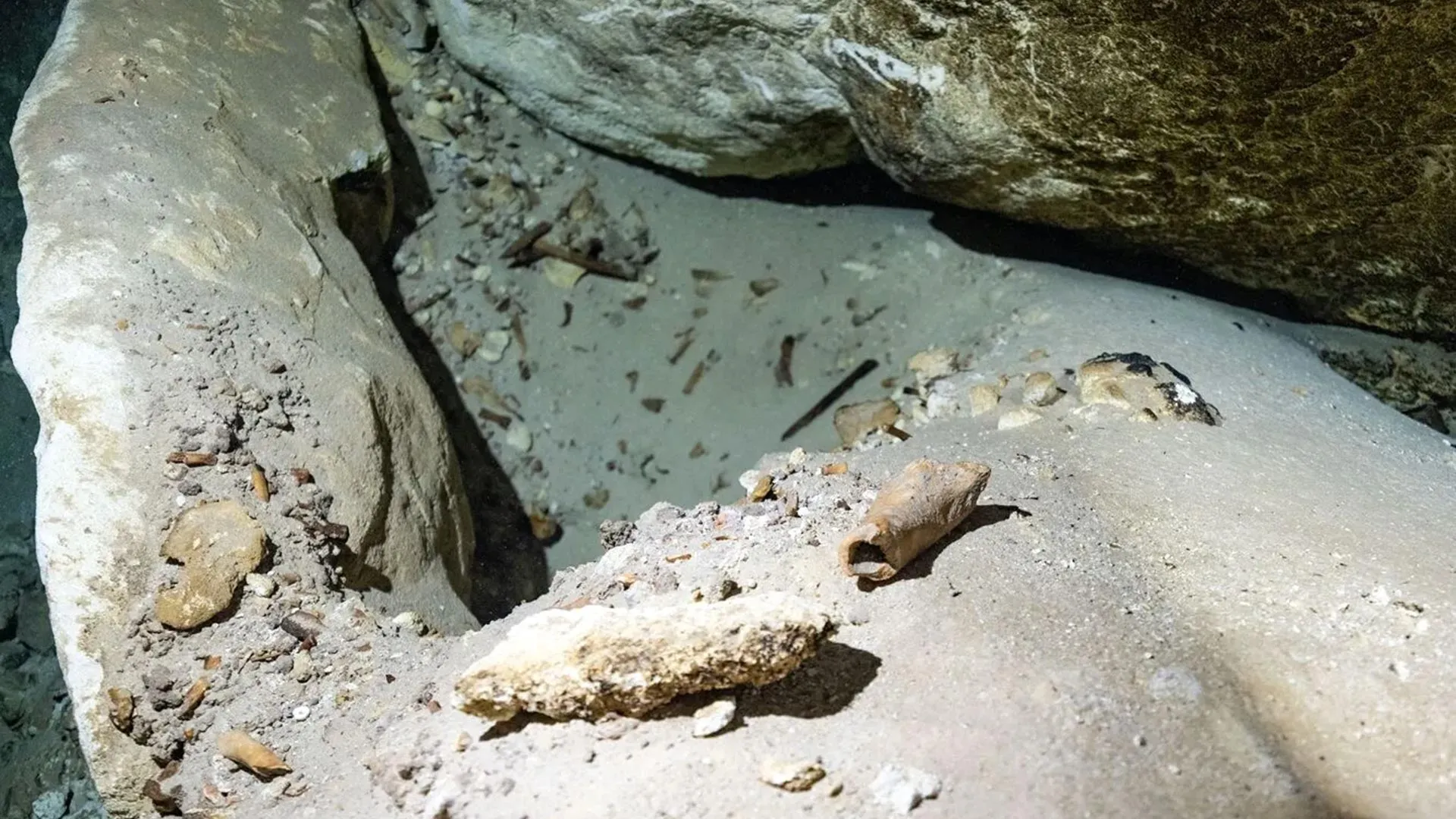
The investigation centered on two subterranean water bodies near Mount Gambier in South Australia: Green Waterhole and Gouldens Sinkhole. Accessing these submerged labyrinths required high-level technical expertise, achieved through a collaborative partnership with specialist cave divers from the Cave Divers Association of Australia (CDAA). These elite divers descended into the dark, labyrinthine chambers to retrieve historical skeletal elements from the cave floors and ledges.
The recovered assemblage was remarkably diverse, comprising both native Australian fauna and species introduced following European settlement. The collection included bones from cows, kangaroos, emus, sheep, pigs, dingoes, rabbits, possums, quolls, and swamp rats. Radiocarbon dating techniques confirmed that many of these specimens date back to the 1840s—coinciding with the arrival of the first European settlers and the establishment of the regional city of Mount Gambier.
By analyzing how these relatively recent bones were deposited, fragmented, and altered by their environment, the researchers gained a baseline timeline of decay and modification. This modern baseline serves as a chronological bridge, allowing scientists to reliably interpret much older fossil assemblages belonging to extinct Pleistocene megafauna that fell into the same cave systems thousands of years ago.
From Deposition to Diagenesis
The chronological progression of a bone entering an underwater cave involves several distinct stages:
- Deposition: The carcass or isolated skeletal element enters the cave, either by falling through a vertical shaft, being washed in by subterranean floods, or being dragged in by predators.
- Submersion and Colonization: Once submerged, the bone interacts with the surrounding aquatic chemistry. In photic zones near entrances, algae and aquatic plants rapidly colonize the bone surfaces.
- Long-Term Diagenesis: Over decades, centuries, or millennia, the bone undergoes subtle mineral exchanges with the surrounding water. In anoxic, dark zones, these processes slow dramatically, preserving original cellular structures and proteins. In contrast, dry cave counterparts experience aggressive attack from terrestrial bacteria and expanding plant roots.
Supporting Data
The Griffith University study relies on a vast array of empirical evidence gathered through multi-tiered analytical methodologies. By combining macro-scale observations with atomic-level inspections, the research team mapped out precisely how different micro-environments within cave systems dictate bone preservation.
Micro-Environments and Preservation Fingerprints
The analysis proved that underwater caves are not monolithic preservation chambers. Instead, they feature localized micro-environments driven primarily by light penetration and biological activity:
- The Photic Zone (Well-Lit Entrances): Near the mouths of sinkholes where sunlight penetrates the water column, biological activity flourishes. Algae, aquatic mosses, and various plant species actively grow across the submerged surfaces of bones. This biological colonization leaves unmistakable organic signatures etched into the bone matrix, distinct from terrestrial weathering.
- The Aphotic Zone (Total Darkness): Deep within the "midnight regions" of the caves, sunlight is entirely absent. Without light, photosynthetic organisms cannot survive. Consequently, bones resting in these pitch-black depths often remain remarkably pristine. The lack of biological disturbance allows the original cortical structure, fine anatomical details, and even fragile organic molecules—such as proteins trapped within ancient cellular matrices—to endure across vast expanses of time.
The Contrast: Wet Versus Dry Caves
To validate their findings, Walker and her colleagues compared the submerged South Australian specimens against known assemblages from dry cave systems. The divergence in data was stark:
- Submerged Bones: Retained exceptional structural integrity. While they bore distinct chemical and biological markers dictated by water chemistry and light levels, their overall morphology remained finely detailed. Original mineral structures and trapped proteins frequently survived the aquatic transition.
- Dry Cave Bones: Displayed entirely different taphonomic signatures. Lacking the protective, stable chemistry of water-filled caverns, dry cave remains were heavily targeted by land-based bacteria that consumed organic components. Furthermore, encroaching terrestrial plant roots mechanically carved long, deep grooves across the exterior surfaces of the bones, complicating structural analyses.
Official Responses
The implications of this study have sent ripples through the global archaeological and paleontological communities, prompting enthusiastic responses from academic leaders and researchers alike.
"By analyzing animal bones from two underwater cave systems in South Australia, we have revealed how different cave environments leave distinct preservation ‘fingerprints’ on skeletal remains," stated lead author and PhD candidate Meg Walker.
Walker emphasized the breadth of the investigation, noting, "Backed by radiocarbon-dated bones, we tracked how skeletons accumulated and were modified over decades and centuries in underwater caves, then compared them to those buried in dry caves. Using a range of methods, from the macro to the micro, we looked at features associated with wet and dry caves—things like spatial distributions of the bones and their surfaces, down to elemental compositions and proteins trapped in ancient cells."
Professor Julien Louys, Director of the Australian Research Centre for Human Evolution and Walker’s doctoral supervisor, underscored the broader significance of the breakthrough. "Underwater caves have long tantalized researchers with the promise of extraordinary fossil preservation, but without a systematic way to read the data, we were missing half the story," Professor Louys noted. "This framework changes the game by giving scientists a decoder ring for subterranean taphonomy."
Highlighting the practical application of the research, Miss Walker concluded: "This study has delivered the first framework for interpreting how megafauna fossils formed, survived, and changed in underwater caves. It will provide archaeologists and paleontologists worldwide with a powerful new tool for reconstructing past environments and histories in these challenging conditions."
Implications
The publication of this research in PLOS One marks a pivotal turning point for multiple scientific disciplines, promising to unlock chapters of Earth’s history that were previously obscured by the very environments that preserved them.
Revolutionizing Megafauna Research
Australia—and indeed much of the globe—is home to rich deposits of extinct megafauna: giant wombats (Diprotodon), marsupial lions (Thylacoleo carnifex), short-faced kangaroos, and massive prehistoric reptiles. Many of these creatures fell into sinkholes during periods of environmental stress or aridification. By applying Walker and Louys’s new taphonomic framework, researchers can now accurately distinguish between bones modified by ancient predators, those altered by subterranean hydrological flows, and those affected by biological colonization. This precision will allow scientists to reconstruct extinction timelines with unprecedented accuracy.
Paleoclimatology and Environmental Reconstruction
Beyond individual bones, the chemical and elemental composition of submerged fossils serves as an archive of past climates. Because bone mineral structures interact dynamically with the water surrounding them over millennia, analyzing elemental signatures can reveal shifts in ancient hydrology, water temperature, and regional climate fluctuations. Archaeologists can thus use flooded caves as high-resolution paleoclimate stations, tracking how ancient fauna responded to severe environmental pressures long before human-driven climate change.
Protecting Submerged Heritage
As climate change alters water tables and human activity encroaches upon subterranean landscapes, underwater caves face increasing environmental pressures. The Griffith University study underscores the delicate nature of these submerged ecosystems and the scientific treasures they hold. By establishing a rigorous baseline for studying cave taphonomy, the research highlights the urgent need to protect these flooded graveyards from pollution, unauthorized diving disturbances, and hydrological disruption.
Ultimately, the murky depths of sinkholes like Green Waterhole and Gouldens Sinkhole are no longer silent, impenetrable vaults. Thanks to this pioneering Australian study, the fingerprints left by time, water, and darkness can finally be read, bringing the ancient inhabitants of our planet back into the light of modern science.
