

By Global Outdoor News Desk
Updated September 3, 2026
Main Facts
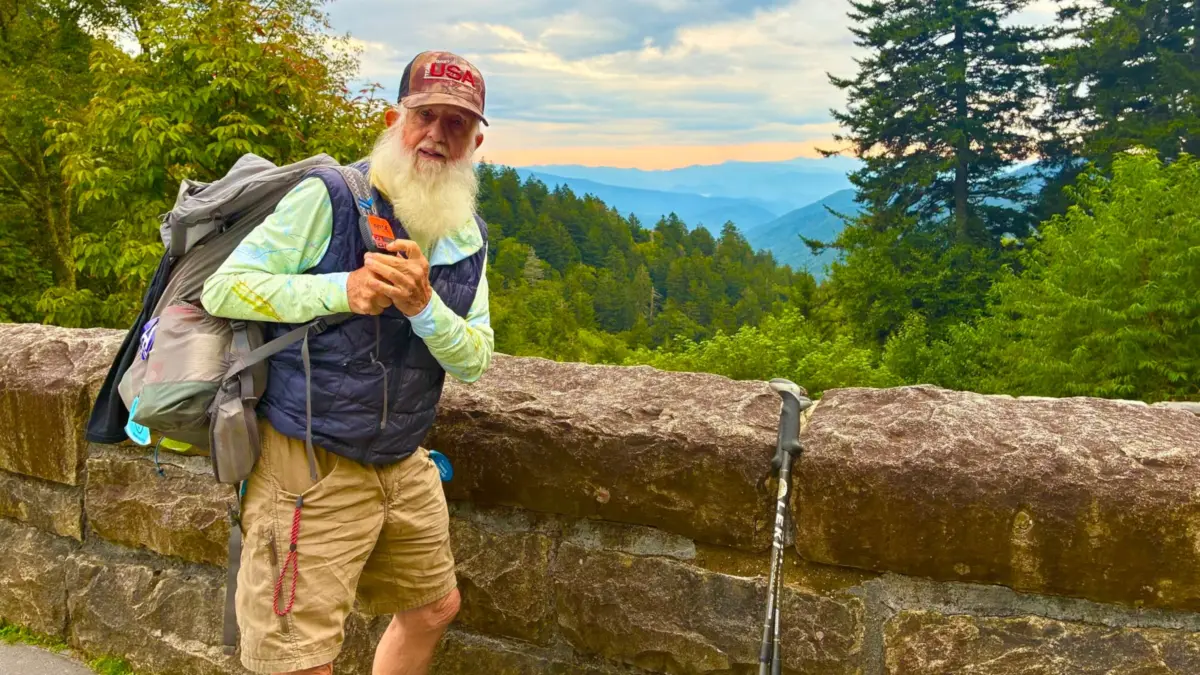
With just two-tenths of a mile remaining before the summit of Mount Katahdin, 91-year-old Dale “Grey Beard” Sanders suffered a hard fall. It was the 71st time he had hit the ground during a grueling, 12-month odyssey across the unforgiving terrain of the Appalachian Trail (AT).
Despite the bruises, the exhaustion, and the immense physical toll of navigating Maine’s treacherous Hunt Trail, Sanders reached the northern terminus with a mere five days to spare before his self-imposed, 12-month calendar deadline. In doing so, he cemented his legacy as the oldest person in history to successfully thru-hike the legendary 2,200-mile trail.
To claim an official age-group record for a thru-hike, regulations require adventurers to cover the entire length of the trail within a consecutive 12-month period, stepping past every single white blaze—or, as Sanders laughingly noted of his final ascent, crawling past them. Neither the Appalachian Trail Conservancy (ATC) nor Guinness World Records currently distinguishes between supported, self-supported, and unsupported age records on the route, but Sanders stands alone as the only nonagenarian known to have completed the journey.
Prior to Sanders reclaiming the title, the record was held by M.J. “Nimblewill” Nomad Eberhart, who completed the thru-hike at age 83 in 2021. Ironically, Eberhart had originally taken the crown from Sanders, who first set the record in 2017 at the age of 82.
Chronology of a 12-Month Odyssey
The journey to the top of Mount Katahdin was far from a straightforward march. Unlike younger thru-hikers who typically blaze through the route in four to six months, Sanders took nearly the entire 365-day calendar year, actively hiking for 200 of those days.
Ahead of his launch, Sanders dedicated six months to rigorous physical conditioning. However, the realities of the trail quickly humbled him. Compared to his blistering 2017 trek—where multi-mile days exceeding 20 miles were common—Sanders had to scale back his ambitions significantly, averaging roughly 11 miles per day.
The Mid-Trail Crisis in Maine
The trek nearly ended prematurely deep in the Maine wilderness. Just 142 miles short of the northern terminus, Sanders suffered a severe fall that resulted in a hospital visit. Medical professionals ran a battery of diagnostic tests to check for internal bleeding and investigate persistent numbness in his left arm.
Attending physicians strongly advised Sanders to hang up his trekking poles, return home to Tennessee, and consult with his primary care physician and a neurologist.
"I didn’t want to go home because it was so close to the end," Sanders recalled.
Fate intervened when he received news of his mother-in-law’s passing. The tragic event forced him off the trail and back home to attend the funeral.
Medical Clearance and the Final Push
While grieving and managing family affairs, Sanders took advantage of the downtime to schedule crucial medical evaluations. A thorough examination by his neurologist revealed that he had indeed experienced bleeding in the brain, but it was classified as old and inactive. Meanwhile, the persistent numbness in his arm was diagnosed simply as a pinched nerve.
With formal medical clearance from both his neurologist and primary care physician, Sanders made a defiant choice: he was heading back to Maine.
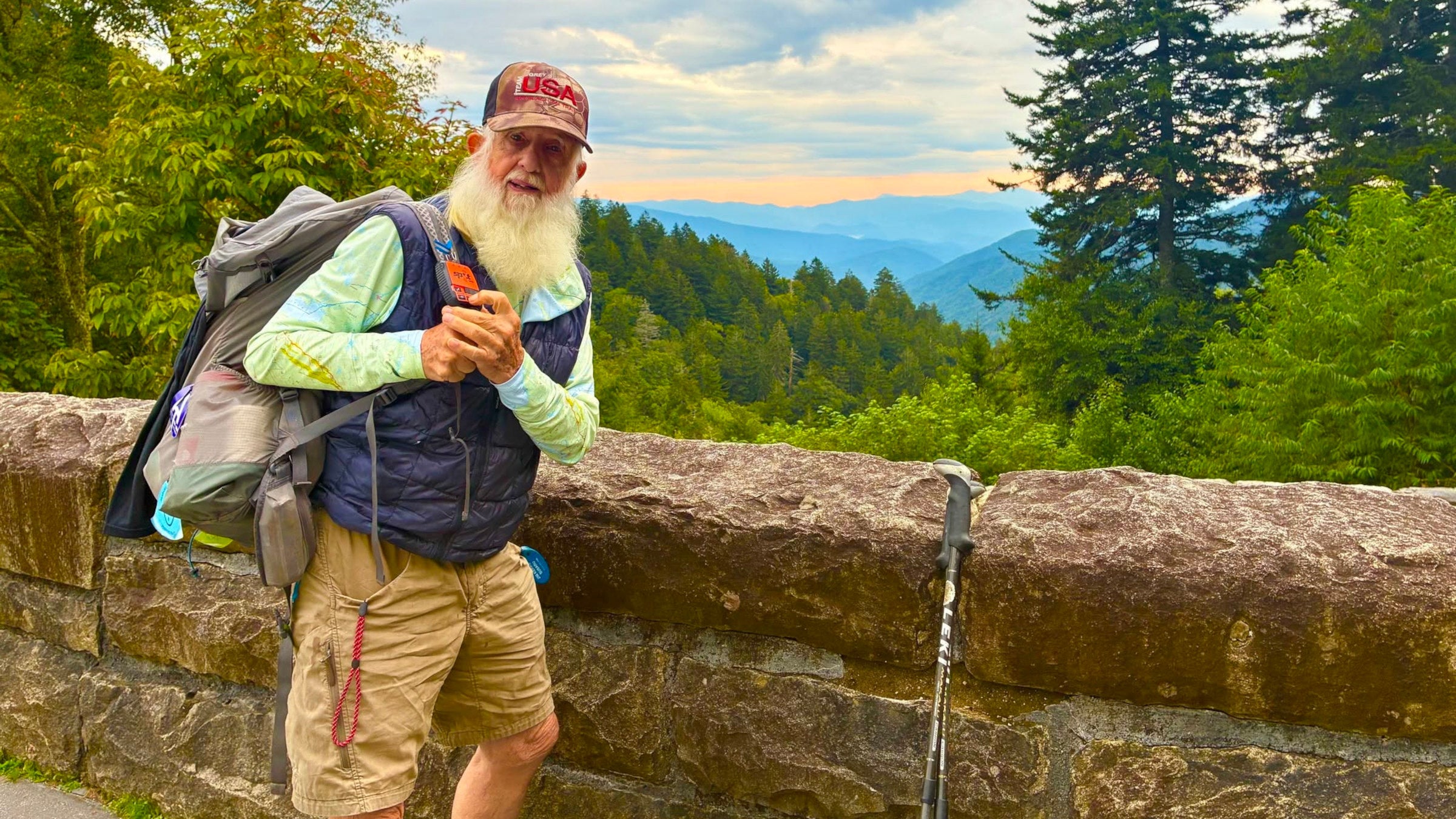
Given the narrow window of time remaining in his 12-month cycle, Sanders knew that completing a continuous thru-hike was mathematically unlikely. He prepared himself to accept a section-hiking record instead. Yet, fueled by sheer grit and a touch of serendipity, he returned to the trail, battled his way up Mount Katahdin, and crossed the finish line with five days to spare.
Supporting Data and Physical Toll
The statistics behind Sanders’ 2026 thru-hike paint a vivid picture of the sheer physical vulnerability—and resilience—required to push the human body into nonagenarian extremes.
- Total Falls: 71 documented falls across the 12-month journey.
- Minor vs. Severe: The vast majority were "soft falls," where Sanders quickly dusted himself off and pressed onward. However, seven falls were severe enough to leave him disoriented, laying on the earth, groaning in pain.
- Daily Mileage: Averaged approximately 11 miles per day, down sharply from his 20-mile-plus days during his 2017 record-breaking run at age 82.
- Active Hiking Days: Spent 200 days actively on the trail within the 365-day window.
- Distance to Spare: Reached the summit of Mount Katahdin with only 5 days remaining before his 12-month deadline expired.
Reflecting on his physical transformation over the years, Sanders offered a blunt assessment of the aging process. "When you get older, it seems that our body starts to deteriorate, and we simply do not physically have the abilities that we had when we were under 40," he remarked. "The older you get past say 50 or 60, it starts going down."
Sanders admitted that his balance was noticeably worse compared to his 2017 expedition. Every steep incline presented a psychological hurdle, forcing him to confront a rapidly shrinking ceiling of physical capabilities. Two days after his final fall on Katahdin, he noted that while his legs were covered in contusions and felt intensely sore, miraculously, no bones were broken.
Official Responses and Perspectives
While organizations like the Appalachian Trail Conservancy and Guinness World Records monitor the logistics of trail milestones, the true resonance of Sanders’ achievement is felt most profoundly within the global outdoor community and among everyday hikers seeking motivation.
When asked why he chose to put his body through such punishing trials—enduring hospitalizations, brain bleeds, and dozens of debilitating falls—Sanders revealed a motivation that transcended personal glory.
"I hold several age records in several different venues, most of them hiking and paddling, and in each and every one of those, it seems that I’ve given people hope," Sanders explained. "It’s when people have hope that they have inspiration. Hope is really important."
Fellow hikers, outdoor enthusiasts, and medical professionals alike have marveled at his tenacity. While doctors initially urged caution, Sanders’ ability to listen to medical advice, seek proper diagnosis, and safely return to the trail demonstrated a calculated approach to extreme risk management. He did not succeed through reckless abandon, but through disciplined recovery, an unyielding mental framework, and an refusal to let age dictate the boundaries of his dreams.
Implications for Aging, Longevity, and Outdoor Culture
Dale Sanders’ historic journey at age 91 carries profound cultural and psychological implications, challenging societal norms regarding aging, physical decline, and retirement.
Redefining Nonagenarian Limits
Modern society often characterizes the 90s as a decade defined strictly by physical decline, institutional care, or sedentary living. By enduring 71 falls, navigating rugged mountain passes, and conquering 2,200 miles of wilderness, Sanders shatters conventional expectations of what is biologically possible for a nonagenarian. His journey forces gerontologists, fitness experts, and everyday citizens to re-evaluate the potential ceiling of human healthspan when paired with lifelong physical conditioning and ironclad mental resilience.
The Psychology of Inspiration
Sanders’ explicit mission—to provide hope and inspiration to others—highlights the psychological ripple effect of outlier achievements. In an era marked by rising rates of anxiety, depression, and age-related isolation, stories of elder resilience serve as a powerful counter-narrative. They remind younger generations that vitality is a practice, and that psychological determination can often bridge the gap when physical capacities inevitably wane.
Shifting Perspectives on Risk in the Outdoors
The outdoor community continually wrestles with questions of safety, particularly concerning older adventurers. Sanders’ journey underscores the critical importance of a supportive medical network, honest self-assessment, and the willingness to pause—as he did following his mother-in-law’s passing and his hospitalization in Maine—to heal body and mind. His ultimate success proves that safety and extreme adventure are not mutually exclusive, provided the adventurer respects the mountains and listens closely to their body.
Ultimately, "Grey Beard" has left an indelible mark on the Appalachian Trail. More than just a record in a ledger, Sanders’ 2026 thru-hike stands as a monumental testament to the enduring power of the human spirit—proving that as long as there are white blazes to follow, it is never too late to chase the horizon.
