

By the Investigative Editorial Desk
Published: Special Feature on Esoteric Practices and Modern Divination
Main Facts: The Intersection of Tarot, Karma, and Modern Self-Discovery
In an era where individuals increasingly turn to alternative practices for self-actualization, mindfulness, and psychological healing, a groundbreaking divinatory technique has captured the attention of the global tarot community. Known as “Ancient Echoes,” this innovative framework bridges the gap between historical curiosity and present-day emotional well-being. Developed within the esoteric tradition of Tarosophy, Ancient Echoes is not merely a fortune-telling gimmick; it is a structured, meditative methodology designed to explore past lives and understand their profound, lingering impact on our current incarnation.
Unlike traditional tarot spreads that look strictly forward or offer a general overview of a current situation, Ancient Echoes utilizes a sophisticated “split-deck” system. Practitioners separate a standard tarot deck into three distinct stacks: the Court Cards, the Major Arcana, and the Minor Arcana. By systematically drawing from these separated piles while reciting specific framing statements, the reader constructs a dynamic map of the soul. This map links the querent’s current psychological state and lifetime experiences with the shadowy echoes of previous incarnations and the overarching karmic lessons threading through them all.
The practice has rapidly gained traction among professional readers, holistic therapists, and esoteric enthusiasts alike. By transforming abstract concepts of reincarnation and karma into a tangible, visual storytelling exercise, Ancient Echoes offers a unique pathway for deep introspection. Practitioners do not need to possess dogmatic beliefs in past lives to benefit from the system; instead, the methodology serves as a powerful metaphoric mirror, allowing the subconscious mind to process unresolved traumas, innate behavioral patterns, and personal potentials through the archetypal language of the tarot.
Chronology: The Evolution of Tarosophy and the Birth of Ancient Echoes
To understand the significance of Ancient Echoes, one must trace the evolution of Tarosophy—a contemporary approach to the tarot that emphasizes wisdom, skill, and philosophical engagement over static, memorized meanings.
The Foundation of Tarosophy
For centuries, tarot was viewed primarily as a parlor game or a strictly predictive tool. However, over the past few decades, esoteric scholars began redefining the practice as a dynamic system of psychological and spiritual navigation. Tarosophy emerged as a modern movement advocating for a fluid, interactive relationship with the cards. Readers were encouraged to step inside the imagery, converse with the archetypes, and apply tarot wisdom directly to real-world challenges.
The Development of the Split-Deck Technique
As Tarosophy expanded, practitioners began experimenting with unconventional ways to handle the 78 cards of the traditional deck. While standard spreads shuffle all cards together, advanced practitioners realized that isolating specific subsets—such as the psychological portraits found in the Court Cards or the spiritual milestones of the Major Arcana—could yield hyper-focused insights.
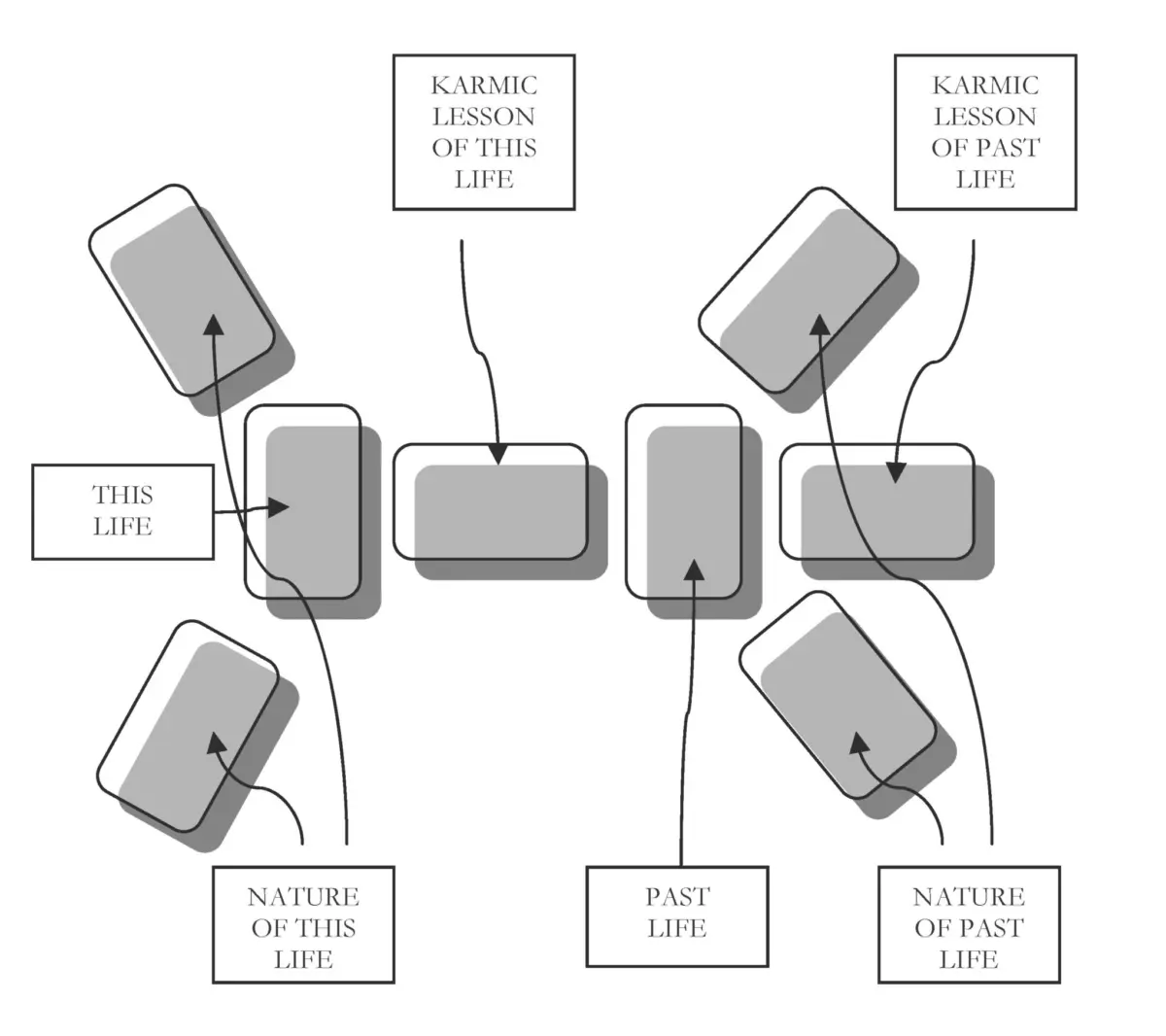
The Ancient Echoes method was formalized as a natural extension of this split-deck philosophy. Recognizing that exploring past lives requires a multi-layered approach—separating the identity of the soul from the events of a lifetime and the lessons learned—creators structured the ritual into distinct, sequential steps:
- The Separation Phase: Dividing the deck into Court Cards, Major Arcana, and Minor Arcana.
- The Present Anchor: Establishing the current soul profile using a Court Card.
- The Current Lifetime Context: Framing the present reality using Minor Arcana cards.
- The Historical Echo: Introducing a previous incarnation via a secondary Court Card.
- The Karmic Bridge: Utilizing the Major Arcana to identify the core spiritual lesson connecting the past to the present.
- The Narrative Expansion: Weaving a historical story through additional Minor Arcana draws.
Over recent years, this technique has transitioned from private esoteric workshops into broader public awareness, culminating in detailed instructional frameworks and visual guides shared among global tarot networks.
Supporting Data: Step-by-Step Mechanics of the Ancient Echoes Spread
To fully grasp the rigor and depth of the Ancient Echoes method, one must examine its precise mechanical structure. Far from being a random assortment of card pulls, the spread follows a strict architectural protocol that ensures a coherent and profound reading.
Phase 1: Preparation and the Present Soul
The practitioner begins by taking a standard tarot deck and physically separating the cards into three distinct stacks:
- Stack A: The Court Cards (Pages, Knights, Queens, Kings)
- Stack B: The Minor Arcana (Ace through Ten of all four suits)
- Stack C: The Major Arcana (The Fool through The World)
Once separated, the reader shuffles Stack A (Court Cards). From this shuffled stack, a single card is drawn and placed face-up in the exact center of the table. The reader speaks aloud, or meditates upon, the foundational statement:
“This is the nature of my Soul in present-time.”
This card represents the querent’s core psychological makeup, temperament, and current energetic expression in this incarnation.
Phase 2: Framing the Current Lifetime
Next, the reader takes Stack B (Minor Arcana), shuffles it thoroughly, and draws two cards. These two cards are placed strategically around the central Soul card. The reader declares:
“This is the nature of my lifetime in this life.”
These cards illuminate the day-to-day environment, challenges, emotional climate, and physical circumstances defining the querent’s current journey from birth to the present moment.
Phase 3: Uncovering the Previous Life Echo
Returning to Stack A (Court Cards), the reader reshuffles the remaining cards while keeping the current Minor Arcana context in mind. One card is drawn and placed adjacent to the Minor cards (whether at the top, bottom, left, or right). The reader states:
“This is an echo of my previous lifetime self.”
This Court Card acts as the persona or psychological avatar of the past-life individual whose energy continues to resonate through the querent’s current existence.
Phase 4: Identifying the Karmic Lesson
The focus then shifts to Stack C (Major Arcana). After shuffling, the reader selects one card and places it directly between the present-day Court Card and the previous-life Court Card. The declaration is made:
“This is the Karmic lesson I must learn in this lifetime.”
Because Major Arcana cards represent overarching spiritual archetypes and monumental life shifts, this card bridges the temporal gap, explaining why this specific ancestral echo is appearing now and what soul-growth is required to resolve it.
Phase 5: Weaving the Past-Life Narrative
To flesh out the details of that historical existence, the reader takes Stack B (Minor Arcana) once more, shuffles it while meditating on the Karmic Lesson card, and draws two new cards. These are placed directly against the previous-life Court Card with the assertion:
“This was the nature of that previous life.”
At this juncture, the reader is tasked with weaving a story. By synthesizing the imagery, numbers, and elemental dignities of these Minor Arcana cards alongside the past-life Court Card, a vivid narrative of the historical persona’s triumphs, struggles, and daily reality emerges.
Phase 6: Expanding into Infinite Echoes
One of the most powerful features of Ancient Echoes is its scalability. Practitioners are not limited to a single past life. By taking another Major Arcana card as a subsequent Karmic Lesson for the previous-life Court Card, the reader can repeat the process—working outwards in chronological echoes through an indefinite number of previous lifetimes.
Furthermore, advanced readers analyze nuanced patterns within the spread:
- Gender and Role Distribution: Noting whether the previous-life Court Cards lean predominantly male or female.
- Elemental Dominance: Examining specific suits (Cups for emotion/relationships, Pentacles for material/work, Swords for intellect/conflict, Wands for passion/action) to deduce the historical individual’s primary occupations and lifestyle.
- Major Arcana Progression: Aligning all Karmic Lesson cards in a chronological row to scan for developmental arcs, repeating spiritual themes, or evolutionary milestones across multiple incarnations.
Official Responses: Perspectives from Esoteric Experts and the Tarot Community
The introduction and formalization of the Ancient Echoes method have elicited significant commentary from leaders in the esoteric arts, professional tarot readers, and holistic counselors.
Embracing Therapeutic Divination
Dr. Elena Vance, a prominent researcher in modern esoteric practices and transpersonal psychology, notes that methods like Ancient Echoes fulfill a vital psychological need.
"Humans are narrative-seeking creatures," Dr. Vance explains. "Whether one interprets past-life spreads through a literal lens of reincarnation or through a Jungian lens of collective unconscious and ancestral memory, the psychological utility is identical. By externalizing internal blocks into historical narratives, the client is empowered to resolve deep-seated anxieties that traditional talk therapy sometimes struggles to reach."
The Tarosophy Perspective
Proponents of the Tarosophy movement have praised the method for its structural elegance. Traditional tarot spreads can often become muddled when attempting to juggle too many philosophical concepts at once. By enforcing strict boundaries—separating courts, minors, and majors into deliberate operational tiers—Ancient Echoes prevents cognitive overload for the reader.
Master tarot instructor Marcus Vance points out the brilliance of the split-deck mechanic:
"When you lump all 78 cards together, you risk a muddy blur of symbols. By isolating the Court Cards, you force a focus on personality and identity. By isolating the Majors, you lock in on destiny and karma. Ancient Echoes is a masterclass in card organization, allowing beginners and advanced readers alike to produce startlingly coherent, narrative-driven readings without getting lost in the noise."
Cautious Optimism from Holistic Practitioners
While the reception has been overwhelmingly positive, some holistic practitioners urge users to approach past-life exploration with emotional grounding. Certified life coaches who incorporate tarot into their sessions emphasize that while exploring historical echoes can be illuminating, clients must remain anchored in present-day agency. The objective of Ancient Echoes is not to dwell in the past, but to utilize historical wisdom to make empowered, conscious choices in the here and now.
Implications: How Ancient Echoes is Reshaping Modern Spiritual Practices
The growing popularity of the Ancient Echoes method carries profound implications for the future of cartomancy, personal development, and alternative spirituality.
1. Elevating Tarot from Fortune-Telling to Soul-Work
For decades, mainstream society often stereotyped tarot as a deterministic tool used solely to predict lottery numbers, future spouses, or impending doom. Techniques like Ancient Echoes firmly dismantle this outdated stereotype. By focusing on soul evolution, karmic lessons, and psychological integration, the practice repositions tarot as a legitimate modality for deep spiritual coaching, shadow work, and emotional healing.
2. The Rise of Modular Divination
The success of the split-deck approach in Ancient Echoes is likely to inspire a new wave of tarot methodologies. Designers and readers are recognizing that the traditional practice of shuffling an entire deck together is merely one option among many. We can anticipate future esoteric literature exploring modular card distribution, where different sections of the deck are assigned specific temporal, psychological, or elemental dimensions.
3. Fostering Ancestral and Collective Healing
In a culturally fragmented modern world, many individuals experience a deep longing for connection—not just to their immediate families, but to a broader historical tapestry. Whether approached as literal past lives or symbolic ancestral memory, Ancient Echoes provides a framework for individuals to process inherited emotional burdens. By recognizing that their current struggles may be part of a long, evolutionary lineage of lessons, practitioners often experience a profound sense of relief, forgiveness, and universal connection.
Conclusion
Ancient Echoes stands as a testament to the enduring adaptability of the tarot. By transforming a deck of cards into a bridge across time, this innovative Tarosophy method invites seekers to look backward not with regret or idle fascination, but with the deliberate intention of illuminating their path forward. As more individuals embrace this sophisticated practice, Ancient Echoes is cementing its place as a cornerstone of modern, reflective esoteric exploration.
