

By Outdoor Journalism Bureau
Updated August 27, 2026
Main Facts
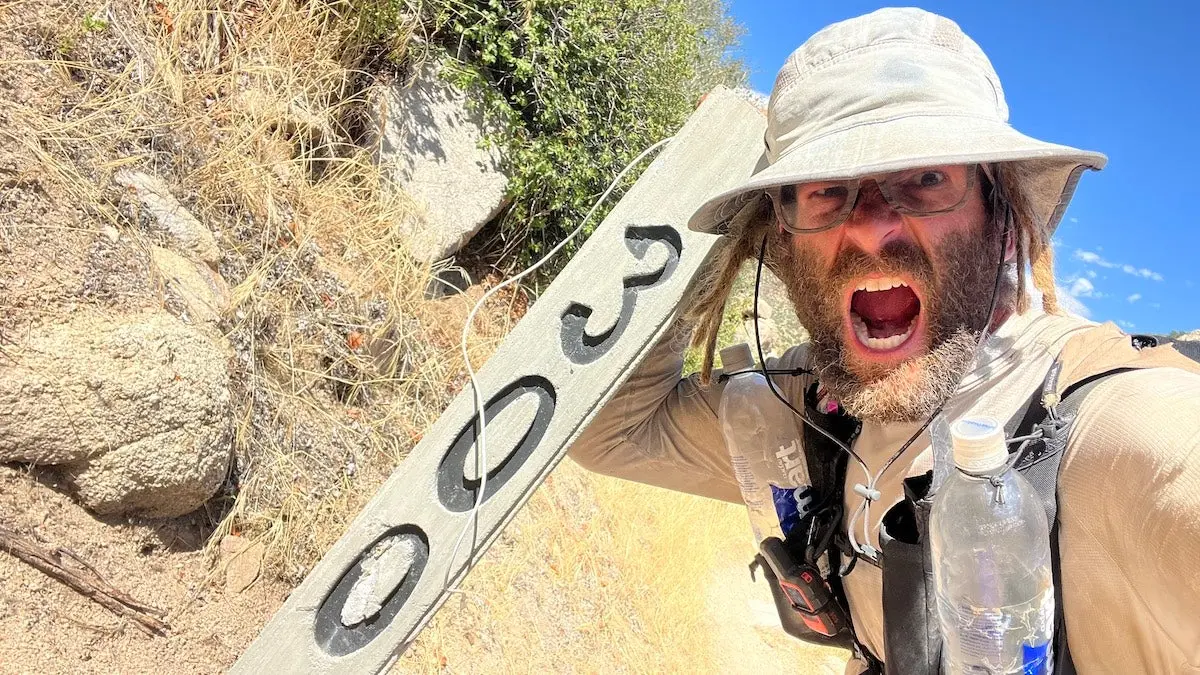
In a monumental achievement that has sent shockwaves through the endurance community, ultrarunner and long-distance speed hiker Nick Fowler has etched his name into the history books. On a Saturday afternoon, the Oklahoma native reached the southern terminus of the Pacific Crest Trail (PCT), completing the grueling 2,650-mile journey from the Canadian border in a scarcely believable 45 days, 17 hours, and 47 minutes.
What makes Fowler’s accomplishment otherworldly is not merely the speed—which averaged out to an astonishing 57 miles per day—but the style in which it was achieved. Fowler completed the trek self-supported. Carrying all of his essential gear, shelter, and provisions on his back from the start, he utilized only public resources available to every standard thru-hiker along the way, operating entirely without a dedicated support crew.
Despite traveling without a motorized support vehicle, a dedicated pacer, or hand-delivered resupplies, Fowler managed to shatter the overall Fastest Known Time (FKT) for the PCT. In doing so, he eclipsed the previous overall record set earlier this summer by French ultrarunner Aurélien Sanchez, who completed a northbound (NOBO) supported trek in 45 days, 20 hours, and 11 minutes—a run backed by a crew that handled logistics, food drops, and gear transport.
Fowler’s victory also marks a staggering personal redemption. He crushed his own previous southbound (SOBO) self-supported FKT of 52 days, 9 hours, and 18 minutes, which he had set just three years prior in 2023. By carving nearly a full week off his previous personal best, Fowler has redefined the boundaries of human endurance on one of North America’s most punishing long-distance routes.
Chronology of an Epic Journey
To understand the magnitude of Fowler’s record-breaking run, one must look at the timeline of perseverance, adaptation, and intense physical suffering that led him to the southern terminus.
The 2023 Breakthrough
In 2023, Fowler first put the endurance world on notice when he tackled the PCT in a southbound direction. Traveling solo and carrying his own pack, he finished the 2,650-mile gauntlet in 52 days, 9 hours, and 18 minutes. While the time was good enough to secure the self-supported SOBO record at the time, Fowler left the trail knowing he had more to give. In public reflections after that finish, he admitted his ultimate dream was to break the elusive 50-day barrier for a self-supported traverse.
The 2025 Heartbreak
Hungry to push his limits further, Fowler returned to the trail with a vastly different strategy. Last summer, he mounted an ambitious bid for the northbound supported FKT. He assembled a dream-team crew of five elite long-distance trail record-holders—including well-known thru-hiker and Appalachian Trail unsupported FKT holder Jeff Garmire—to assist him in breaking the 50-day threshold via a supported push.
However, the mountains have a way of humbling even the best-laid plans. After blazing through the first 832 miles, Fowler was struck by a severe illness that forced him off the trail. His campaign ended in abrupt heartbreak.
Rather than letting the failure deter him, Fowler used the setback as fuel. Reflecting on the aborted attempt in an emotional Instagram post, he wrote: "If I’m non-elite and we can do things like this, it means anyone can… One of the things I learned out here is that it’s ok to fail."
The 2026 Triumph
Buoyed by lessons learned from both his 2023 success and his 2025 health struggles, Fowler returned to the Canadian border in the summer of 2026. This time, he stripped away the support crew entirely, opting to return to his roots: a solo, self-supported southbound journey.
Battling through unpredictable weather, geographic isolation, physical decay, and mental fatigue, Fowler pushed his body to unprecedented limits. He averaged an unbelievable 18 hours of continuous movement per day. Step by step, mile by mile, he chipped away at the miles until he crossed the finish line at the Mexican border, securing not just a personal victory, but a historic milestone for the entire ultrarunning discipline.
Supporting Data and Tactical Breakdown
Fowler’s record-breaking endeavor was as much a triumph of logistics and sports science as it was of sheer willpower. Traveling self-supported across 2,650 miles of shifting terrain requires meticulous calculation of weight, nutrition, and gear durability.
- Daily Distance: Fowler averaged roughly 57 miles per day for over a month and a half.
- Daily Caloric Intake: To fuel continuous movement for 18 hours a day, Fowler’s caloric requirements skyrocketed to an astonishing 12,000 calories per day.
- Nutritional Strategy: Eschewing traditional backpacking meals for much of his heavy-duty energy needs, Fowler relied heavily on dense, accessible supermarket calories, famously consuming high quantities of sugary beverages like bottled Starbucks Frappuccinos to keep his glucose levels stable on the move.
- Gear and Equipment: Drawing from lessons in 2023, Fowler meticulously customized his gear list to shave off every possible ounce. Despite his minimalism, the relentless terrain exacted a heavy toll on equipment. Fowler chewed through 15 pairs of running shoes over the course of the 46-day trek, highlighting the brutal impact of high-mileage days on the body.
- Track Record: Fowler is no stranger to the FKT community. His athletic resume includes prominent fastest known times on other legendary routes, including the Arizona Trail, the Oregon Coast Trail, and the Ozark Trail.
Official Responses and Expert Perspectives
The ultrarunning and thru-hiking communities have responded to Fowler’s achievement with a mixture of awe and profound respect. The sheer difficulty of orchestrating an unsupported FKT on a trail as dynamic as the PCT cannot be overstated.
Jeff Garmire, a prominent Backpacker contributor and the current record holder for the unsupported Appalachian Trail FKT, had a front-row seat to Fowler’s evolution, having served on his support team during last year’s aborted northbound attempt.
Speaking to Backpacker, Garmire expressed deep admiration for his friend and peer:
"I know that he always thought he could have gone much faster, and it’s an amazing feat to be able to go back and take a week off his own time," Garmire wrote. "Between fires, closures, and the massive amount of miles each day, it is such a tough trail to set an FKT on, and especially to get the overall in a self-supported style."
Following his triumphant finish, Fowler spoke with the San Francisco Chronicle, detailing the intense physical toll of his 18-hour daily marching routine. While he admitted to feeling profoundly exhausted upon reaching the southern terminus, medical checks confirmed that he finished the trail in a state of resilient, albeit battered, health.
Implications for the Future of Long-Trail FKTs
Nick Fowler’s record-breaking run marks a paradigm shift in how the endurance community views the intersection of speed, style, and human potential.
For years, the conventional wisdom in modern FKT attempts heavily favored supported styles. The logic was sound: offloading the burden of logistics, food procurement, and gear management to a dedicated crew allows an athlete to rest more effectively and travel lighter, maximizing forward momentum. Aurélien Sanchez’s record earlier this summer was a testament to the power of a well-oiled support apparatus.
However, Fowler has upended this narrative. By crossing the finish line faster than any supported or unsupported hiker in history—while carrying his own house on his back—he has proven that elite-level human optimization can bridge the gap between solo self-reliance and elite athletic pacing.
Furthermore, Fowler’s journey carries profound psychological implications for everyday athletes. By transitioning from a devastating, illness-forced failure in 2025 to an absolute triumph in 2026, he has reinforced the narrative that setbacks are not terminal, but rather essential data points on the path to mastery. His philosophy—that ordinary people can achieve extraordinary things if they are willing to embrace failure and learn from it—will undoubtedly inspire a new generation of adventurers to test their limits on the world’s most demanding trails.
As the dust settles on the southern terminus of the Pacific Crest Trail, one reality remains clear: the benchmark for endurance hiking has been rewritten, and Nick Fowler has left an indelible mark on the history of modern outdoor exploration.
