

Published: August 25, 2026
Author: Backpacker Gear Desk
Main Facts
When a backpacker shops for a new pack, the purchasing decision almost always hinges on a single, seemingly straightforward metric: the number in the product’s name. Whether it reads 40, 50, or 60, consumers take this numerical designation as gospel, assuming it denotes the total volume in liters that the pack can safely haul into the backcountry. For decades, this metric has served as the universal shorthand for capacity, helping hikers gauge whether a particular model can swallow a multi-day kit, a weekend load, or a minimalist overnight setup.
However, recent empirical testing conducted by Backpacker magazine in collaboration with the Outside Lab at CU Denver reveals that this number tells only part of the story.
When the Backpacker editorial team put 18 traditional and ultralight backpacks from their summer gear guide through rigorous volume verification tests, they uncovered a surprising operational reality: claimed capacity does not equal main compartment capacity.
While manufacturers are generally accurate regarding the total cumulative volume of a pack—accounting for every external pocket, hip-belt pouch, floating lid, and side sleeve—the primary storage bag often holds significantly less than advertised. For instance, a traditional, fully featured backpack boasting a nominal 60-liter capacity may dedicate only 45 liters of space to its main internal compartment. The remaining 15 liters are distributed across a sprawling network of external storage options.
This technical nuance fundamentally changes how backpackers must evaluate gear. It shifts the conversation from simple arithmetic to an understanding of spatial architecture, load distribution, and personal hiking styles.
Chronology of the Testing Process
The insights behind this gear revelation stemmed from a systematic, data-driven investigation carried out earlier this year in Denver, Colorado. The chronology of how Backpacker dismantled common consumer assumptions highlights a rigorous shift toward scientific testing in outdoor journalism.
Phase One: Gear Selection and Arrival
Ahead of the summer season, Backpacker editors gathered 18 distinct backpacks, spanning the divide between traditional, heavy-duty, multi-pocket models and stripped-down, frameless ultralight sacks. These packs were shipped directly to the engineering facilities of the Outside Lab at the University of Colorado Denver, a premier testing environment known for blending academic rigor with real-world outdoor product evaluation.
Phase Two: The Lab Bench Protocol
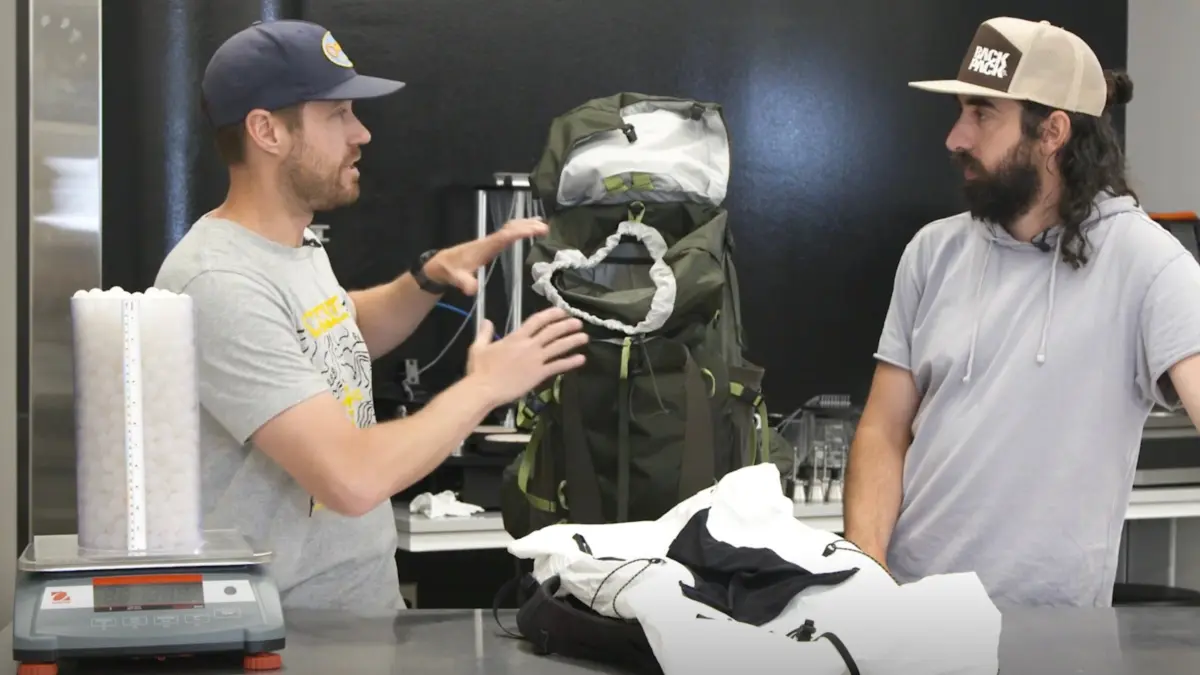
Led by Backpacker Editor-in-Chief Adam Roy and Lab Test Editor Adam Trenkamp, the team established a protocol designed to demystify manufacturer specifications. Rather than accepting listed capacities at face value, the lab set out to empirically measure:
- Whether the total stated volume matches reality.
- Exactly how that volume is partitioned between the main pack body and auxiliary storage spaces.
Working side-by-side in the lab, Roy and Trenkamp dissected the anatomy of traditional versus minimalist packs. Using standardized volumetric testing methods, they measured the internal dimensions of main compartments against external pockets, isolating where every single liter lived.
Phase Three: The Deconstruction Discussion
The culmination of the lab testing phase was captured in an on-site dialogue between Roy and Trenkamp. Addressing common reader myths head-on, Trenkamp demonstrated on camera how a nominal 60-liter traditional pack falls short in its main cavity, forcing a re-evaluation of how hikers pack their gear. The findings were subsequently compiled to reshape the publication’s summer gear guide, giving consumers a more nuanced lens through which to view equipment specifications.
Supporting Data and Comparative Analysis
To truly grasp the implications of the Outside Lab’s findings, one must examine the divergent architectural philosophies of modern backpacking packs. The 18 models tested by Backpacker fell into two distinct camps: fully featured traditional packs and ultralight minimalist packs.
The Traditional Pack Architecture: Fragmented Volume
Traditional backpacks are designed for maximum versatility, comfort under heavy loads, and extensive external organization. They typically feature:
- A primary internal compartment (the "main pack bag").
- A removable or floating top lid with multiple zippered pockets.
- Oversized stretch-woven front dump pockets.
- Specialized side pockets (often angled for easy water bottle access or configured for gear stashing).
- Zippered hip-belt pockets for snacks, navigation tools, or electronics.
The Data Reality: According to the Outside Lab’s measurements, these features drastically dilute the volume of the main compartment. On a standard 60-liter traditional pack, the main compartment often caps out at roughly 45 liters. The remaining 15 liters—25% of the pack’s total volume—are scattered across the lid, hip belts, and exterior pockets.
For a backpacker who assumes they have a 60-liter void to stuff a sleeping bag, tent, and bear canister into, this 15-liter deficit in the main compartment can cause immediate packing friction. Bulky items that exceed 45 liters in aggregate simply will not fit inside the primary bag, regardless of how much external storage remains.
The Ultralight Pack Architecture: Concentrated Volume
In stark contrast, ultralight packs—often favored through-hikers and fast-and-light minimalists—typically feature a radically simplified design ethos. Many are built around a single, cavernous main pocket, sometimes supplemented by a simple rear mesh pocket and minimal shoulder or hip storage.
The Data Reality: On an ultralight pack, nearly 100% of the listed capacity resides within the main compartment. If a minimalist pack is rated at 50 liters, a hiker can safely assume that the vast majority of those 50 liters are located inside the primary waterproof or weather-resistant roll-top bag. This makes calculating space, predicting gear fit, and packing an ultralight sack a straightforward, predictable endeavor.
| Feature / Metric | Traditional Backpacks (e.g., 60L Class) | Ultralight Backpacks (e.g., 50L Class) |
|---|---|---|
| Main Compartment Volume | ~75% of total listed capacity (e.g., 45L) | ~90% to 95% of total listed capacity |
| External/Accessory Volume | ~25% distributed across lids, belts, and side pockets | Minimal; restricted to a rear mesh pocket |
| Packing Predictability | Requires spatial planning for bulky interior items | Highly direct; bulk goes straight into the main bag |
| Accessibility | High; gear is sorted across multiple compartments | Low to moderate; relies on external mesh for quick grabs |
Official Insights and Expert Perspectives
The dialogue between Editor-in-Chief Adam Roy and Lab Test Editor Adam Trenkamp underscores the educational mission behind the Outside Lab testing. Rather than casting doubt on manufacturer honesty, the editors aimed to clarify how volume metrics translate to trail performance.
"Not to make capacity too complicated, but it is a little more complicated than that," Lab Test Editor Adam Trenkamp explained during their lab session. "On a fully featured pack like you find in most traditional backpacking bags, the main compartment doesn’t necessarily hold the entire capacity that’s listed for the bag."
Trenkamp emphasized that while the total volume metric provided by manufacturers is generally faithful—meaning the pack does hold 60 liters when every single pocket, nook, and cranny is stuffed to maximum capacity—the distribution catches consumers off guard.
"It’s important when you pick out a pack in knowing maybe how much you’re going to take with you," Trenkamp advised. He recommends that hikers take their gear inventory, add a buffer for bulky items, and carefully analyze how a pack’s fabric stretches and expands. "Does that item actually fit inside [the main compartment]? Versus something like an ultralight pack that’s one main pocket, where you know the total volume is inside that main pocket, so you can guess how much is actually going to fit in there pretty easily."
Adam Roy synthesized these technical findings into a clear philosophical takeaway for consumers, linking pack architecture directly to hiking styles.
"It seems to me like the difference between a pack where most of the capacity is in the main pack bag versus one with more pockets is just personal preference in how you hike," Roy noted. He pointed out that if a hiker’s philosophy centers on efficiency—packing up camp at dawn, hiking all day, and rarely accessing gear until evening camp—an ultralight, single-compartment sack is the ideal tool.
Conversely, hikers who prefer a more leisurely pace filled with frequent stops, sightseeing, and quick access to layers, cameras, or snacks benefit immensely from a fully featured pack. Even though the main bag is smaller, the external organization prevents the need to constantly unpack and repack the primary compartment.
"That lets you kind of put the things you want to get to more frequently in those other organized pockets," Trenkamp agreed. "That way you can get in and out, and it’s not going to really create an issue where you’re unpacking the bag or repacking the bag."
Implications for Backcountry Travelers
The revelations from the Outside Lab carry significant practical implications for anyone looking to purchase a backpack, whether upgrading an aging rig or transitioning to an ultralight setup.
1. Re-evaluating Gear Volume Requirements
Backpackers can no longer rely on a simple one-size-fits-all mental calculation. A hiker transitioning from an ultralight 50-liter pack to a traditional 50-liter pack may find themselves struggling to fit their sleeping bag and shelter inside, simply because the traditional pack’s main body might only offer 35 to 40 liters of internal storage. Consumers must look beyond the headline number and investigate how a pack divides its space.
2. Matching Pack Design to Trail Habits
The testing proves that gear selection should be an extension of a hiker’s behavioral habits on the trail:
- The Transit-Focused Hiker: If you dislike stopping and prefer to keep your gear buried securely inside a weatherproof internal compartment, prioritize packs with high main-compartment ratios—typically found in ultralight or minimalist designs.
- The Organized Generalist: If you carry specialized gear (water filters, first-aid kits, stoves, extra layers) that you prefer to access instantly without dismantling your pack, a fully featured traditional pack with floating lids, deep belt pockets, and complex side organization is worth the smaller main compartment penalty.
3. The Future of Gear Transparency
As independent testing facilities like the Outside Lab at CU Denver continue to collaborate with media outlets like Backpacker, consumer expectations are shifting. Hiker advocacy and data-driven gear reviews are pushing manufacturers toward greater transparency in how capacities are marketed.
Ultimately, understanding the anatomy of a backpack’s volume ensures that when hikers hit the trail this season, their gear will not only fit on paper—it will perform seamlessly in the wild.
