

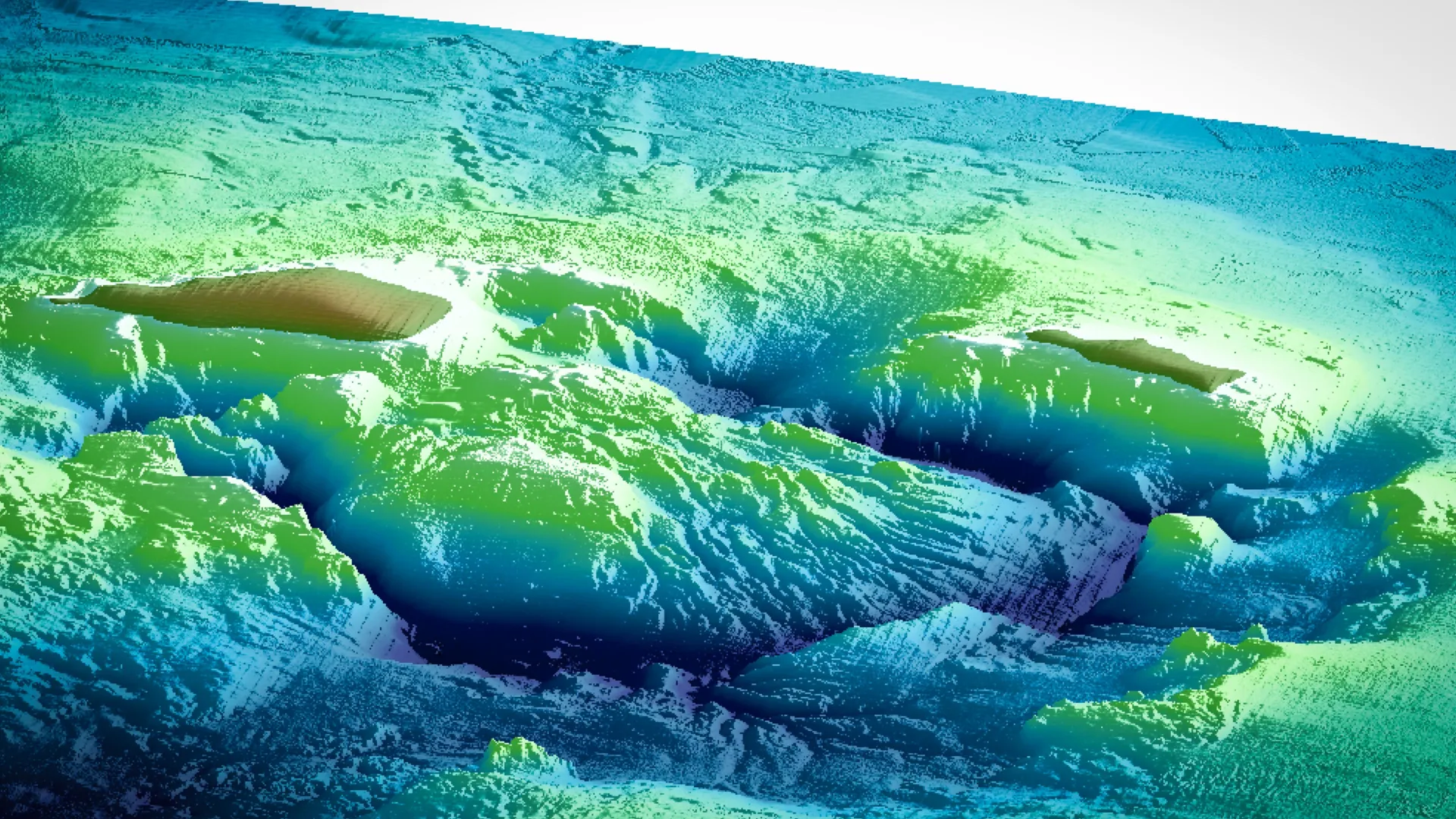
TOKYO — Deep beneath the cobalt-blue waters south of Japan lies a slumbering giant, its vast subterranean plumbing system quietly stirring back to life. A groundbreaking scientific study has revealed that a massive reservoir of magma beneath the Kikai caldera is actively refilling, offering researchers a rare, unprecedented look at how the Earth’s most catastrophic volcanoes recover and regenerate in the aftermath of planetary-scale eruptions.
The discovery, spearheaded by a dedicated team of geophysicists at Kobe University in collaboration with the Japan Agency for Marine-Earth Science and Technology (JAMSTEC), sheds vital new light on the mysterious life cycles of supervolcanoes. While the findings confirm that Kikai remains active, experts emphasize that an imminent eruption is not anticipated. However, the study provides a critical piece of the puzzle regarding how colossal volcanic systems—including famous counterparts like Yellowstone in the United States and Toba in Indonesia—store and accumulate the immense volumes of molten rock required to trigger global-scale disasters.
Main Facts: Unlocking the Secrets of the Kikai Caldera
The primary revelation of the study, recently published in the prestigious journal Communications Earth & Environment, is the direct detection and mapping of a substantial, active magma-rich zone beneath the seafloor of the Kikai caldera.
Kikai is a predominantly submerged volcanic caldera system located in the Satsunan islands, roughly 50 kilometers south of Kyushu, Japan. Approximately 7,300 years ago, the volcano was the site of the Akahoya eruption—the largest known Holocene volcanic event in geological history. During this cataclysm, an unimaginable volume of magma was violently ejected into the atmosphere, causing the overlying crust to fracture and collapse inward, creating a massive marine depression roughly 20 kilometers across rather than a traditional cone-shaped mountain.
To put the scale of such an event into perspective, geoscientists often rely on terrestrial analogies: the sheer volume of magma involved in Kikai’s ancient eruption would be enough to blanket New York City’s Central Park in molten rock to a staggering depth of 12 kilometers (nearly 7.5 miles).
When cataclysms of this magnitude occur, they fundamentally alter the geological architecture of a region. For decades, scientists have grappled with a fundamental paradox: while geological evidence proves that giant caldera systems are capable of repeating their apocalyptic performances, the precise underground mechanisms that allow them to accumulate such vast quantities of magma over millennia have remained shrouded in mystery.
The Kobe University research team has broken through this barrier of uncertainty. By deploying advanced marine geophysical imaging techniques, the researchers confirmed that a newly supplied pool of magma is actively feeding the very same underground reservoir that spawned the prehistoric Akahoya catastrophe. This demonstrates that ancient supervolcanoes do not necessarily die out after a single monumental explosion; instead, their plumbing systems can persist for millennia, quietly transitioning from destructive evacuation to a slow, methodical process of subterranean reconstruction.
Chronology: From Ancient Catastrophe to Modern Discovery
To fully comprehend the significance of the Kikai findings, scientists must trace a timeline that spans more than 11,000 years of geological history, culminating in modern technological breakthroughs.
The Holocene Epoch and the Akahoya Eruption (c. 7,300 Years Ago)
The geological timeline of Kikai is dominated by the Holocene epoch, which began roughly 11,700 years ago at the close of the last ice age. For millennia, the region experienced various phases of volcanic behavior, which dramatically culminated in the Akahoya eruption around 5300 BCE. This cataclysmic blast ejected immense pyroclastic flows that devastated the southern Japanese archipelago and blanketed vast areas of East Asia in volcanic ash, leaving an indelible mark on the region’s prehistoric ecosystems and human populations. The structural collapse that followed formed the vast underwater caldera seen today.
The Post-Collapse Era and Lava Dome Formation (c. 3,900 Years Ago to Present)
Following the titanic explosion, the Kikai system did not remain entirely dormant. Approximately 3,900 years ago, volcanic activity resumed on a smaller scale near the center of the submerged caldera, leading to the formation of a growing lava dome known as Takeshima. Lava domes form when highly viscous, sticky magma slowly squeezes upward through a volcanic vent, piling up sluggishly rather than flowing away freely as fluid basaltic lava might. Chemical analysis of the rocks comprising this dome and other localized eruptions revealed a crucial detail: the materials differed significantly in chemical composition from the magma expelled during the ancient giant eruption, signaling the arrival of a fresh, distinct source of molten rock from deep within the Earth’s mantle.
The Modern Geophysical Investigation (Recent Years)
Recognizing the potential to study an active supervolcano system from a marine vantage point, researchers from Kobe University and JAMSTEC devised a comprehensive strategy to map the subterranean crust beneath Kikai. Utilizing specialized research vessels equipped with airgun arrays, the team generated controlled, low-frequency seismic pulses that penetrated the ocean floor. Concurrently, a network of ocean-bottom seismometers (OBS) was deployed across the seabed to capture how these acoustic waves traveled, refracted, and reflected through the varying rock layers of the Earth’s crust.
By analyzing the alterations in speed and direction of these seismic waves—which slow down or change path when encountering partially molten, magma-rich rock—the researchers successfully reconstructed a high-resolution, three-dimensional image of Kikai’s subterranean architecture. This meticulous chronological progression, moving from ancient disaster to cutting-edge acoustic mapping, culminated in the publication of the team’s transformative findings.
Supporting Data: Listening to Seismic Waves Beneath the Ocean
The success of the Kikai investigation hinged upon a unique methodological advantage: its underwater location. While studying a submarine volcano presents logistical hurdles, it provides an exceptional scientific benefit. Unlike terrestrial volcanoes, where access is often restricted by rugged terrain, dense vegetation, or infrastructure, a submerged caldera allows for unobstructed, systematic, and large-scale geophysical surveys across the entire structural expanse of the volcanic center.
The technical core of the study relied on controlled-source seismology. The research vessel deployed powerful airgun arrays that released compressed air pulses into the water column. These pulses traveled through the seabed, penetrating kilometers into the Earth’s upper crust. As the seismic waves propagated through different geological media—solid basalt, fractured rock, sedimentary layers, and pockets of molten magma—their velocity and trajectory were systematically altered.
Oceans-floor seismometers strategically stationed around the caldera recorded these subtle variations in real time. Because liquid and partially molten rock drastically impedes and slows down shear seismic waves while altering compressional wave velocities, the resulting dataset acted like a medical CAT scan for the volcano.
The resulting subsurface model revealed a pronounced, low-velocity anomaly directly beneath the active zone of the caldera. This anomaly corresponds to a voluminous, shallow magma reservoir. Furthermore, geochemical data gathered from historical lavas in the area supported the seismic data, proving that the reservoir is not a stagnant remnant of the ancient eruption. Instead, chemical markers confirm that fresh, volatile-rich magma has been continuously or episodically injected into the chamber over millennia, slowly inflating the reservoir and rebuilding the volcano’s internal pressure architecture.
Official Responses: Insights from the Lead Researchers
The implications of the study have resonated throughout the global volcanology community, prompting detailed reflections from the scientists who led the investigation.
Dr. Nobukazu Seama, a prominent geophysicist at Kobe University and lead investigator of the project, emphasized the fundamental scientific necessity of tracking magma accumulation. "We must understand how such large quantities of magma can accumulate to understand how giant caldera eruptions occur," Seama stated, underscoring the gap in current volcanological forecasting models.
Reflecting on the unique advantages provided by the marine environment, Seama noted, "The underwater location allows us to implement systematic, large-scale surveys," which would be virtually impossible across an equivalent land-based supervolcano system constrained by geographic boundaries.
Addressing the continuity of the magma supply between the prehistoric disaster and modern activity, Seama added: "Due to its extent and location, it is clear that this is in fact the same magma reservoir as inliberated during the previous eruption." However, he was quick to clarify the dynamic nature of this subterranean chamber, explaining the origin of the newer material: "This means that the magma that is now present in the magma reservoir under the lava dome is likely newly injected magma."
The research team also stressed that these findings fit into a broader, universal framework of supervolcano behavior. Commenting on the relationship between Kikai and other global giants, Seama observed, "This magma re-injection model is consistent with the existence of large shallow magma reservoirs beneath other giant calderas like Yellowstone and Toba."
Looking toward the future of volcanic hazard mitigation, Seama outlined the ultimate objective of his team’s ongoing work: "We want to refine the methods that have proved to be so useful in this study to more deeply understand the re-injection processes. Our ultimate goal is to become better able to monitor the crucial indicators of future giant eruptions."
Implications: A New Framework for Global Supervolcano Monitoring
The confirmation that Kikai’s magma reservoir is actively refilling carries profound implications not only for Japan, but for the global scientific community and disaster management agencies worldwide.
Rethinking Supervolcano Life Cycles
For many years, the conventional wisdom surrounding supervolcanoes viewed them as quiescent systems that spent immense periods in deep dormancy, followed by sudden, catastrophic awakening. The Kikai study reinforces an evolving paradigm: these systems are dynamic, long-lived, and continuously evolving. The steady re-injection of fresh magma into legacy reservoirs suggests that caldera systems can maintain a state of semi-permanent metabolic activity, steadily processing and storing new mantle-derived melts long after their most recent major collapse.
Global Parallels: Yellowstone and Toba
The validation of the magma re-injection model at Kikai provides a vital baseline for understanding other high-risk supervolcanoes across the globe, most notably the Yellowstone Caldera in the United States and the Toba Caldera in Sumatra, Indonesia. Both systems feature vast, shallow magma reservoirs that have long concerned geologists. By applying the seismic surveying techniques and analytical models perfected at Kikai, researchers hope to gain unprecedented visibility into the internal health of Yellowstone and Toba, tracking whether their respective magma chambers are similarly expanding, stabilizing, or experiencing active re-charge.
Enhancing Early Warning and Monitoring Systems
One of the most daunting challenges in modern geophysics is the difficulty of forecasting giant volcanic eruptions. Unlike smaller stratovolcanoes—such as Mount St. Helens or Mount Etna—which erupt frequently and display clear, well-documented precursory signs, supervolcanoes erupt on timescales spanning tens of thousands of years. Consequently, distinguishing between normal, background magmatic fluctuations and the critical escalation phases that precede a catastrophic event is exceptionally difficult.
By refining seismic imaging techniques and coupling them with geochemical monitoring, scientists are moving closer to identifying the specific physical and chemical thresholds that signal impending danger. While the Kikai discovery clearly indicates that the volcano is alive and receiving fresh magma, it simultaneously provides a baseline of normal, non-emergency activity. Knowing what a recovering, stable reservoir looks like acoustically and chemically is just as important as identifying signs of imminent unrest.
A Measured Reassurance
Disaster management and public safety authorities have received the study with a balanced perspective. Experts reiterate that the detection of a refilling magma reservoir does not signify an impending eruption. The geological processes occurring beneath Kikai operate on timescales of millennia, and the mere presence of molten rock at depth is a normal characteristic of an active volcanic arc.
Nevertheless, the research underscores the necessity of continuous, long-term monitoring. Japan, situated along the volatile Pacific Ring of Fire, remains one of the most seismically and volcanically active nations on Earth. Integrating marine-based seismic data into national volcanic hazard assessment programs ensures that scientists will have advanced notice of any significant behavioral shifts decades before they could ever manifest at the surface.
Ultimately, the Kikai caldera study transforms a submerged geological mystery into an illuminating window beneath the Earth’s crust. By listening to the echoes of seismic waves across the ocean floor, humanity has taken a significant step forward in understanding the deep-seated forces that shape our planet—turning the study of ancient cataclysms into a tool for safeguarding the future.
This research was funded by the Ministry of Education, Culture, Sports, Science and Technology (MEXT) under "The Third Earthquake and Volcano Hazards Observation and Research Program (Earthquake and Volcano Hazard Reduction Research)," and by the Japan Society for the Promotion of Science (Grant 20H00199). The investigations were conducted in close collaboration with researchers from the Japan Agency for Marine-Earth Science and Technology (JAMSTEC).
