

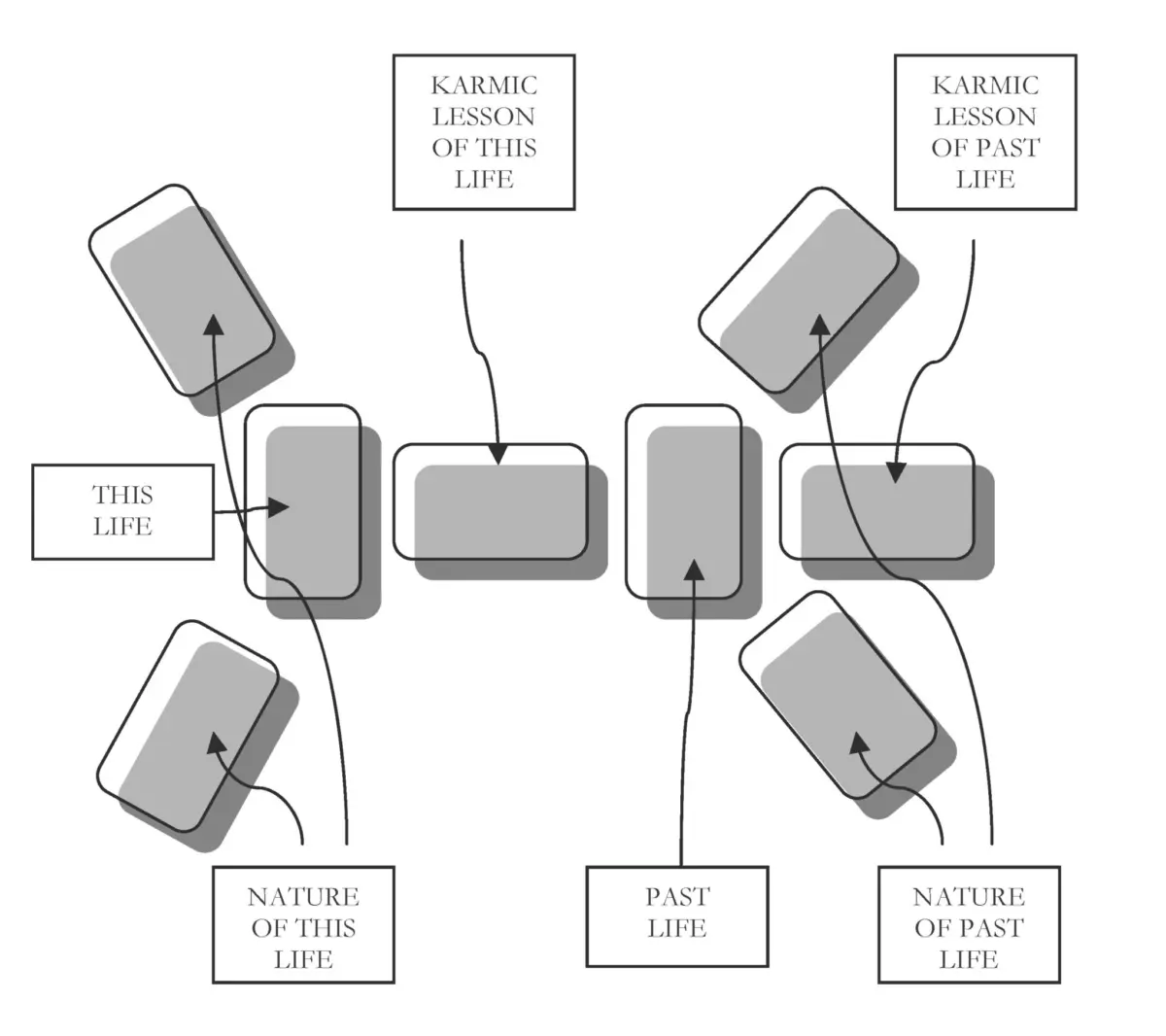
LONDON — In the ever-evolving landscape of esoteric practices and modern divination, a groundbreaking technique has emerged that promises to bridge the gap between historical consciousness and contemporary self-awareness. Known as Ancient Echoes, this innovative methodology utilizes a specialized Tarosophy "split-deck" approach to explore past lives and understand their profound, lingering impacts on the present day.
Developed as a structured framework for Tarot readers, esoteric historians, and spiritual seekers alike, Ancient Echoes transforms the traditional 78-card Tarot deck into a dynamic multi-dimensional mirror. By categorizing the deck into distinct functional stacks—the Court Cards, the Major Arcana, and the Minor Arcana—practitioners can meticulously map out the architecture of a soul’s journey across time. As interest in metaphysical self-discovery reaches unprecedented levels in the digital age, this method offers a grounded, narrative-driven approach to the elusive concept of past-life regression.
Main Facts: Deconstructing the ‘Ancient Echoes’ Framework
At its core, Ancient Echoes is not merely a fortune-telling exercise; it is an introspective storytelling mechanism rooted in the principles of Tarosophy—the wisdom of Tarot. Unlike linear spreads that simply read left-to-right, the Ancient Echoes technique operates on a structural separation of the deck.
The mechanics of the spread are precise and intentional:
- The Three Stacks: The practitioner begins by physically separating a standard Tarot deck into three independent piles: Court Cards, Major Arcana, and Minor Arcana.
- The Soul Anchor: A shuffled Court Card is placed centrally, representing the current incarnation’s energetic blueprint ("This is the nature of my Soul in present-time").
- The Current Lifetime: Two Minor Arcana cards flank the Soul card to illustrate the immediate environment, struggles, and blessings of the present life.
- The Karmic Bridge: Major Arcana cards are utilized to pinpoint overarching spiritual lessons, while additional Court and Minor cards build detailed, evocative profiles of ancestral or historical past-life selves.
The methodology allows for an infinite expansion outward. By continuously drawing Major Arcana cards as karmic stepping stones, a reader can theoretically trace an unbroken chain of previous incarnations, effectively mapping out a spiritual lineage.
Chronology: The Evolution of Tarosophy and the Birth of the Spread
To understand the significance of Ancient Echoes, one must examine the timeline of its conceptual origins within the broader esoteric community.
Phase One: The Modernization of Tarot (Pre-2010s)
For centuries, Tarot was viewed primarily through a divinatory or psychological lens—most notably championed by Arthur Edward Waite, Aleister Crowley, and later, Carl Jung. However, spreads remained largely traditional, utilizing the entire deck simultaneously to answer localized questions about love, career, and immediate futures.
Phase Two: The Birth of ‘Tarosophy’ (2010s)
The term "Tarosophy" was coined to describe a philosophy of Tarot that treats the cards as a living art form, a language, and a toolkit for active transformation rather than passive prediction. Practitioners began experimenting with "split-deck" methodologies—breaking the deck into categorical subsets to isolate specific psychological archetypes (Court Cards as personalities, Major Arcana as spiritual milestones, Minor Arcana as daily reality).
Phase Three: The Synthesis of Past-Life Exploration (Recent Years)
As therapeutic modalities incorporating past-life regression (such as QHHT and hypnotherapy) gained mainstream cultural acceptance, esoteric practitioners sought ways to replicate these introspective journeys using cartomancy. Ancient Echoes was formalized as a direct response to this demand, offering a tangible, visual, and narrative-heavy alternative to traditional trance work. The publication of the method’s core framework and its accompanying visual guides marked a milestone in interactive cartomantic therapy.
Supporting Data: Analyzing the Mechanics of the Spread
While esoteric practices often resist empirical quantification, the structural integrity of the Ancient Echoes spread relies on established principles of semiotics, narrative psychology, and archetypal association.
Card Distribution Analysis
In a standard 78-card deck, the mathematical probabilities of drawing specific combinations allow for millions of unique narrative configurations.
- Court Cards (16 cards): Representing psychological typologies, developmental stages, or familial archetypes, these cards anchor the identity of both the present soul and the past-life persona.
- Minor Arcana (56 cards): Divided into four suits (Cups, Pentacles, Swords, Wands), these cards supply the textural data of everyday life—indicating trades, environments, emotional states, and elemental influences. Statistical observations by practitioners note that recurring suits across past-life echoes often point toward generational or occupational fixations (e.g., repeated Pentacles indicating agricultural, mercantile, or financial preoccupations).
- Major Arcana (22 cards): Acting as the heavy pillars of fate, these cards dictate the central curriculum of the soul’s evolution.
Interpretive Metrics
When conducting an Ancient Echoes session, practitioners are encouraged to log specific analytical markers:
- Gender Distribution: Noting whether previous life Court Cards lean predominantly male or female, offering insights into balancing internal animus and anima energies.
- Suit Dominance: Evaluating which Minor Arcana suits dominate a previous life layout to deduce vocational, relational, or environmental factors.
- Karmic Progression: Aligning the Major Arcana Karmic Lesson cards in a linear sequence to check for cyclical patterns—such as moving from The Tower to The Star, indicating a narrative arc of destruction followed by profound healing.
Official Responses and Expert Perspectives
The introduction of Ancient Echoes has sparked lively debates and enthusiastic adoption within global Tarot communities, holistic wellness circles, and therapeutic coaching spaces.
The Esoteric Community
Prominent voices within the Tarot association networks have praised the method for its intellectual rigor. Unlike simplistic "past-life spreads" found on unregulated blogs—which often rely on a single card draw—Ancient Echoes demands active storytelling and psychological synthesis.
"Ancient Echoes shifts Tarot from a parlor trick into a profound literary and psychological tool," notes one senior esoteric researcher. "You aren’t just looking at a picture; you are actively weaving a tapestry of human experience across time. It forces the reader to connect historical archetypes with present-day emotional blocks."
Skeptics and Psychological Critics
From a psychological perspective, mainstream mental health professionals view methods like Ancient Echoes through the lens of narrative therapy and projection, rather than literal reincarnation.
"Whether one believes in literal past lives or not is almost secondary in a therapeutic context," explains a clinical psychologist specializing in expressive arts therapy. "The cards serve as a safe external screen for the client’s subconscious mind. When someone says, ‘This was the nature of that previous life,’ they are often externalizing deep-seated trauma, inherited family patterns, or unresolved personal conflicts. It is a powerful method for externalizing and rewriting internal narratives."
Implications: The Future of Esoteric Self-Discovery
The rise of structured, introspective spreads like Ancient Echoes carries profound implications for the future of the wellness, divination, and personal development industries.
1. The Shift Toward Active Co-Creation
Modern spiritual seekers are increasingly moving away from fatalistic divination ("What will happen to me?") toward empowerment and self-mastery ("Why am I experiencing this, and how do I heal it?"). Ancient Echoes places the burden of meaning-making squarely on the practitioner. By requiring the user to "weave a story" from the cards, the method honors human agency, turning divination into an act of collaborative art.
2. Integration with Ancestral Healing and Genealogy
There is a growing crossover between past-life exploration and modern ancestral healing (epigenetics and generational trauma work). Many practitioners of Ancient Echoes report that the "previous lifetimes" uncovered during a reading often mirror historical epochs, familial migrations, or ancestral wounds that resonate deeply with modern family trees. This opens up new avenues for holistic practitioners who wish to combine cartomancy with systemic constellation work.
3. Expansion of Tarosophy Education
As educational programs surrounding advanced Tarot methodologies expand, frameworks like Ancient Echoes are likely to become standard curriculum for professional readers. Workshops focusing on split-deck mechanics teach critical thinking, symbolic literacy, and advanced narrative structuring—skills that elevate the standard of practice across the entire metaphysical community.
Conclusion
Ancient Echoes stands as a testament to the enduring adaptability of the Tarot. By breaking down the traditional deck into purposeful, interactive stacks, this innovative method transforms card reading into a profound archaeological dig of the psyche. Whether viewed as a literal journey through past incarnations or a brilliant exercise in narrative psychology, Ancient Echoes offers seekers a powerful mirror to understand who they are today by exploring who—and what—came before. As the method continues to catch on globally, it promises to reshape how we interpret the echoes of history whispering softly within our modern lives.
