

GLOBAL SCIENCE DESK — For decades, the narrative surrounding the planet’s rapidly warming cryosphere has been one-dimensional and deeply concerning. As global temperatures climb, the vast, ancient expanses of permafrost locked away in Earth’s polar and high-altitude regions have begun to thaw.
As these frozen soils degrade, microorganisms feast on organic matter that has been sequestered for millennia, releasing massive pulses of greenhouse gases—namely carbon dioxide ($textCO_2$) and methane—into the atmosphere. This biological feedback loop has long been viewed by climate scientists as a perilous accelerator of global warming, a ticking carbon bomb threatening to derail international emissions targets.
However, a landmark study published in the prestigious journal Nature reveals a surprising twist in the planet’s carbon ledger. An international team of researchers from Umeå University in Sweden and East China Normal University has discovered that thawing permafrost triggers a powerful, counteracting geological process. While microbes are busy releasing carbon, the physical degradation of the landscape accelerates chemical weathering—a natural mechanism that actively draws $textCO_2$ out of the atmosphere.
In some regions, this weathering-driven carbon uptake is so robust that it completely neutralizes—and occasionally surpasses—the carbon emissions escaping from local waterways. While scientists caution that this geological sink is not a silver bullet for the climate crisis, the findings fundamentally reshape our understanding of how biological and geological carbon cycles interact in a warming world.
Main Facts
The groundbreaking research demonstrates that the degradation of permafrost does not merely act as a one-way street of carbon release. Instead, it sets off a complex cascade of chemical and physical reactions that can fundamentally alter regional and global carbon budgets.
- The Dual Nature of Thaw: While microbial breakdown of ancient organic matter continues to pump greenhouse gases into the atmosphere, the physical disruption of the landscape exposes fresh, unweathered mineral surfaces to air and water.
- The Chemical Weathering Engine: As water interacts more extensively with freshly exposed rock and mineral strata, chemical weathering accelerates. This specific geochemical process consumes atmospheric $textCO_2$, transforming it into dissolved inorganic carbon that is washed safely into river systems.
- Scale of the Offset: Across the expansive study area of the Qinghai-Tibet Plateau, the researchers calculated that rock weathering offsets an average of 35 percent of all riverine $textCO_2$ emissions. In regions where permafrost has become patchy or discontinuous, this offset frequently exceeds 100 percent, meaning the landscape temporarily becomes a net sink for carbon rather than a source.
- A Missing Link in Climate Models: Current global climate and carbon cycle projections heavily emphasize biological emissions from thawing soils while largely overlooking the simultaneous geological reactions. The study highlights an urgent need to update these models to include fluid-rock interactions.
Chronology of the Discovery
Unraveling the hidden mechanics of permafrost weathering required a multidisciplinary, multi-year scientific effort spanning some of the most remote and challenging terrain on Earth.
Phase 1: Identifying the Blind Spot in Regional Budgets
For years, biogeochemists studying high-latitude and high-altitude river networks noticed anomalies in carbon gas concentrations. While streams draining thawing permafrost zones were undeniably rich in dissolved organic carbon and outgassing $textCO_2$, the volume of gas escaping into the atmosphere did not always align neatly with the sheer amount of organic matter being decomposed by microbes.
Researchers hypothesized that secondary chemical processes—specifically those occurring between water, rocks, and atmospheric gases—might be altering the carbon balance downstream. However, proving this hypothesis on a regional scale required intensive field sampling and sophisticated geochemical tracing.
Phase 2: The Qinghai-Tibet Plateau Expedition
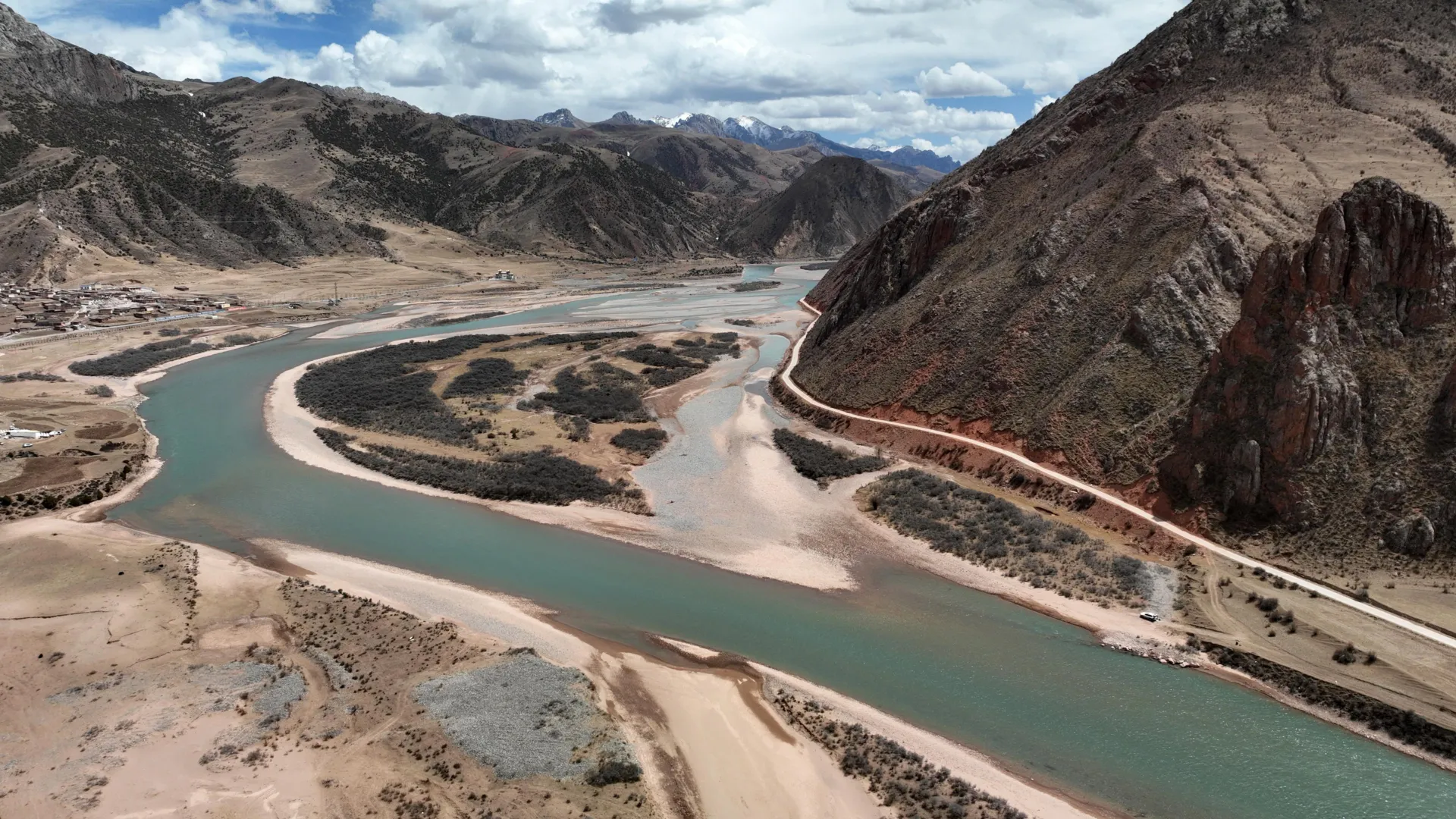
To test their theories, an international team led by scientists from East China Normal University and Umeå University turned their focus to the Qinghai-Tibet Plateau. Often referred to as the "Third Pole," the plateau represents the world’s largest high-altitude cryosphere outside of the polar regions. It serves as an ideal natural laboratory, featuring diverse gradients of continuous, discontinuous, and sporadic permafrost that respond dynamically to rapid regional warming.
During extensive field campaigns, the research team systematically sampled 50 rivers distributed across vast catchments of the plateau. They gathered comprehensive data sets, measuring riverine $textCO_2$ emissions, tracking dissolved carbon species, and utilizing advanced isotopic tracers to pinpoint the exact molecular origins of the carbon moving through the aquatic networks.
Phase 3: Geochemical Modeling and Synthesis
Back in the laboratory, the team integrated their field measurements into high-resolution geochemical models. By analyzing the chemical signatures of the river water alongside the geological composition of the surrounding catchments, they were able to trace the pathways of carbon from the atmosphere, through the soil and rock matrices, and into the hydrological system.
The results, finalized and peer-reviewed for publication in Nature, provided definitive proof: as permafrost thaws and landscapes shift, the exposure of fresh mineral surfaces dramatically ramps up chemical weathering rates, capturing atmospheric carbon and locking it into dissolved inorganic forms before it can escape into the skies.
Supporting Data and Quantitative Insights
The empirical evidence gathered across the Qinghai-Tibet Plateau provides a granular look at how geological carbon uptake scales with the degradation of frozen ground. The data reveals stark contrasts between landscapes with intact permafrost and those undergoing advanced fragmentation.
| Permafrost Coverage Status | Average Weathering-Driven Carbon Offset | Observations / Characteristics |
|---|---|---|
| Continuous Permafrost | Modest offsets (< 15%) | Minimal exposure of fresh mineral surfaces; biological emissions dominate the local carbon budget. |
| Discontinuous Permafrost | Significant offsets (30% to 60%) | Increased hydrological connectivity and rock exposure; substantial weathering counters river outgassing. |
| Patchy / Isolated Permafrost | Exceeds 100% in select catchments | Accelerated landscape degradation allows weathering-driven uptake to completely neutralize and surpass riverine $textCO_2$ emissions. |
Across the entire study area, the researchers estimated that rock weathering neutralizes approximately 35 percent of the carbon dioxide emitted by rivers. This quantitative breakthrough demonstrates that geological sinks in cryospheric environments are far more dynamic and impactful than previously assumed.
Official Responses and Expert Perspectives
The publication of the study has drawn widespread attention from the global biogeochemistry and climate science communities, prompting reflections on how future assessments must account for the interplay between biology and geology.
Dr. Liwei Zhang: Unveiling the Catchment-Scale Balance
Dr. Liwei Zhang, a biogeochemist at East China Normal University and lead contributor to the research, emphasized the dramatic shift in perspective required when looking at degrading landscapes.
"We found that river $textCO_2$ emissions decline while carbon uptake through rock weathering increases as permafrost cover decreases," Dr. Zhang stated. "In some catchments where permafrost has become patchier, weathering-driven carbon uptake was large enough to offset or even exceed river $textCO_2$ emissions."
Dr. Zhang noted that while scientists have historically mapped permafrost thaw as a straightforward vector for carbon release, the physical fracturing of the earth opens up hidden chemical pathways that act in direct opposition to microbial decay.
Professor Jan Karlsson: Bridging Biological and Geological Cycles
Weighing in on the broader implications for global climate modeling, Professor Jan Karlsson of the Department of Ecology, Environment and Geoscience at Umeå University stressed that the Earth system cannot be understood through isolated scientific lenses.
"Our findings show that biological and geological carbon cycles are tightly linked," said Professor Karlsson. "To understand whether thawing permafrost ultimately amplifies or dampens climate warming, we need to consider both the carbon released from ancient soils and the carbon consumed through rock weathering."
Karlsson underscored that while the discovery illuminates a powerful natural balancing act, it serves as a reminder of the intricate complexity governing Earth’s biogeochemical feedback loops.
Implications for Climate Science and Policy
While the discovery of enhanced rock weathering in thawing permafrost regions introduces an encouraging new variable into Earth science, researchers are careful to contextualize what these findings mean for the broader climate crisis.
1. Rewriting Climate and Carbon Models
The most immediate impact of the study will be felt within the modeling community. Global climate models (GCMs) and Earth system models (ESMs) have traditionally treated thawing permafrost primarily as an unmitigated carbon source.
By failing to account for weathering-driven carbon uptake, these models may be miscalculating the net carbon budget of high-latitude and high-altitude regions. Incorporating fluid-rock interactions into future iterations of climate models will allow scientists to simulate the fate of permafrost carbon with far greater accuracy.
2. Guarding Against Misinterpretation
The researchers issue a firm warning against viewing rock weathering as a magic bullet or a permanent engineering solution to human-driven emissions.
- Complexity and Variability: Chemical weathering is not uniform. Depending on the specific mineralogy of a given region, certain weathering reactions can actually release $textCO_2$ rather than consume it.
- Timescales: Geological carbon sequestration operates on very different temporal scales compared to the rapid, acute pulses of greenhouse gases currently entering the atmosphere from microbial respiration.
- Net Balance: Even in catchments where weathering offsets 100 percent of riverine emissions, this local geological sink does not cancel out the broader, cumulative atmospheric burden of industrial fossil fuel combustion and widespread land-use change.
3. A Holistic Approach to Future Assessments
Ultimately, the Nature study calls for a paradigm shift in how environmental scientists assess the health and trajectory of cryospheric regions. Future international climate assessments—such as those conducted by the Intergovernmental Panel on Climate Change (IPCC)—will need to look beyond purely biological metrics.
As the planet continues to warm and frozen landscapes transform, understanding the delicate, high-stakes tug-of-war between ancient microbes breaking down soil and rushing water weathering unexposed stone will be vital to predicting the ultimate trajectory of Earth’s climate.
