

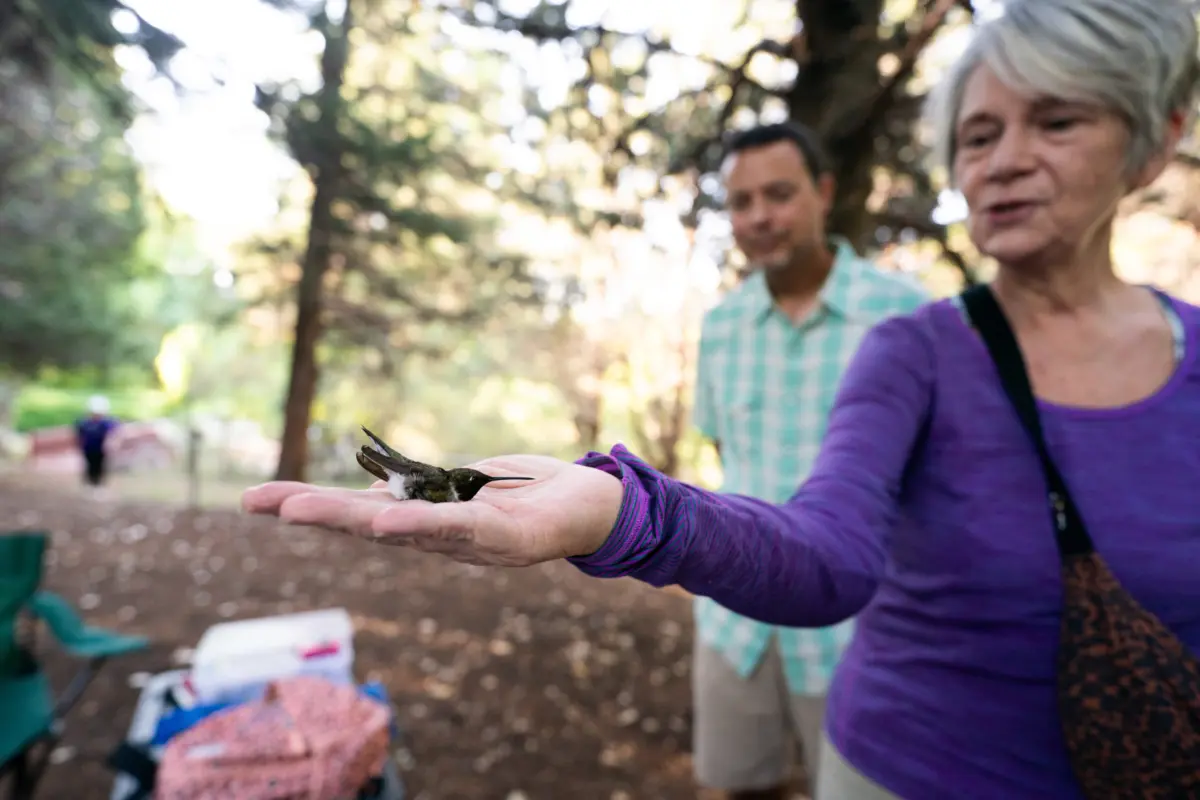
CORNVILLE, Ariz. — Beneath the canopy of the Page Springs Fish Hatchery, a quiet but extraordinary scientific effort unfolds every other Saturday during the late summer months. Here, the International Hummingbird Society (IHS) hosts its public hummingbird banding sessions, offering local residents and visiting ecotourists a rare, hands-on encounter with some of the fastest, smallest, and most metabolically extreme creatures on Earth.
For the researchers and volunteers who gather at the riparian oasis along Page Springs Road, the primary objective is scientific data collection. For the public, however, the draw is often deeply emotional. It is the rare opportunity to feel the rapid, high-frequency vibration of a hummingbird’s heartbeat against an open palm just before the tiny bird launches back into the wild.
Main Facts: Public Banding and Citizen Science at Page Springs
The hummingbird banding program, conducted by licensed researchers under the auspices of the International Hummingbird Society, serves as a bridge between rigorous ecological research and public education. Held at the Page Springs Fish Hatchery, located at 1600 N. Page Springs Road, these events allow the public to witness the meticulous process of capturing, measuring, health-checking, and tracking individual hummingbirds.
During a typical five-hour morning session, researchers process approximately 40 to 60 birds. The process relies on specialized, non-invasive techniques designed to minimize stress to the animals:
- Capture: Hummingbirds are safely lured using feeders surrounded by delicate, soft mesh nets.
- Transport: Once captured, they are gently placed into individual, breathable mesh bags to keep them calm and secure as they await processing.
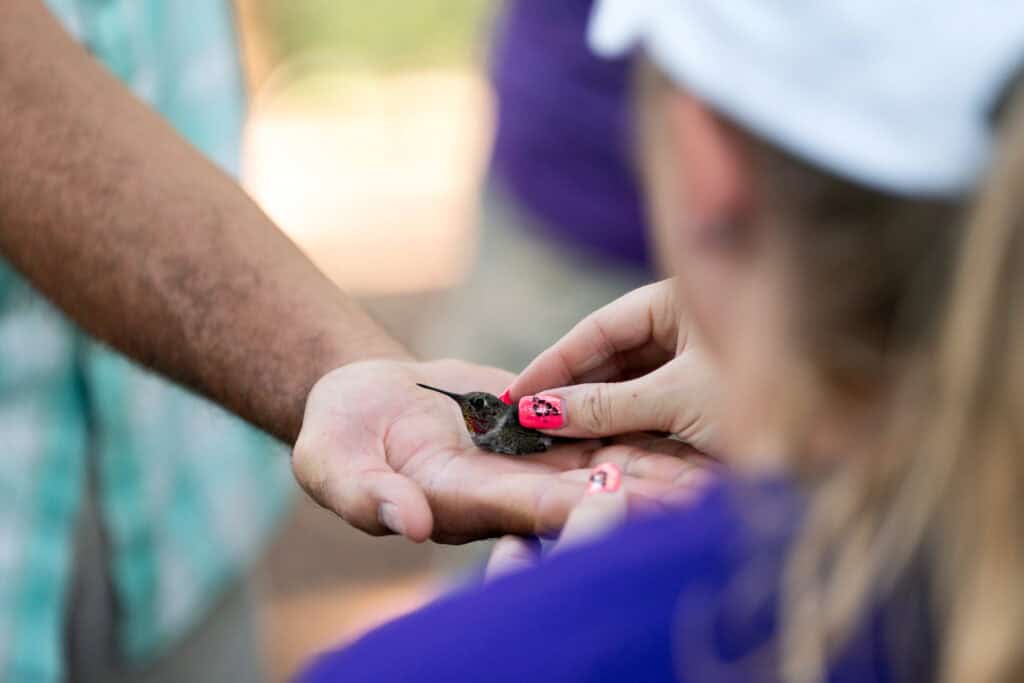
- Examination: At the banding station, certified banders record a suite of morphological data, including bill length, wing chord, body weight, sex, age, and fat reserves.
- Banding: A micro-sized, federally registered aluminum band, stamped with a unique identification number, is carefully fitted around the bird’s leg.
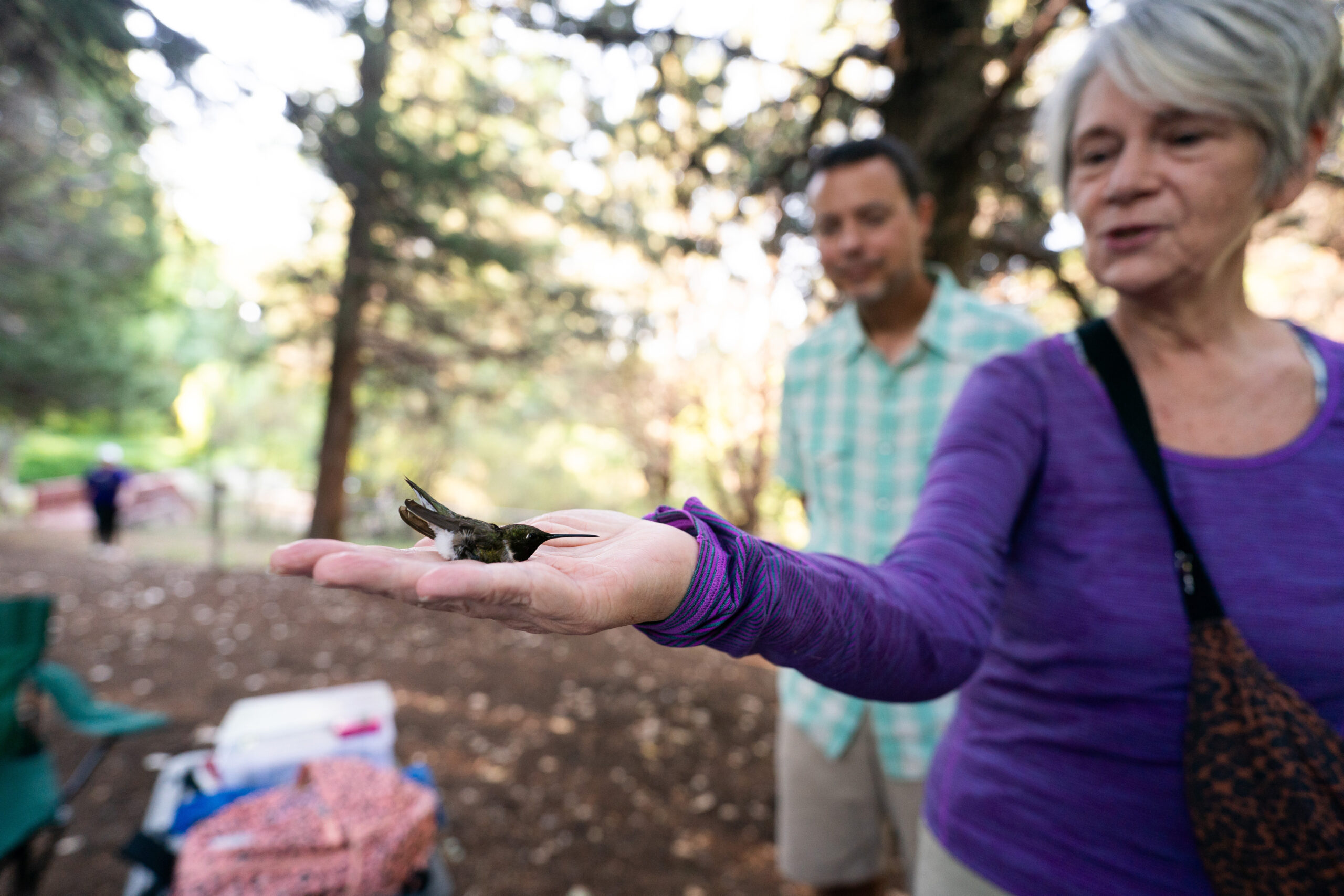
- Release: The bird is placed flat on the open palm of a volunteer or public spectator, allowing it a moment to orient itself before taking flight.
The data gathered during these sessions is submitted to the federal Bird Banding Laboratory (BBL), managed by the U.S. Geological Survey (USGS), contributing to a continental database used by ornithologists worldwide to study avian population dynamics, migratory routes, and the ecological impacts of climate change.
Chronology: The Summer Banding Season and National Milestones
The late summer represents a critical window for hummingbird research in Northern Arizona, coinciding with the southward migration of several species from their breeding grounds in Canada and the Pacific Northwest.
Late July: The Sedona Hummingbird Festival
The high point of the early season occurs during the annual Sedona Hummingbird Festival. During the festival’s dedicated Saturday session, researchers banded approximately 60 hummingbirds, experiencing high volume due to the influx of migratory populations. The Sunday session yielded slightly fewer captures, a phenomenon volunteers attribute to the birds’ natural sensitivity; the handling and activity around the feeders often act as a behavioral catalyst, prompting some individuals to resume their southward migratory journey.
August 8: Mid-Season Public Session
During the public session on Saturday, August 8, banders processed roughly 40 birds. Among these were several "recaptures"—birds that had been banded either earlier in the season or in previous years. The presence of multi-year recaptures serves as a vital indicator of high site fidelity, proving that the birds return to the exact same stopover sites year after year, and that the banding process itself does not deter their natural migratory patterns.
August 12–16: National Banding Conference
Recognizing the region’s high density of both hummingbird populations and certified researchers, Sedona was selected to host a major national banding conference through Sunday, August 16. Centered at the Church of the Red Rocks, the conference brought together between 50 and 60 professional hummingbird banders from across the United States. Attendees shared advanced capture techniques, discussed regional population trends, and conducted practical field demonstrations at selected private residences in the Sedona area.
Upcoming Sessions: August 22 and September 5
The public banding season at the Page Springs Fish Hatchery concludes with two final Saturday events:
- Saturday, August 22: Running from 6:26 a.m. to 11:26 a.m.
- Saturday, September 5: Running from 6:35 a.m. to 11:35 a.m.
Organizers note that while attendees are not required to stay for the duration of the five-hour sessions, arriving early is highly recommended, as hummingbird feeding and flight activity peak during the cooler, early morning hours.
Supporting Data: The Delicate Science of Avian Measurement
The physical characteristics of hummingbirds require specialized equipment and extreme precision. Because a hummingbird’s leg is roughly the thickness of a toothpick, standard avian bands are entirely unusable. Instead, banders use custom-cut, ultra-light aluminum sheets, which are meticulously smoothed to ensure there are no sharp edges before being closed around the tarsus with specialized pliers.
+-----------------------------------------------------------------------------+
|                       HUMMINGBIRD SPECIES OF SEDONA                         |
+----------------------+-----------------------+------------------------------+
| Species              | Status in Sedona      | Distinguishing Features       |
+----------------------+-----------------------+------------------------------+
| Anna's Hummingbird   | Year-round resident   | Rose-pink gorget (males);    |
|                      | (Official City Bird)  | stout build                  |
+----------------------+-----------------------+------------------------------+
| Black-chinned        | Summer breeder        | Matte black chin with velvet |
|                      |                       | purple collar                |
+----------------------+-----------------------+------------------------------+
| Rufous Hummingbird   | Migratory transit     | Bright copper-orange back;   |
|                      |                       | highly aggressive            |
+----------------------+-----------------------+------------------------------+
| Broad-tailed         | Summer breeder/trans  | Iridescent red throat; loud  |
|                      |                       | metallic wing whistle        |
+----------------------+-----------------------+------------------------------+
| Calliope             | Migratory transit     | Smallest U.S. bird; magenta  |
|                      |                       | throat rays (males)          |
+----------------------+-----------------------+------------------------------+
To determine the age and sex of the birds without genetic testing, researchers rely on minute physical markers. Volunteer Lenore Hemingway, consulting standard ornithological field guides during the event, explained the diagnostic criteria used at the banding station:
- Bill Corrugations: Young hummingbirds possess tiny, microscopic ridges or "corrugations" along the sides of their bills. As the bird matures, these ridges are gradually worn smooth. A high percentage of bill corrugation indicates a hatch-year bird.
- Plumage Buffing: Juvenile birds often exhibit pale, buff-colored edges on their feathers, particularly on the head and back, which help distinguish them from mature adults.
- Gorget Development: The gorget—the iridescent throat patch found on male hummingbirds—develops progressively. Partial gorget coloration, or specific patterns of throat spotting, can pinpoint both age and transition stages in young males.
- Tail Feather Morphology: The shape, width, and white-tipping of the outer tail feathers (rectrices) are primary indicators of sex. Female tail feathers generally feature prominent white tips, whereas adult males typically have pointed, solid-colored dark feathers.
Expert Perspectives: Training and Safety Standards
The safety of the birds is the paramount priority of the IHS and its volunteers. Because of the delicate physical nature of these animals, obtaining a federal permit to band hummingbirds requires years of specialized apprenticeship and a demonstrated mastery of avian handling.
Whitney Morejon, an active volunteer whose wife, Hilary, is a certified bander, emphasized the critical importance of proper training. "Every species has a specific range of leg sizes, and the bander must verify the measurements of each individual bird," Morejon explained. "That way, we ensure the band is neither too big nor too small. In other regions, birds have been captured with missing feet, which is almost always the result of an untrained or uncertified individual applying a band too tightly or improperly."
To prevent such injuries, the training pipeline for southwestern banders is rigorous. Two of the primary banders at the August 8 event, Hilary Morejon and Amanda Hammer, completed their intensive training in Portal, Arizona. Located in Cochise County along the New Mexico border, Portal is nationally recognized as an avian research hub.
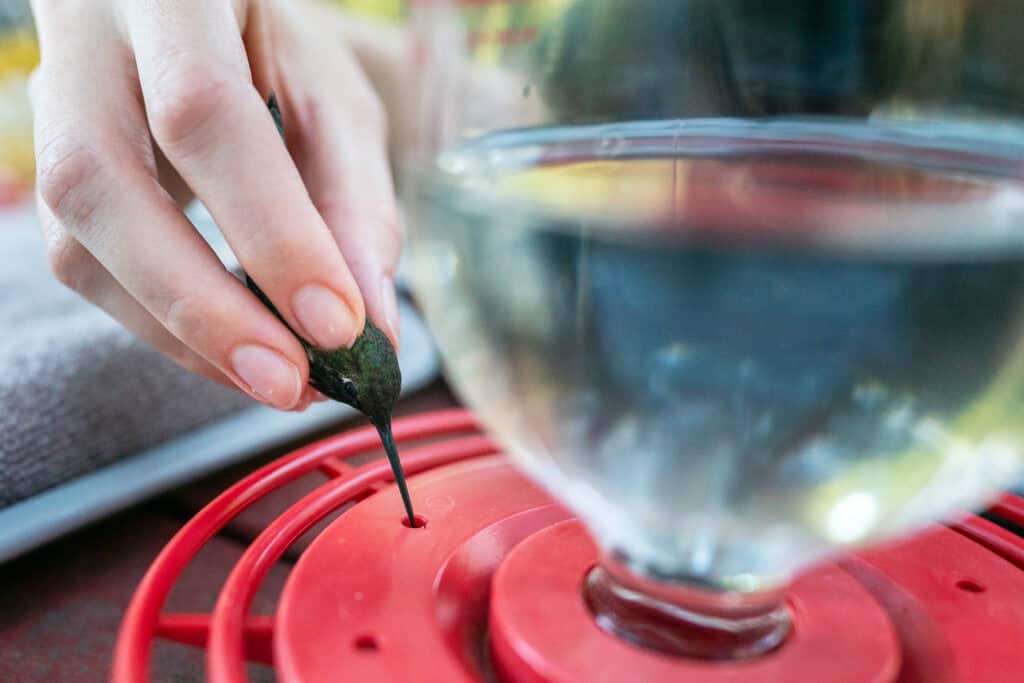
"Many bird banders take a classroom-based certification course, but Susan Wethington, the lead researcher based in Portal, utilizes an intensive apprenticeship approach," Whitney Morejon noted. Under Wethington’s program, trainees reside in the field for several weeks, undergoing daily hands-on evaluations to ensure their handling, measuring, and banding techniques meet the highest safety standards before they are permitted to operate independently.
Ecological Implications: Migration Corridors and Climate Resilience
The long-term data collected at Page Springs provides critical insights into the migratory health of southwestern hummingbird populations. By tracking recapture rates, researchers can evaluate the quality of local habitats.
"Out of about 40 birds processed in a single morning, we typically see three to four recaptures," Whitney Morejon stated. "On one exceptional day, we had 13 or 14 recaptures, the majority of which were from previous seasons. This is highly significant. It tells us two things: first, that our capture and banding techniques are gentle enough that they do not disrupt the birds’ migratory patterns or cause avoidance behavior; and second, that Page Springs remains a stable, reliable resource for these birds year after year."
The confirmation of migratory routes is another major scientific yield. In recent years, data from Southwest banders has confirmed that many of the hummingbirds passing through Northern Arizona spend their winters in southern and western Mexico. This links the ecological health of Arizona’s riparian habitats directly to conservation policies in Mexico, highlighting the need for international, trans-boundary conservation strategies.
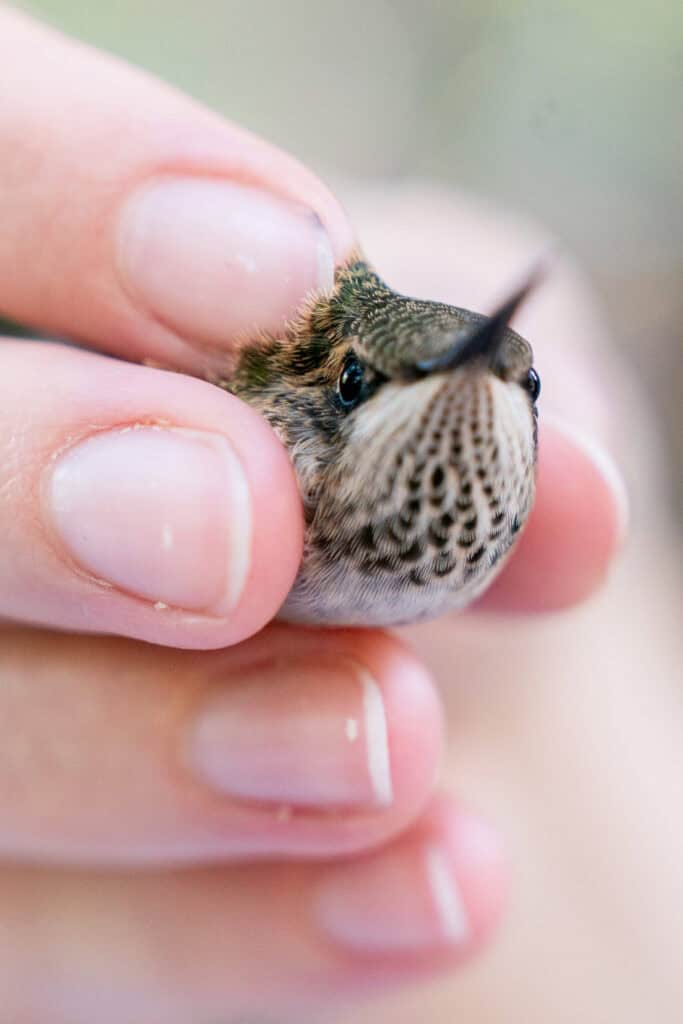
As climate change alters blooming schedules and water availability across the Southwest, the monitoring work conducted by the International Hummingbird Society at Page Springs Fish Hatchery serves as an early warning system. By tracking changes in arrival dates, average body weights, and fat reserves of these delicate migrants, researchers can better understand how environmental shifts impact biodiversity across North America.
