

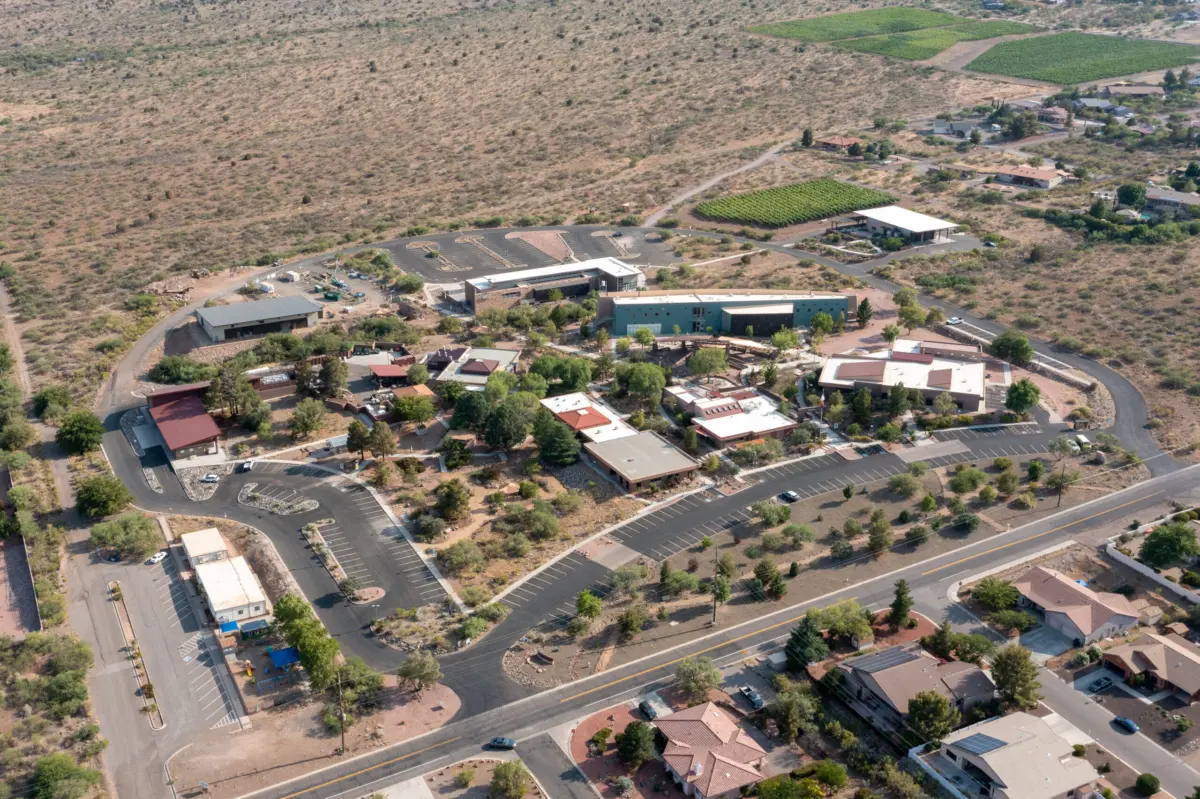
Yavapai College, a cornerstone of higher education in Yavapai County, Arizona, is facing a critical period of institutional scrutiny. The college has until February to submit a comprehensive body of evidence and documentation to its regional accrediting agency, the Higher Learning Commission (HLC), to demonstrate why its accreditation should be maintained.
This urgent mandate follows a formal complaint filed by a member of the college’s own District Governing Board, which triggered a state of "embedded monitoring" focusing on institutional integrity and board governance. Simultaneously, the college is navigating the fallout of a $50,000 forensic audit commissioned to investigate potential financial irregularities within its administrative ranks. While the audit cleared officials of criminal wrongdoing, it exposed significant vulnerabilities in policy compliance and administrative oversight.
Chronology of Events
The current operational and administrative challenges at Yavapai College are the result of a series of political, administrative, and regulatory developments over the past several years:
- 2017: Rodney Jenkins assumes the role of Vice President of Community Relations and Legislative Affairs, overseeing key marketing, community outreach, and legislative portfolios.
- 2023: Yavapai College successfully secures continued accreditation from the Higher Learning Commission, commencing a standard 10-year accreditation cycle.
- January 2025: Following local elections, new board members Bill Kiel (District 1), Toby Payne (District 3), and Patrick Kuykendall (District 4) are sworn into office, altering the dynamics of the District Governing Board.
- February 2025: Jack Smith succeeds Rodney Jenkins as the Vice President of Community Relations and Legislative Affairs. Upon taking office, Smith flags unusual fund allocations across various institutional accounts.
- Spring 2025: Then-President Dr. Lisa Rhine authorizes Smith to engage an external forensic accounting firm to audit the department’s historical financial records.
- April 15, 2025: Board member Deb McCasland (District 2) and Chief Human Resources Officer Dr. Janet Nix jointly file a formal complaint with the HLC, alleging disruptive behavior by certain board members that threatens the institution’s accreditation.
- May 2025: The Chicago-based accounting and advisory firm Baker Tilly begins a forensic audit of the Community Relations and Legislative Affairs division, focusing on financial transactions spanning the prior three to five years.
- Summer 2025: District 4 Representative Patrick Kuykendall resigns from the board. Dr. Dave Berry is appointed Acting President of Yavapai College. The college submits its mandatory 30-day response to the HLC complaint.
- August 11, 2025: During a public board meeting, Director of Academic Initiative Megan Crossfield and Acting President Dr. Dave Berry publicly address the HLC’s "embedded monitoring" status and provide updates on the pending forensic audit report.
- August 21, 2025: Baker Tilly is scheduled to release its final, comprehensive forensic audit report to the college administration.
- February 2026: Yavapai College faces its official deadline to submit its mid-cycle Assurance Review documentation to the HLC, addressing both routine year-four requirements and the specific governance issues raised under embedded monitoring.
Supporting Data and Institutional Context
To understand the severity of Yavapai College’s current standing, it is necessary to examine the regulatory framework of regional accreditation and the financial scope of the concurrent forensic audit.
The Higher Learning Commission’s Accreditation Framework
Yavapai College operates on a 10-year accreditation cycle. Having secured reaffirmation in 2023, the college is currently entering Year 4. This phase of the cycle requires a mandatory mid-point check-in known as an Assurance Review.
In 2025, the HLC streamlined its evaluative criteria, reducing the core standards from five to four. Yavapai College must write and submit a detailed narrative demonstrating compliance with these updated criteria:
- Mission: Clarity of institutional purpose and public service.
- Integrity: Ethical and Responsible Conduct: Honesty, transparency, and effective governance.
- Teaching and Learning: Quality, Resources, and Support: Student success, academic rigor, and instructional qualifications.
- Resources, Planning, and Institutional Effectiveness: Financial sustainability, systemic planning, and administrative capability.
HLC 10-Year Accreditation Cycle (Yavapai College Status)
┌────────────────────────────────────────────────────────────────────────┐
│ Year 1-3: Continuous Quality Improvement                                │
├────────────────────────────────────────────────────────────────────────┤
│ Year 4 (Current): Mid-Cycle Assurance Review & Embedded Monitoring      │
│                     ► Focus on Criterion 2a (Integrity)                │
│                     ► Focus on Criterion 2c (Board Governance)         │
├────────────────────────────────────────────────────────────────────────┤
│ Year 5: Quality Initiative (Process Improvement/Student Success Project)│
├────────────────────────────────────────────────────────────────────────┤
│ Year 8: Second Assurance Review                                        │
├────────────────────────────────────────────────────────────────────────┤
│ Year 10: Comprehensive Evaluation & Affirmation Site Visit             │
└────────────────────────────────────────────────────────────────────────┘
Due to the complaint filed in April, the HLC placed Yavapai College under embedded monitoring specifically targeted at two sub-components of Criterion 2:
- Criterion 2a (Integrity): Operating with honesty, academic freedom, and fiscal responsibility.
- Criterion 2c (Board Governance): Ensuring the governing board remains autonomous, acts in the institution’s best interest, and avoids overstepping into day-to-day operations.
According to Megan Crossfield, Director of Academic Initiative, embedded monitoring is a common corrective mechanism rather than an immediate sanction. Approximately 20% to 30% of higher education institutions undergoing comprehensive or mid-cycle reviews are placed under some form of embedded monitoring. This peer-review process allows institutions to address structural issues before they escalate to more severe statuses, such as "Show Cause" or probation.
The Forensic Audit Scope and Financials
The parallel administrative investigation, conducted by Baker Tilly, carried an authorized budget of $50,000. The probe targeted the Community Relations and Legislative Affairs division, looking back three to five years into historical spending. The objective was to determine whether funds from different institutional accounts were allocated inappropriately or if criminal activity had occurred under previous leadership.
Official Responses and Board Controversy
The intersection of the HLC complaint and the forensic audit has highlighted deep ideological and operational divisions within Yavapai College’s leadership.
The Trustee and HR Complaint
The joint complaint filed by Trustee Deb McCasland and Chief HR Officer Dr. Janet Nix targeted the conduct of fellow board members, pointing specifically to Representative Bill Kiel. McCasland defended her decision to involve the accrediting agency, citing a persistent pattern of behavior that she believed violated board policies.
"The board needs to work on keeping in our role as board members," McCasland stated during the August 11 meeting. "The fiduciary responsibility that we have is not what you guys have been doing. It’s keeping the college running; it’s not about talking about people in the press, it’s not talking negatively about the president in the press. That’s how we carry the college forward. I’ve seen all kinds of problems, and that’s why I submitted the complaint."

McCasland further asserted that since the seating of the new trustees in January 2025, she observed violations of board roles during every single scheduled meeting.
Administration and Executive Posture
Acting President Dr. Dave Berry has sought to maintain an objective, stabilizing presence during the dual investigations. Addressing the college’s official response to the HLC, Dr. Berry clarified that the administration’s intent was to provide an honest assessment rather than to litigate the dispute.
"It wasn’t about defending the college or protecting the accreditation," Dr. Berry said. "It was more answering the HLC and the IAC [Intersocietal Accreditation Commission] on ‘are these things happening at the institution.’"
Regarding the forensic audit, Dr. Berry confirmed that preliminary findings from Baker Tilly indicated no evidence of illegal actions. "Let me say, there has been no criminal activity found at this time, nor do we anticipate any criminal activity will be brought forth in the final report," he stated.
However, Dr. Berry acknowledged that the audit revealed systemic administrative weaknesses:
"The audit helped inform us of some policies that we maybe have in place that we weren’t following all the way, and some different practices where we’re giving a little too much authority to certain levels. We want to make sure that everyone, regardless of title and level at the institution, is following our policies and practices."
Implications for the College and Students
The ongoing disputes and regulatory oversight carry significant risks for Yavapai College’s future operations, student body, and administrative structure.
Academic and Financial Consequences of Accreditation Loss
The most severe threat facing the institution is the potential loss of regional accreditation. While Megan Crossfield emphasized that the current "embedded monitoring" status does not mean the situation is immediately dire, the consequences of a hypothetical revocation would be catastrophic:
- Ineligibility for Federal Financial Aid: Under Title IV of the Higher Education Act, students attending non-accredited institutions cannot receive federal Pell Grants, direct student loans, or work-study funds. Given that a significant portion of community college students rely on federal assistance to afford tuition, losing this eligibility would cause enrollment to plummet.
- Non-Transferability of Credits: Regional accreditation ensures that curriculum standards are met. If Yavapai College loses this status, other accredited colleges and universities would no longer accept credits transferred from the institution, rendering students’ coursework functionally void for degree advancement elsewhere.
- Reputational Damage: A loss of accreditation would severely damage relationships with local high schools, dual-enrollment programs, and regional employers who rely on the college for workforce development.
Governance and Administrative Reforms
To satisfy the HLC’s February deadline, Yavapai College’s District Governing Board must demonstrate a return to professional, policy-bound operations. The resignation of District 4 Representative Patrick Kuykendall leaves a vacancy that will need to be filled, potentially shifting the balance of the board. The remaining trustees must establish clear boundaries between policy-level governance and the operational execution managed by the college president and cabinet.
Administratively, the final Baker Tilly report will require Yavapai College to implement tighter internal financial controls. This will likely involve:
- Revising delegation-of-authority policies to restrict spending limits for vice presidents and department heads.
- Standardizing budget transfers to prevent the moving of funds between unrelated departmental "pots of money."
- Implementing mandatory annual policy compliance training for all senior administrative staff.
The college’s ability to resolve these internal conflicts and tighten its fiscal management over the coming months will determine whether it can successfully navigate its mid-cycle review and secure its standing as a trusted institution of higher learning.
