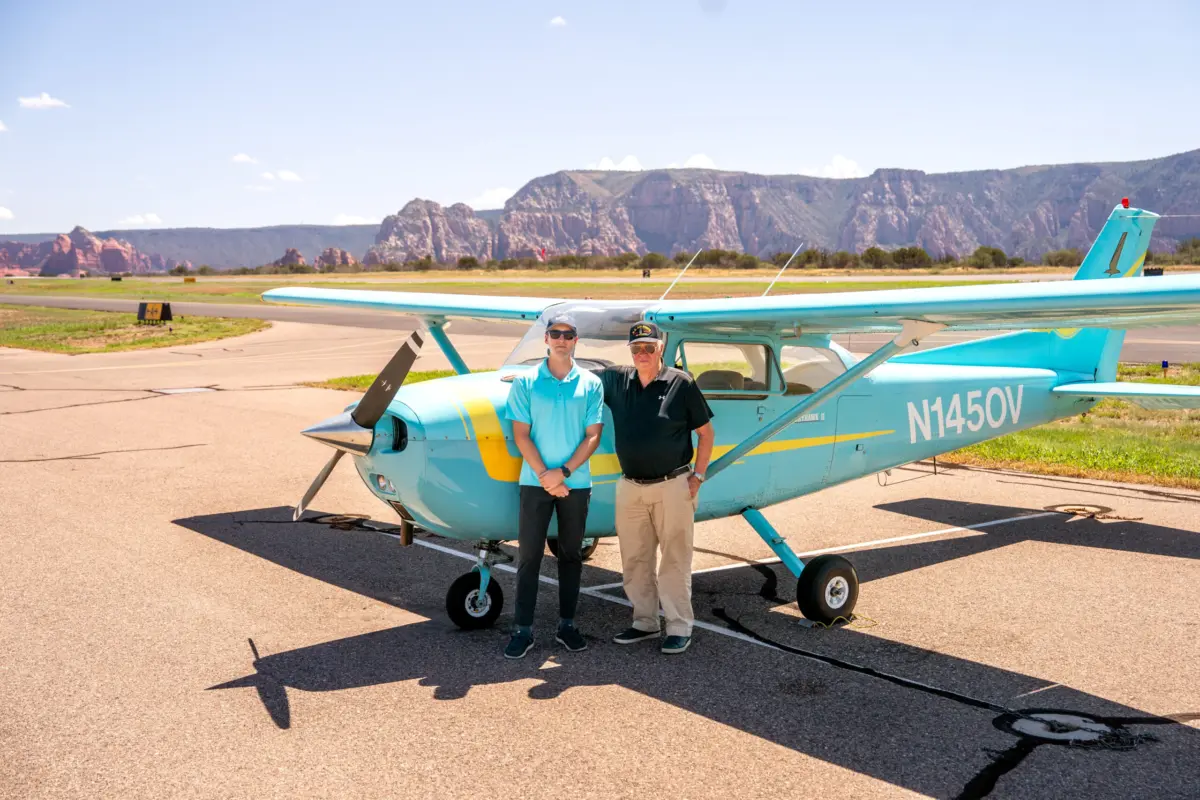
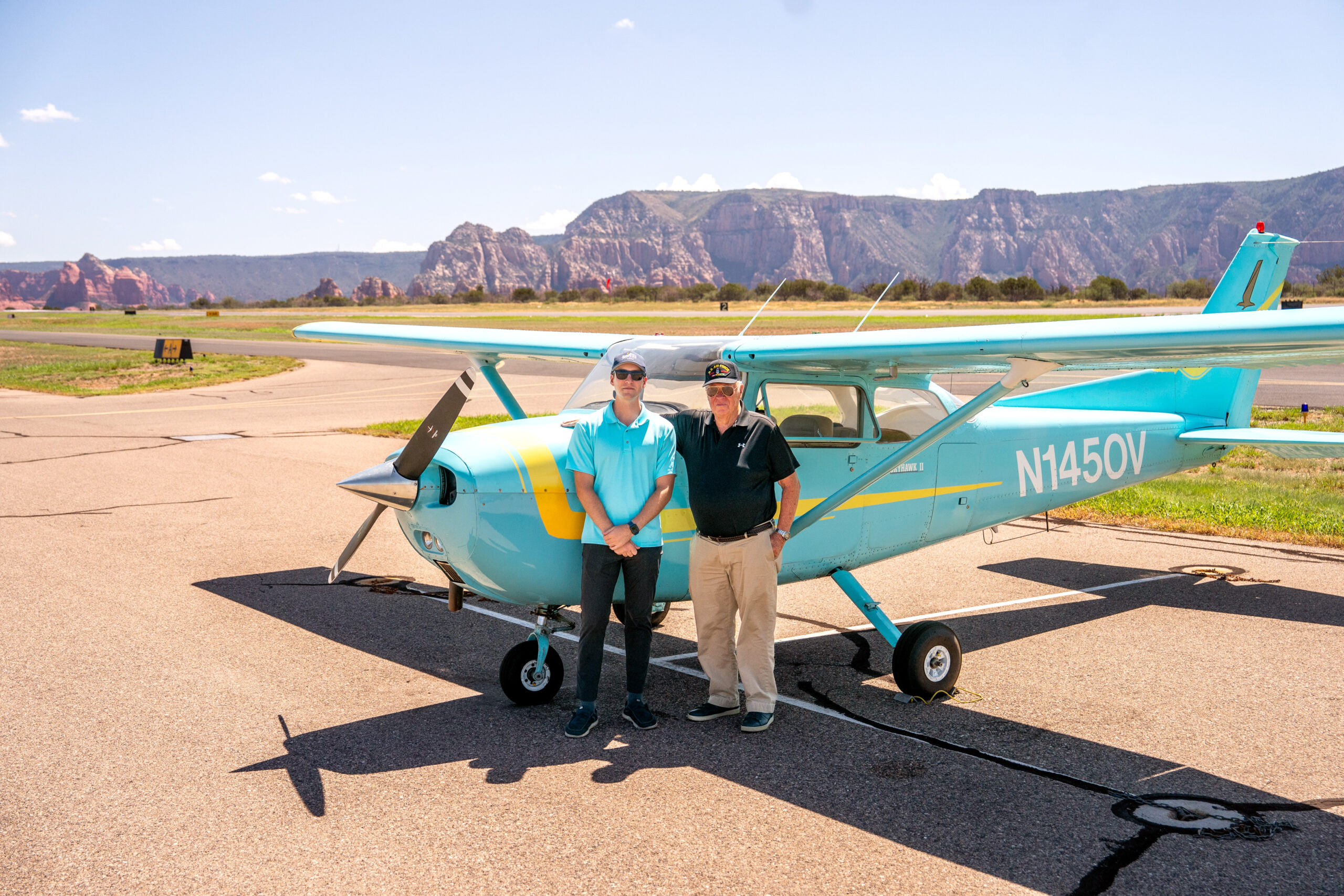
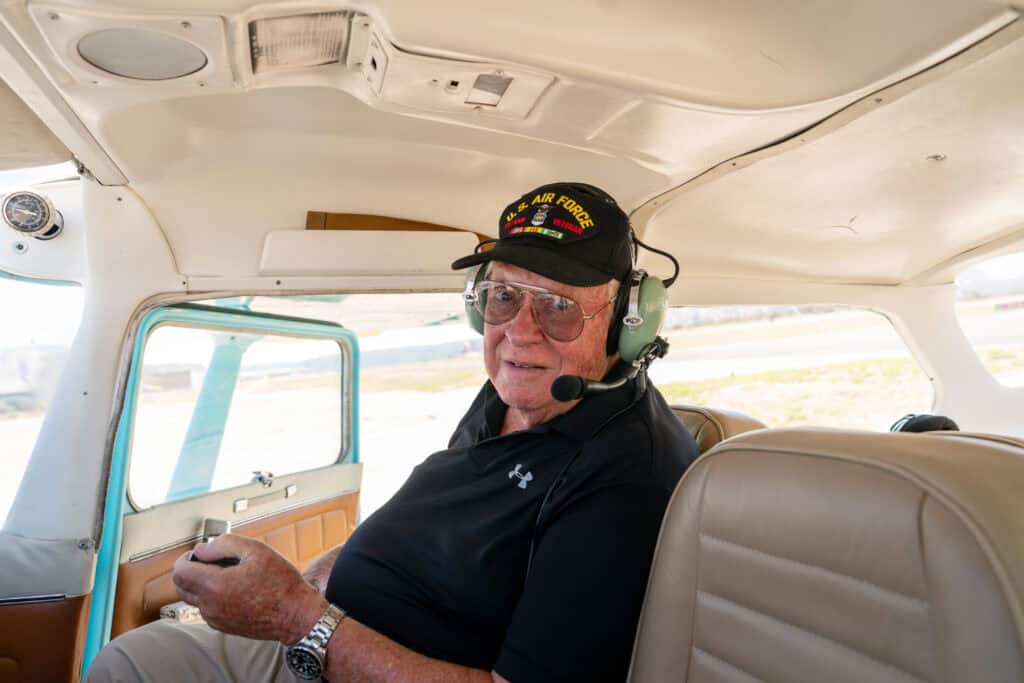
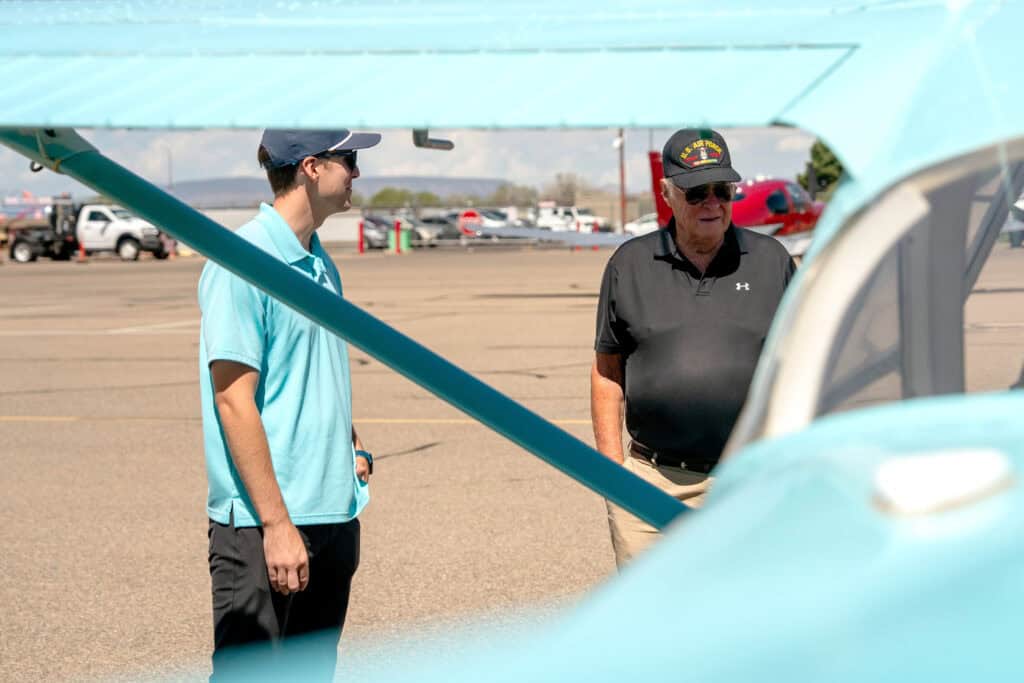
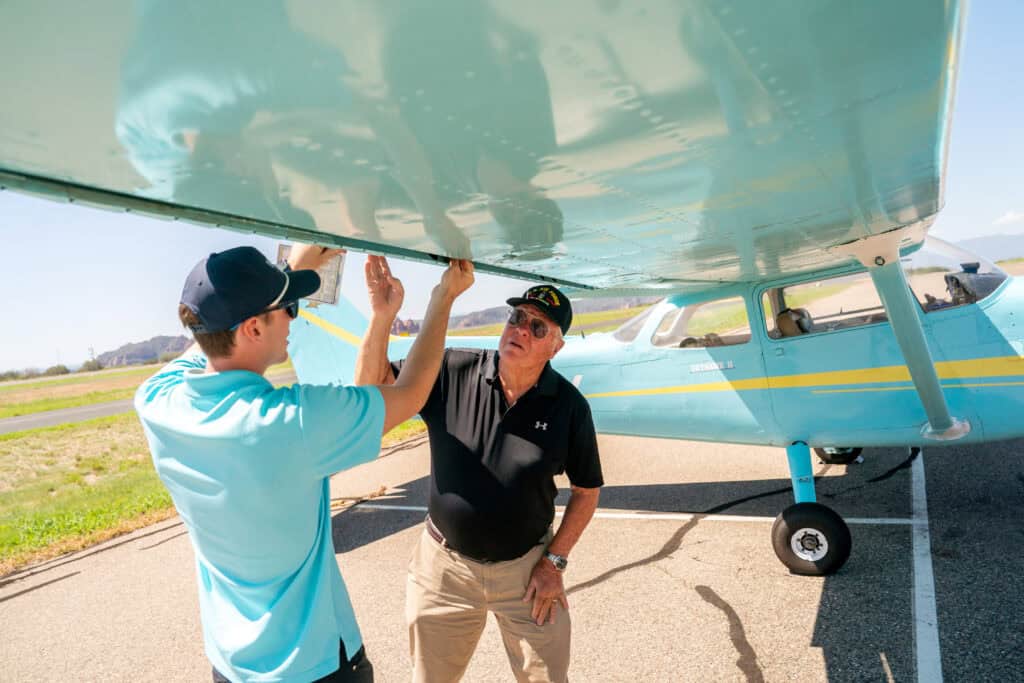
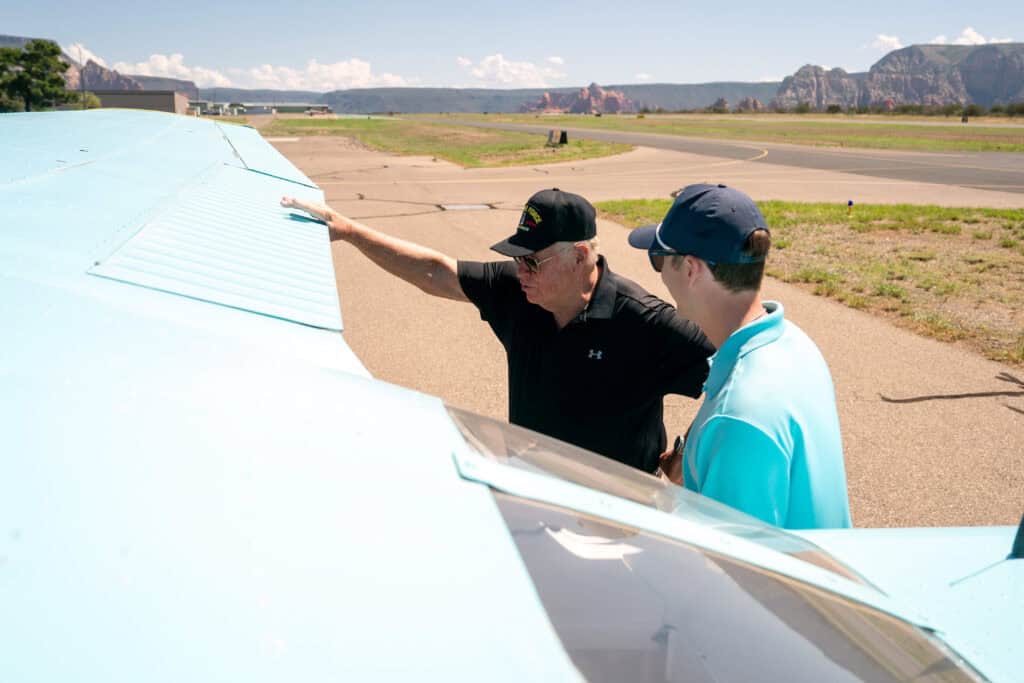
On the morning of Wednesday, July 29, 2026, the quiet skies over the red rocks of Sedona, Arizona, became the stage for a deeply personal mission. Dubbed "Operation Freedom Flight," the event marked the return to the air of 84-year-old retired U.S. Air Force Lieutenant Colonel Jay Thompson. After a 34-year hiatus from active piloting, Thompson took to the skies once again, co-piloting a Cessna 172 over the Verde Valley—an extraordinary journey made possible through a grassroots network of family, local residents, and a Sedona-based aviation company.
Thompson, who recently relocated to the town of Cottonwood in May 2026 to be closer to his family, had long felt the pull of the skies. For a man who spent more than three decades in military aviation, the sound of aircraft was not a local nuisance but a nostalgic comfort. When his daughter, Danielle Matthews, realized the depth of her father’s yearning to fly, she initiated a community-wide effort.
The endeavor quickly gained traction, uniting local Verde Valley residents Ken Wood of Cottonwood and James Iacovacci of Cornville. Iacovacci contacted Bluebird Air Tours, a family-owned commercial tour operator based at the Sedona Airport. The company’s owner, Brad Tulin, alongside his sons Tanner and Trevor, volunteered their aircraft, fuel, and piloting expertise to make Thompson’s dream a reality.
Under the command of Tanner Tulin, the Cessna 172 departed the tabletop runway of Sedona Airport, flying Thompson over the iconic red rock formations, across the Verde Valley, and past his new home in Cottonwood, nestled near the base of Mingus Mountain.
Chronology: A Lifetime of Aviation
The story of Jay Thompson’s flight on July 29 is the culmination of an aviation journey that began nearly seven decades ago. His passion for flight, military service, and family are woven through several key eras.
[1950s] First Solo Flight (Aeronca Champion)
   │
[1960] Enrolled in USAF ROTC at Ohio State University
   │
[1960s-1970s] Active Duty USAF: Flew KC-135 Stratotanker in Vietnam War
   │
[1973] Transitioned to Air National Guard (Pittsburgh, PA)
   │
[1990] Deployed to Jeddah, Saudi Arabia (Gulf War refueling missions)
   │
[1992] Final Military Flight (Traditional "Wetdown" Ceremony)
   │
[2024] Granddaughter Leah preserves his history for the Library of Congress
   │
[May 2026] Relocated to Cottonwood, Arizona
   │
[July 29, 2026] "Operation Freedom Flight" over Sedona and Cottonwood
Early Wings and Academic Foundations
Thompson’s fascination with aviation dates back to his teenage years in the mid-1950s. As a high school junior, he took his first formal flying lessons in an Aeronca Champion, a classic American light aircraft. Demonstrating an innate aptitude for flight, Thompson completed his first solo flight after just eight hours of dual instruction, accumulating a total of 15 hours in the Aeronca before transitioning to larger aircraft.
In 1960, Thompson enrolled at The Ohio State University (OSU), where he immediately joined the U.S. Air Force Reserve Officers’ Training Corps (ROTC) program. While completing his academic degree, he excelled in military aptitude tests and flight training, logging hours in a Piper Cherokee. Through OSU’s certified flight curriculum, Thompson secured his private pilot’s license in 37 hours—just two hours over the minimum FAA-approved curriculum requirement of 35 hours for certified schools.
During his collegiate years, Thompson met his future wife, Christel Herold. She became his lifelong companion, accompanying him throughout his subsequent military postings. During his early training flights, Thompson developed a signature salute for Herold: whenever he knew she was watching from below, he would perform a "victory roll"—climbing into a tight upward slope, allowing the aircraft to fall into a controlled barrel roll, and pulling up at the last moment as a aerial gift.
Military Career: Stratotankers and Strategic Air Command
Upon commissioning as an officer in the United States Air Force, Thompson was assigned to fly the Boeing KC-135 Stratotanker, a heavy aerial refueling aircraft derived from the Boeing 367-80 prototype (the basis for the Boeing 707 airliner). Over his active-duty career, Thompson logged 4,211 pilot hours.
+------------------+----------------------------------------------------+
| Parameter        | Details                                            |
+------------------+----------------------------------------------------+
| Primary Aircraft | Boeing KC-135 Stratotanker                         |
| Total Flight Hrs | 4,211 Hours                                        |
| Major Conflicts  | Vietnam War, Gulf War (Desert Shield/Storm)        |
| Key Commands     | Strategic Air Command, Air Mobility Command        |
| Final Unit       | 171st Air Refueling Wing (147th ARS, PA National Guard) |
+------------------+----------------------------------------------------+
During the Vietnam War, Thompson was stationed at Westover Air Force Base in Massachusetts, deploying frequently to forward bases in Thailand and Okinawa, Japan. From these Pacific outposts, he flew hazardous refueling missions, keeping critical combat aircraft aloft.
In 1973, Thompson transitioned from active duty to the Air National Guard, joining the 171st Air Refueling Wing (specifically the 147th Air Refueling Squadron) based in Pittsburgh, Pennsylvania. His service continued through the late Cold War and into the 1990s. In October 1990, during the buildup to the Persian Gulf War, Thompson was deployed to Jeddah, Saudi Arabia, near the Red Sea. Under Operations Desert Shield and Desert Storm, he flew critical combat refueling missions over Kuwait and Saudi Arabia, supporting coalition air forces.
The Final Approach and Relocation
Thompson’s military flying career concluded on December 22, 1992. On a crisp winter morning in western Pennsylvania, he shared breakfast with locals at a Murrysville McDonald’s before heading to the base for his final flight. Upon landing back at the Air National Guard base, his aircraft was met by the traditional military "wetdown" ceremony, where base fire trucks sprayed the aircraft with water, followed by a champagne toast to celebrate his decades of service.
For nearly 50 years, Thompson resided in Pennsylvania. However, by 2026, his children and grandchildren had relocated to Arizona’s Verde Valley region. Desiring to be close to his family, Thompson made the move to Cottonwood in May 2026, setting the stage for his return to the cockpit.
Supporting Data: Aircraft, Logistics, and Historical Documentation
The success of "Operation Freedom Flight" relies on a comparison of the aviation systems Thompson operated throughout his life, alongside the academic work that preserved his legacy.
Technical Comparison of Aircraft Flown by Jay Thompson
To understand the transition Thompson made during his July 2026 flight, it is useful to compare the aircraft that defined his career:
Aeronca Champion (7AC): A single-engine, high-wing, tandem-seat light airplane. Powered by a 65-horsepower Continental piston engine, it was the vehicle for Thompson’s first solo flight.
Boeing KC-135 Stratotanker: A four-engine, swept-wing, heavy military aerial refueler. With a wingspan of over 130 feet and a maximum takeoff weight of 322,500 pounds, this aircraft required immense crew coordination. Thompson utilized its high-speed boom refueling system to service B-52 and B-66 bombers, F-100s, F-5s, F-105s, F-4Cs, and high-altitude U-2 reconnaissance planes.
Cessna 172 Skyhawk: The aircraft used for the July 2026 flight. A four-seat, single-engine, high-wing utility aircraft, the Cessna 172 is the most produced aircraft in history. Its high-wing design provided Thompson with unobstructed views of the Arizona landscape.
The Veterans Heritage Project (Imprint of Honor)
Thompson’s military history was formally documented in 2024 through the Veterans Heritage Project (operating under the program name Imprint of Honor). His granddaughter, Leah Thompson, then a junior at Flagstaff High School, conducted extensive primary-source interviews with her grandfather.
Her resulting historical essay, titled "Sound of Freedom," was published in the project’s annual book series, Since You Asked. A hardbound copy of the volume containing Thompson’s oral history was submitted to the Library of Congress in Washington, D.C., ensuring his military contributions are permanently preserved in the national archives.
Official Responses: Reflections from the Cockpit and Community
The emotional and professional impact of the flight was captured through the reactions of those who participated in planning and executing "Operation Freedom Flight."
Following the flight, Lieutenant Colonel Jay Thompson expressed profound gratitude for the experience:
"As Tanner expertly landed his Cessna 172, I wished the day could have gone on forever. It was a beautiful Arizona day; clear blue skies and I was flying once again after many years. At 84, I relished being in a small plane next to an amazing young and personable pilot. The hour flight was filled with excitement, exhilaration, and wonder. Cruising over the beautiful Sedona red rocks and next to the Mingus Mountain was awe-inspiring."
Tanner Tulin, the Bluebird Air Tours pilot who guided the flight, noted Thompson’s sharp aviation instincts:
"We started off in Sedona and then made our way down to Cottonwood and the Mingus Mountain area, where we showed him his house from above. He was able to solo after only eight hours back in his training days, which is an exceptionally short amount of time. During our flight, he shadowed me on the joystick, and you could tell he still had that feel for the aircraft. It was an honor to fly with him."
Danielle Matthews, Thompson’s daughter, highlighted the local effort that made the flight possible:
"When my dad first arrived in Cottonwood, he heard the local airport traffic and asked, ‘Why would anyone complain about that?’ To him, that sound is the sound of freedom. Seeing the community—from local neighbors like James and Ken to the Tulin family at Bluebird Air Tours—come together instantly to honor a veteran was incredibly moving. They didn’t hesitate for a second."
Implications: The Power of Community-Led Veteran Recognition
"Operation Freedom Flight" highlights several broader social and community themes:
Preserving Living History
As the generation of Cold War and Gulf War veterans ages, programs like the Veterans Heritage Project play a vital role. By connecting high school students with local veterans, these initiatives bridge generational gaps and ensure that personal military histories are preserved before they are lost. Leah Thompson’s essay not only honored her grandfather but also laid the groundwork for the local community to recognize his service.
Community Cohesion and Local Business Engagement
The rapid coordination between private citizens in Cornville and Cottonwood and a commercial operator in Sedona illustrates the strength of local community networks in rural Arizona. For small businesses like Bluebird Air Tours, volunteering services for events like "Operation Freedom Flight" strengthens community ties and demonstrates how local commerce can support civic gratitude.
Aviation as Therapy and Connection
For retired pilots, the transition from active flying to civilian retirement can often bring a sense of profound loss. Returning an aging aviator to the cockpit—even as a co-pilot—offers significant cognitive and emotional benefits. By allowing Thompson to "shadow" the controls over his new home, the flight helped him connect his storied past with his new life in the Verde Valley. For Thompson, the aircraft noise over Cottonwood is no longer just a familiar sound; it is a reminder of a community that welcomed him home.