

Main Facts
For generations, the dark, water-filled caverns scattered across the globe have functioned as silent vaults, preserving a wealth of prehistoric history within their submerged chambers. Underwater caves are natural traps that have captured and held the physical remnants of extinct megafauna, ancient predators, and historic fauna for millennia.
Until recently, however, these flooded graveyards remained frustratingly enigmatic to the scientific community. While paleontologists recognized the immense value of the specimens resting on subterranean cave floors, they lacked a reliable, standardized methodology to decipher how these bones arrived in the depths, how they endured the aquatic environment over centuries, and what physical and chemical transformations they underwent along the way.
A landmark study published in the peer-reviewed journal PLOS One under the title "Neotaphonomic characteristics of vertebrate site formation in underwater caves" has fundamentally changed this dynamic. Led by researchers from Griffith University’s Australian Research Centre for Human Evolution (ARCHE), the multidisciplinary study introduces a pioneering framework that allows scientists to accurately read the distinct preservation "fingerprints" left on bones by underwater cave environments.
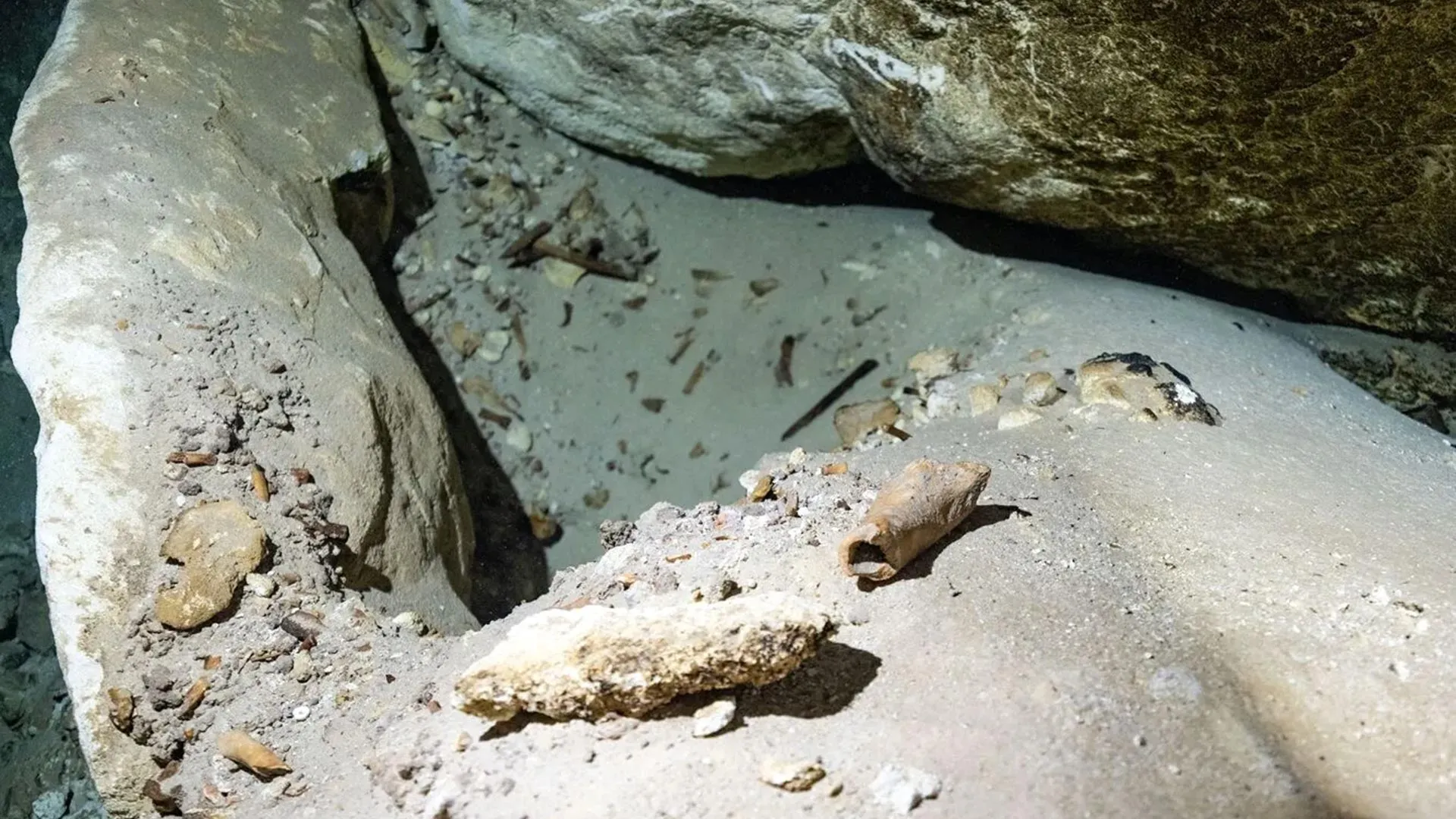
By conducting a comprehensive, multi-scale analysis of animal remains recovered from two distinct subterranean cave systems in South Australia—Green Waterhole and Gouldens Sinkhole—the research team successfully mapped the mechanisms of bone accumulation, preservation, and modification. The findings establish that submerged environments act as unique preservation chambers. They leave behind signature chemical, biological, and structural markers that can be systematically decoded, offering a powerful new lens through which researchers can reconstruct prehistoric ecosystems, track environmental shifts, and interpret the life histories of long-extinct species.
Chronology
To understand how modern bones and ancient fossils interact with subterranean hydrology and biology, the research team—bolstered by expert cave divers from the Cave Divers Association of Australia—embarked on a detailed chronological investigation.
The investigative timeline centered on South Australia’s Mount Gambier region, an area renowned for its complex network of karst limestone formations and water-filled sinkholes. The study utilized a comparative temporal approach, examining a diverse assemblage of historical and modern vertebrate remains collected from the Green Waterhole and Gouldens Sinkhole systems.
These recovered skeletal elements represented a wide array of native Australian fauna and introduced species, including kangaroos, emus, dingoes, possums, quolls, swamp rats, cows, sheep, pigs, and rabbits. Radiocarbon-dating techniques applied to select specimens revealed that a significant portion of this skeletal assemblage dated back to the mid-19th century—coinciding with the arrival of the first European settlers and the initial establishment of local towns in the 1840s.
By analyzing how these relatively recent, time-calibrated remains were deposited, altered, and mineralized over decades and centuries, the researchers established a baseline for neotaphonomy—the study of how organisms decay and become fossilized in modern contexts. This chronological baseline acts as a key, allowing scientists to work backward in time. By understanding the signature modifications left on 19th-century sheep and kangaroo bones, researchers can now more accurately interpret the much older, Pleistocene-era fossils of extinct megafauna—such as giant short-faced kangaroos (Procoptodon), marsupial lions (Thylacoleo carnifex), and giant wombats (Diprotodon)—that share the exact same watery subterranean matrix.
Supporting Data
The Griffith University study achieved its breakthrough by deploying a rigorous, multi-tiered methodological approach. The researchers analyzed bone samples using a sliding scale of observation, ranging from macro-scale spatial distributions down to micro-scale elemental compositions and ancient cellular proteins.
The Macro to Micro Spectrum
At the macro scale, researchers mapped the physical dispersion of the skeletal remains across the irregular topography of the cave floors, noting how water currents, gravity, and animal entry points dictated where bones settled. At the micro scale, they employed advanced imaging and analytical techniques to examine bone surfaces, cellular degradation patterns, and chemical bonding.
The data revealed a stark dichotomy in preservation styles based on the micro-environments within the caves, heavily influenced by light penetration and biological activity:
- The Photic Zone (Lit Entrances): Near brightly lit cave entrances and sinkhole openings, ambient sunlight fosters the growth of aquatic plants and various species of algae. The data showed that these photosynthetic organisms frequently colonize the exposed surfaces of submerged bones. As they grow and interact with the bone matrix, they leave behind unmistakable biological signatures and etching patterns that differentiate them from dry-land remains.
- The Aphotic Zone (Total Darkness): Deep within the subterranean recesses—regions completely untouched by natural sunlight—conditions are profoundly different. In these "midnight zones," photosynthetic life cannot survive. Consequently, bones resting in total darkness are largely shielded from organic colonization, frequently retaining an astonishing degree of structural integrity, pristine surface detailing, and original micro-architecture.
- The Subaerial Contrast (Dry Caves): To validate their findings, the research team compared the underwater specimens with bones recovered from arid, terrestrial dry caves. The comparative data highlighted major divergences. While underwater bones often retained their fine surface details, bones in dry caves lacked aquatic signatures entirely. Instead, they displayed clear evidence of terrestrial weathering: land-based bacteria had actively consumed organic components of the bone matrix, while invasive plant roots had carved distinct, long grooves across their surfaces.
Furthermore, elemental and chemical assays demonstrated that the water chemistry of the limestone caves plays a crucial role. The calcium-rich aquatic environments often facilitate a delicate balance of mineral exchange, shielding the collagen within the bones from rapid microbial destruction and allowing fragile cellular structures to persist across vast stretches of time.
Official Responses
The implications of the study have drawn high praise from the scientific community, signaling a major leap forward for vertebrate paleontology and cave archaeology.
"By analyzing animal bones from two underwater cave systems in South Australia, we have revealed how different cave environments leave distinct preservation ‘fingerprints’ on skeletal remains," said Meg Walker, lead author of the study and a PhD candidate at Griffith University. Walker conducted the research under the supervision of Professor Julien Louys, Director of the Australian Research Centre for Human Evolution (ARCHE).
"Backed by radiocarbon-dated bones, we tracked how skeletons accumulated and were modified over decades and centuries in underwater caves, then compared them to those buried in dry caves," Walker explained, emphasizing the systematic nature of the investigation. "Using a range of methods, from the macro to the micro, we looked at features associated with wet and dry caves—things like spatial distributions of the bones and their surfaces, down to elemental compositions and proteins trapped in ancient cells."
Highlighting the practical utility of the research for the global scientific community, Walker noted the overarching achievement of the project: "This study has delivered the first framework for interpreting how megafauna fossils formed, survived, and changed in underwater caves. It will provide archaeologists and paleontologists worldwide with a powerful new tool for reconstructing past environments and histories in these challenging conditions."
Professor Louys underscored the dedication required to undertake such research, praising the collaborative effort between academic researchers and specialized technical personnel. The inclusion of elite cave divers from the Cave Divers Association of Australia was vital, enabling the safe retrieval of delicate biological data from complex, low-visibility, and deep-water subterranean chambers that would otherwise remain completely inaccessible to traditional scientific expeditions.
Implications
The publication of this neotaphonomic framework in PLOS One opens up unprecedented avenues for scientific research, with far-reaching consequences for several academic disciplines.
Transforming Paleontology and Archaeology
For decades, interpreting underwater fossil deposits was largely speculative. Paleontologists frequently struggled to determine whether an assemblage of bones found in a flooded sinkhole represented animals that had fallen to their deaths, carcasses washed in by ancient flash floods, or remains dragged into the caverns by predators. The Griffith University framework provides a diagnostic manual to untangle these taphonomic histories. By examining the micro-marks, algal traces, and chemical alterations on a fossil, scientists can now reconstruct the exact physical pathway the bone took from the surface landscape to the subterranean floor.
Reconstructing Past Climates and Environments
Beyond understanding individual bone histories, the framework serves as a paleoclimatic proxy. Because the preservation signatures are directly tied to environmental factors such as light levels, water chemistry, biological communities, and hydrological shifts, analyzing these bones allows researchers to reconstruct past environmental conditions. Changes in water depth, historical climate fluctuations, and shifts in regional ecology over hundreds of thousands of years can now be reliably inferred from the physical state of the fossils preserved within limestone aquifers.
A Global Tool for Submerged Exploration
Karst cave systems—ranging from the cenotes of the Yucatán Peninsula in Mexico and the blue holes of the Bahamas to the flooded cave networks of Australia and Europe—are universally recognized as treasure troves of paleontological and anthropological data. Many of these sites have yielded globally significant discoveries, including ancient human remains and complete skeletons of extinct Pleistocene megafauna.
With this new analytical framework now established, researchers working in submerged caves anywhere in the world possess a standardized, scientifically rigorous method to interrogate their finds. As exploration techniques improve and diving technology allows deeper access into uncharted subterranean realms, this study ensures that scientists will be fully equipped to read the complex, silent language written in bone beneath the water’s surface.
