

By Editorial Staff
Published: Insights & Techniques in Modern Divination
In the rapidly evolving world of modern esotericism, practitioners continually seek innovative ways to make ancient traditions accessible to younger demographics. For teenagers navigating the turbulent waters of identity formation, academic pressure, and social dynamics, traditional Tarot spreads can often feel dense, overly complex, or intimidating.
Enter "The Four Pages," a streamlined, highly engaging, and thoroughly road-tested Tarot reading technique specifically tailored for individuals aged 14 to 19. Developed over a decade ago and refined through hundreds of face-to-face sessions—always conducted with strict adherence to ethical guidelines and parental permission—this method bridges the gap between classic cartomancy and the developmental needs of modern youth.
This comprehensive feature explores the mechanics of "The Four Pages" spread, its historical evolution, the psychological principles behind its design, and its broader implications for youth mentorship and modern Tarot practice.
Main Facts
At its core, "The Four Pages" is a minimalist, three-card spread derived from the traditional Tarot deck, utilizing the four Page cards (Pages representing youthful energy, new beginnings, and messages) as a personalized anchor.
Key Elements of the Practice:
- Target Audience: Designed explicitly for adolescents and young adults aged 14–19.
- Ethical Standard: Performed strictly with parental permission when dealing with minors in professional or public settings.
- Deck Utilization: Uses a restricted subset of the deck initially (the four Pages), before integrating the chosen card back into the full shuffled deck for the draw.
- Structure: A three-card narrative focusing on identity (the Page), ambition (the card above), and inner support (the card below).
- Delivery Style: Infused with theatrical flair and elements of a "magic trick" to maximize engagement and maintain the attention of younger audiences.
Unlike complex layouts like the Celtic Cross, which can overwhelm a novice with up to ten interlocking meanings, "The Four Pages" focuses intensely on actionable insights, personal empowerment, and cognitive framing.
Chronology: The Evolution of a Youth-Centric Spread
To understand the staying power of "The Four Pages," one must examine its timeline from conceptualization to widespread adoption within niche educational and esoteric circles.
- Phase 1: Conception (Over a Decade Ago):
Recognizing a lack of beginner-friendly divination tools for teenagers, experienced readers sought to distill the Tarot’s court cards into a relatable archetype. Because "Pages" inherently symbolize youth, exploration, and the student journey, they were chosen as the foundational anchor. - Phase 2: The Road-Testing Era (Years 1–5):
The technique was put into practice across hundreds of live, face-to-face interactions. Practitioners noted that teenagers engaged significantly more when they were allowed to actively choose their representative card rather than having one assigned based on astrological sign or birth date. - Phase 3: Refinement and Gamification (Years 6–10):
Readers discovered that framing the selection process with a touch of theatricality—treating the find-and-reveal phase like a magic trick—drastically improved the atmosphere. It transformed a potentially clinical reading into an interactive, memorable experience. - Phase 4: Digital Documentation and Contemporary Use (Present Day):
The method has been formalized and shared among professional associations (such as the Tarot Association), offering guidance on how readers can responsibly engage younger populations while keeping the sessions grounded, uplifting, and safe.
Supporting Data and Methodology: Step-by-Step Breakdown
The methodology behind "The Four Pages" is built on principles of active participation, personal agency, and psychological priming. Here is how the reading is structurally executed in practice:
1. Isolating the Archetypes
The reader extracts the four Pages (Page of Wands, Page of Cups, Page of Swords, and Page of Pentacles) from a standard 78-card Tarot deck.
2. Self-Selection and Identity
The young querent is presented with the four face-up Pages and asked to select the one that best represents them, matches their current mood, or captures their aspirations. This step is crucial; it grants the teenager immediate autonomy over the narrative of the reading.
3. Streamlining the Deck
The remaining three unchosen Pages are returned to the deck, leaving only the chosen Page in play.
4. Setting the Narrative Framework
The reader hands the chosen Page back to the teenager, establishing a direct physical and psychological connection. The reader frames the card with a forward-looking prompt:

"This is you, walking into the future. Let the cards show us something that will always help you in your life, and something that you should set your sights on."
5. The Shuffle and Cut
The querent’s Page is placed back into the deck, which is then thoroughly shuffled. The young person is invited to stop the shuffling process at any point, ensuring they feel energetically connected to the timing of the draw.
6. The Reveal
The reader turns the deck face up and carefully scans through the cards until the chosen Page is located. The Page is handed directly to the teenager to hold.
7. Interpreting the Contextual Cards
- The Card ABOVE: Represents ambition and future goals—a framework for what the young person should aim for.
- The Card BELOW: Represents foundational support—an invisible asset or inner strength they can always call upon when facing adversity.
Practical Illustration:
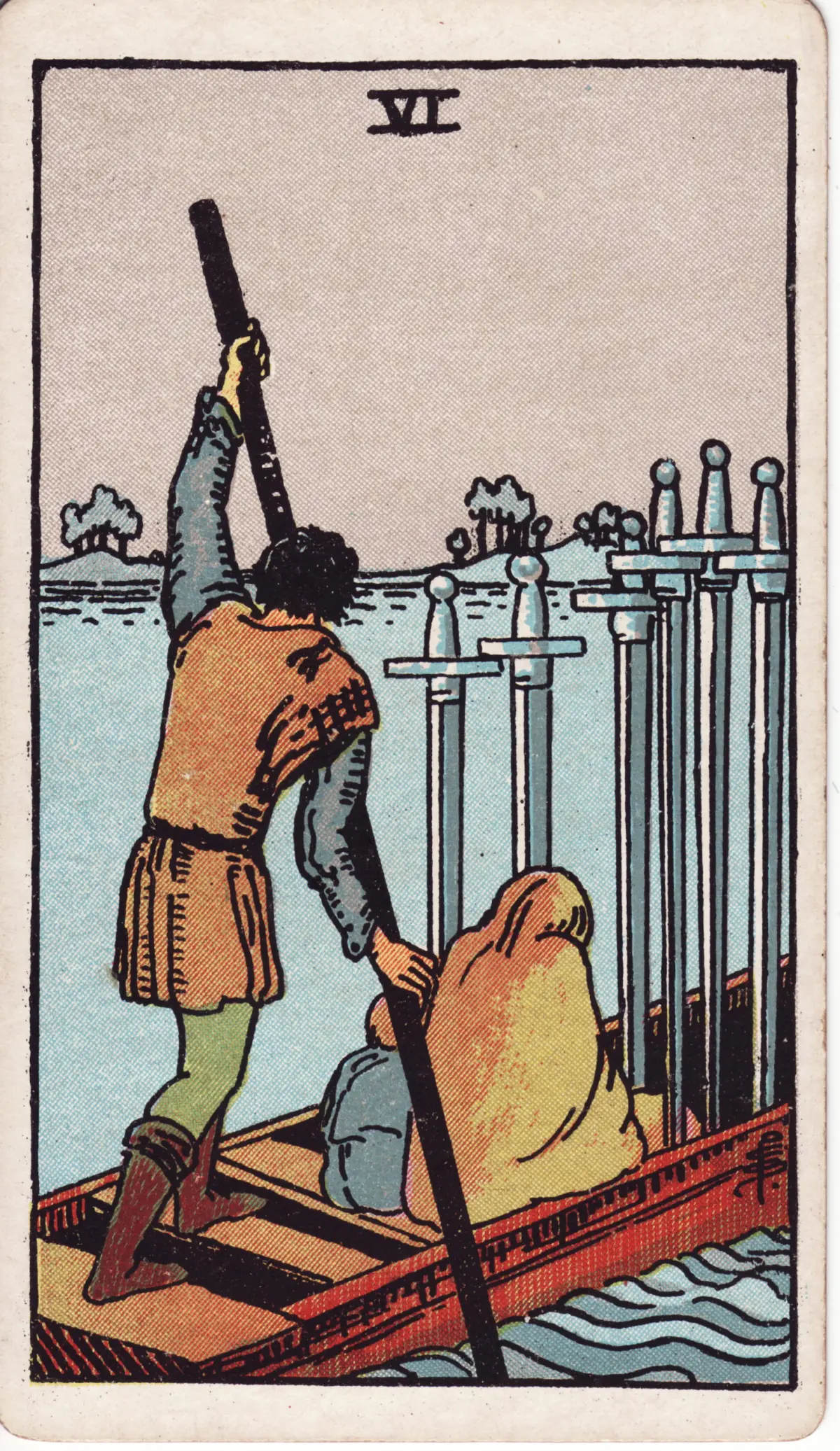
For example, if the Six of Swords lands above the Page, it serves as a call to adventure, higher education, and broadening horizons. If the Seven of Wands lands below, it acts as a resilient anchor, reminding the youth that they possess the inner fortitude to stand their ground against future opposition.
Official Responses and Professional Perspectives
While esoteric practices involving minors can sometimes invite skepticism or regulatory caution, professional bodies and youth mentors have largely praised structured, lightweight approaches like "The Four Pages" for their psychological utility.
The Value of Ethical Boundaries
Child welfare advocates and professional Tarot organizations emphasize the absolute necessity of parental consent. Because adolescent mental health is delicate, ethical readers operating in public spaces or workshops must ensure guardians are informed and supportive of the activity.
Educational and Mentorship Perspectives
Educators who have observed or utilized similar arts-based mentorship tools note that Tarot, when stripped of fatalism and reframed as a storytelling device, can function effectively as a projective psychological tool.
- Encouraging Reflection: By attributing traits to neutral cards (like the Seven of Wands or Six of Swords), teenagers can externalize their anxieties and ambitions.
- Building Resilience: Framing the lower card as an "invisible friend" provides young people with cognitive coping mechanisms during times of stress.
- Fostering Communication: The interactive nature of the reading opens up dialogue between the reader (or mentor) and the youth regarding their real-world goals and academic paths.
Implications: The Future of Youth Divination and Mentorship
The success of "The Four Pages" highlights a broader shift within the esoteric community: a move away from dogmatic prediction and toward empowerment, self-reflection, and psychological accessibility.
1. Modernizing Ancient Tools
As younger generations display an increasing appetite for mindfulness, astrology, and intuitive arts, practitioners must adapt. Methods that require hours of memorization alienate Gen Z and Gen Alpha. Quick, interactive, and gamified spreads ensure that traditions survive and remain relevant.
2. Group Dynamics and Social Bonding
As noted by experienced practitioners, this spread excels in group settings among peers. In youth clubs, workshops, or social gatherings, teenagers naturally gravitate toward shared mystical experiences. When performed with theatrical flair, it fosters a sense of collective curiosity and mutual support.
3. Redefining the Role of the Reader
In this context, the Tarot reader acts less like a traditional fortune-teller and more like a facilitator of self-discovery. By guiding youth to recognize their own ambitions and inner strengths, readings transform into constructive mentoring sessions disguised as a bit of magical fun.
Conclusion
"The Four Pages" proves that Tarot does not need to be intimidating to be profound. By combining a simplified structure, active self-selection, and a touch of theatrical performance, this method offers teenagers a safe, engaging, and deeply empowering glimpse into their own potential. As the esoteric landscape continues to innovate, techniques that prioritize youth autonomy, ethical boundaries, and psychological resilience will undoubtedly serve as the gold standard for mentoring the next generation.
