

LONDON & UTRECHT — Two hundred and one million years ago, Earth underwent a profound and violent biological reckoning. Known as the end-Triassic mass extinction, this catastrophic event wiped out a staggering proportion of marine and terrestrial species, clearing the ecological stage for the rise of the dinosaurs. For decades, paleontologists and geologists have pinned the primary blame on massive, protracted volcanic eruptions tied to the fracturing of the supercontinent Pangea. These cataclysmic fissures belched monumental volumes of carbon dioxide into the global atmosphere, trapping heat and driving planetary temperatures upward by a devastating 5 to 10 degrees Celsius.
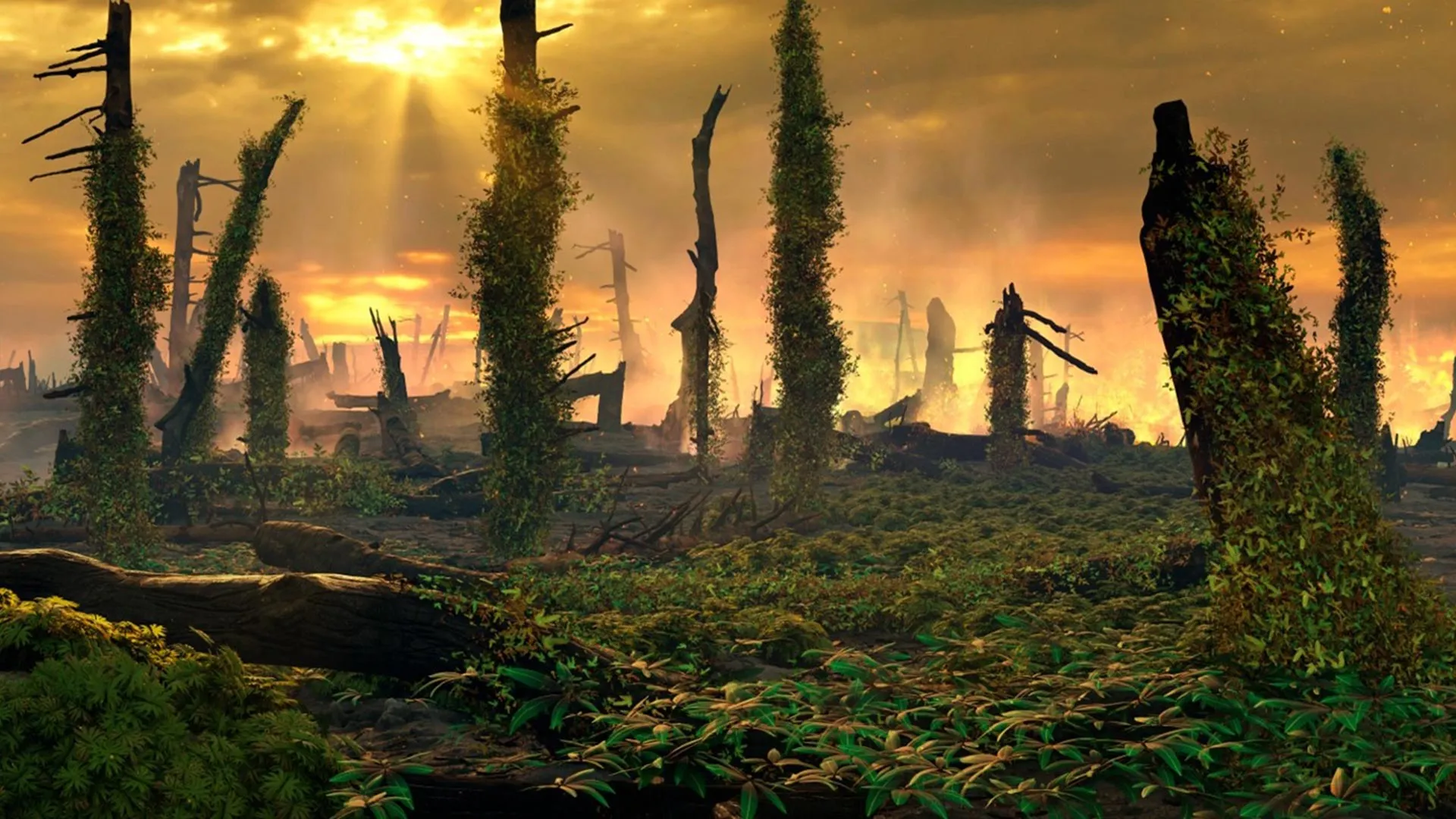
Yet, a newly published international study reveals that the atmospheric injection of greenhouse gases was only the opening act. According to groundbreaking research led by geologists at Utrecht University and published in Nature Geoscience, the suffocating heat triggered a cascading feedback loop of global deforestation, opportunistic plant colonization, and unprecedented, relentless wildfire activity. As towering ancient forests collapsed under the thermal strain, a resilient army of ferns surged into the scarred landscapes of Northwest Europe. Far from being mere passive victims of a warming world, these ferns inadvertently transformed into the planet’s ultimate tinderbox, creating a self-sustaining cycle of devastation that burned for tens of thousands of years.
Main Facts: Unraveling a Deep-Time Catastrophe
The core finding of the Utrecht-led research team centers on a previously unmapped environmental dynamic: the intimate, destructive synergy between extreme climate warming, fern expansion, and continent-spanning wildfires.
During the main phase of the end-Triassic extinction, rising global temperatures and severe ecological stress dismantled complex forest ecosystems. In their place, fern-dominated savannahs rapidly expanded across vast territories in what is now Northwest Europe. While ferns are historically celebrated for their evolutionary hardiness—often labeled by paleobotanists as the ultimate "disaster species"—their biological traits created a dangerous vulnerability to fire.
As these sprawling fern colonies dried out seasonally, they generated thick, flammable mats of organic debris. This fuel supply proved irresistible to lightning and spontaneous combustion in a super-heated world, feeding colossal, recurrent wildfires. To track this ancient pyromania, the research team relied on an innovative, low-cost analytical metric: the Palynomorph Darkness Index (PDI). By quantifying the microscopic color changes of fossilized pollen and spores using the RGB spectrum, scientists mapped a continent-wide "Dark Zone" that perfectly mirrors the timing of the fern spike and the peak of the end-Triassic mass extinction.
- Event Timeline: The end-Triassic mass extinction occurred approximately 201 million years ago.
- Temperature Impact: Volcanic activity linked to the breakup of Pangea drove global temperatures up by 5 to 10 degrees Celsius.
- Botanical Shift: Complex forests collapsed, replaced by expansive, fern-dominated savannahs.
- Duration of the Fire Interval: The resulting fern spike and heightened wildfire regime persisted anywhere from 40,000 to 300,000 years.
- Publication Venue: Nature Geoscience, July 21, 2026.
Chronology of the Disaster: From Volcanic Sunder to the "Dark Zone"
Reconstructing a planetary crisis that played out over two hundred million years requires exceptional geological archives. To piece together the chronology of the end-Triassic wildfires, an international team of scientists analyzed exceptionally well-preserved sediment extracted from four distinct drill cores. Crucially, this dataset included a recently recovered, continuous 640-meter-long sediment core originating from the United Kingdom.
The Pre-Extinction Equilibrium
Before the onset of the crisis, the world was largely dominated by rich, diverse forest ecosystems. Pollen and spore records from the deepest sections of the drill cores reflect a stable botanical baseline. In these layers, organic microfossils display a pale yellow hue, standard for sediments that have undergone modest, uniform burial over millions of years.
The Volcanic Trigger and Forest Collapse
Approximately 201 million years ago, the Central Atlantic Magmatic Province (CAMP) began its sustained eruptions. The staggering output of carbon dioxide overwhelmed the Earth’s carbon cycle, rapidly escalating global temperatures. As heat waves intensified and precipitation patterns fractured, traditional forests could not adapt. Massive deforestation ensued, accompanied by severe soil erosion and landscape destabilization.
The Rise of the Disaster Species
With the canopy destroyed, sunlight flooded the forest floors. Ferns, possessing spore-based reproduction and deep, resilient root systems, capitalized on the chaos. While other vegetation withered, ferns colonized the denuded terrain with astonishing speed. They spread across Northwest Europe, establishing broad, open, savannah-like ecosystems.
The Era of the Megafire
As these fern populations matured, they produced dense accumulations of biomass. During dry spells, this biomass dried out completely, transforming the landscape into a continuous carpet of fuel. The result was an unprecedented epoch of high-frequency wildfires.
The geological signature of this fiery epoch is preserved in the cores as an unmistakable "Dark Zone." While deeper, older fossils and post-extinction fossils remained lightly colored, microfossils trapped within the extinction interval darkened progressively to an intense, deep brown. This color anomaly occurred simultaneously across all four geographic basins—ruling out simple burial depth as a cause and confirming a shared, global environmental shock.
Supporting Data: Innovations in Paleo-Wildfire Detection
For decades, reconstructing ancient wildfire activity relied primarily on two classic proxies: macroscopic fossil charcoal fragments and polycyclic aromatic hydrocarbons (PAHs)—organic chemical compounds produced during the incomplete combustion of organic matter and preserved in sediment layers.
While invaluable, both proxies carry distinct scientific limitations. Large pieces of fossil charcoal are structurally fragile; they can easily break apart during transport and deposition, creating a false impression of vastly magnified fire activity. Similarly, PAHs are volatile and mobile; these microscopic smoke molecules can travel immense distances from their source fire before settling, and their chemical integrity can degrade over millions of years of diagenesis.
To bypass these hurdles, the research team pioneered and refined the Palynomorph Darkness Index (PDI).
Decoding the Palynomorph Darkness Index
Organic microfossils—such as plant pollen and spores—naturally darken over time as they are buried deeper within the Earth’s crust. As sedimentary layers accumulate above them, increasing pressure and geothermal heat cook the organic matter, driving a predictable transition from pale yellow to dark brown and eventually black.
However, the researchers noticed a radical departure from this rule in the end-Triassic cores. The deepest, oldest fossils were paradoxically lighter in color than the younger fossils trapped within the extinction interval.
To quantify this anomaly with absolute precision, the scientists connected a high-resolution digital camera to a light microscope, capturing digital images of thousands of individual pollen grains and spores. The camera recorded color data across the RGB (Red, Green, Blue) spectrum, which was subsequently converted into standardized grayscale values.
The team executed 15,000 distinct measurements across multiple plant groups spanning the pre-extinction, extinction, and post-extinction eras. Crucially, they compared tree pollen against fern spores to test whether the darkening was driven by inherent biological differences.
"All plant groups show the same effect, which is a strong indication that it was the result of an outside force," notes Dr. Bas van de Schootbrugge. When mapped against traditional proxies, the PDI matched the spikes in charcoal and PAH concentrations with remarkable precision. The "Dark Zone" was definitively identified as the chemical imprint of extreme, widespread charring caused by relentless wildfires.
Official Responses and Expert Insights
The publication of the study in Nature Geoscience has drawn widespread acclaim from the paleontology and paleoclimatology communities, who view the methodology as a major leap forward for deep-time environmental reconstruction.
Dr. Bas van de Schootbrugge, a senior author of the study from Utrecht University, emphasized the dual role that ferns played in orchestrating the ecological crisis. Far from being passive victims of climate change, ferns were active participants in the planetary disruption.
"Ferns are truly remarkable plants that have withstood many crises throughout Earth history, and some species can adapt to some of the most extreme environments. They can be considered to be true disaster species," Dr. Van de Schootbrugge explained during a press briefing discussing the findings.
Describing the vicious cycle that locked the Earth into a fiery state for millennia, Van de Schootbrugge noted how biological traits designed for survival inadvertently exacerbated the planetary collapse:
"When the ferns dry out, the thick mats act as the ideal fuel to trigger massive wildfires. Ferns responded to and delivered the fuel that fanned the flames, triggering repeated massive wildfires. A truly hellish world."
Other members of the international geological team pointed out that the PDI technique democratizes and simplifies paleofire research. Because the equipment required—a standard light microscope equipped with a digital camera—is widely available and inexpensive compared to the mass spectrometry required for PAH analysis, research groups worldwide can apply the Palynomorph Darkness Index to other mass extinction boundaries, such as the Permian-Triassic or Cretaceous-Paleogene events.
Broader Implications: A Warning from Deep Time
While the end-Triassic extinction unfolded 201 million years ago, the implications of the Utrecht University study resonate powerfully in the modern era. Earth’s current climate trajectory bears unsettling parallels to the biochemical shifts that preceded the Mesozoic mass extinction.
The researchers emphasize that the end-Triassic crisis was not driven by a single, isolated catastrophe, but rather by an unforgiving cascading feedback loop. The recipe for planetary devastation involved three core ingredients:
- Rapid Climate Warming: Anthropogenic or volcanic greenhouse gas emissions drive extreme global heating.
- Deforestation and Habitat Destruction: Rising temperatures and shifting precipitation decimate complex, stable ecosystems like ancient forests.
- The Rise of Opportunistic Species: Resilient, fast-growing pioneer plants take over damaged landscapes, inadvertently supplying continuous fuel for recurrent, high-intensity disturbances like wildfires.
In the case of the Triassic-Jurassic transition, this feedback loop sustained a devastated, fire-scarred biosphere for at least 40,000 years, and potentially up to 300,000 years, suppressing biological recovery and reshaping the evolutionary trajectory of life on Earth.
"The lesson we can learn from this," Dr. Van de Schootbrugge concludes, "is that the combination of climate change, deforestation, and the spread of opportunistic species can provide all the ingredients for a perfect storm." As modern ecosystems face accelerated warming, widespread habitat loss, and expanding brushfire regimes across the globe, the ancient fossil record serves as both a scientific window into the deep past and a sobering reminder of the fragile interconnectedness of Earth’s biosphere.
