

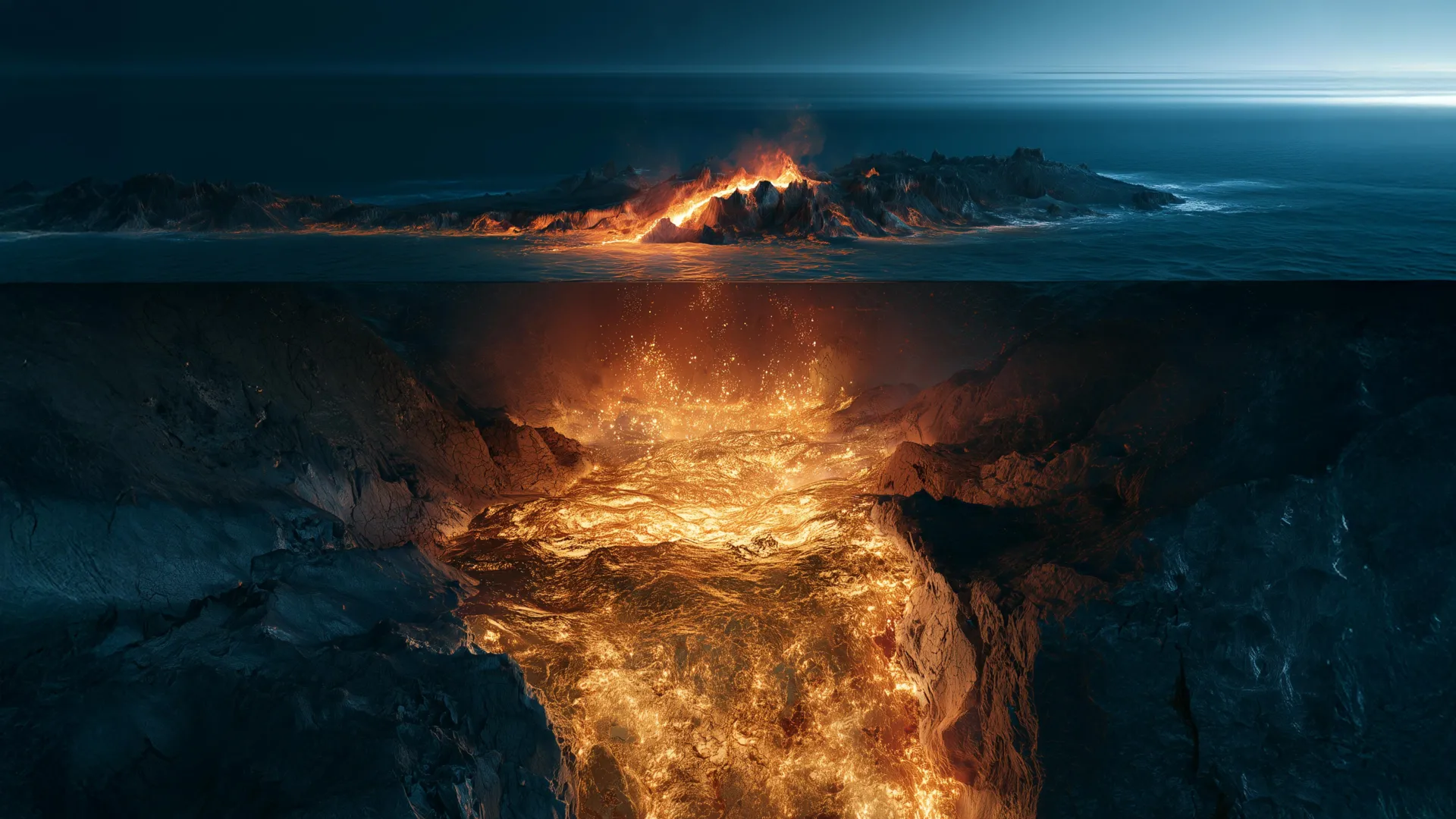
GEOMAR — Deep beneath the rolling waves of the South Pacific, a subterranean metallurgical laboratory is hard at work. For decades, geologists have puzzled over an enduring geological mystery: why are island arcs—dramatic chains of underwater and surface volcanoes that form above subduction zones—so inexplicably rich in gold?
While scientists have long understood that these volatile regions can host significant mineral deposits, the precise mechanisms driving this localized geological enrichment have remained elusive. Now, groundbreaking research led by Dr. Christian Timm, a marine geologist at the GEOMAR Helmholtz Centre for Ocean Research Kiel, is pulling back the curtain on Earth’s subterranean alchemy. The findings suggest that a complex, multi-stage melting process deep within the planet’s mantle acts as a "gold kitchen," setting the stage for precious metal deposits long before magma ever breaches the ocean floor.
Main Facts
The new study, published by an international team of geoscientists, reveals that the exceptional gold concentrations found in island arcs are driven by hydrous, high-temperature mantle melting. Rather than being the result of a single, straightforward volcanic event, the enrichment of gold is a cumulative process fueled by the repeated, intense melting of a water-rich and oxidized mantle.
Key takeaways from the research include:
- The Role of Water: Water released from descending tectonic plates does not directly pump gold into the magma, as previously theorized. Instead, it acts as a powerful catalyst, driving extensive and repeated melting of the mantle rock.
- The Fate of Sulfides: Deep in the mantle, gold is preferentially bound within sulfide minerals. Under high-degree melting conditions, these sulfides break down entirely, unlocking trapped gold and transferring it directly into the rising melt.
- Primitive Snapshots: By analyzing pristine volcanic glass dredged from the seafloor, scientists were able to capture the unadulterated chemical fingerprints of ancient magmas, revealing gold concentrations several times higher than those found in mid-ocean ridges.
- The Life Cycle of Gold: While the rocks sampled do not contain high enough concentrations for commercial mining, this deep-mantle enrichment establishes the critical starting conditions that feed hydrothermal systems and potential ore deposits closer to the surface.
Chronology of the Discovery
The journey to decoding Earth’s deep-ocean gold kitchen unfolded through a meticulous combination of marine expedition, rapid laboratory preservation, and high-precision chemical analysis.
Step 1: Sampling the Seafloor
The foundation of the research was laid during marine geological expeditions targeting the Kermadec island arc and the neighboring Havre Trough, located north of New Zealand. In these dynamic subduction zones, the Pacific Plate dives beneath the Australian Plate, generating intense tectonic and volcanic activity. During these missions, researchers collected 66 volcanic glass samples directly from the seafloor.
Step 2: Preserving the Magma’s Diary
Volcanic glass forms when submarine lava erupts and is quenched by the freezing waters of the deep ocean, cooling almost instantaneously. This rapid thermal shock locks the magma’s original chemical composition in place, acting as a geological time capsule. Among the collected items, the team prioritized "primitive glasses"—specimens that preserved the unaltered chemistry of the magma before fractional crystallization could alter its makeup.
Step 3: Ultra-Trace Chemical Analysis
Back in the laboratory, the researchers subjected the samples to rigorous geochemical scrutiny. Measuring gold at ultra-trace concentrations—often measured in nanograms per gram—requires extreme precision. The team compared gold levels alongside other chalcophile ("sulfur-loving") elements, including silver, copper, selenium, and platinum. Because these elements share similar chemical behaviors during melting, their proportional ratios served as a forensic tool to reconstruct the hidden processes at work deep inside the Earth’s mantle.
Supporting Data and Geochemical Evidence
The analytical results provided a clear, albeit surprising, narrative about the subterranean forces shaping these volcanic chains.
When the researchers analyzed the primitive glass samples, the numbers stood out immediately. The rocks displayed original gold concentrations of up to six nanograms per gram. While six nanograms may sound minuscule to the untrained ear, it represents an unusually high baseline for mantle-derived magma. Furthermore, the samples exhibited gold-to-copper ratios significantly elevated above those measured in fertile mantle rocks and primitive mid-ocean ridge basalts.
To understand these signatures, the team looked at the physical conditions required to trigger them:
- High-Temperature Melting: The chemical patterns indicated that the mantle beneath the Kermadec arc melts at elevated temperatures, crossing the sulfide liquidus—the thermal threshold where sulfide minerals can completely dissociate.
- Multi-Stage Depletion: The chemical indicators strongly pointed to a mantle source that had already undergone an earlier episode of partial melting (leaving it "depleted") before being subjected to a subsequent, high-degree melting event.
"When we analyzed these samples, we found that their gold concentrations are often several times higher than those of comparable magmas from mid-ocean ridges," Dr. Christian Timm noted. "This raised the key question: which processes are responsible for this enrichment?"
Official Responses and Scientific Insights
The implications of the study challenge long-held assumptions within economic geology and petrology. For years, scientists operated under the hypothesis that fluids and volatiles released by a subducting slab acted as a direct transport mechanism, physically leaching gold from the mantle and carrying it upward into the overlying magma plume.
Dr. Timm and his colleagues found that the reality is far more nuanced.
"We initially assumed that water released from the subduction zone directly controlled gold enrichment," Timm explained. "However, our data show that water mainly facilitates mantle melting. The key factor for high gold concentrations is the high—and in part repeated—degree of melting."
Water, therefore, plays an indirect yet vital role. By lowering the melting point of mantle rocks and driving extensive magmatic activity, water forces the mantle to melt more vigorously. This intensity is the executioner of sulfide minerals.
"Gold in the mantle is commonly bound in sulfide minerals," Timm elaborated. "At high degrees of melting, these minerals break down, releasing their gold completely into the melt."
In essence, lower or single-stage melting leaves gold imprisoned within stable sulfide structures. It is only when the mantle experiences repeated, aggressive melting events that the vaults are broken open, allowing the precious metal to flood into the rising magma.
Broader Implications for Geology and Mining
While the volcanic glass samples recovered from the Kermadec Arc are scientifically invaluable, gold prospectors should not pack their bags just yet. The rocks examined by GEOMAR do not possess gold concentrations high enough to warrant commercial extraction. Economically viable ore bodies require grade concentrations several orders of magnitude greater than what was found in these deep-sea glasses.
However, the study profoundly shifts our understanding of how giant mineral deposits come to be. By pushing the explanation for gold enrichment deeper into the planet’s interior, the research connects deep-mantle dynamics with shallow crustal processes.
The same multi-stage melting mechanism may help explain the formation of massive seafloor hydrothermal sulfide systems—often referred to as "black smokers"—which develop when superheated, mineralized fluids circulate through submarine volcanic structures. These hydrothermal systems are notorious for hosting extraordinary concentrations of copper, zinc, gold, and silver.
"The mechanism we identify could contribute to the elevated gold contents observed in hydrothermal systems in subduction zones," Timm stated, though he noted that this specific link warrants further investigation.
Ultimately, the study reframes how geologists view the birth of precious metal deposits. Rather than looking exclusively at what happens when magma approaches the surface, science must now look thousands of meters lower, into the convective currents of the Earth’s mantle.
"We are effectively looking at the first step in the life cycle of gold," Timm concluded. "It begins with the transfer of gold from the mantle into a melt that eventually forms volcanoes. The alchemy starts long before the metal reaches the surface."
