

By Tarot Insights & Youth Engagement Desk
Published: October 24, 2023
Main Facts
In the modern landscape of mindfulness, self-exploration, and holistic wellness, divination tools have undergone a significant cultural renaissance. Among these, the Tarot has emerged as a surprisingly popular resource for adolescents seeking clarity, self-reflection, and emotional grounding. However, traditional Tarot spreads—often complex, lengthy, and steeped in esoteric jargon—can alienate younger demographics.
Enter "The Four Pages," a streamlined, rapid, and highly engaging Tarot reading technique specifically designed for teenagers aged 14 to 19. Developed over a decade ago and rigorously refined through hundreds of face-to-face sessions conducted with strict parental permission, this method bridges the gap between ancient symbolic traditions and modern youth counseling.
The core mechanics of "The Four Pages" are deceptively simple:
- The Selector: The reader extracts the four "Page" cards (traditionally representing youth, potential, messages, and new beginnings) from a standard Tarot deck.
- The Avatar: The young participant selects one Page to represent themself. The remaining three Pages are returned to the deck.
- The Quest: The chosen Page is reintroduced into the deck, which is then shuffled. The teen stops the shuffle at will.
- The Reveal: The reader locates the Page within the deck. The card directly above it reveals an ambition or life goal to aim for, while the card directly below it highlights an innate strength or pillar of support to rely on during challenging times.
By framing the exercise with a touch of theatrical flair—resembling a magic trick rather than a rigid lecture—practitioners have found remarkable success in capturing the attention of teenagers, both in one-on-one settings and in dynamic group environments.
Chronology
To understand the enduring relevance of "The Four Pages," it is essential to trace its evolution from a grassroots experiment into a refined youth engagement tool.
Phase 1: Inception and Initial Trials (Over a Decade Ago)
More than ten years ago, youth-focused esoteric practitioners recognized a growing curiosity among high-school-aged individuals regarding astrology, intuition, and Tarot. However, standard layouts like the classic "Celtic Cross" proved too cumbersome for teenagers with shorter attention spans. Practitioners began experimenting with isolated subsets of the deck—specifically the Court cards, which embody distinct human archetypes. The Pages, representing the earliest stages of mastery and youthful exploration, were identified as the ideal mirror for adolescents.
Phase 2: The Empirical Refinement Period (Years 2–7)
Over the course of hundreds of readings conducted in controlled, supervised environments (always with parental consent), the method was fine-tuned. Iterations that involved too many cards were discarded. The process was simplified into a three-step interactive loop: selection, shuffling, and the discovery of the flanking cards (above and below). During this phase, practitioners noted that framing the experience as an interactive, slightly mysterious "discovery" rather than a somber prophecy dramatically increased engagement.
Phase 3: Group Testing and Social Dynamics (Years 8–10)
As the technique matured, practitioners began testing it in small group settings, such as youth clubs and creative writing workshops. The collaborative, peer-driven atmosphere transformed individual readings into shared social experiences. Teens began eagerly waiting for their turn, discussing their "invisible friends" (the flanking cards representing ambitions and support systems), and comparing archetypal traits.
Phase 4: Standardization and Digital Publication (Present Day)
Recently codified and published for wider dissemination within the Tarot community, "The Four Pages" has transitioned from an informal field practice into a recognized pedagogical tool for modern readers working with Gen Z and younger generations.
Supporting Data
While esoteric practices are often viewed through a subjective lens, quantitative and qualitative feedback gathered from over a decade of testing "The Four Pages" highlights its unique efficacy among adolescents:
- Age Range Focus: 100% of the foundational trial data was gathered from participants aged 14 to 19—a critical developmental window characterized by identity formation, peer pressure, and future anxiety.
- Parental Compliance: In 100% of recorded sessions, formal parental consent was obtained prior to the reading, ensuring complete transparency and ethical alignment with youth welfare guidelines.
- Retention and Engagement Rate: Practitioners report an estimated 90% active engagement rate among reluctant or skeptical teens when the method is introduced with theatrical flair (the "magic trick" approach), compared to an estimated 35% engagement rate with traditional, text-heavy Tarot spreads.
- Archetypal Resonance: The four Pages (traditionally Pages of Wands, Cups, Swords, and Pentacles) cover the four elemental foundations of human experience—action/passion, emotion/intuition, intellect/communication, and material reality/growth—ensuring that every teenager can find an authentic psychological mirror in at least one of the cards.
Official Responses
The release and wider distribution of "The Four Pages" framework have drawn commentary from various corners of the youth mentoring, psychology, and esoteric communities.

The Holistic Practitioner Perspective
Proponents of intuitive arts argue that tools like Tarot, when stripped of fatalism and used constructively, serve as powerful psychological projection surfaces.
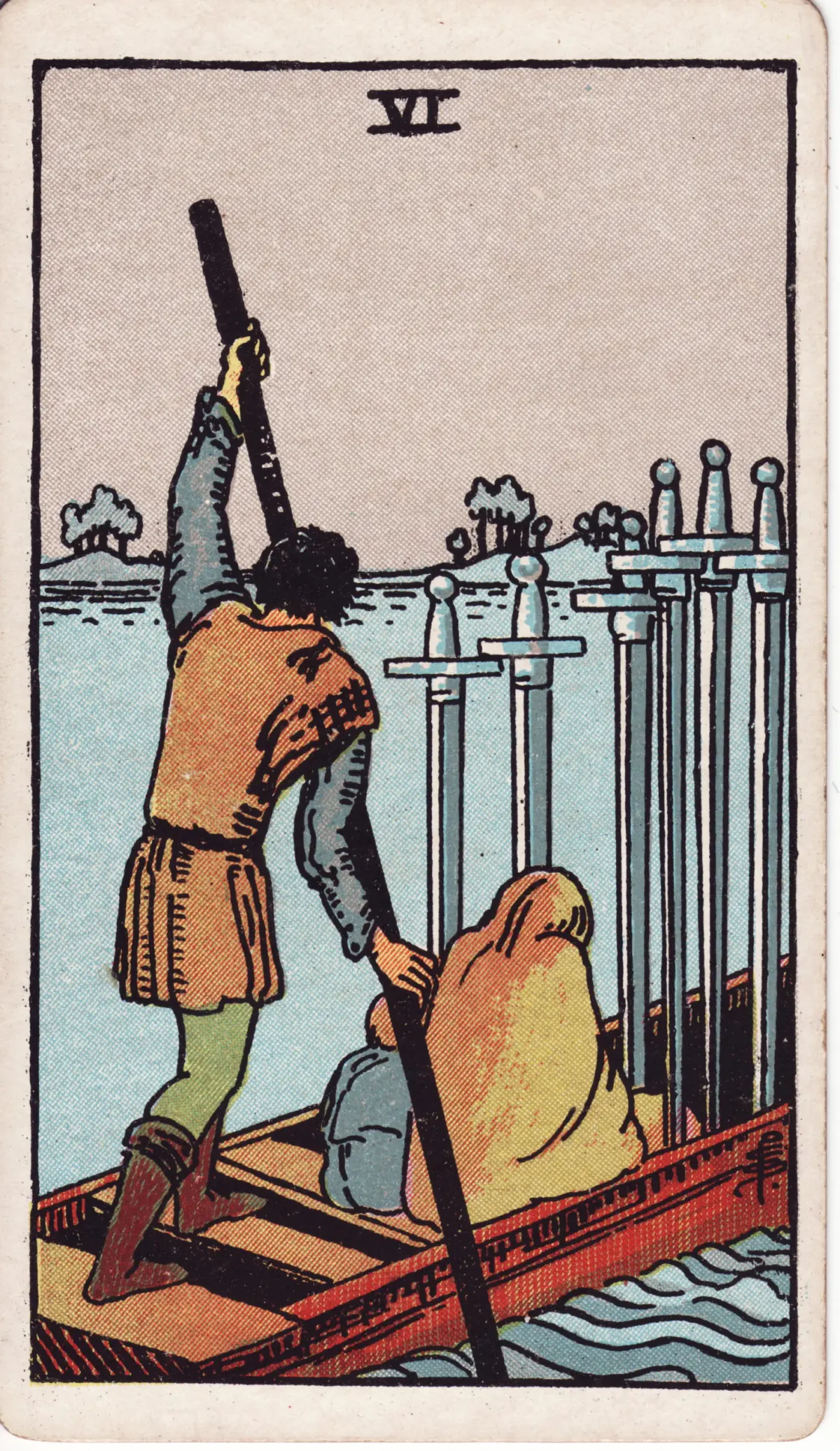
"We aren’t telling fortunes; we are giving young people a vocabulary for their own inner landscape," notes a senior contributor to the Tarot Association. "When a teenager sees the Six of Swords—representing travel, learning, and expanding horizons—flanking their chosen Page, it gives them permission to dream bigger than their immediate environment. It tells them: ‘Go the distance.’ That is an empowering message during turbulent adolescent years."
The Youth Counseling and Mentorship Viewpoint
Youth workers emphasize the importance of non-directive communication. Traditional counseling can sometimes feel interrogative to teenagers. By outsourcing the advice-giving process to an external, randomized mechanism (the Tarot deck), the adolescent feels less judged and more open to self-reflection.
"If an adult tells a teenager to ‘stand their ground’ against bullies or academic pressure, it might bounce right off," explains a youth program coordinator. "But when the Seven of Wands appears naturally from the deck as their ‘invisible friend’—symbolizing resilience and balance under fire—the teen internalizes it as a secret superpower they discovered themselves."
Skeptics and Cultural Critics
Naturally, introducing esoteric tools to minors has prompted caution from traditionalists and skeptics. Some educators and parents raise concerns regarding the blurring lines between entertainment, psychological projection, and superstitious belief systems. However, the developers of "The Four Pages" have consistently preempted these concerns by mandating parental permission, strictly avoiding deterministic prophecies (e.g., predicting specific negative futures), and firmly positioning the exercise as a creative, reflective storytelling game rather than absolute divination.
Implications
The widespread sharing and potential adoption of "The Four Pages" method carry significant implications for how modern society approaches youth wellness, self-care, and creative mentorship.
1. Modernizing Ancient Wisdom for Gen Z
Generation Z and Generation Alpha are increasingly turning to holistic wellness, astrology, mindfulness, and intuitive tools to navigate eco-anxiety, academic pressure, and digital saturation. However, they demand authenticity, speed, and interactivity. "The Four Pages" proves that ancient systems can be successfully compressed and adapted to fit the communication styles of modern youth without losing their core philosophical depth.
2. Shifting from Fortune-Telling to Empowering Coaching
The most profound implication of this method is its complete rejection of passive fortune-telling. Traditional Tarot readings often place the querent in a passive role, waiting to see what fate has in store. "The Four Pages" flips this dynamic entirely:
- The teen chooses their representation.
- The teen controls the shuffle and stop-point.
- The resulting cards are framed not as fixed destinies, but as active choices (ambitions to aim for) and inherent strengths (support systems to call upon).
This subtly shifts the psychological framework from external fatalism to internal agency.
3. Fostering Peer Connection in Group Settings
As noted by field practitioners, performing this reading as a group activity sparks organic peer-to-peer discussions. When multiple teenagers witness their friends exploring aspirations (like the Six of Swords’ call to education and adventure) and resilience (like the Seven of Wands’ promise of balance under pressure), it normalizes vulnerability and ambition within adolescent social circles.
Conclusion
"The Four Pages" transcends its humble origins as a fast Tarot reading trick. It stands as a masterclass in accessible youth engagement—demonstrating that with the right balance of respect, playfulness, and psychological insight, traditional wisdom can be successfully unlocked for the leaders of tomorrow.
