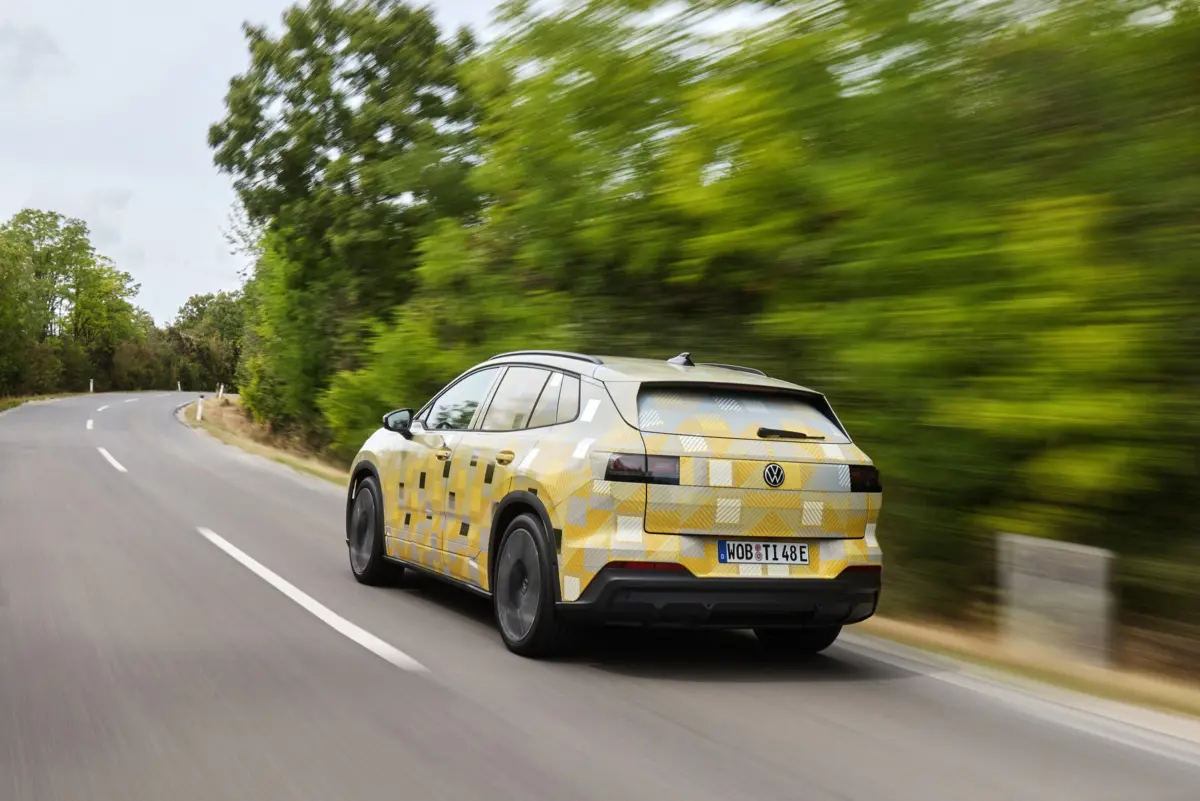
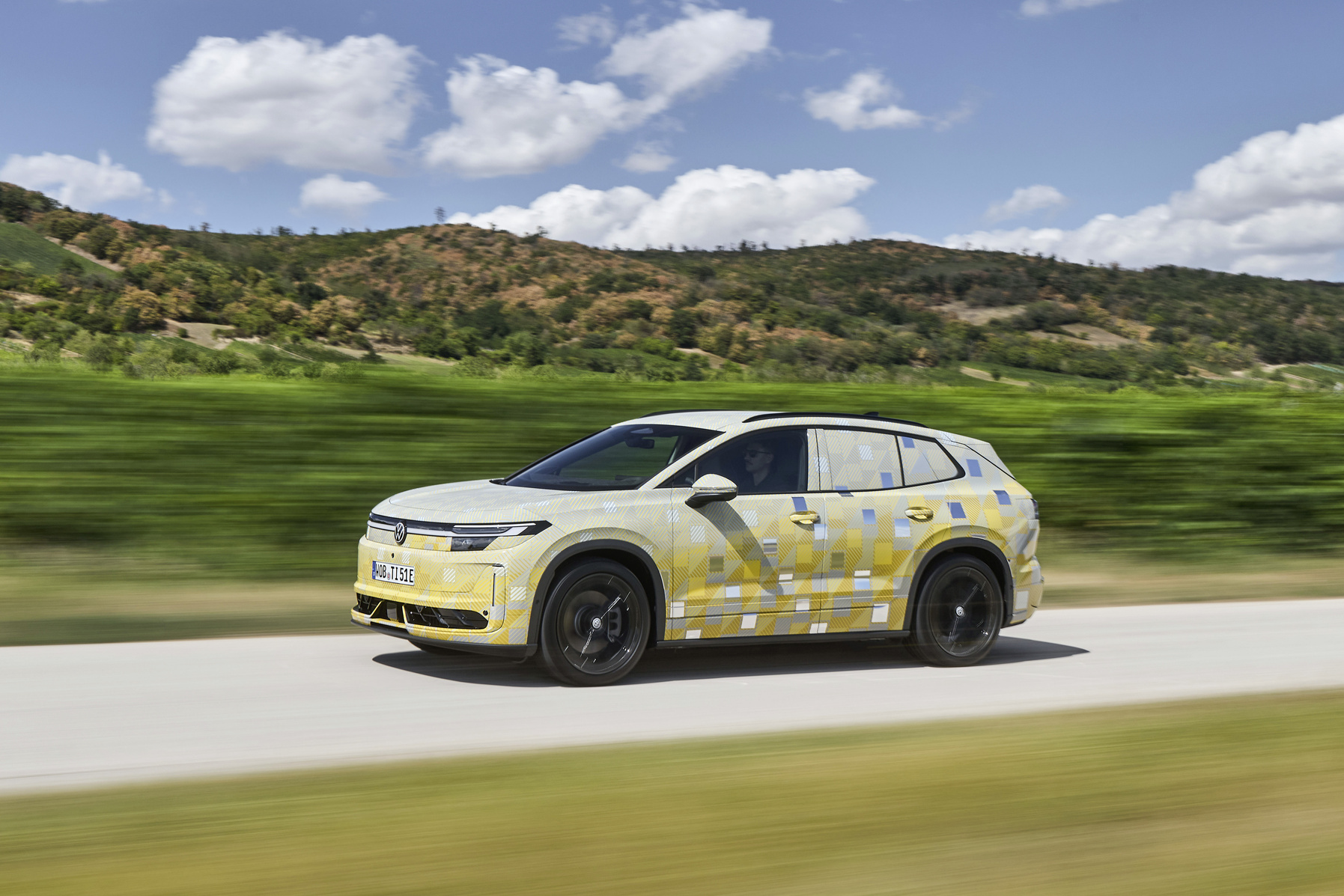
Main Facts: The Transition from Alphanumeric to Iconic Naming
Volkswagen is officially pivoting its electric vehicle (EV) nomenclature strategy, leaning heavily into its most trusted legacy nameplates. Following the preview of models like the ID. Polo and ID. Cross, the German automotive giant has confirmed that its next major all-electric volume SUV will officially be named the ID. Tiguan.
Slated to arrive in showrooms at the beginning of 2027, the ID. Tiguan represents a vital evolution in Volkswagen’s electric portfolio. Rather than continuing strictly with the purely alphanumeric naming conventions (such as the ID.4 and ID.5, which the new vehicle will ultimately succeed), VW is betting that trusted consumer brand equity will ease the broader public’s transition into zero-emission mobility.
The upcoming EV will not instantly replace the internal combustion engine (ICE) and hybrid iterations of the vehicle; instead, the all-electric ID. Tiguan will be sold alongside traditional powertrain Tiguan models, offering a dual-track strategy to satisfy diverse global consumer preferences. The official world premiere for the camouflage-clad SUV is scheduled for early October, where full specifications, design details, and initial market availability will be unveiled.
Chronology: From ID. Pioneers to the Tiguan Electric Era
The roadmap leading to the introduction of the ID. Tiguan underscores Volkswagen’s shifting strategy in the fiercely competitive global electric vehicle market:
2021: Volkswagen launches the ID.4, establishing a mass-market footprint in the global battery-electric vehicle (BEV) sector, later supplemented by its fastback sibling, the ID.5.
2023–2025: Amid shifting consumer preferences, economic headwinds, and stiff competition from both legacy automakers and new EV startups, VW re-evaluates its marketing and naming architectures. Early experiments with names like the ID. Polo and ID. Cross signal a pivot toward legacy brand integration.
Late 2026: Test mules of the all-electric ID. Tiguan continue their rigorous development trials under specialized camouflage wraps ahead of final production sign-offs.
Early October 2026: Volkswagen schedules the official global debut of the ID. Tiguan, lifting the veil on its design, interior layout, and performance metrics.
Beginning of 2027: The ID. Tiguan officially hits global markets, effectively beginning the phase-out timeline for the original ID.4 and ID.5 series while co-existing with the latest generation of combustion and hybrid Tiguans.
Supporting Data: The Phenomenal Scale of the Tiguan and ID. Lineups
To understand why Volkswagen is anchoring its electric future to the Tiguan name, one only needs to examine the sales figures. The data illustrates a legacy of dominance across both traditional and electric sectors:
8.3 Million: The total number of Tiguan vehicles produced globally since its inception, cementing its status as a cornerstone of Volkswagen’s modern commercial success.
1 Million+: Combined deliveries in the past year alone for the Tiguan and its sister model, the Tayron, demonstrating sustained demand for Volkswagen’s core SUV family across petrol, diesel, and plug-in hybrid (PHEV) configurations.
950,000+: Deliveries of the ID.4 and ID.5 series since 2021. This milestone places them among the most successful battery-electric vehicle model series across the entire Volkswagen Group, proving the underlying architecture’s market appeal.
Dual-Track Offering: The decision to run the ID. Tiguan alongside traditional combustion-engine and hybrid Tiguans ensures that Volkswagen can capture market share regardless of how quickly individual regional infrastructures adopt full electrification.
Official Responses: Leadership Weighs In
Volkswagen leadership views the ID. Tiguan not just as a new product, but as a bridge connecting the brand’s storied past with its carbon-neutral future.
Thomas Schäfer, CEO of the Volkswagen Brand, Head of Brand Group Core, and Member of the Board of Management of Volkswagen AG, emphasized the psychological and commercial power of the Tiguan moniker during the announcement:
"More than 8.3 million Tiguan vehicles produced demonstrate the strength and trust associated with this model name. The Tiguan represents a versatile, premium vehicle and embodies the essence of True Volkswagen. With the ID. Tiguan, we are carrying this product promise into the electric future. The all-electric model builds on the strengths of the bestseller and offers premium design, generous space, intuitive operation and innovative technologies. Together, both models form a strong offering for our customers’ different powertrain preferences."
Schäfer’s remarks highlight a critical strategic shift: rather than forcing consumers to learn new branding systems (like the alphanumeric "ID." prefixes paired with numbers), Volkswagen is acknowledging that consumer comfort lies in familiar, trusted identities. By merging the proven practicality of the Tiguan with next-generation EV architecture, VW aims to reduce friction for buyers transitioning away from fossil fuels.
Implications: What the ID. Tiguan Means for the EV Market
The introduction of the ID. Tiguan carries far-reaching implications for the automotive industry, Volkswagen’s internal structure, and the broader consumer landscape.
1. The Death of Pure Alphanumeric Naming in Mass Markets
When Volkswagen first launched its dedicated EV push, alphanumeric names like ID.3, ID.4, and ID.7 were chosen to project a futuristic, tech-forward image. However, automotive marketing data has repeatedly shown that alphanumeric names often struggle to build emotional resonance compared to heritage names like Golf, Passat, or Tiguan. The pivot toward names like ID. Tiguan and ID. Polo signals a broader industry retreat from cold tech-branding back to emotional, legacy-driven marketing.
2. Streamlining the Electric Portfolio
By positioning the ID. Tiguan as the direct successor to the ID.4 and ID.5, Volkswagen is simplifying its mid-size electric SUV lineup. While the ID.4 pioneered VW’s MEB platform scalability, the ID. Tiguan represents a maturation phase—refined design, improved interior ergonomics, and software stability that addresses early criticisms of the ID. software ecosystem.
3. Hedging Bets Amid Uneven Global EV Adoption
The automotive landscape in 2026 and 2027 is characterized by uneven regulatory shifts and fluctuating EV demand across North America, Europe, and Asia. By manufacturing both the traditional/hybrid Tiguan and the all-electric ID. Tiguan side by side, Volkswagen is building maximum supply chain flexibility. If a specific market accelerates its EV transition, dealers can pivot heavily toward the ID. Tiguan; if another market lags due to charging infrastructure constraints, the hybrid and ICE variants will maintain cash flow.
4. Setting the Stage for October
As the automotive world looks ahead to the official world premiere in early October, anticipation is high. The success of the ID. Tiguan will likely dictate the pace at which Volkswagen transitions other core segments to its upcoming Scalable Systems Platform (SSP) and advanced software stacks. For now, the message from Wolfsburg is clear: the electric transition does not mean abandoning the past, but rather weaponizing trusted heritage to conquer the zero-emission horizon.