

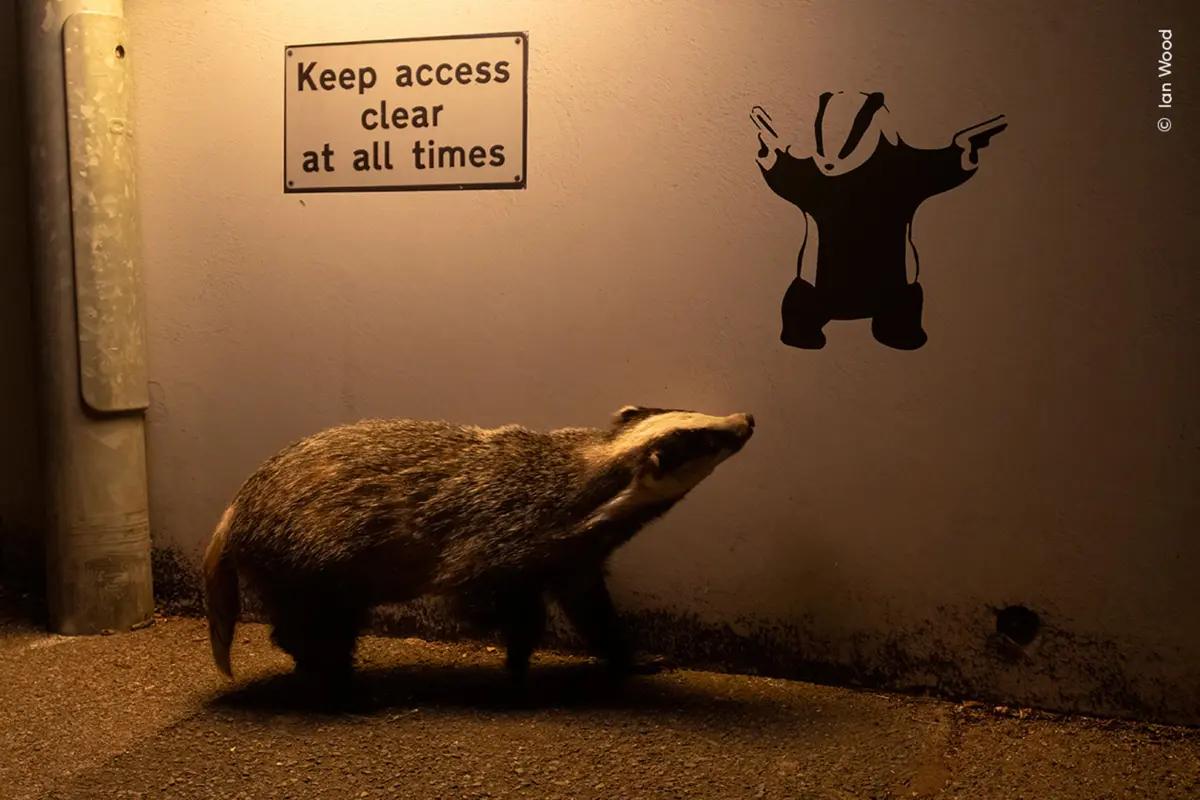
LONDON — In a triumph for urban wildlife photography, British photographer Ian Wood has captured the prestigious 2024 People’s Choice Award at the 60th annual Wildlife Photographer of the Year (WPOTY) competition. His winning image, titled "No Access," features an ambling Eurasian badger pausing beneath a striking piece of street art in the coastal town of St Leonards-on-Sea, England.
Beating out a competitive shortlist of 25 breathtaking entries, Wood’s photograph captured the hearts of nature enthusiasts worldwide, drawing a record-breaking tally of more than 76,000 votes. The competition, developed and produced by the Natural History Museum in London, once again proved its immense global reach, celebrating imagery that captures both the raw beauty and the complex realities of the natural world.
While the captivating photograph highlights the surprising adaptability of wildlife in concrete jungles, it also serves as a poignant artistic statement. Behind the charming composition lies a stark warning from the photographer regarding the perilous future facing badgers in the British countryside.
Main Facts: The Triumph of "No Access"
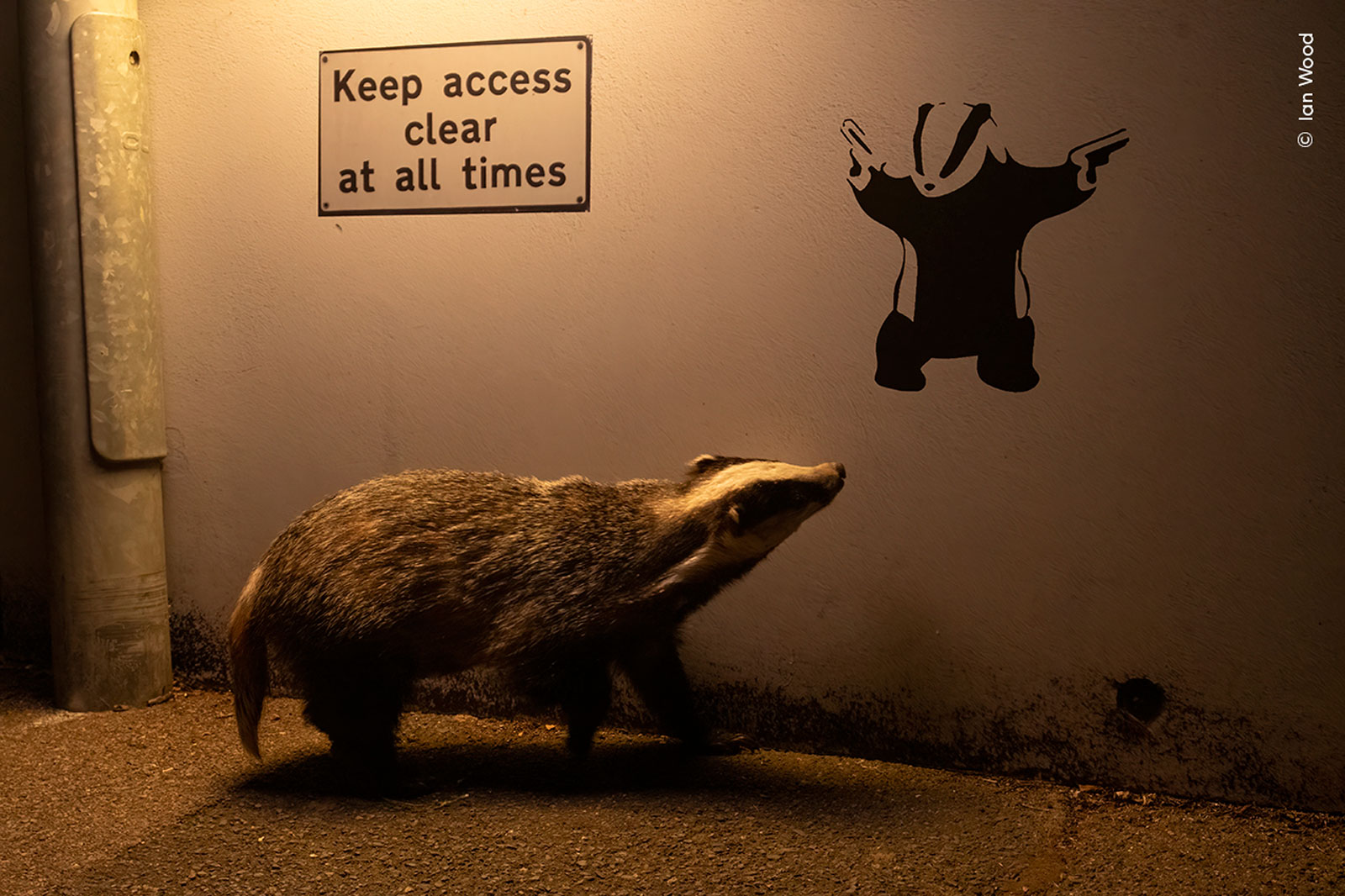
Ian Wood’s winning composition is a masterclass in timing, patience, and urban storytelling. Bathed in the amber glow of a solitary streetlamp, a lone Eurasian badger walks calmly along a pavement in St Leonards-on-Sea. As it ambles past a brick wall adorned with graffiti, the animal briefly glances upward, creating an uncanny moment of connection between human expression and wild habitation.
The image was selected from an initial pool of nearly 60,000 entries submitted to the landmark sixtieth Wildlife Photographer of the Year competition. Following a rigorous preliminary screening by an international panel of expert judges, 25 standout images were put to a global public vote. More than 76,000 fans of nature and photography cast their ballots, making this year’s People’s Choice Award one of the most heavily participated in the event’s history.
Alongside Wood’s grand prize winner, four "Highly Commended" finalists were recognized for their extraordinary contributions to wildlife and nature photography:
- "Earth and Sky" by Francisco Negroni: A breathtaking view of a double lenticular cloud illuminated at dusk by glowing lava erupting from Chile’s Villarrica volcano.
- "Edge of Night" by Jess Findlay: A ghostly, motion-filled action shot of a barn owl emerging from the hayloft of a derelict barn to begin its nightly hunt.
- "Whiteout" by Michel d’Oultremont: A masterclass in camouflage, showing a sharp-eyed stoat surveying its snowy domain in the bleak depths of a Belgian winter.
- "Spiked" by David Northall: A dramatic, gritty encounter featuring a bloodied yet resolute honey badger returning to finish a confrontation with a defiant Cape porcupine.
All five celebrated images are currently on display online and via interactive voting screens at the flagship Wildlife Photographer of the Year exhibition at the Natural History Museum in London, running until June 29, 2025.
Chronology: How the Winning Shot Came to Be
The genesis of "No Access" began not in a remote woodland or a protected national park, but on the asphalt pavements of a bustling English seaside community.

In St Leonards-on-Sea, local residents had developed a routine of leaving food scraps on the pavement to feed local foxes. Over time, however, Ian Wood noticed that foxes weren’t the only urban scavengers taking advantage of the nightly handouts. Badgers from a nearby established sett were increasingly venturing out of their traditional rural environments to forage in the brightly lit urban streets.
Recognizing a unique behavioral shift, Wood tracked the movements of the animals. Having observed a badger regularly walking along a specific pavement beneath a graffiti-marked wall late at night, he decided to turn observation into art.
To capture the scene without disturbing the animal or altering its natural behavior, Wood meticulously set up a small, discreet photographic hide on the edge of the road. Working under the cover of darkness, he relied entirely on the natural illumination cast by a nearby streetlamp. His patience paid off when the badger ambled into the frame, paused for a fraction of a second, and looked up—yielding a flawlessly timed frame that would ultimately conquer the global vote.
Supporting Data: By the Numbers
The Wildlife Photographer of the Year competition continues to cement its status as the world’s premier showcase for nature photography. Key metrics from the 2024 and 2024-2025 cycles highlight the scale of the achievement:
- 60,000+: The approximate number of total images submitted globally to the 60th edition of the main WPOTY competition.
- 25: The elite number of shortlisted images selected by the international judging panel to compete for the People’s Choice Award.
- 76,000+: The record-breaking number of individual votes cast by the public from around the globe to determine the winner.
- 10th: The milestone edition of the WPOTY People’s Choice Award won by Ian Wood’s image.
- October 2025: The scheduled month for the upcoming 61st awards ceremony at the Natural History Museum in London, where winners of the next competition cycle will be announced.
Official Responses: Voices from the Museum and the Creator
The striking juxtaposition of urban life and wild nature elicited praise from cultural leaders and profound reflections from the artist himself.
Dr. Douglas Gurr, Director of the Natural History Museum, commended the winning photograph for its thematic depth and cultural resonance:
"Ian’s flawlessly timed image offers a unique glimpse of nature’s interaction with the human world, underscoring the importance of understanding urban wildlife. His exceptional photograph serves as a powerful reminder that local nature and wildlife, often just outside our homes, can inspire and captivate us."
For Ian Wood, the public adoration of his photograph has been deeply humbling, but it also carries a heavy message that he is eager to share with a wider audience:
"The outpouring of badger love since my photo was nominated for the People’s Choice Award has been beautifully overwhelming. Finding out that it has won is truly humbling. However, there is a darker side to this image," Wood stated.
"I live in rural Dorset where I’m on a re-wilding mission to enhance habitats for a huge array of wildlife. The badger cull—which is still ongoing—has decimated their numbers, and I fear that unless the cull is stopped, we’ll only see badgers in urban settings in several parts of England. My hope is for this image to raise awareness of the damaging effect of the badger cull and help push for change."
Implications: Urban Wildlife, Conservation, and the Badger Cull
While "No Access" celebrates the adaptability of animals thriving on the fringes of human society, conservationists and experts point out that urban colonization is frequently a symptom of broader ecological distress rather than a success story.
The Plight of the Rural Badger
Ian Wood’s critique of the ongoing badger cull brings a deeply contentious political and environmental issue back into the spotlight. In parts of the United Kingdom, badger culls have been implemented as a measure to control bovine tuberculosis (bTB) in cattle. However, wildlife charities, animal rights organizations, and conservationists have repeatedly argued that the culls are scientifically ineffective, inhumane, and environmentally devastating, leading to the local extinction of badger families across vast swathes of the countryside.

When rural habitats become hostile or decimated by culling and intensive land development, resilient species like Meles meles (the Eurasian badger) are forced to adapt. Foraging in suburban streets, rummaging through domestic trash, and navigating car-laden tarmac roads become survival strategies of last resort.
The Rise of the Urban Ecosphere
Urban wildlife photography has evolved into an essential sub-genre within conservation visual arts. By documenting foxes in London, coyotes in Chicago, leopards in Mumbai, and now badgers beneath St Leonards-on-Sea graffiti, photographers challenge the rigid dichotomy that nature exists exclusively in remote wilderness reserves.
Dr. Gurr noted that understanding urban wildlife is crucial for fostering planetary stewardship. When city dwellers witness wild animals navigating human infrastructure on a daily basis, empathy grows. However, conservationists caution that society must not romanticize urban adaptation as a permanent fix. Animals do not choose cities because they prefer concrete over forests; they choose them because their natural homes have been disrupted or destroyed.
Looking Forward
As the Natural History Museum prepares for its upcoming 61st competition—with entries currently undergoing evaluation by international experts ahead of the October 2025 awards—competitions like WPOTY continue to serve as a vital megaphone for the planet.

Ian Wood’s badger does not merely gaze upward at a painted wall; it implicitly challenges human viewers to look closer at the consequences of environmental policy. Through the lens of art and empathy, “No Access” stands as both a celebration of resilience and an urgent plea to protect the wild spaces that remain before the only refuge left for Britain’s iconic badgers is the urban street corner.
