

From the Yoga Journal Archives (Originally published January–February 2004)
When an instructor announced it was time for Sirsasana (Headstand) during a workshop in Philadelphia, an elderly woman quietly slipped out of the room, swiftly followed by her yoga teacher. Moments later, the pair returned. The student had confessed she had never been upside down in her entire life and was gripped by fear. Her teacher gently persuaded her to return, framing the moment as an ideal opportunity for personal growth. Hesitantly, the student agreed.
The instructor helped her into the pose, maintained the position for roughly 15 seconds, and guided her carefully back down. The woman stood up, beamed, and embraced her instructor. The next day, her opening words were simple: “Can you take me upside down again today?”
That student went on to practice the inversion in every single class that followed. At a spry 82 years old, she had confronted her fears, empowered her mind, and built physical resilience that defied her youth.
Inversions challenge our fundamental relationship with gravity. Because human beings rarely, if ever, purposefully turn themselves upside down outside of a dedicated movement practice, an initial aversion to inversions is entirely natural. Yet, letting fear prevent us from exploring these poses means missing out on profound physical and psychological benefits. As Ralph Waldo Emerson once wrote, “He has not learned the lessons of life who does not every day surmount a fear.” A yoga class provides the perfect crucible for discarding such limitations.
The Role Reversal: Why Inversions Matter
A yoga practice devoid of inversions is like a marriage without a partner, lemonade without lemons, or a body without a heart—the essential core is missing. Inversions set yoga apart from many other physical disciplines.
Psychological and Emotional Impacts
Psychologically, turning upside down forces us to quite literally see things from an alternate perspective. Emotionally, these postures guide the energy of the pelvis—associated with creation and personal power—upward toward the heart center, enabling self-exploration and inner growth.
Physiological Benefits
Physically, inversions are believed to stimulate the immune and endocrine systems, invigorating and nourishing the brain and vital organs. When executed with precision, inversions also release deep-seated tension in the neck and spine.
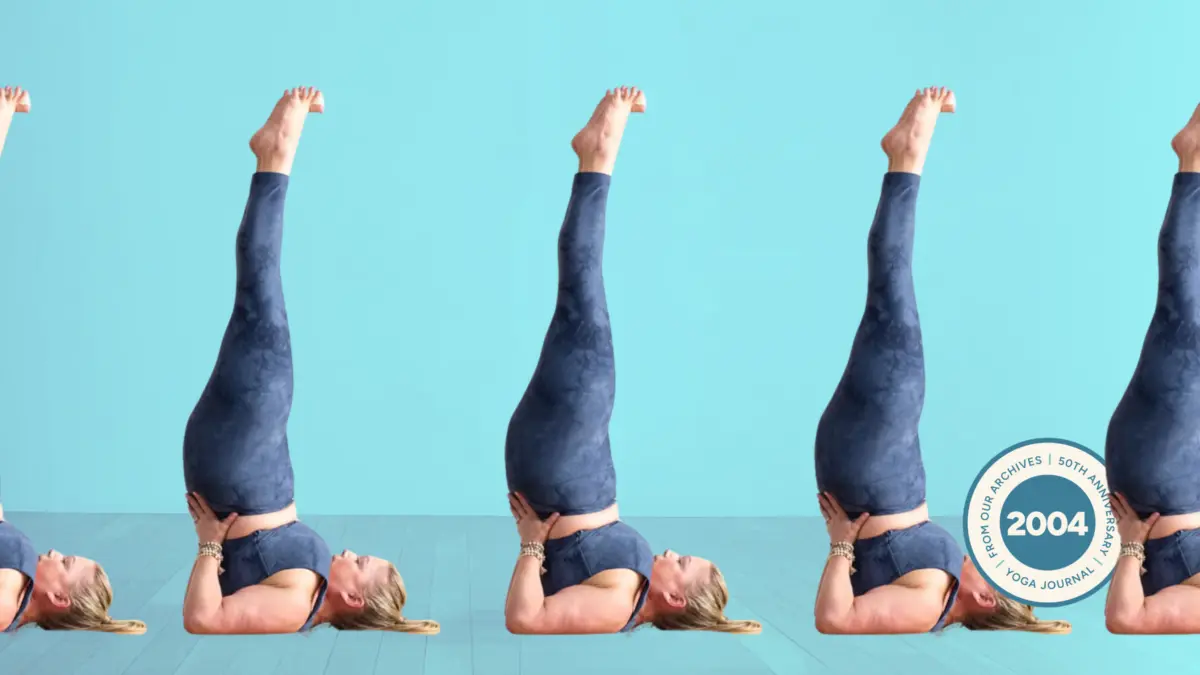
Because of their myriad benefits, Sirsasana (Headstand, pronounced shir-SHA-sa-nuh) and Sarvangasana (Shoulderstand, pronounced sar-vaan-GAH-sa-nuh) are historically considered the king and queen of asanas, respectively.
- Sirsasana (The King): Develops our capacity for action (the fire element) and enhances our ability to create (the air element). It leaves practitioners alert and focused.
- Sarvangasana (The Queen): Nurtures our capacity to pause, stop doing, and get grounded (the earth element), fostering stillness and reflection (the water element). It leaves practitioners calm and receptive.
To receive these palpable benefits safely—and to prevent injury, particularly to the delicate cervical spine—learning the correct setup and alignment is paramount. Practitioners with neck injuries, epilepsy, high blood pressure, heart conditions, or eye problems must avoid inversions, and women are traditionally advised to forgo them during menstruation. Mindfulness is the ultimate prerequisite.
Chronology of a Practice: Building Stability Over Time
Mastering inversions is not a weekend project; it is a lifelong architectural project for the body. After 36 years of daily practice, veteran yogis still practice both Headstand and Shoulderstand daily, recommending the same patient progression to their students.
Phase 1: Developing Upper-Body Awareness (The Foundations)
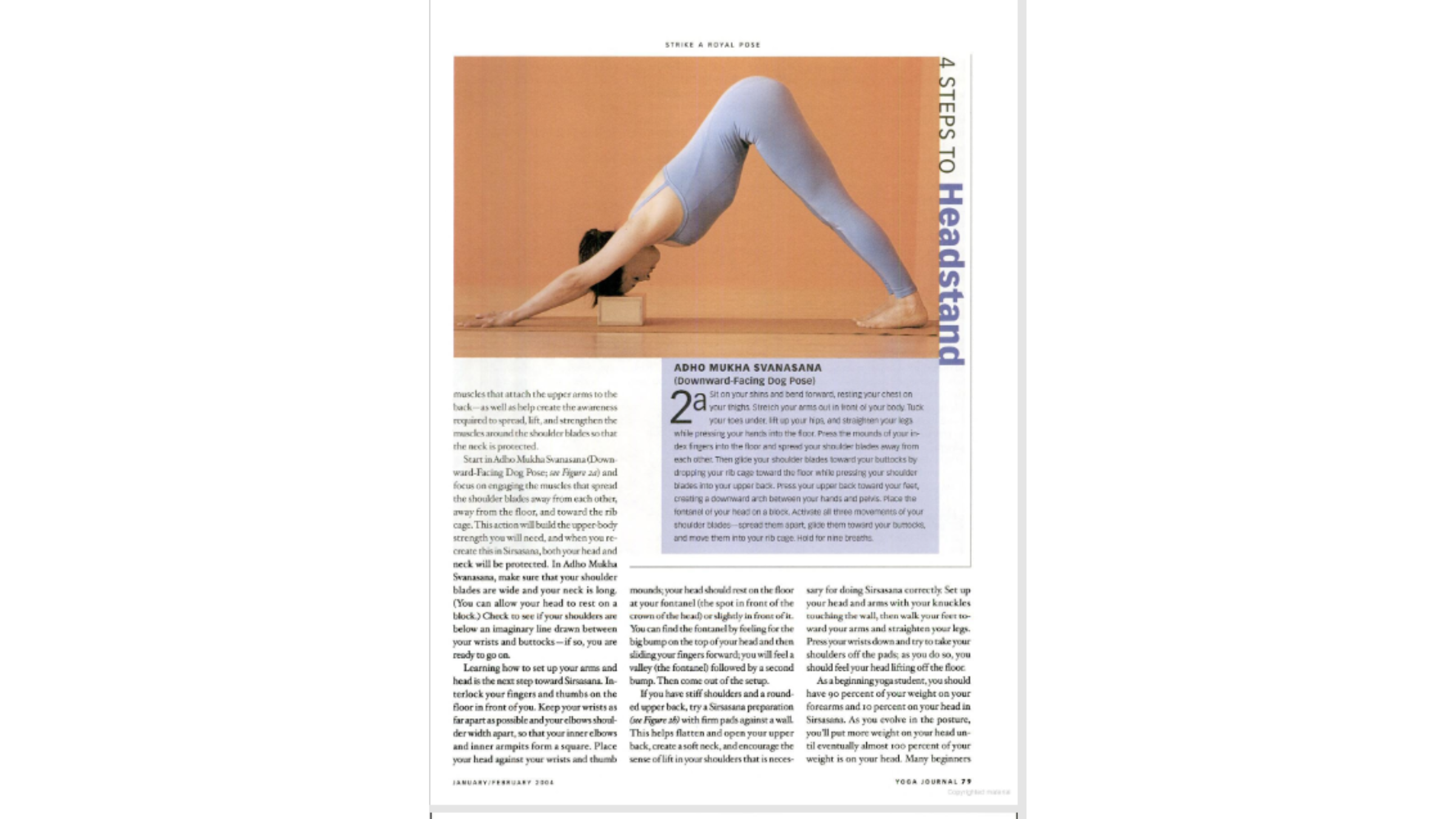
Before lifting the feet off the floor, practitioners must build the upper-body strength and structural awareness required to protect the neck. This begins in foundational poses like Adho Mukha Svanasana (Downward-Facing Dog).
- Focus on engaging the latissimus dorsi—the large muscles connecting the upper arms to the back.
- Widen the shoulder blades away from each other, away from the floor, and toward the rib cage to establish upper-body integrity.
Phase 2: Preparatory Propping and Props
Stiff shoulders and a rounded upper back are the primary culprits behind neck strain in inversions. Using firm blankets, pads, or a wall helps open the upper back and create a soft neck.
- In Shoulderstand preparations, blankets should support the body uniformly from the elbows to the shoulders and upper trapezius muscles.
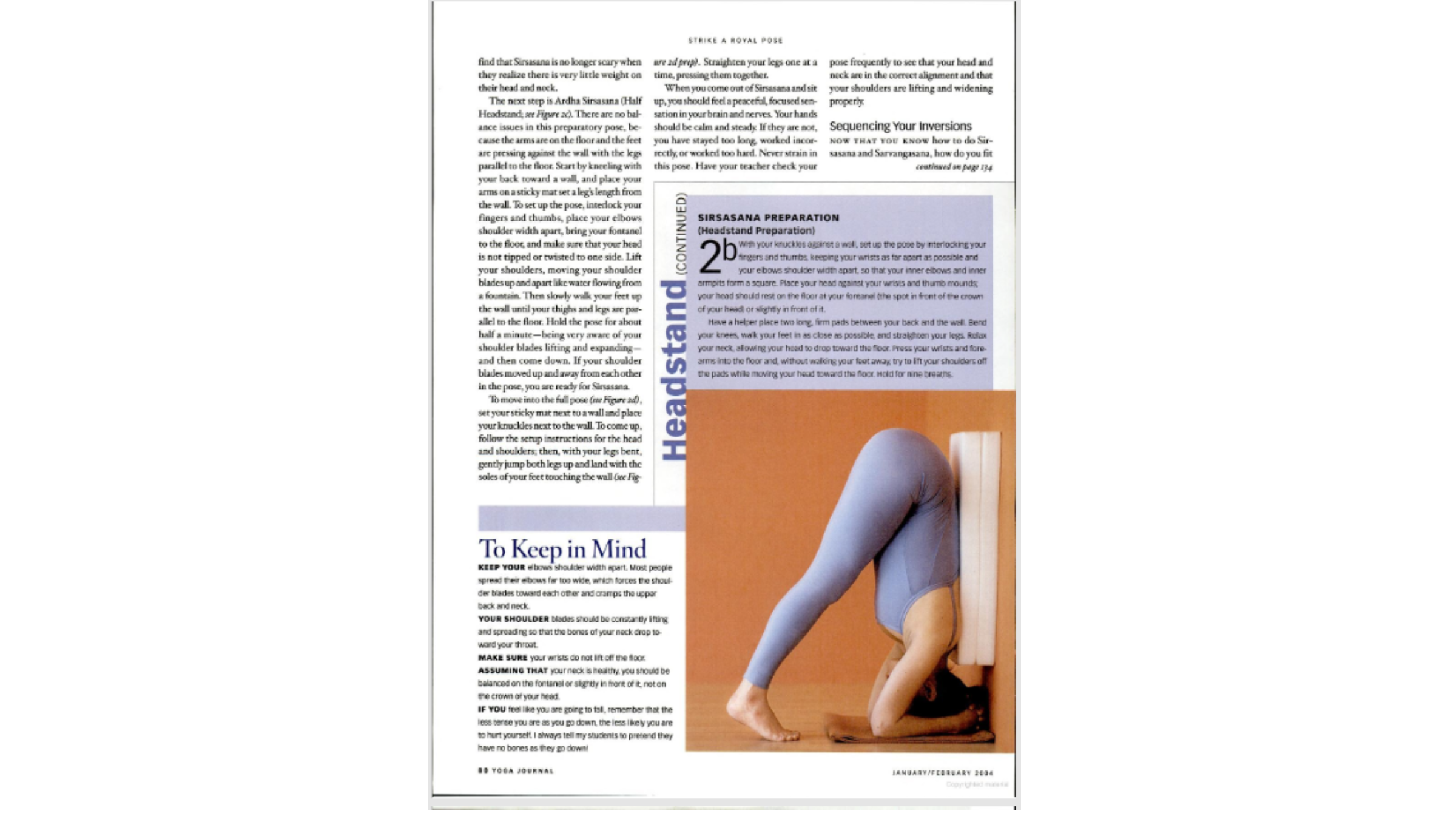
- In Headstand preparations, propping against a wall helps flatten the upper back and encourages the vital lift in the shoulders.
Phase 3: Half-Inversions (Ardha Poses)
Before executing full inversions, practitioners graduate to half-variations where balance issues are minimized:
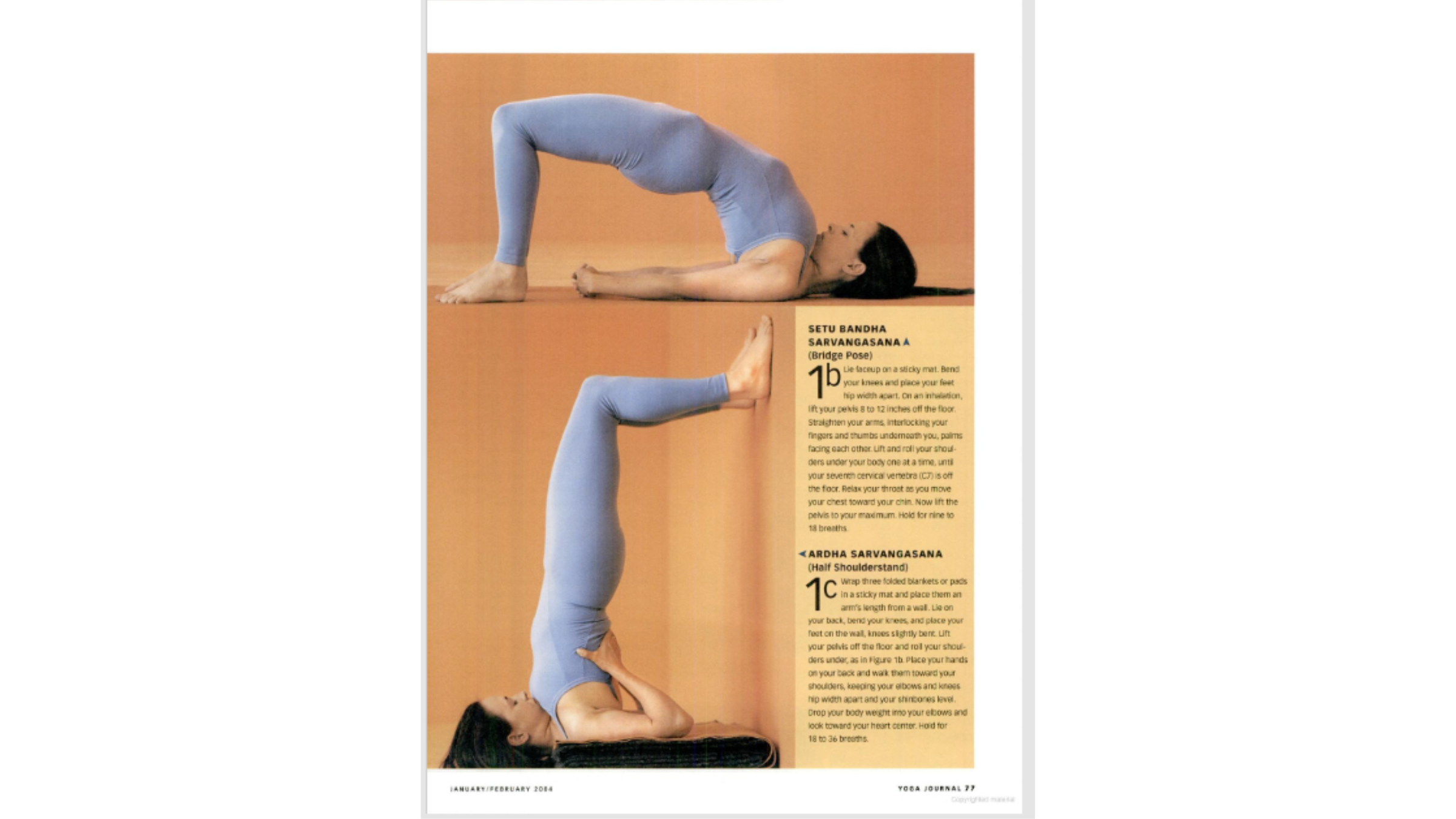
- Ardha Sarvangasana (Half Shoulderstand): Performed with the pelvis lifted off the floor, feet resting on a wall, and shoulders properly padded.
- Ardha Sirsasana (Half Headstand): Performed with arms on the floor, the fontanel resting lightly on the ground, and feet walking up a wall until the legs are parallel to the floor.
Phase 4: Full Inversion and Integration
Once the foundational strength, shoulder mobility, and breath awareness are established, practitioners advance to full Sirsasana and Sarvangasana. Upon exiting either pose, a seated integration period is mandatory. The breath should be steady, the eyelids heavy, and the facial muscles soft. Agitation or anger upon coming down signals that the pose was held too long or executed with incorrect alignment.
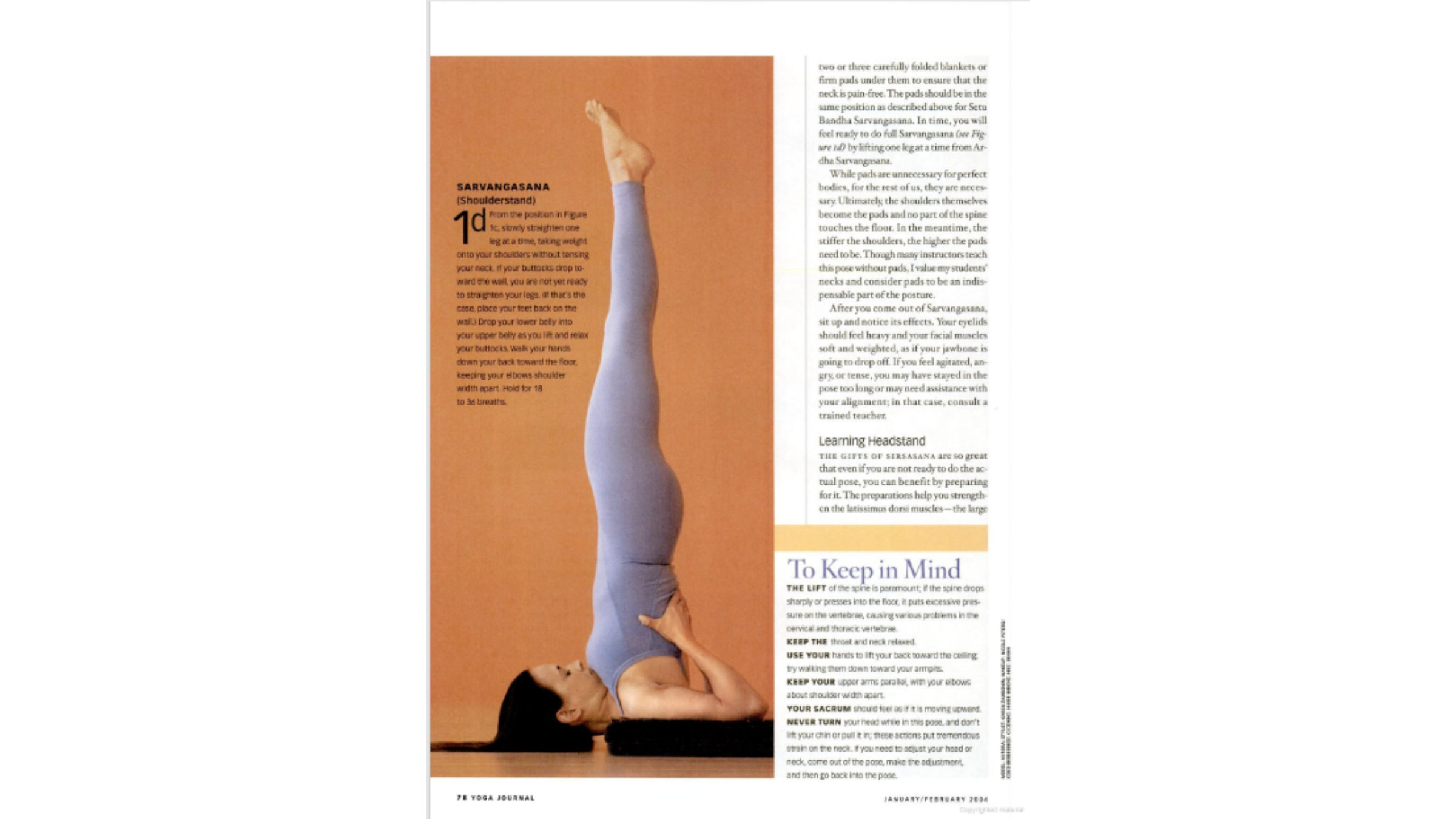
Supporting Data: Shoulderstand Mechanics
Achieving a healthy Sarvangasana requires meticulous biomechanical setup to safeguard the cervical spine.
[Standing Table Prep] ---> [Bridge Pose (Setu Bandha)] ---> [Half Shoulderstand] ---> [Full Sarvangasana]Step-by-Step Guide to Shoulderstand
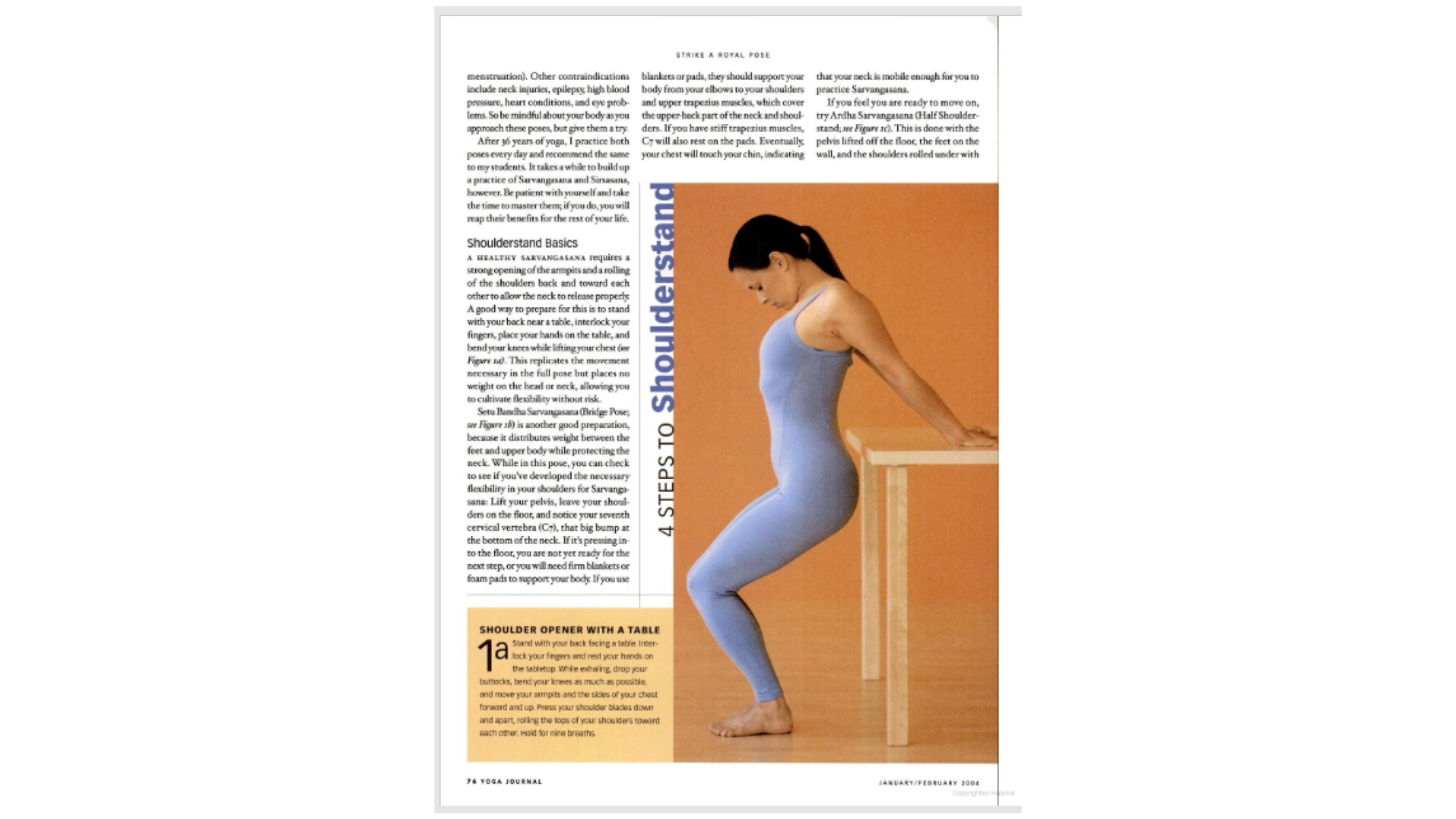
- Open the Armpits and Shoulders: A healthy Shoulderstand requires a strong opening of the armpits and a rolling of the shoulders back and toward each other.
- The Table Test (Preparation): Stand near a table, interlock your fingers, place your hands on the table surface, and bend your knees while lifting your chest. This replicates the required upper-body movement without placing weight on the head or neck.
- Assess via Bridge Pose (Setu Bandha Sarvangasana): Lift your pelvis while keeping your shoulders flat on the floor. Assess the seventh cervical vertebra (C7)—the prominent bump at the base of the neck. If C7 presses hard into the floor without support, your shoulders lack the necessary openness, and you must use firm blankets or foam pads under your elbows, shoulders, and upper traps.
- Transition to Half and Full Variations: Progress to Ardha Sarvangasana with feet on the wall. When ready, lift one leg at a time into full Sarvangasana, ensuring no weight rests directly on the spine.
Crucial Guidelines for Shoulderstand
- Support the Neck: Use dense blankets if your trapezius muscles are stiff.
- Check the Chin: Eventually, your chest should naturally touch your chin, indicating adequate neck mobility.
- Monitor Post-Pose State: Post-practice, your jaw should feel heavy and relaxed. Tension indicates alignment errors or overexertion.
Learning Headstand (Sirsasana): Official Expert Methodology
The gifts of Sirsasana are immense, but safety dictates a rigorous, step-by-weighed-step approach.
4 Steps to Headstand Mastery
- Establish the Foundation in Downward-Facing Dog: Ensure your shoulder blades are wide and your neck is long. Verify that your shoulders sit below an imaginary line drawn between your wrists and hips.
- Arm and Head Alignment: Interlock your fingers and thumbs on the floor. Keep wrists as far apart as possible while maintaining elbow-width shoulder distance, forming a square with your inner arms. Place your head on the floor at your fontanel (the soft spot just in front of the crown of the head).
- Practice Ardha Sirsasana (Half Headstand): Kneel a leg’s length from a wall. Set up your arms and head, lift your shoulders (moving shoulder blades up and apart like water from a fountain), and walk your feet up the wall until your legs are parallel to the floor. Hold for 30 seconds.
- Execute Full Sirsasana: Place your mat near a wall with knuckles touching the baseboard. Set up your head and shoulders, bend your legs, and lightly hop up to land the soles of your feet against the wall. Slowly straighten your legs one at a time, pressing them inward toward each other.
Golden Rules for Headstand
- Weight Distribution: Beginners should maintain 90 percent of their body weight on their forearms and only 10 percent on their head. Realizing this balance instantly diffuses the fear of neck injury.
- Shoulder Lift: Continuously draw the shoulder blades away from the floor to keep the neck floating and protected.
- Seek Supervision: Have a trained instructor frequently check your alignment to ensure your head, neck, and shoulders are working in harmony.
Implications: A Lifetime of Practice
Integrating inversions into a regular physical discipline offers far more than aesthetic or acrobatic appeal. By systematically dismantling physical aversions—such as the fear of being upside down—practitioners build mental tenacity that transcends the yoga mat.
When approached with patience, respect for contraindications, and strict adherence to structural alignment, inversions like Headstand and Shoulderstand transform from intimidating athletic feats into accessible, deeply nourishing sanctuaries of calm and focus. They remind us that discomfort is often just an unfamiliar angle, waiting to be reframed.
