

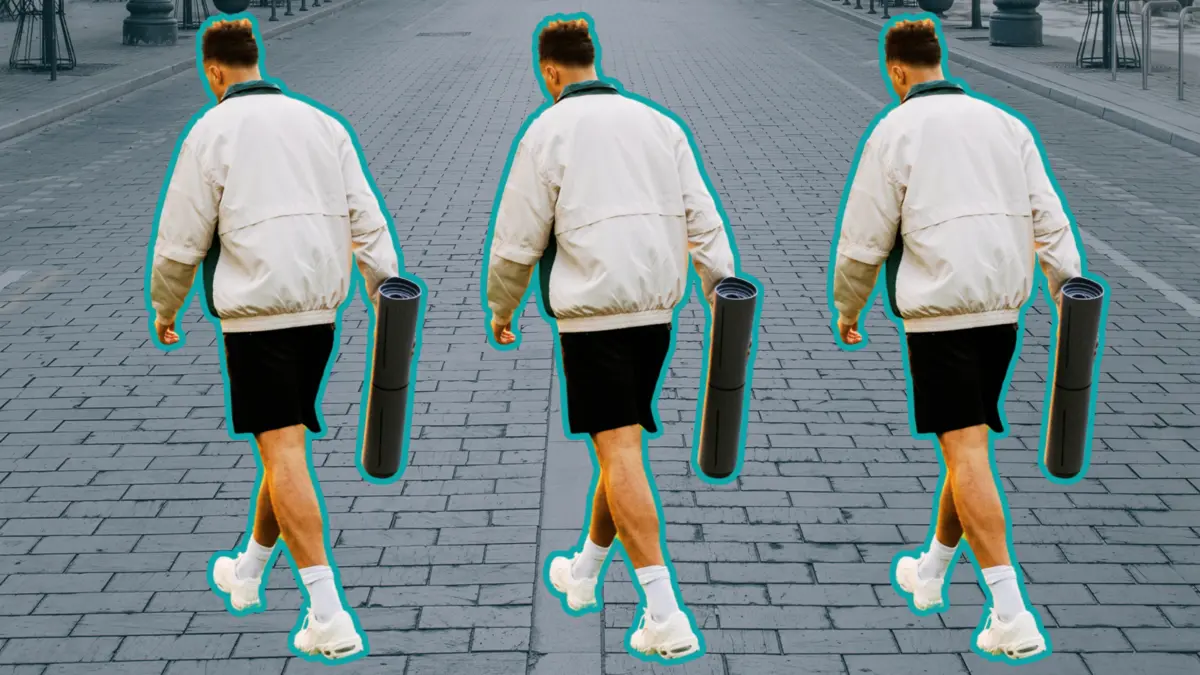
August 7, 2026 — In the relentless, hyper-accelerated ecosystem of New York City, the transition from an anonymous commuter to an approachable beacon of peace is often signaled by a single, unassuming accessory: a rolled-up yoga mat tucked under the arm.
To the untrained eye, a yoga mat is merely a piece of high-density foam or rubber designed to cushion joints during downward-facing dogs and warrior poses. However, in major metropolitan hubs, urban anthropologists and city residents alike are discovering that the mat functions as something entirely different. It acts as an inadvertent social beacon—a modern-day totem that broadcasts openness, vulnerability, and accessibility in a city otherwise famous for its impenetrable armor of speed and silence.
This phenomenon raises a compelling question about modern urban life: Can an individual carve out a private sanctuary of mindfulness while simultaneously advertising themselves as a lightning rod for human connection?
Main Facts: The Anatomy of the Urban Sanctuary
The daily commute of a dedicated practitioner reveals a fascinating psychological dichotomy. Before embracing a regular yoga practice, urbanites frequently navigate city streets like armored vehicles. Racing toward professional obligations or social engagements, they exist almost entirely within their own internal monologues—calculating transit times, dodging cyclists, and wrestling with career anxieties. In this state, the individual is effectively invisible yet impervious, moving through crowds with an aura of deliberate detachment.
The introduction of a regular yoga practice shifts this dynamic entirely. The walk to the studio transforms from a high-stress obstacle course into a protected interval of "me-time." Toting a mat, practitioners often report slipping into an introspective, almost poetic bubble. Minds wander to upcoming schedules, the mechanics of a morning breathwork session, or the mundane yet pleasant debate over whether to purchase a sweet or savory scone from a local bakery.
Yet, this internal peace is remarkably fragile. The moment a practitioner steps onto the sidewalk with their mat, a subtle sociological shift occurs. The rolled-up foam communicates a quiet subtext to the surrounding public: This person is centered. This person is safe to approach.
Consequently, the tranquil bubble is routinely burst. Tourists seeking directions to the High Line, the nearest subway station, or local culinary landmarks routinely bypass dozens of hurried, headphones-wearing commuters to single out the yogi. While this can disrupt a moment of hard-earned serenity, it also challenges long-standing cultural stereotypes. Far from the pop-culture trope of the cold, cynical New Yorker, the urban yogi frequently welcomes these interruptions, proving that openness can thrive even on concrete sidewalks.
Chronology of Encounters: Three Vignettes of Urban Connection
The approachable aura generated by the yoga mat frequently attracts more than just requests for transit directions. It invites complete strangers to share deeply personal narratives, creating fleeting yet profoundly impactful moments of human connection. Three distinct encounters illustrate how a simple piece of exercise equipment can catalyze life-altering conversations across the city.
1. The Overwhelmed Mother
It begins in an apartment building elevator. A woman boards, juggling two young children, a bulging briefcase, and the visible exhaustion of a high-pressure legal career. After a brief exchange of weary smiles, a confessional tone takes over.
She admits she used to practice yoga regularly and desperately needs to return to it, but life has intervened—demanding children, a demanding profession, an aging pet, and a traveling spouse.
"You know, you can’t take care of others if you don’t take care of yourself," the practitioner offers, striking a note of classic, grounded wisdom.
Two months later, the elevator doors open to reveal the same woman, this time carrying her own yoga mat and radiating a newfound sense of vitality. Crediting the casual elevator chat for her return to the studio, she jokes about rewarding the advice with high-value stock options before settling happily for a simple cup of coffee. The interaction underscores a core truth of modern wellness culture: the reminder to prioritize self-care can be the catalyst someone needs to reclaim their life balance.
2. The Displaced Newcomer
On a different morning, standing outside a bustling dog daycare, a forlorn young woman approaches out of nowhere with a direct inquiry: "You do yoga. Where do you practice?"
Reading the classic "What have I done?" expression on the newcomer’s face—a universal rite of passage for recent transplants—the practitioner senses an acute wave of isolation. A ten-block walk ensues, during which the young woman pours out her story: a recent college graduation, a post-grad trip to Asia, a move to New York for a partner’s artistic pursuits, and the abrupt devastation of being left for someone else in a city where she only knew one person.
Invited to a beginner-friendly class, the newcomer experiences her first taste of the city’s wellness community. By the end of the session, the tears have stopped, and she is already exchanging phone numbers with another studio member who shares a similar story of relocation. Months later, she is thriving, having pivoted from a dreaded career path into meaningful non-profit work, anchored by a new circle of friends forged on and around the mat.
3. The Neighborhood Senior
Even street corners hold opportunities for connection. Waiting for a pedestrian signal, an elderly gentleman spots the mat and strikes up a conversation with a cheerful reference to "those yoga people" and his daughter’s stretching habits.
Nostalgic for his days as a minor-league baseball outfielder, he pulls a tube of pain-relieving gel from a shopping bag, crediting it with keeping him mobile. When the practitioner gently suggests that yoga might offer similar benefits, the two strike up an easy rapport while marching across the intersection. Before parting ways, the man calls back with a cheerful, booming "NAMASTE!"—bridging generational and cultural divides through simple neighborly warmth.
Supporting Data and Sociological Context
Urban sociologists note that dense metropolitan environments often foster a psychological defense mechanism known as "urban overload." To cope with perpetual sensory stimulation, city dwellers unconsciously adopt behavioral insulation, avoiding eye contact and minimizing casual interactions with strangers.
- The Psychology of Prosocial Cues: Research into non-verbal communication indicates that carrying fitness equipment—particularly yoga mats, which are culturally associated with mindfulness, non-judgment, and patience—serves as a powerful prosocial cue. It signals emotional availability, lowering the perceived social cost of initiating a conversation.
- Mental Health Benefits of Micro-Interactions: Studies on urban well-being suggest that brief, positive exchanges with strangers ("micro-connections") measurably reduce feelings of loneliness and boost daily mood stability, benefiting both the recipient and the initiator.
- The Rise of Community Wellness: Urban real estate trends over the last decade show a massive surge in mixed-use developments centered around wellness studios, reflecting a growing consumer demand for spaces that combine physical health with social infrastructure.
Official Responses and Expert Perspectives
Mental health professionals and urban design experts increasingly view community-oriented wellness spaces as vital urban infrastructure.
Dr. Elena Vance, a professor of urban sociology at Columbia University, highlights how modern cities are actively seeking antidotes to the loneliness epidemic. "We often think of infrastructure in terms of concrete, transit lines, and bridges," Dr. Vance explains. "But emotional infrastructure—the micro-interactions that make people feel seen, valued, and connected to their neighbors—is just as crucial for public health."
Yoga studio owners report a similar evolution in their spaces. No longer viewed strictly as places for physical exercise, modern studios are increasingly functioning as community hubs where cross-generational and cross-demographic bonding takes place.
"When people roll out their mats, they drop their social masks," says Marcus Vance, co-owner of a downtown Manhattan wellness collective. "Whether you are a corporate attorney, a heartbroken newcomer, or a retired athlete, the mat levels the playing field. It reminds us that underneath our fast-paced lives, we share the same fundamental human needs for peace, support, and belonging."
Implications for the Future of Urban Life
The accidental diplomacy of the urban yogi offers a broader lesson for modern society. As cities continue to grow denser and digital communication frequently replaces face-to-face interaction, the physical spaces we occupy—and the items we carry through them—carry profound social weight.
The yoga mat serves as an unlikely ambassador of calm in a chaotic world. It demonstrates that maintaining personal mindfulness does not require total isolation from one’s community. Instead, true inner peace, when genuinely cultivated, has a magnetic quality that naturally draws others out of their isolation.
For city residents navigating the pressures of modern life, the takeaway is clear: while the desire to retreat into an internal bubble is entirely natural, the unexpected punctures to that bubble are often where the richest fabric of city life is woven. By remaining open to the strangers beside us—whether in an elevator, on a sidewalk, or at a crosswalk—we transform a collection of isolated individuals into a vibrant, supportive community.
