

Main Facts: The Global Epicenter of Marine Biodiversity
Nestled off the northwestern tip of Bird’s Head Peninsula in West Papua, Indonesia, lies Raja Ampat—an archipelago widely celebrated by marine biologists, conservationists, and professional photographers alike as the ultimate underwater sanctuary on Earth. Comprising over 1,500 jungle-covered limestone islands surrounding the four major landmasses of Waigeo, Batanta, Salawati, and Misool, this remote region sits squarely within the heart of the world-renowned Coral Triangle.
Often heralded as "The Last Paradise," the geographic positioning of Raja Ampat grants it a staggering level of biological wealth. Marine researchers estimate that the region houses roughly 75% of all known coral species on the planet. Beneath its crystalline surface lies a thriving aquatic ecosystem supporting upwards of 1,000 species of reef fish, 540 distinct types of hard and soft corals, 700 species of mollusks, as well as transient populations of dugongs, saltwater crocodiles, and schooling manta rays.

For underwater photographers, Raja Ampat represents both a dream assignment and an ultimate test of technical skill. The combination of pristine, flourishing reefscapes, abundant macro life, and dramatic topography offers endless creative opportunities. However, capturing these wonders requires meticulous planning, an understanding of complex oceanography, and specialized equipment capable of handling extreme environmental conditions.

Chronology: The Journey to the Edge of the World
Planning an expedition to Raja Ampat demands a significant investment of time, endurance, and logistical patience. Understanding the journey is the first step for any photographer hoping to bring heavy, delicate camera rigs into the field.

Phase 1: The Transit
For international travelers—particularly those originating from Australia and Western hubs—reaching the threshold of the archipelago is an exercise in endurance. The typical transit involves at least two international and domestic commercial flights, often punctuated by lengthy layovers in major Indonesian transit cities like Jakarta, Makassar, or Sorong.

Phase 2: The Gateway of Waisai
Upon landing in Sorong, travelers must transition to the sea, boarding a slow, humid, two-hour ferry ride across open water to reach Waisai, the administrative capital situated on Waigeo Island. From Waisai, a final leg involving a rugged, pothole-peppered car journey leads to local staging points, where expeditions officially begin.

Phase 3: Choosing the Vessel or Base
Once at the starting line, photographers must choose their mode of exploration. Options generally fall into three categories:

- Day-Trip Speedboats: Departing from local lodges to nearby sites. Best for localized shooting but limited in geographic range.
- Island Homestays: Offering immersive surface intervals and access to pristine house reefs, ideal for relaxed macro work and split-shots.
- Liveaboards: Widely considered the gold standard for serious photographers. Liveaboards allow practitioners to cover immense distances across the far-flung reaches of the archipelago. Securing an itinerary that includes Misool in the south is widely regarded as hitting the photographic jackpot, given its uniquely improving biodiversity metrics.
Supporting Data & Photographic Logistics: What to Pack and Expect
Raja Ampat operates on a dual-threat photographic capability: it is simultaneously a wide-angle paradise and a macro-photography mecca. Preparing the right gear bag is critical before taking the plunge.

Wide-Angle Mastery
The massive, sprawling reef systems, dramatic drop-offs, and schooling pelagics call for reliable wide-angle optics.

- Recommended Glass: A 16–35mm zoom lens paired with a high-quality dome port allows photographers to capture sweeping vistas of coral gardens, schooling barracudas, reef sharks, and majestic manta rays.
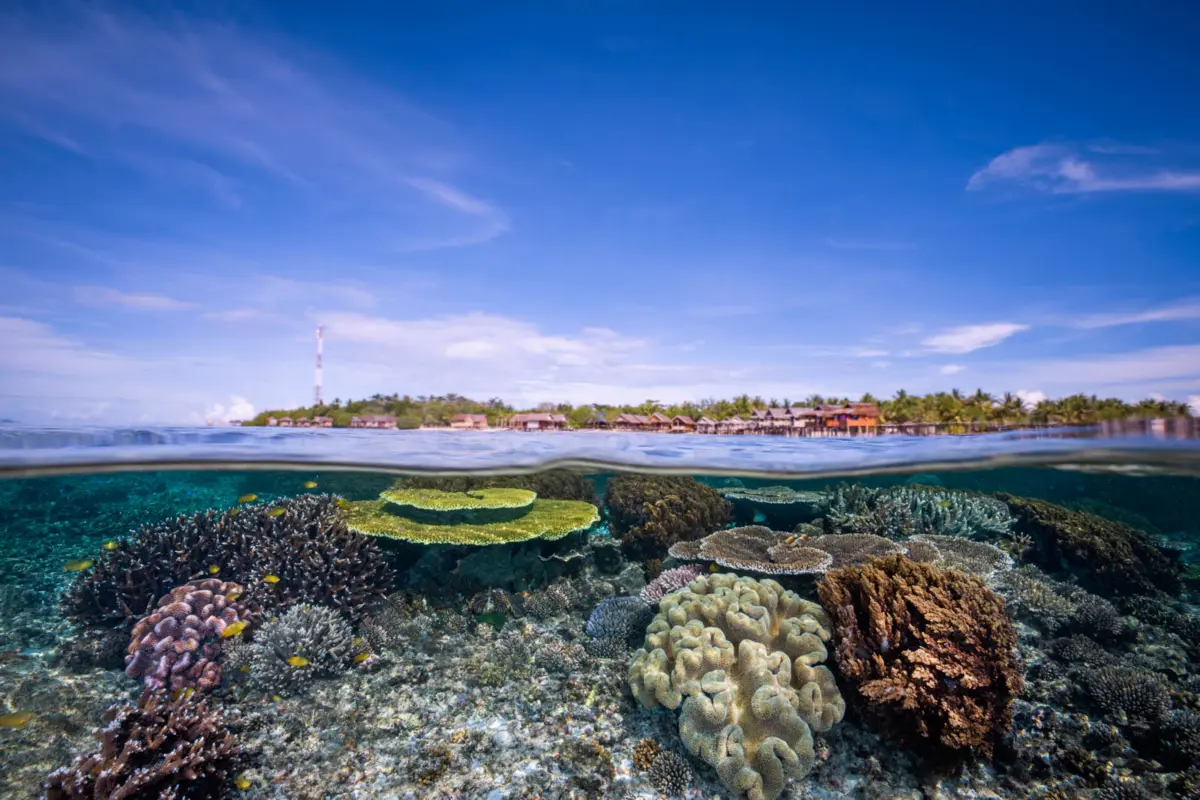
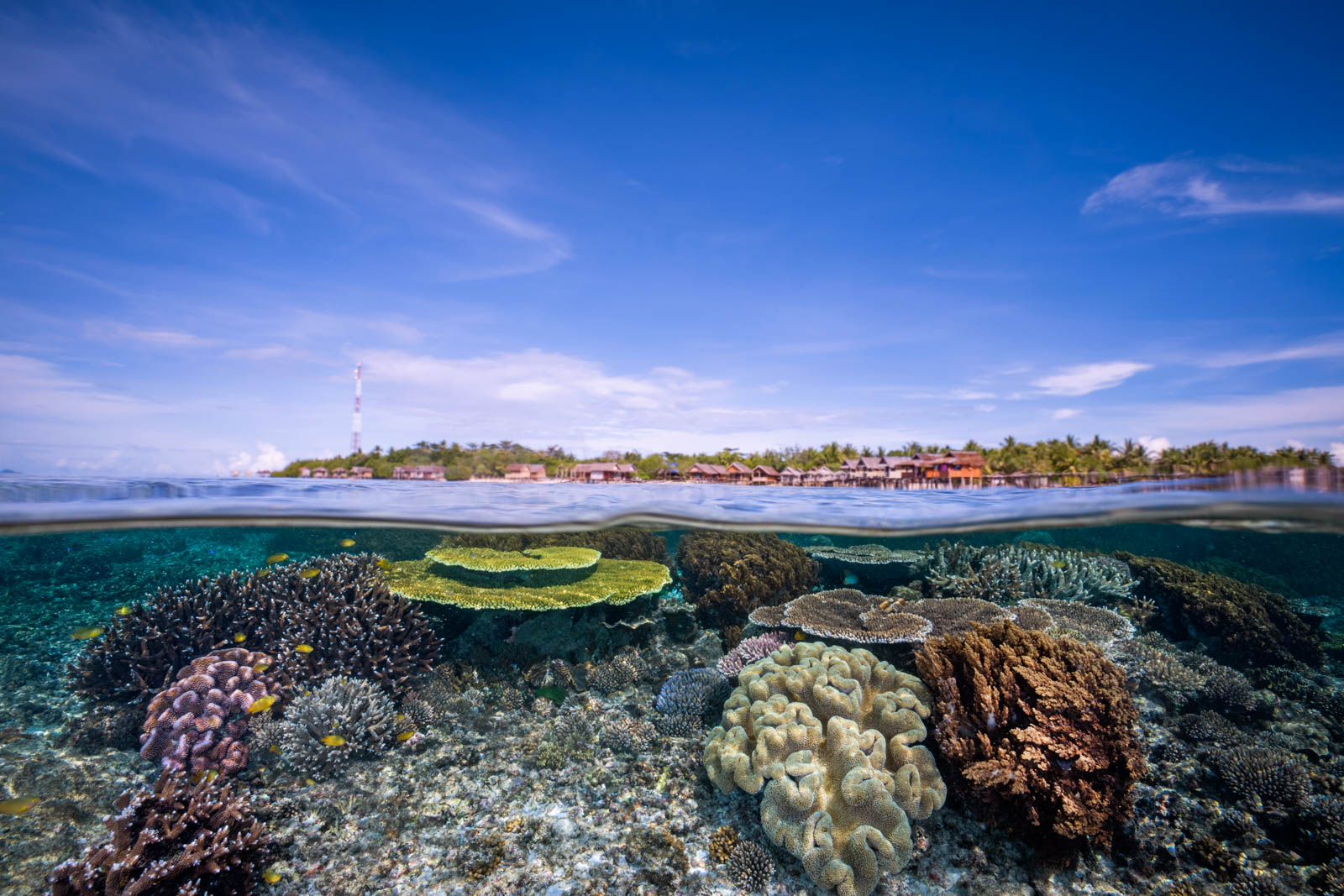
- Split-Shots (Over-Under): The calm, mirror-like shallows surrounding island house reefs and limestone lagoons provide ideal conditions for split-shots. Photographers should prioritize homestays with healthy house reefs to maximize 24-hour access to these compositions, particularly during the region’s dramatic sunrises and sunsets.
Macro Wonders
Beneath the grand coral architecture lies a hidden universe of bizarre and beautiful macro subjects.

- Recommended Glass: While a mid-range macro lens (such as a 60mm) is useful, a longer focal length like a 90mm or 120mm is essential for isolating tiny subjects without disturbing them. External diopters are strongly advised for capturing extreme close-ups of microscopic subjects.
- Expected Critters: Divers frequently encounter pygmy seahorses, ornate ghost pipefish, flamboyant cuttlefish, mantis shrimp, leaf scorpionfish, blue-ringed octopuses, and a kaleidoscopic array of nudibranchs.
Official Recommendations: Top Dive Sites for Photographers
Experienced expedition leaders recommend five premier sites across Raja Ampat, each offering distinct photographic advantages and challenges.

1. Melissa’s Garden
- Type: Wide-Angle / Reefscape
- Description: An expansive, sprawling garden of plate corals that stretches as far as the eye can see. Ideal for wide-angle compositions featuring mountains of hard coral populated by schooling batfish, snappers, and lionfish.
2. Batu Rufus
- Type: Lagoon / Natural Light / Split-Shots
- Description: Located near the Fam Islands, this site features a crystal-clear emerald lagoon framed by towering limestone karst formations. A dramatic swim-through lined with massive gorgonian fans leads into a shallow, 5-meter deep natural pool. It is an exceptional site for natural light photography, freediving-style shooting, and striking over-under split-shots.
3. Cape Kri
- Type: Mixed (Wide-Angle & Macro)
- Description: Famed for holding world records for biodiversity on a single dive, Cape Kri features sloping walls dropping to 40 meters. Photographers should dive this site twice: once with a wide-angle setup for pelagics, reef sharks, and jacks, and a second time with a macro rig to comb the dense Muricella gorgonian fans for elusive pygmy seahorses.
4. Manta Ridge
- Type: Pelagic / Behavior
- Description: Situated between Mansuar and Arborek Islands, Manta Ridge is a high-energy cleaning station where reef mantas congregate. While conditions can be unpredictable, successful dives yield phenomenal action shots of oceanic giants swooping through the currents.
5. Citrus Ridge
- Type: Macro & Color Exploration
- Description: Located near the Gam Islands, Citrus Ridge combines vibrant, hyper-saturated soft coral gardens with an abundance of macro critters. It provides an unmatched color palette for creative abstract and close-up photography against a vivid natural background.
Implications: Environmental Challenges and Conservation Realities
While Raja Ampat offers unrivaled rewards, the physical realities of the environment present profound challenges to underwater image-makers.

Navigating Nutrient-Rich Waters and Strong Currents
The staggering marine life of Raja Ampat is directly tied to the powerful upwellings and nutrient-dense currents surging through passages like the Dampier Strait. While these nutrients fuel the growth of lush coral ecosystems, they frequently result in reduced visibility. Photographers must master precise strobe positioning to minimize backscatter in murky water.

Furthermore, these currents can be ferocious. Divers are frequently required to hook onto rocks or seek shelter behind boulders while holding heavy camera housings steady against the surge. Expedition leaders caution that when currents are categorized as "strong," photographers should consider leaving bulky camera setups behind to avoid safety hazards, or ensure their rigs are secured with robust lanyards and backed by comprehensive equipment insurance policies.

The Conservation Imperative
Unlike many marine regions suffering from global degradation, Misool and surrounding protected zones within Raja Ampat demonstrate that concerted conservation efforts, no-take zones, and community-led marine patrols can reverse ecological decline. Photographers visiting the region bear a professional and ethical responsibility to practice rigorous buoyancy control, avoiding contact with fragile coral structures and respecting the natural behaviors of marine life.

Ultimately, a successful expedition to Raja Ampat relies on decisive planning: committing fully to either a macro or wide-angle strategy per dive, respecting the raw power of the ocean, and honoring the stewardship required to preserve the world’s last great marine paradise.
