

By Elizabeth Stamp
Architecture and Design Features
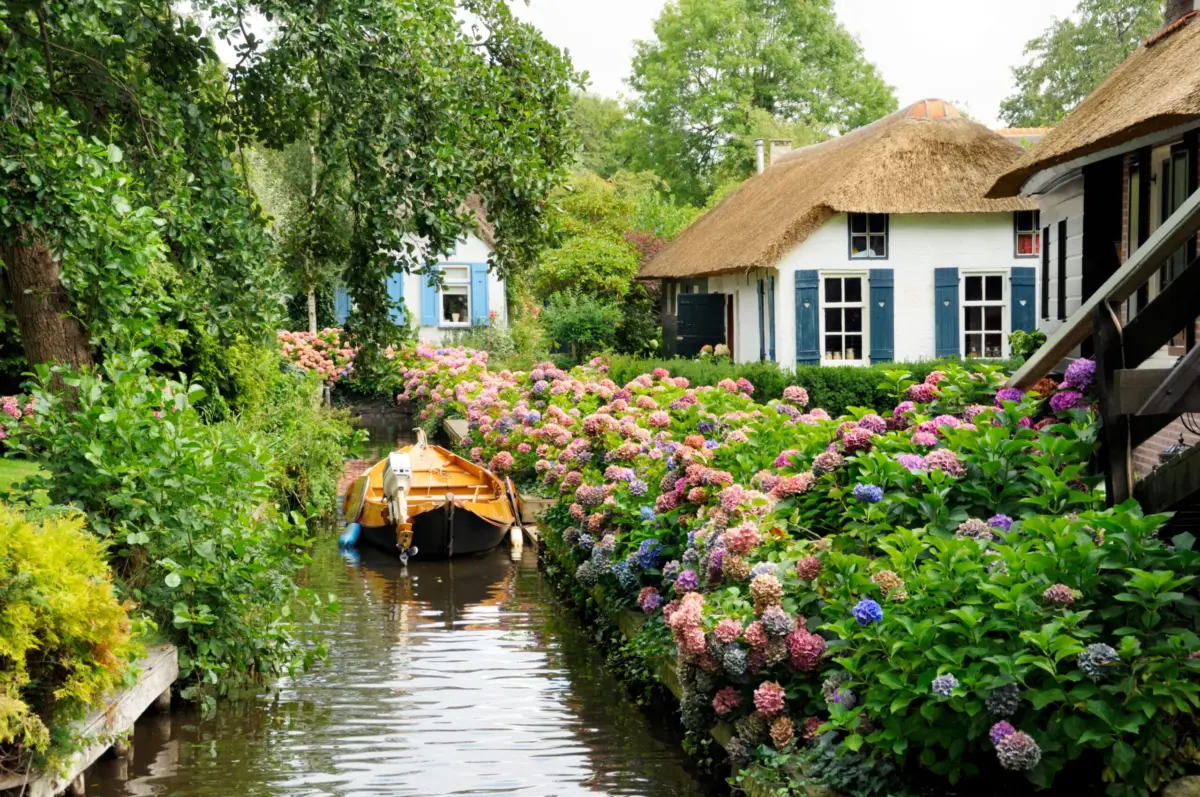
When we picture the quintessential storybook village—a pastoral hamlet straight out of folklore—the image almost invariably features cozy cottages capped with thick, undulating crowns of golden thatch. These fairytale dwellings feel like relics of a distant, simpler era, plucked from the pages of classic children’s literature. Yet, these charming architectural wonders are far from mere fantasy.

Across the globe, travelers can still discover entire communities where homes are protected by traditional thatched roofs. Crafted from humble organic materials such as dried straw, palm branches, rushes, and water reeds, these ancient roofs are marvels of early engineering. Surprisingly durable, naturally insulating, and remarkably resilient against pests and severe weather when maintained properly, a well-crafted thatched roof can endure for decades.
Despite their practical and aesthetic benefits, the craft has largely fallen out of favor in modern mainstream construction, driven by strict contemporary fire codes and the scarcity of skilled labor. In some jurisdictions, they have even been outlawed. However, a dedicated global network of historic villages, master artisans, and preservationists are fighting to keep the tradition alive. From the snow-draped valleys of Japan to the windy coasts of Chile and the honey-colored stone lanes of England’s Cotswolds, these communities celebrate a historic building method that links modern humanity directly to the earth.
Main Facts: The Anatomy and Science of Thatched Architecture
At its core, thatching is the art and craft of building a roof with dry vegetation, layering the material in a specific manner so as to shed water away from the interior of the structure. While it is often romanticized for its rustic aesthetic, thatching is rooted in sophisticated principles of building physics.
Materials of the Trade
The choice of vegetation depends heavily on local geography, climate, and availability:

- Water Reeds (Phragmites australis): Widely considered the gold standard of European thatching materials due to their longevity. A high-quality water reed roof can easily last between 50 to 80 years.
- Long Straw and Combed Wheat Reed: Common throughout Western Europe and parts of North America, these agricultural byproducts offer a softer, more rounded appearance, though they typically require replacement every 25 to 40 years.
- Palm Fronds and Grasses: Predominant in tropical and subtropical regions across Latin America, Africa, and parts of Asia, providing exceptional breathability and cooling shade in hot, humid climates.
Natural Performance Benefits
Long before the advent of fiberglass insulation, synthetic membranes, and commercial HVAC systems, thatching provided superior climate control:
- Thermal Regulation: Because of the trapped air pockets within the layered stalks, thatched roofs act as natural insulators. They keep interiors cool during scorching summer months and retain precious warmth during freezing winters.
- Weather Resistance: When installed at a steep pitch—typically a minimum of 45 degrees—the overlapping stalks of a thatched roof cause rainwater to slide down the exterior surface rather than penetrate the interior.
- Acoustic Damping: The dense mass of dried plant material absorbs sound remarkably well, shielding inhabitants from the noise of heavy rain, wind, and wildlife.
Chronology: The Evolution, Decline, and Resurgence of Thatch
The history of thatching is essentially the history of human shelter itself. Tracing its timeline reveals how a universal necessity transformed into a rare cultural touchstone.

Prehistory to the Middle Ages: The Universal Shelter
- Neolithic Era: Archaeological evidence suggests that humans have used grasses and reeds for overhead protection since hunter-gatherer societies began settling down into agrarian communities. Early huts utilized whatever local flora was abundant.
- The Middle Ages: Thatch became the definitive roofing material for European peasantry and nobility alike. However, it was notoriously vulnerable to urban fires. Following catastrophes like the Great Fire of London in 1666, urban centers began banning thatch in favor of slate and clay tiles, pushing the practice strictly into rural domains.
The 19th and 20th Centuries: Industrialization and Marginalization
- The Agricultural Shift: As industrialization took hold, agricultural practices modernized. The introduction of mechanical threshing machines in the 19th century actually damaged the long straw required for quality roofs, inadvertently threatening the raw material supply for thatchers.
- Suburban Expansion: The post-World War II housing boom prioritized cheap, rapid construction methods using corrugated iron, concrete tiles, and asphalt shingles. Thatching was increasingly viewed as outdated, labor-intensive, and unhygienic.
The 21st Century: Heritage Conservation and Eco-Architecture
- The Preservation Movement: By the late 1900s, governments and cultural heritage organizations—such as England’s Historic England and UNESCO—began recognizing thatched villages as irreplaceable cultural landscapes.
- The Sustainable Turn: Today, as the architectural world searches for low-carbon, biodegradable, and sustainable building materials to combat climate change, forward-thinking designers are re-evaluating vernacular techniques like thatching for modern eco-resorts and experimental housing.
Supporting Data: Global Hotspots of Thatching Tradition
While thatching is a global phenomenon, certain regions have preserved the craft with extraordinary dedication, transforming their historic settlements into world-renowned cultural destinations.
| Region / Country | Traditional Material Used | Average Lifespan | Notable Cultural Significance |
|---|---|---|---|
| The Cotswolds, England | Long Straw & Combed Wheat | 25–40 years | Defined by honey-colored limestone cottages topped with ornate, sculptural thatch caps featuring decorative animal motifs by master thatchers. |
| Shirakawa-go & Gokayama, Japan | Susuki (Japanese pampas grass) | 20–30 years | Home to Gassho-zukuri farmhouses, characterized by steep, 60-degree triangular roofs designed to withstand heavy winter snowfalls. Designated UNESCO World Heritage sites. |
| Chiloé Archipelago, Chile | Quilineja (native climbing plant) & local grasses | 30–50 years | Coastal vernacular architecture blending indigenous wooden shingle and thatch traditions, adapted to high-moisture maritime climates. |
| Zaanse Schans, Netherlands | Reeds | 40–60 years | Historic Dutch windmills and wooden houses utilizing tightly packed reed bundles to resist fierce North Sea winds. |
Official Responses and Preservation Challenges
Despite their undeniable visual charm and historical value, maintaining a thatched roof in the 21st century comes with significant regulatory and logistical hurdles.

Insurance and Fire Safety Regulations
One of the greatest challenges facing owners of thatched properties is securing property insurance. Insurance companies frequently classify thatched roofs as high-risk structures due to perceived fire hazards—often stemming from historical incidents, faulty chimney flues, or proximity to lightning strikes.
In response, national thatching associations and heritage bodies have collaborated with fire safety officials to establish rigorous building codes. Modern retrofits often require the installation of fire-retardant membranes beneath the thatch layer, spark arrestors on chimneys, and lightning protection systems. In the United Kingdom, the National Society of Master Thatchers works closely with insurers to provide accurate risk assessments, proving that a well-maintained, modernly wired thatched home is no more dangerous than a standard shingled dwelling.

The Craftsperson Shortage
Perhaps the most pressing existential threat to thatching is not fire, but a lack of human hands. Thatching is an intensely physical, highly skilled trade that cannot easily be mechanized. It requires years of apprenticeship under a master craftsman to understand how to grade materials, manage roof pitch, hand-drive hazel spars, and trim eaves with razor-sharp precision.
Governments and trade guilds have increasingly stepped in with vocational training grants. In countries like Germany, Denmark, and the UK, formal certification programs have been established to attract a younger generation of eco-builders interested in traditional crafts.

Implications: The Future of Vernacular Architecture in a Warming World
As the architectural community grapples with the environmental footprint of global construction—which accounts for a massive percentage of global carbon emissions—the lessons embedded in thatched villages offer a profound blueprint for the future.
Embodied Carbon and Circular Economies
Unlike petroleum-based asphalt shingles or energy-intensive concrete tiles, materials like water reed and straw are entirely biodegradable and carbon-negative during their growth cycle. They capture carbon dioxide from the atmosphere while growing, require minimal industrial processing, and return harmlessly to the earth at the end of their lifecycle.

Architects focused on regenerative design are increasingly looking at how vernacular building techniques can be adapted for contemporary sustainable housing. While a full suburban subdivision of thatched-roof suburban homes is unlikely to return due to density and municipal safety codes, the philosophy of thatching—utilizing hyper-local, renewable, bio-based materials—is experiencing a renaissance.
Cultural Tourism and Heritage Preservation
For travelers seeking an antidote to the homogenized concrete landscapes of modern globalized cities, thatched villages offer a vital connection to local identity. Destinations like Shirakawa-go in Japan or the storybook lanes of the Cotswolds prove that historical preservation is not merely about looking backward, but about sustaining living communities where ancient skills are passed down from generation to generation.

Ultimately, these golden-crowned cottages stand as testaments to human ingenuity: structures made from the simplest grasses of the earth, standing resilient against the tests of time, weather, and modernity.
