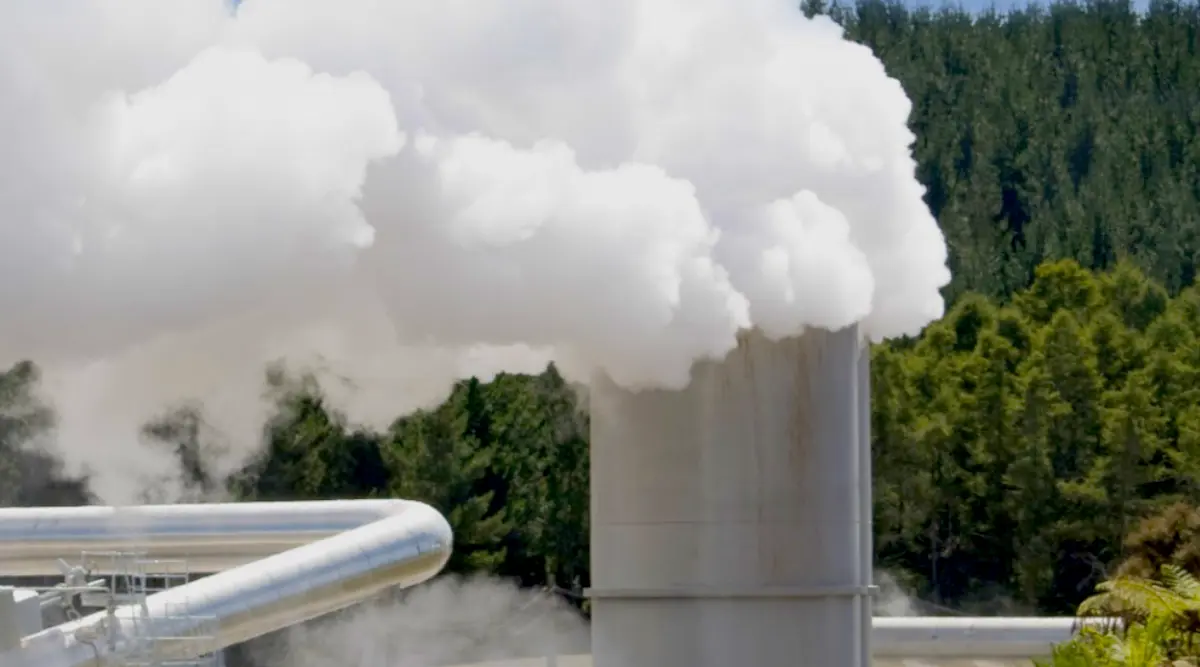
Geothermal energy has quietly emerged as an up-and-coming existential threat to the U.S. coal industry. Ironically, this technological disruption is unfolding with the explicit financial and strategic backing of the Trump administration, despite its stated goals of bolstering fossil fuels under the banner of "American Energy Dominance."
While geothermal currently accounts for a modest 1% of total U.S. power generation capacity, a confluence of federal backing, oilfield drilling expertise, and breakthrough Enhanced Geothermal Systems (EGS) are rapidly expanding the technology’s geographic and economic limits. Far from a niche renewable resource restricted to a few isolated pockets in the West, geothermal is scaling up to become a formidable competitor for round-the-clock baseload power.
Main Facts: A New Frontier for Baseload Power
For decades, the commercial expansion of geothermal energy was constrained by strict geological requirements. Traditionally, harnessing geothermal power depended on naturally occurring hydrothermal conditions—a precise combination of underground heat, permeable rock, and water. In the United States, these optimal zones were scattered almost exclusively across areas west of the Rocky Mountains. This geographic bottleneck effectively neutralized geothermal energy as a nationwide threat to coal-fired and natural gas power plants.
However, modern engineering has rewritten the rules. Breakthroughs in Enhanced Geothermal Systems (EGS) and superhot rock drilling have transformed geothermal from a localized resource into a scalable technology that can theoretically be deployed anywhere.
Recognizing this paradigm shift, the Trump administration has embraced geothermal energy within its broader "American Energy Dominance" framework. Rather than viewing renewables as a threat to fossil fuels, the administration has paired support for traditional hydrocarbons with aggressive backing for domestic geothermal, biomass, and hydropower resources.
Crucially, this policy has found an institutional champion in Energy Secretary Chris Wright. Formerly the CEO of leading oilfield services firm Liberty Energy, Wright brings a deep understanding of subsurface drilling to the Department of Energy (DOE). Under his purview, the federal government is actively merging traditional oil and gas drilling prowess with next-generation clean energy deployment, sparking a wave of private-sector investment and technological cross-pollination.
Chronology of Recent Developments
The acceleration of the U.S. geothermal sector has shifted from a slow burn to a rapid series of milestones. A timeline of recent announcements highlights the rapid scaling of the industry:
August 24, 2022: The Department of Energy’s long-term R&D initiative, the Frontier Observatory for Research in Geothermal Energy (FORGE) complex in Utah, proves instrumental in establishing advanced EGS methodologies, laying the groundwork for commercial viability.
2025: Oilfield services giant Liberty Energy invests $10 million into geothermal startup Fervo Energy, followed by a massive $462 million Series E funding round in which Devon Energy also participates.
March 4, 2025: The U.S. Air Force steps up as an early institutional adopter, pursuing advanced geothermal systems for military installations—mirroring its historical support for early-stage solar energy during the Obama administration.
September 1, 2026: A historic trifecta of geothermal announcements shakes the energy sector:
Fervo Energy signs a landmark 396-megawatt power purchase agreement (PPA) with tech giant Google to supply clean power from its Cape Station project in Utah by 2028.
Developer Hexagon Energy forms a strategic agreement with major forest products firm Weyerhaeuser to explore geothermal projects across timberlands in Washington and Oregon.
Startup Mazama Energy achieves a major performance milestone in superhot rock drilling at its Project Athena site in Oregon, paving the way for commercial-scale deployment at its upcoming Project Ceres site.
September 3, 2026: The Department of Energy officially establishes the new Geothermal Center of Excellence at the National Laboratory of the Rockies (formerly NREL) in Colorado, in partnership with the National Energy Technology Laboratory (NETL).
Supporting Data and Institutional Infrastructure
The sudden surge in geothermal viability is heavily underpinned by federal research facilities and robust private capital. The newly launched Geothermal Center of Excellence (CoE) acts as a centralized hub designed to accelerate resource discovery, reduce drilling costs, and achieve gigawatt-scale generation.
The CoE is supported by an extensive coalition of DOE facilities, including:
Argonne National Laboratory
Brookhaven National Laboratory
Idaho National Laboratory
Lawrence Berkeley National Laboratory
Lawrence Livermore National Laboratory
Los Alamos National Laboratory
Oak Ridge National Laboratory
Pacific Northwest National Laboratory
Sandia National Laboratories
Furthermore, the involvement of the National Energy Technology Laboratory (NETL)—traditionally a bastion of fossil fuel research with operational hubs in hydrocarbon-heavy states like Texas and West Virginia—highlights the deep technical overlap between the oil and gas sector and modern geothermal development. Because EGS relies on directional drilling, hydraulic fracturing, and subsurface imaging techniques pioneered by the petroleum industry, oilfield service companies are finding a lucrative second life in geothermal exploration.
Private investment reflects this maturation. Beyond Fervo Energy’s $462 million Series E raise and its 396-MW corporate PPA with Google, major industrial players are mobilizing land assets. Partnerships like the Hexagon Energy-Weyerhaeuser agreement demonstrate that private landowners are increasingly viewing subsurface heat as a valuable, revenue-generating asset.
Official Responses and Strategic Policy Contradictions
The federal government’s official stance on geothermal energy reveals a fascinating policy paradox. The Hydrocarbons and Geothermal Energy Office (HGEO)—operating under the DOE—was established to promote an "all-of-the-above" strategy that explicitly seeks to restore the U.S. coal industry as a cornerstone of the national energy mix.
Yet, official HGEO strategy documents explicitly mandate conflicting goals:
"Accelerate the discovery and development of gigawatt-scale geothermal energy and position geothermal as a competitive domestic source for reliable baseload electricity generation."
While Energy Secretary Chris Wright has made notable efforts to keep legacy coal-fired power plants online, macroeconomic and structural realities point in the opposite direction. According to the U.S. Energy Information Administration (EIA), demand for coal by power plant operators continues to trend downward. Meanwhile, wind, solar, and energy storage continue to outpace all other generation sources in adding new capacity to the grid.
By actively fostering gigawatt-scale geothermal power, the federal government is inadvertently nurturing the very technology capable of replacing coal’s primary market advantage: reliable, 24/7 baseload electricity.
Implications for the Future of U.S. Energy
The convergence of oilfield technology, federal research backing, and corporate demand for round-the-clock clean energy has profound implications for the American power sector.
1. The Displacement of Coal Baseload
Coal plants have historically maintained a stronghold in the energy mix by providing reliable baseload power—electricity that can be dispatched continuously regardless of weather conditions. However, enhanced and superhot rock geothermal systems offer the exact same 24/7 reliability without carbon emissions or the volatile fuel costs associated with coal. As projects like Fervo’s Cape Station scale toward commercial operation by 2028, coal operators will face yet another economic squeeze.
2. The Synergy Between Oil & Gas and Clean Energy
The pivot of oilfield services firms like Liberty Energy and Devon Energy toward geothermal proves that the energy transition does not necessarily require the complete dismantling of traditional fossil fuel infrastructure. Instead, drilling rigs, subsurface engineers, and geological expertise are being directly repurposed. This technological transfer offers a soft landing for fossil fuel service economies, allowing them to thrive in a decarbonizing market.
3. Corporate Procurement and Grid Stability
Tech giants like Google are spearheading a shift toward "firm" clean energy. While wind and solar intermittent power require extensive battery storage to achieve 24/7 availability, geothermal provides continuous power straight from the ground. The proliferation of corporate PPAs for geothermal energy will likely accelerate grid decarbonization while setting a new standard for corporate power procurement.
Conclusion
The Trump administration’s push for "American Energy Dominance" has created an unexpected catalyst for the geothermal industry. By uniting the resources of the Department of Energy, the drilling expertise of the oil and gas sector, and the financial weight of corporate tech buyers, geothermal energy is shedding its historical limitations. As the Geothermal Center of Excellence ramps up operations and commercial projects break ground across the West and Pacific Northwest, the writing is on the wall: the coal industry’s most enduring advantage—baseload reliability—is facing a formidable new challenger from deep beneath the Earth’s crust.