


By [Your Name/Editorial Staff]
Published in Health & Environmental News
Main Facts
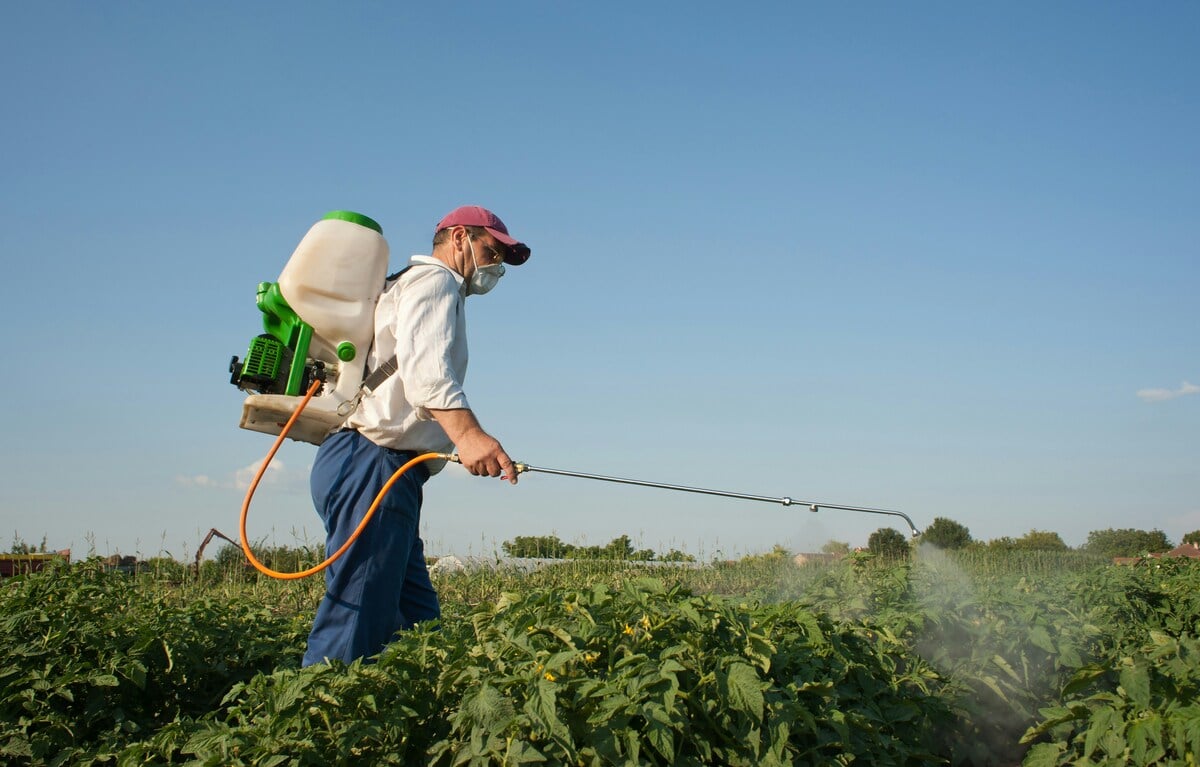
For decades, the cornerstone of modern agricultural chemical defense has rested on a reassuring, if scientifically fragile, premise: the dose makes the poison. Chemical manufacturers, regulatory agencies, and large-scale agribusinesses have long argued that while massive, acute quantities of weedkillers and insecticides might pose health risks, the trace amounts found in food, water, and ambient air are simply too low to cause meaningful harm. This logic has justified the routine spraying of millions of acres of American cropland, public parks, and residential gardens with a cocktail of synthetic formulas.
That foundational argument has now suffered a devastating blow.
A groundbreaking study recently published in the Annals of Global Health dismantles the notion of a safe threshold for low-dose chemical exposure. Researchers investigated ten high-priority agricultural chemicals—selected from a broader European Union evaluation pool encompassing more than 200 pesticides—and discovered that a staggering 80 percent of them are capable of inducing genetic damage in human cells, even at minimal, trace-level concentrations.
Worse still, every single one of the eight toxic substances identified in the study is currently approved and registered for use in the United States. Among them is glyphosate, the active ingredient in Bayer’s ubiquitous weedkiller, Roundup. According to the study’s findings, glyphosate triggered perceptible cellular and genetic damage at extremely low doses. This empirical revelation suggests a chilling reality: when it comes to many of our most widely deployed agricultural chemicals, there may be no such thing as a safe level of human exposure.
Chronology
To understand how we arrived at this scientific crossroads, it is necessary to retrace the timeline of chemical regulation, public awareness, and mounting legal battles that have brought pesticides like glyphosate into the global spotlight.
- 1974: Monsanto introduces glyphosate to the agricultural market under the brand name Roundup. It is rapidly adopted worldwide as a revolutionary, broad-spectrum herbicide that simplifies weed management for farmers and homeowners alike.
- March 2015: The International Agency for Research on Cancer (IARC), a specialized branch of the World Health Organization (WHO), classifies glyphosate as a "probable human carcinogen" after a comprehensive review of human, animal, and mechanistic data.
- 2019: Individual plaintiffs, including California gardener John Durnell, begin filing lawsuits against Monsanto (subsequently acquired by pharmaceutical giant Bayer in 2018). Durnell alleges that chronic exposure to Roundup caused him to develop non-Hodgkin’s lymphoma and that the company failed to adequately warn consumers about the product’s health hazards. A Missouri court rules in favor of Durnell, awarding him $1.25 million in damages.
- 2023–2025: Public scrutiny intensifies as independent biomonitoring studies reveal widespread systemic presence of agricultural chemicals in human populations. Concurrently, tens of thousands of individual plaintiffs line up in state and federal courts across the U.S., driving Bayer’s total pending Roundup litigation portfolio to approximately 65,000 active cases.
- Mid-2026: The Annals of Global Health publishes the landmark low-dose toxicity study led by researchers including Daniele Mandrioli of the Collegium Ramazzini, establishing that 80 percent of tested agricultural chemicals cause genetic alterations at minimal exposure levels.
- June 2026: The legal landscape shifts dramatically when the U.S. Supreme Court rules in favor of Bayer in its long-standing appeal. The high court determines that federal pesticide laws preempt state-level failure-to-warn claims, a decision expected to impact thousands of pending lawsuits.
Supporting Data
The credibility of the recent Annals of Global Health study rests on rigorous methodology designed to bridge a historical gap in toxicological research. For years, regulatory safety limits—often referred to as acceptable daily intakes (ADIs)—have been calculated primarily on high-dose animal studies, frequently assuming that biological systems can easily detoxify or repair minor, low-level insults.
Senior author Daniele Mandrioli, a researcher and the secretary general of the prestigious Collegium Ramazzini, underscored the critical flaw in traditional assessments during a recent interview discussing the findings: "Low-dose testing in toxicology is fundamental. Often, effects of low doses are underestimated simply because they are not studied."
To rectify this blind spot, the research team prioritized ten chemicals flagged by prior European Union oversight frameworks. Of those ten, eight exhibited definitive genotoxic properties—meaning they have the capacity to damage DNA, disrupt cellular functions, and potentially initiate carcinogenic pathways.
Notably, the study brought to light previously unrecorded vulnerabilities. For substances such as cyprodinil (a broad-spectrum fungicide) and deltamethrin (a synthetic pyrethroid insecticide), the study provided the first concrete evidence of potential cellular damage at low thresholds. Meanwhile, the data surrounding glyphosate confirmed what independent scientists have long suspected: cellular degradation occurs at doses so low they mirror the baseline environmental contamination regularly found in modern food supplies and drinking water systems.
These laboratory results align uncomfortably with independent biomonitoring data. Past studies published by federal health agencies and academic institutions have shown that human body burdens of glyphosate and other agricultural chemicals have risen significantly over the past two decades, correlating with the expansion of genetically modified, chemical-dependent crop systems.
Official Responses
The collision between hard science, corporate liability, and regulatory policy has triggered starkly contrasting responses from industry leaders, public health advocates, and legal experts.
Bayer, which inherited the legacy of Roundup following its multi-billion-dollar acquisition of Monsanto, has consistently maintained that glyphosate is safe when used according to label instructions. The corporation points to decades of regulatory approvals from bodies such as the U.S. Environmental Protection Agency (EPA), which has maintained that glyphosate is not likely to be carcinogenic to humans—putting it at direct odds with the World Health Organization’s IARC classification.
Following the recent U.S. Supreme Court decision, Bayer representatives and agricultural trade groups expressed relief, framing the ruling as a victory for federal uniformity in pesticide regulation. The Supreme Court’s determination that individual states cannot enforce independent warning labels that bypass federal standards offers corporate defendants a powerful shield against state-level tort claims. Agricultural lobbying organizations, such as Farm Progress, have noted that this judicial precedent could effectively dismiss a vast portion of the roughly 65,000 active lawsuits currently plaguing the company.
Conversely, public health advocates, environmental organizations, and legal scholars view the Supreme Court’s preemption ruling as a dangerous retreat from consumer protection. Critics argue that relying solely on federal regulatory frameworks—which are frequently criticized for relying on industry-funded safety data—leaves everyday citizens defenseless against insidious, long-term chemical exposures.

The scientific community has similarly doubled down on its calls for a complete overhaul of risk assessment models. Public health researchers argue that regulatory agencies must pivot toward cumulative, low-dose toxicity evaluations rather than evaluating isolated chemicals in artificial vacuums.
Implications
The convergence of the Annals of Global Health study and the recent Supreme Court ruling creates a profound paradox for modern society: even as independent science reveals the hidden dangers of trace-level chemical exposures, legal avenues for holding manufacturers accountable are becoming increasingly restricted.
1. Public Health and Chronic Disease
The demonstration that common pesticides can induce genetic damage at low doses shifts our understanding of chronic illnesses. Genetic mutations do not happen overnight; they are cumulative events. If agricultural chemicals are silently eroding cellular integrity in farmers, landscapers, and consumers who ingest trace residues daily, public health systems may face an invisible wave of genotoxically driven conditions, including various forms of cancer, endocrine disruption, and reproductive disorders.
2. The Future of Agricultural Regulation
Regulatory bodies in the United States and abroad face mounting pressure to modernize their testing paradigms. Current risk-assessment models rarely account for "cocktail effects"—the synergistic toxicity that occurs when human bodies are simultaneously exposed to dozens of different low-dose chemicals through food, water, and air. If regulatory agencies fail to incorporate low-dose genotoxicity testing into their registration processes, the burden of safety will continue to fall unfairly on the consumer.
3. Judicial Accountability vs. Federal Preemption
The Supreme Court’s ruling shields chemical manufacturers from state-level lawsuits, but it does little to restore public trust. When legal systems prioritize corporate regulatory compliance over the right of citizens to be warned about potential health hazards, a crisis of confidence ensues. Consumers and gardeners like John Durnell are left to navigate a marketplace where products stamped with government approval may, in light of modern science, carry unseen biological costs.

Ultimately, the new research serves as an urgent wake-up call. The argument that "the dose makes the poison" is losing its scientific footing. As evidence mounts that even the smallest traces of everyday agricultural chemicals can alter human DNA, society must decide whether convenience and high-yield farming are worth the hidden, long-term toll on human biology.
