

Main Facts
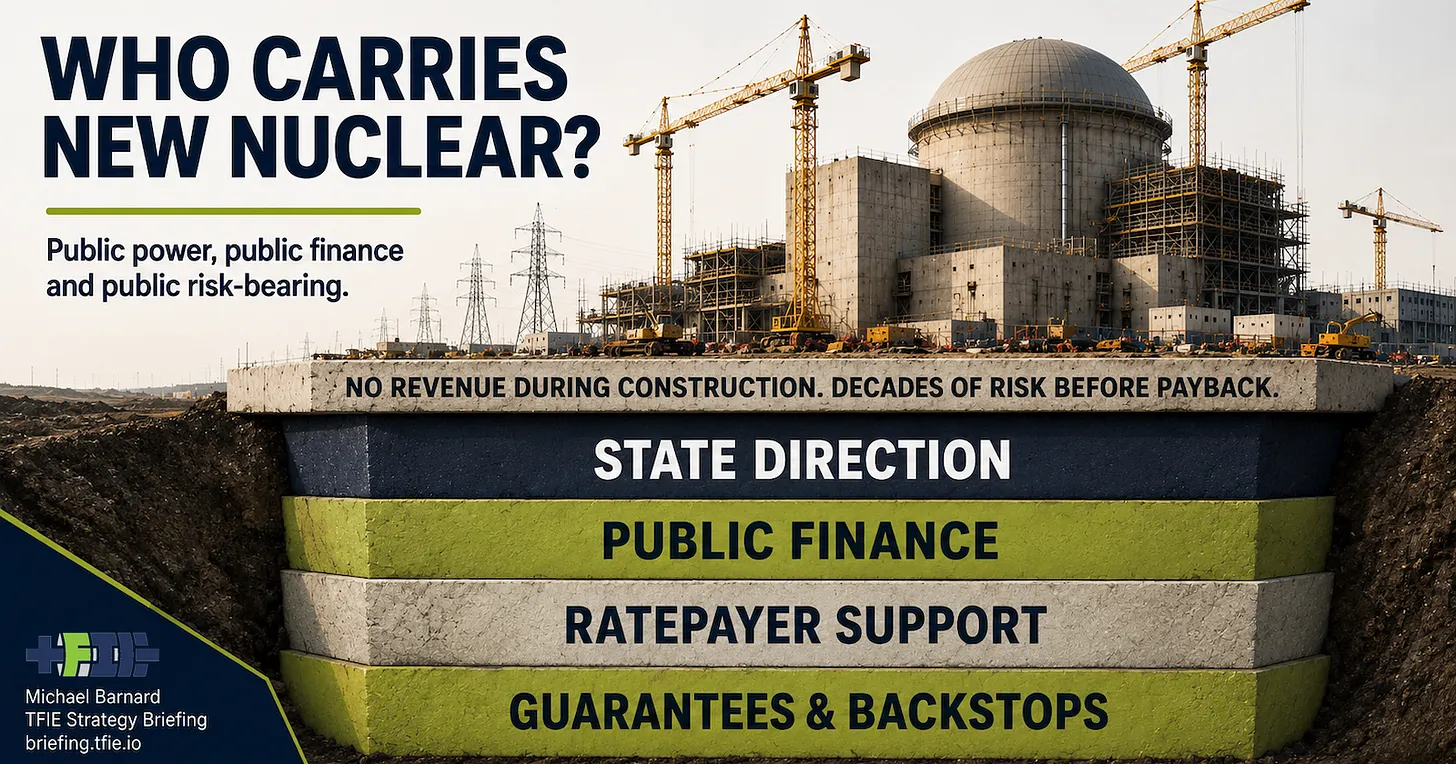
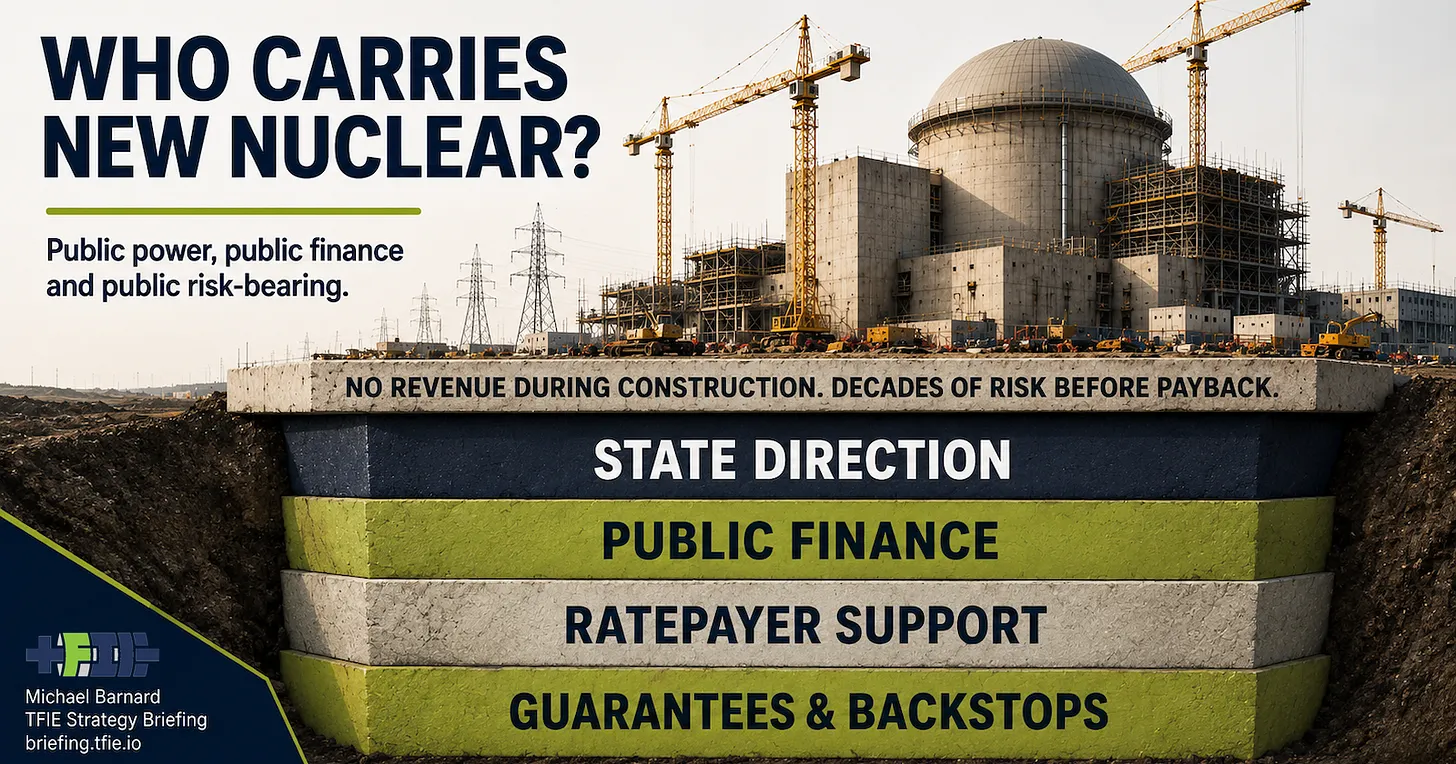
The debate surrounding the future of nuclear energy has reached a critical juncture as nations grapple with the urgent need to decarbonize power grids while maintaining grid stability. While nuclear power successfully generates reliable, low-carbon electricity over multiple decades without the severe health burdens associated with fossil-fuel combustion, a fundamental economic reality continues to disrupt project pipelines: new nuclear projects are fundamentally incompatible with free-market capitalism and hands-off merchant project finance.
For decades, the narrative surrounding advanced energy solutions has often treated all low-carbon generation assets as interchangeable commodities waiting for free markets to discover their financial viability. However, gigawatt-scale nuclear reactors require billions of dollars in capital expenditure years before generating a single kilowatt-hour of electricity. Every minor engineering hurdle, regulatory modification, or supply-chain disruption concentrates massive financial risk within a single, highly complex asset.
As a result, new nuclear power can only become financeable by shifting construction, financing, and revenue risk away from private merchant investors and toward governments, state-owned institutions, and regulated electricity customers. Case studies from the United Kingdom, Czechia, and China demonstrate that successful nuclear deployment relies heavily on national industrial programs, rigid design standardization, and direct state intervention rather than spontaneous market-driven investments.
Chronology of Nuclear Project Financing and Evolution
The Pre-Merchant Era (Mid-to-Late 20th Century)
Historically, nuclear fleets were constructed during an era of state monopolies and heavily regulated utilities. Governments orchestrated long-term national industrial programs. They absorbed upfront financial risks, coordinated supply chains, trained specialized workforces, and committed to multi-reactor deployment schedules that allowed engineering lessons to transfer smoothly from one construction site to the next.
The Shift Toward Merchant Markets (Late 1990s–2010s)
As electricity markets were deregulated in various parts of the Western world, policymakers attempted to treat nuclear energy like natural gas or coal generation. The expectation was that private corporations would finance, build, and operate nuclear plants relying solely on wholesale electricity market revenues. This model consistently stalled due to prohibitive upfront capital costs and prolonged construction timelines.
The Modern Interventionist Era (2020s–Present)
Faced with stalled or failing private models, governments have returned to direct intervention.
- The United Kingdom (2020–Present): After facing extreme cost overruns and schedule delays at Hinkley Point C—despite long-term revenue support—the UK shifted strategies for Sizewell C. The new model relies on government equity and regulated asset base (RAB) financing to absorb construction risks publicly. Simultaneously, the UK Small Modular Reactor (SMR) program has turned to state selection of technology, direct funding of development, and government-backed order books.
- Czechia (Recent Projections): Czechia adopted a similarly interventionist framework for the Dukovany expansion, utilizing state loans to cover construction costs, long-term revenue stabilization mechanisms, and a majority state-owned project company.
Supporting Data and Comparative Analysis
The fundamental economic difference between nuclear energy and modular renewables—such as solar panels, wind turbines, and battery storage systems—lies in risk concentration. In modular technologies, failures or delays are dispersed across thousands of smaller, decentralized projects, meaning an individual setback does not destabilize the economics of an entire national deployment strategy. In contrast, nuclear projects tie up massive amounts of capital in single, highly integrated assets.
The British Case Study: Hinkley Point C and Sizewell C
Britain’s recent nuclear infrastructure trajectory illustrates the limits of private capital absorption. Hinkley Point C has continuously suffered from ballooning budgets and timeline blowouts, despite securing long-term revenue guarantees. Consequently, when planning Sizewell C, developers and policymakers bypassed traditional private equity. Instead, they restructured the financial architecture so that public funds and regulated consumer cost-recovery mechanisms absorb risks before ground is even broken.
The Chinese Industrial Benchmark
Even China, which possesses patient state capital, state-controlled utilities, massive electricity demand, and unmatched engineering capabilities, highlights the immense difficulty of scaling nuclear deployment through pure market efficiency. While China has streamlined its nuclear program around the Hualong One and CAP-derived families, variant designs, distinct safety architectures, and fractured supply chains still persist.
To understand the sheer scale of industrial throughput in modern energy, a comparison of generation capacity additions is illuminating. According to analysis by TFIE Strategy Briefing, when adjusting annual capacity additions for representative capacity factors:
- Wind and Solar (2025 additions): Projected to represent roughly 696 TWh of additional annual generation capability in China.
- Nuclear (2025 additions): Projected to represent roughly 14 TWh of additional annual generation capability.
This data does not imply that a gigawatt of solar is functionally identical to a gigawatt of firm nuclear power. Rather, it measures the vast disparity in how quickly respective industrial ecosystems can scale up and deliver generation output.
Official Responses and Stakeholder Perspectives
Policymakers, energy analysts, and industry leaders hold diverging views on how to reconcile the necessity of firm low-carbon power with the undeniable financial burdens of nuclear energy.

- Proponents of State Intervention: Energy strategists argue that pretending nuclear energy can survive in a free-market vacuum is counterproductive. They emphasize that if a nation decides firm baseload power is vital for national security and climate goals, honesty is required regarding the price tag. This requires transparently utilizing public funds, deploying regulated asset base models, and accepting that taxpayers or regulated ratepayers will underwrite the risk.
- Free-Market Skeptics: Economists and financial analysts caution that shifting construction and cost-overrun risks onto consumers and taxpayers exposes the public to open-ended liabilities. They point out that public subsidization of nuclear energy carries massive opportunity costs, diverting billions of dollars that could otherwise be allocated toward faster-deploying renewables, grid-scale storage, and transmission infrastructure.
- The Nuclear Industry: Industry advocates maintain that once a standardized fleet approach is successfully achieved and regulatory hurdles are streamlined through repeat manufacturing—particularly via Small Modular Reactors (SMRs)—long-term operational costs can stabilize. However, they consistently concede that the initial "first-of-a-kind" (FOAK) financial hurdle is insurmountable without robust government backing.
Broader Implications for Energy Policy and Decarbonization
The realization that new nuclear energy requires the heavy hand of the state to become financeable carries profound implications for global climate strategies and electricity market design.
1. The Death of Merchant Nuclear
The era of private companies independently financing and constructing gigawatt-scale nuclear reactors in deregulated wholesale power markets has effectively drawn to a close. Future projects will almost certainly require bespoke regulatory frameworks, sovereign debt guarantees, or direct government equity ownership.
2. Redefining Accountability and Transparency
Because public institutions, state utilities, and regulated electricity consumers are increasingly forced to shoulder construction and financing risks, governments must establish rigorous oversight mechanisms. The financial burdens—and potential cost overruns—must be fully visible to the public, allowing citizens and lawmakers to weigh nuclear power against alternative clean energy portfolios.
3. Industrial Policy as a Prerequisite
For countries wishing to pursue nuclear energy, policymakers must treat the endeavor as a national industrial strategy akin to defense procurement or aerospace development. Success demands long-term political consensus, disciplined design standardization to maximize learning curves, dedicated supply chains, and specialized workforce training programs.
Ultimately, nuclear power remains a viable, low-carbon tool for securing firm electricity generation. However, nations must abandon the illusion that free markets will naturally discover and finance nuclear fleets. Recognizing that the state must build the economic foundation is the first step toward honest, realistic energy planning.
