

Main Facts
The explosive growth of artificial intelligence (AI) has sparked a high-stakes race for computational power, forcing major technology companies to rapidly expand their data center infrastructure. However, this expansion is colliding head-on with corporate sustainability pledges. Amazon, founded by billionaire Jeff Bezos, has publicly committed to achieving net-zero carbon operations by 2040. Yet, recent revelations paint a starkly different picture of the company’s trajectory.
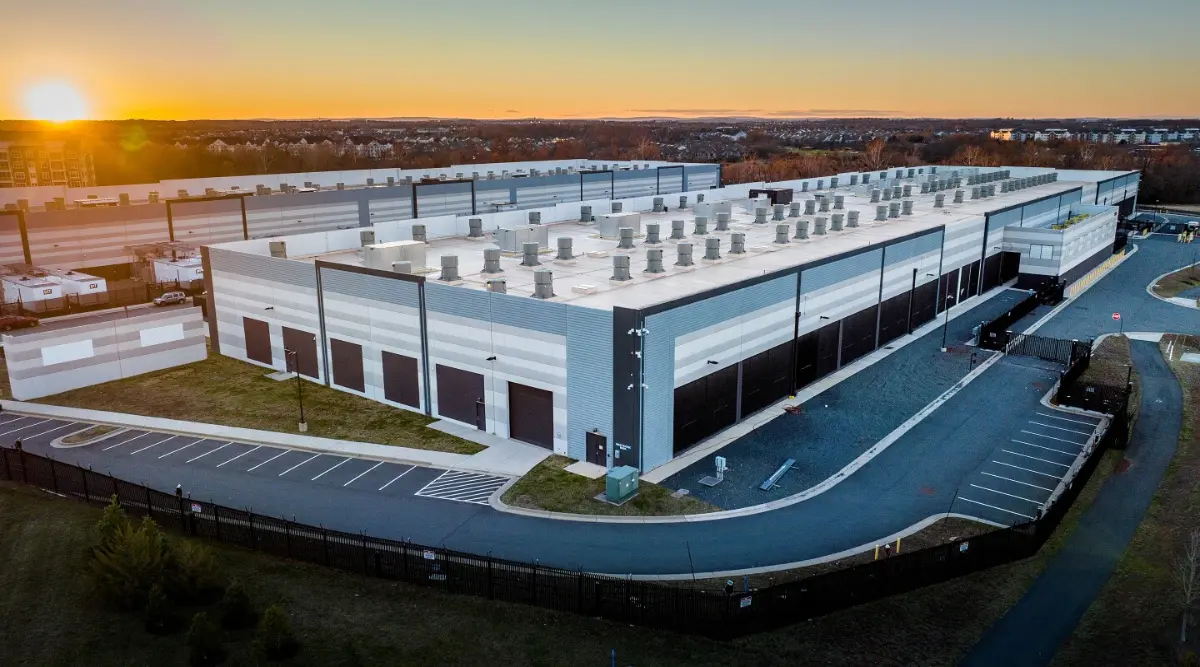
According to reports initially uncovered by clean energy research firm Cleanview and detailed in The New York Times, Amazon has committed to constructing a colossal new data center complex in Pecos County, located in the remote expanse of northwest Texas. Rather than drawing power from the local utility grid—a practice increasingly scrutinized by local residents facing surging utility bills—the facility will operate entirely off-grid.
To achieve this independence, the data center will rely on an unprecedented setup: 35 natural gas-fired turbines capable of generating a staggering 7.65 gigawatts (GW) of electricity. While Amazon has defended the project by emphasizing that the facility will not strain local power grids or raise electricity costs for Texas families, the environmental cost is astronomical. Permitting applications indicate that the facility could be authorized to release up to 33 million tons of carbon dioxide annually.
If built and operated to its maximum permitted capacity, this single complex would surpass the emissions of the James H. Miller Jr. Power Plant in Quinton, Alabama—currently the most polluting coal-fired power plant in the United States, which releases approximately 16 million tons of carbon dioxide per year. While gas burns cleaner than coal per unit of energy, the sheer scale of Amazon’s proposed 7.65 GW facility dwarfs traditional power stations, creating an environmental footprint that threatens to undermine national and global climate targets.
Chronology of Events
The intersection of Big Tech expansion, energy demand, and regulatory shifts has evolved rapidly over recent years, setting the stage for Amazon’s controversial Texas project:
- The 2019 Climate Pledge: Amazon co-founds The Climate Pledge, committing the corporation to reach net-zero carbon emissions across its entire business operations by 2040.
- January 2025: In response to ballooning electricity demand from the technology sector, the federal government issues an executive order designed to streamline the permitting, construction, and operation of critical data center infrastructure.
- Mid-2025 to Early 2026: Federal agencies introduce supportive policies and proposed regulatory exemptions to fast-track fossil fuel-powered generation stations dedicated to servicing industrial computing needs.
- May 2026: Broader industry trends emerge as competitors like Google forge controversial power-sourcing arrangements, such as utilizing the Merom coal plant, sparking regional debates over ratepayer risks and environmental justice.
- Late Summer 2026: Cleanview breaks the news regarding Amazon’s massive Pecos County project in West Texas, revealing plans for a 3.65+ GW off-grid natural gas generation system. Subsequent reporting by The New York Times details the true scale of the site’s potential 33-million-ton annual carbon footprint.
Supporting Data and Environmental Analysis
To understand the magnitude of Amazon’s proposed Pecos County facility, it is necessary to examine the underlying mathematics of fossil fuel generation and modern data center power consumption.
A standard, modern 1-GW combined-cycle natural gas-fired power plant typically emits fewer than 2 million tons of carbon dioxide annually due to high thermal efficiency. Under conventional engineering standards, a 7.65-GW combined-cycle installation would be expected to produce under 15 million tons of carbon dioxide per year. However, Amazon’s project relies on a massive fleet of 35 individual turbines, and permitting thresholds place the facility’s maximum allowable emissions at an unprecedented 33 million tons annually.

Environmental experts note that while power plants rarely operate continuously at absolute maximum capacity, holding permits for such vast emissions establishes a dangerous precedent. Michael Thomas, founder of Cleanview, described the facility to The New York Times as a stark "forecasting of what’s to come," warning that the industry is likely to witness an "explosion of off-grid gas projects" throughout Texas and other strategic energy hubs.
The irony of locating this fossil-fuel-dependent project in West Texas is particularly glaring. The region is internationally recognized as a renewable energy powerhouse, crisscrossed by extensive wind farms that harvest the persistent winds sweeping across the plains day and night. These wind installations generate zero carbon emissions. However, because advanced combined-cycle turbine components face multi-year backlogs, and because tech giants are unwilling to delay their AI deployment schedules amid lucrative government contracts, developers are increasingly turning to readily available, mobile or simple-cycle gas generation units.
Official Responses and Corporate Defense
Faced with mounting criticism from environmental advocates and energy analysts, Amazon and its representatives have defended the company’s long-term environmental vision while navigating the immediate demands of the AI boom.
In a recent statement, Amazon spokesperson Margaret Callahan defended the company’s trajectory by acknowledging the shifting geopolitical and technological landscape. “The world looks different now than when we co-founded the climate pledge,” Callahan asserted, while maintaining that “our commitment hasn’t changed.”
Callahan pointed out that Amazon is actively “exploring” the integration of solar energy generation and advanced battery storage systems at the Pecos County site. She also emphasized that Amazon remains one of the world’s largest corporate purchasers of renewable energy, having successfully integrated wind and solar power into numerous other data center operations globally.
Nevertheless, critics remain unconvinced by corporate reassurances. Kathryn Guerra, a campaign director at corporate watchdog group Public Citizen, lambasted the project’s environmental and public health ramifications. “It’s going to absolutely have a huge impact on the environment, and on public health,” Guerra stated, highlighting the localized risks of massive industrial air pollution in rural communities.
Furthermore, policy experts argue that corporate sustainability reporting often masks the reality of surging absolute emissions. Despite its pledge to decarbonize by 2040, Amazon’s total operational emissions have risen steadily over the past several years, driven largely by the massive energy footprint of its cloud computing infrastructure (AWS) and the exponential demands of generative artificial intelligence workloads.

Implications for the Energy Transition and Climate Policy
The Pecos County data center project serves as a microcosm of a broader, systemic crisis facing the global energy transition. As artificial intelligence transforms from an experimental technology into a core pillar of the global economy, the demand for reliable, uninterrupted baseload power has skyrocketed. Because renewable energy sources like wind and solar are intermittent and grid interconnection queues are severely backlogged—often taking up to a decade to clear—technology companies are increasingly taking matters into their own hands.
The shift toward off-grid, fossil-fuel-powered data centers carries profound implications:
1. The Threat to Corporate Climate Goals
Amazon is not alone in grappling with this dilemma. Competitors across the Big Tech landscape are wrestling with the same operational constraints, frequently resorting to fossil fuels to meet near-term AI infrastructure targets. When corporate entities with net-zero commitments pivot to fossil-fueled microgrids, it calls into question the credibility and enforceability of voluntary corporate climate pledges.
2. Regulatory Tailwinds for Fossil Fuels
Government responses to the data center energy crunch have largely favored industrial expansion over environmental protection. Executive orders aimed at securing national "energy dominance" and federal policies designed to fast-track data center construction have created a permissive regulatory environment. Rather than forcing tech companies to drive grid modernization and clean energy procurement at scale, current policies risk locking in decades of new fossil fuel infrastructure.
3. Public Health and Environmental Justice
The localized impacts of off-grid gas generation disproportionately affect rural communities where vast tracts of land are available for data center development. Permitting industrial facilities that release tens of millions of tons of greenhouse gases—along with criteria air pollutants—threatens local air quality and public health. Watchdog organizations argue that communities should not bear the environmental burden of powering high-tech data processing centers that primarily benefit urban corporate headquarters and global tech consumers.
4. The Path Forward: Citizen Action vs. Institutional Inertia
With regulatory bodies actively streamlining fossil-fuel solutions for the tech sector, critics argue that meaningful accountability must come from grassroots public opposition. As the data center gold rush accelerates, the tension between runaway digital consumption and planetary survival will remain one of the defining challenges of the 21st century. Whether society can balance the computational demands of artificial intelligence with the imperative of a stable climate will depend heavily on public mobilization, policy reform, and whether tech giants are held strictly accountable to their long-term environmental promises.
