

Main Facts
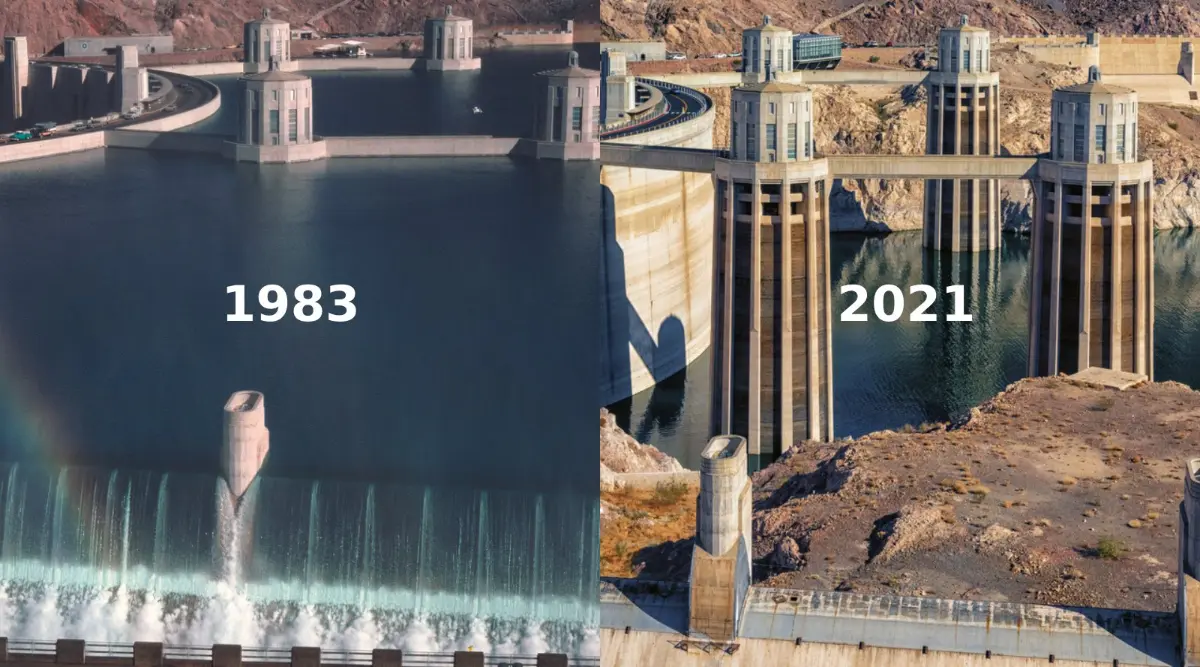
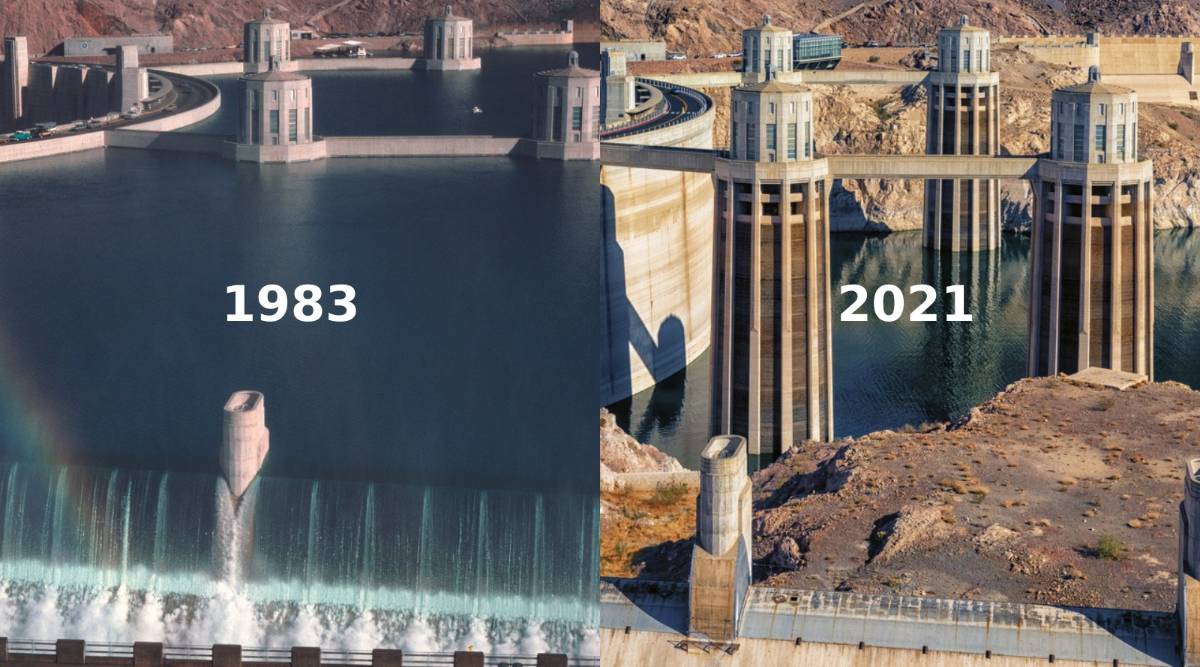
The American Southwest stands at a historic and perilous crossroads. For over a century, the Colorado River has served as the lifeblood of the region, sustaining explosive population growth, sprawling agricultural empires, and booming industrial hubs across seven U.S. states. However, severe climate change, structural over-allocation, and decades of political inaction have pushed the river system to the brink of collapse.
With regional stakeholders failing to reach a consensus on how to sustainably curb consumption, the federal government has announced a sweeping mandatory allocation scheme. Set to take effect this October as current agreements expire, the new ten-year federal blueprint targets dramatic cuts for the Lower Basin states—California, Arizona, and Nevada.
At the center of this looming crisis is a projected 40 percent reduction in water allocations for these three states, potentially slashing up to 3 million acre-feet of water per year. While the federal government lacks direct ownership of the river itself, its firm control over the massive federal dams at Lake Powell and Lake Mead gives Washington absolute leverage over downstream water delivery. As a result, 40 million residents, vast agricultural sectors, and sprawling desert metropolises face a future defined by radical water scarcity.
Chronology: A Century of Oversight and Over-Allocation
1922: The Original Compact
The foundational error of the modern American Southwest was codified in 1922 with the signing of the Colorado River Compact. Dividing the watershed into Upper Basin states (Colorado, New Mexico, Utah, and Wyoming) and Lower Basin states (Arizona, Nevada, and California), negotiators allotted 7.5 million acre-feet of water annually to each group, totaling 15 million acre-feet.
At the time, the region was an arid expanse with sparse populations—Las Vegas was a dusty outpost of barely 2,000 residents, Phoenix hovered around 30,000, and Los Angeles was home to half a million. Negotiators based their allocations on a historically wet period, failing to account for cyclical droughts and assuming the river’s bounty was practically infinite.
1968: The Central Arizona Project
To combat severe groundwater depletion caused by unchecked agricultural and urban growth, Congress authorized the Central Arizona Project (CAP) in 1968. This engineering marvel—a 366-mile canal network running southeast from Lake Havasu past Phoenix to Tucson—delivered life-giving Colorado River water directly into the desert. However, to secure congressional approval, Arizona made a critical concession: in times of shortage, California would retain superior, first-priority claims to the river’s water.
2010s–2025: Decade of Deadlocked Negotiations
As global temperatures rose and the Rockies received diminishing snowpacks, the Colorado River’s annual flow dwindled from historical averages to roughly 12 million acre-feet. For more than a decade, representatives from the seven basin states met repeatedly to renegotiate sharing terms. Despite federal warnings, incentives, and thinly veiled threats of unilateral intervention, state-level negotiations routinely collapsed under the weight of competing economic and regional interests.
August 2026: The Federal Mandate
Following years of intractable gridlock, the federal government announced its definitive ten-year operational blueprint. Bypassing state consensus, the administration confirmed that mandatory cuts would take effect in October 2026, forcing the Lower Basin states to absorb immediate and unprecedented reductions.
Supporting Data & Metrics
Understanding the scale of the Colorado River crisis requires examining the stark numbers defining the region’s water economy:
- The Definition of an Acre-Foot: One acre-foot of water is the volume required to cover a standard football field to a depth of one foot, equivalent to approximately 326,000 gallons (1.2 million liters).
- The Supply-Demand Gap: While the 1922 compact promised 15 million acre-feet, the river today naturally supplies only about 12 million acre-feet annually. Climate change-driven heat and reduced snowfall continue to depress these totals.
- Population Boom vs. Water Reality:
- Phoenix: Expanded from 30,000 residents in 1922 to 1.7 million today, with an additional 4 million in surrounding bedroom communities. The city relies on the Central Arizona Project for roughly 40% of its municipal water.
- Los Angeles: Home to 4 million people, flanked by 8 million more in the broader metropolitan area.
- Las Vegas: Grown to 700,000 residents with 2 million more nearby.
- Proposed Federal Cuts: The new ten-year federal plan could slash water allocations to California, Arizona, and Nevada by up to 3 million acre-feet per year—representing a staggering 40 percent reduction. Initial cuts will remove 1.25 million acre-feet in 2027 and 2028 alone, with deeper reductions possible depending on hydrological conditions.
- Agricultural Disparities: Commercial agriculture in the basin consumes a vast majority of the water, frequently growing highly water-intensive crops like alfalfa, hay, and lettuce (which is roughly 95 percent water) due to historically subsidized, low-cost water pricing.
Official Responses and Stakeholder Reactions
The federal intervention has elicited a mixture of alarm, defiance, and pragmatic resignation from municipal leaders, water managers, and scientific experts across the Southwest.
The Scientific and Policy Perspective
Many water researchers and environmental policy experts view the federal plan as an incomplete fix. Noah Garrison, a water researcher at the UCLA Institute of the Environment and Sustainability, criticized the intervention when preliminary details emerged, stating, "This just kicks the can down the road." Garrison and other critics fear that imposing a temporary federal fix locks the states into endless legal maneuvering rather than forcing genuine long-term structural reforms, ultimately placing the water security of 40 million people at severe risk.
Dr. John Berggren, regional policy manager at Western Resource Advocates, echoed these concerns, emphasizing that deeper sacrifices are mathematically necessary. "In order to best protect the system, there needs to be pretty significant shortages," Berggren noted. "We’re going to have to do more."
Municipal and Management Anxiety
In Arizona, where the sprawling suburban landscape depends entirely on the Central Arizona Project, leaders are confronting terrifying scenarios. Brenda Burman, general manager of the CAP, warned the New York Times about the existential stakes: "They are threatening to shut down the Southwest. It’s not possible to picture it." Without the CAP, Arizona cities would be forced to fall back on badly depleted underground aquifers.
Phoenix Mayor Kate Gallego argued that the federal government must provide substantial financial backing to help municipalities transition away from raw river dependency. Pointing to multi-billion-dollar advanced purification plants capable of recycling wastewater into pristine drinking water, Gallego suggested federal assistance should mirror disaster relief. "Given the magnitudes of these cuts, we would like them to step up in a really big and meaningful way," she said, comparing the water crisis to hurricane recovery in coastal states. However, analysts note that ongoing political shifts and the scaling back of federal emergency infrastructure make substantial funding grants unlikely.

Indigenous Rights and Social Friction
The distribution crisis has also inflamed historic tensions between Native American tribes and non-Indigenous municipalities. Tribal communities hold senior water rights within the CAP distribution framework—a legal reality that often places them at odds with rapidly expanding suburban developments. Long-standing anxieties persist among Indigenous leaders who fear that modern political pressures will once again override established treaty rights.
Implications for the Future
The unfolding crisis on the Colorado River transcends local resource management; it serves as a glaring stress test for modern civilization’s ability to adapt to accelerating climate change.
Economic and Agricultural Transformation
For decades, artificially cheap water allowed the Southwest to sustain water-intensive agriculture in the middle of a desert. The impending 40 percent cuts will render traditional farming practices economically unviable for many producers. A forced agricultural reckoning will likely drive up food prices nationally, disrupt supply chains, and compel a permanent shift toward drip irrigation, dryland farming, and the retirement of vast swaths of farmland.
Urban Resilience and Infrastructure Costs
For metropolitan areas like Phoenix, Las Vegas, and Southern California communities, the era of unlimited urban sprawl is officially over. Cities will be forced to invest heavily in resilient infrastructure, including industrial-scale desalination plants, advanced water recycling, and strict municipal conservation mandates. However, the cost of transitioning to a closed-loop water economy will inevitably fall onto residential ratepayers and local taxpayers, raising severe equity and affordability concerns.
The Broader Climate Reality
Ultimately, the Colorado River crisis reflects a profound systemic failure to align human policy with ecological boundaries. Despite unmistakable scientific warnings regarding shrinking snowpacks, rising evaporation rates, and persistent megadroughts, regional governance has repeatedly prioritized short-term political expediency over long-term survival.
As the federal mandates take effect this October, the American Southwest enters uncharted territory. Whether this shock therapy will finally catalyze sustainable regional cooperation—or trigger an unprecedented social, economic, and ecological collapse—remains the defining question for the twenty-first-century American landscape.
