

Main Facts
The debate surrounding industrial policy in Canada has entered a new and intensive phase, propelled largely by the strategic agenda championed by Mark Carney. At the core of this policy discussion is a fundamental question that has long divided economists, policymakers, and industry leaders: When should the government step in to build, finance, or shape productive capacity, and when should it step back to let market forces dictate the outcome?
The debate has moved swiftly from abstract economic theory to concrete fiscal reality with the introduction of the proposed C$25 billion Canada Strong Fund. Under this initiative, the federal government would borrow capital to establish a major investment vehicle. Rather than operating as a traditional grant-awarding bureaucracy, this fund is designed to take minority equity positions in strategic ventures with the explicit expectation of earning commercial returns.
However, Canada is no stranger to industrial intervention. Ottawa already deploys a vast suite of economic steering tools, including defense procurement, major infrastructure financing, targeted tax credits, housing initiatives, national energy policies, and strategic trade measures. Consequently, the most useful way to analyze Carney’s framework is not through the tired, binary lens of "government versus markets." Instead, the critical distinction lies in how the state intervenes:
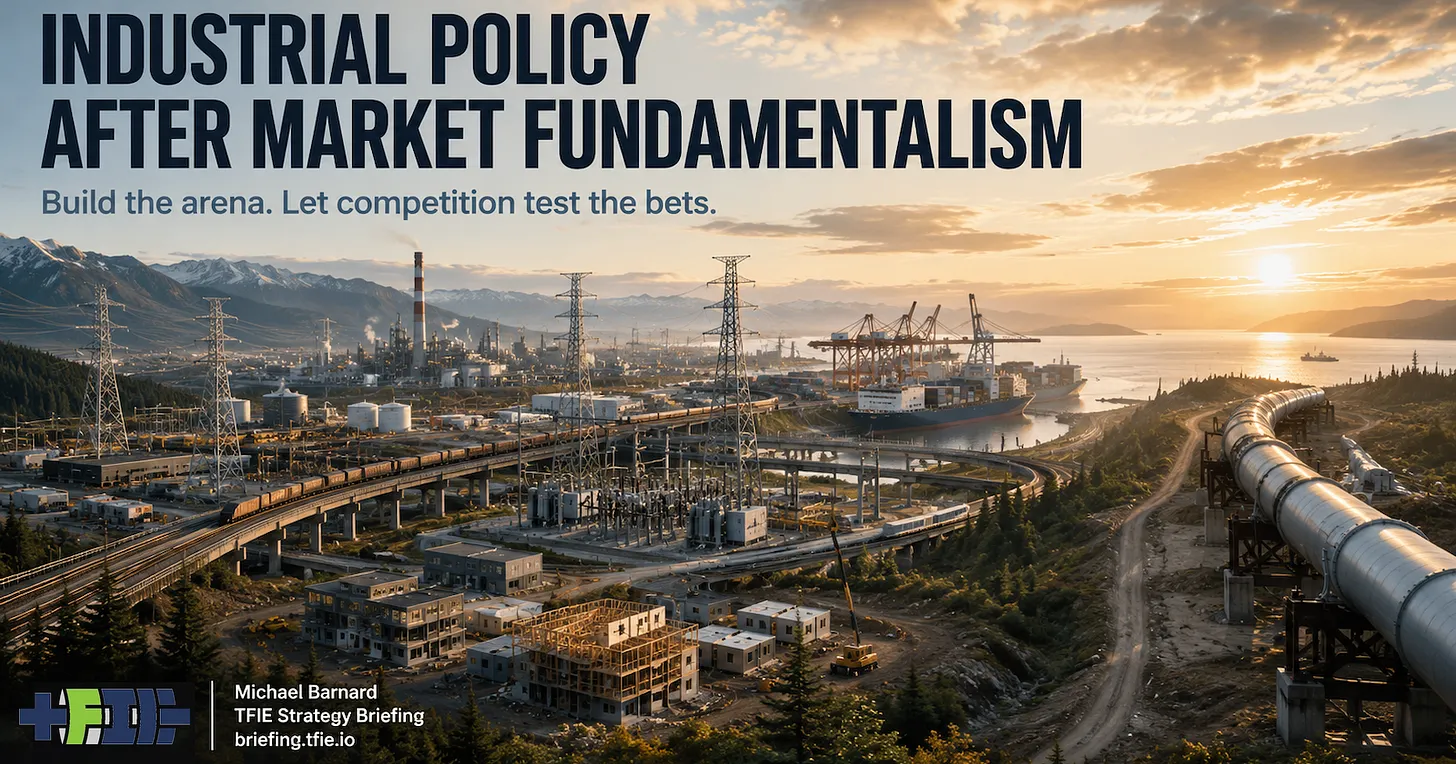
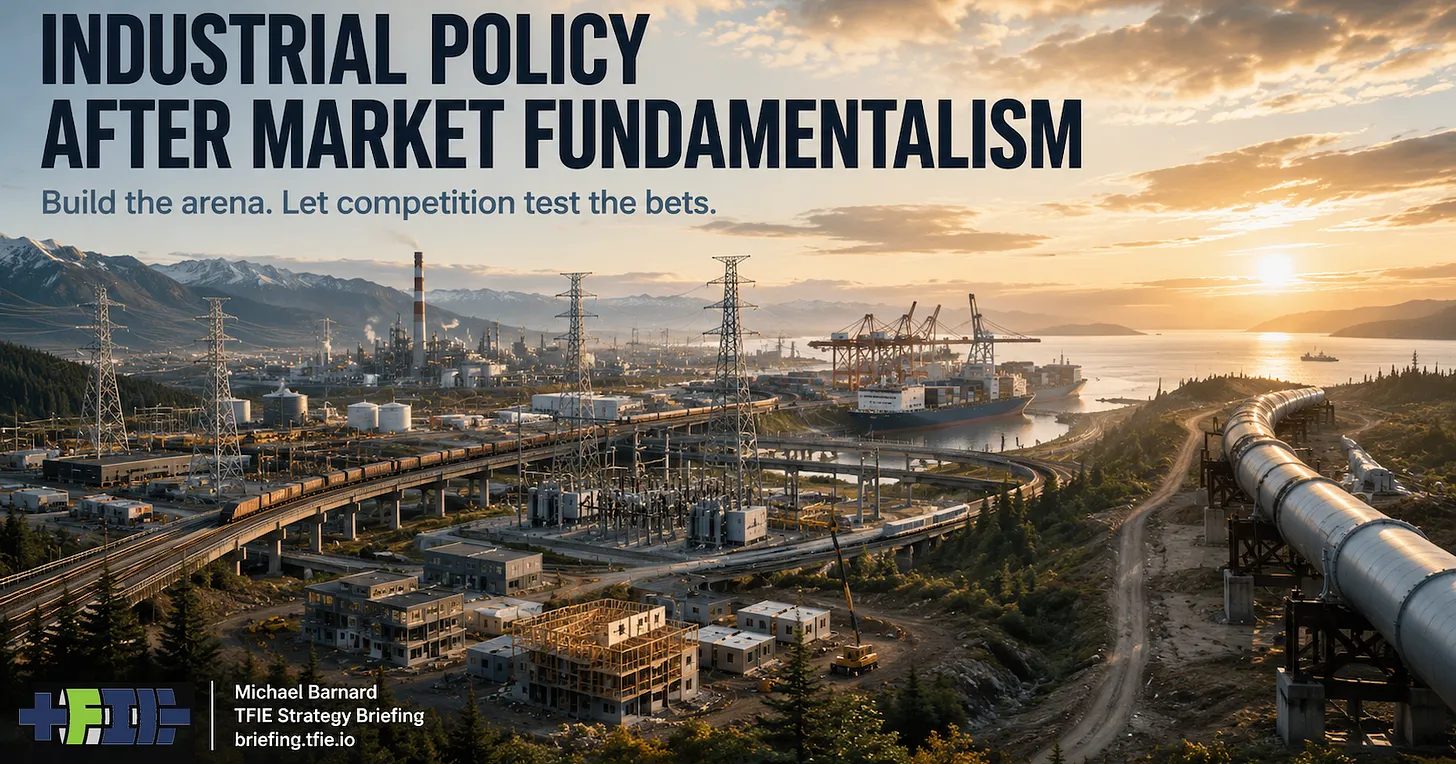
- Building the Arena: Creating shared, foundational infrastructure and public capacity where competing firms and technologies can vie for dominance.
- Shifting Public Risk: Progressively absorbing financial hazards until a politically preferred, yet commercially unproven, project eventually takes on the illusion of commercial viability.
When this evaluative framework is applied across Canada’s complex economic landscape—spanning electricity grids, critical minerals, housing developments, liquefied natural gas (LNG), carbon capture, utilization, and storage (CCUS), and proposed west-coast oil pipelines—a stark divergence emerges between sound systemic investment and politically driven gambles.
Chronology of Canada’s Industrial Policy Evolution
To understand the weight of Mark Carney’s proposed industrial strategy, it is necessary to trace how Canadian economic intervention has evolved over recent decades:
- The Post-War Era to the Late 20th Century: For decades, Canadian industrial policy heavily featured direct state-backed enterprises, crown corporations, and heavy protectionist tariffs designed to foster domestic manufacturing and resource extraction.
- The Neoliberal Shift (1980s–2000s): Influenced by global trends toward deregulation, privatization, and free trade agreements (such as the Canada-U.S. Free Trade Agreement and NAFTA), federal industrial strategy largely retreated. The prevailing consensus suggested that governments were poorly equipped to "pick winners," and that markets should dictate capital allocation.
- The Return of Strategic Intervention (2010s–2020s): Global supply chain disruptions, geopolitical tensions, and the existential urgency of the clean energy transition forced a policy reversal. Governments worldwide began aggressively subsidizing domestic manufacturing, green technologies, and critical supply chains.
- The Present Day (The Carney Agenda & Canada Strong Fund): Mark Carney’s policy stack synthesizes modern economic challenges with institutional realism. By proposing the C$25 billion Canada Strong Fund, the current policy evolution seeks a middle ground: utilizing sovereign balance sheets to mobilize patient capital while attempting to insulate investment decisions from short-term political interference through professionalized management and minority equity stakes.
Supporting Data & Structural Comparisons: Infrastructure vs. Point Projects
The viability of public industrial strategy largely depends on the type of asset being financed. Economic analyses, such as those detailed in recent strategic briefings, categorize public investments based on their "option value" and systemic flexibility.
1. High Option Value: Electricity Transmission
Electricity transmission networks sit near the ideal end of the industrial policy spectrum.
- Multi-Use Utility: A new high-capacity transmission line does not serve just one company or technology. For decades, it can simultaneously supply mines, urban centers, heavy manufacturing plants, data centers, electric vehicle charging depots, heat pumps, and diverse energy generation sources.
- Preserving Competition: Because the government does not need to guess which specific private enterprise or technological standard will ultimately dominate the market, it successfully expands the "arena." It solves coordination failures and allows private players to compete fairly for access to the capacity.
2. Low Option Value: Single-Asset Point Projects
Conversely, a single large-scale project—such as a dedicated export pipeline, an LNG terminal, or an isolated carbon-capture network—presents fundamentally different economic risks.
- Narrow Assumptions: While these projects may possess strategic national value, their financial viability hinges on a precarious stack of assumptions: volatile global construction costs, narrow customer bases, long-term utilization rates, specific regulatory approvals, and rigid counterparties.
- The Sunk Cost Trap: If the original economic thesis collapses due to shifting global markets or technological disruptions, the asset offers very little "option value" to pivot toward alternative uses. Consequently, public capital involvement here demands exponentially stronger empirical justification.
Official Responses & Theoretical Foundations
Mark Carney’s approach bridges classical economic philosophies, drawing heavily on three foundational thinkers—Hayek, Keynes, and Schumpeter—to justify a disciplined yet active state role:
- Friedrich Hayek and the Knowledge Problem: Even critics of market fundamentalism must acknowledge Hayek’s core insight: central planners and government officials cannot possibly possess all the local, distributed, and transient information embedded within prices, consumer preferences, and competing firms. For Carney’s strategy, this dictates that industrial policy must be designed around open competition, reversible commitments, and hard evidence rather than permanent state patronage.
- John Maynard Keynes and Market Failures: Keynes provides the necessary counterbalance. Non-intervention is not neutral; it is an active policy choice that fails societies when private markets cannot or will not deliver vital infrastructure, economic resilience, affordable housing, or counter-cyclical investment during economic collapses.
- Joseph Schumpeter and Creative Destruction: Schumpeter reminds us that any genuine process of economic discovery and innovation requires losers. Failed public investments are not automatically proof that industrial policy is inherently flawed—just as the daily bankruptcy of private corporations does not mean the market system itself has failed. The real danger is when governments refuse to let go of failing ventures.
The Governance Challenge: Can Ottawa Say "No"?
Proponents of the C$25 billion Canada Strong Fund argue that its structural design—relying on minority equity stakes alongside private capital and professionalized management—creates a healthy commercial distance between elected cabinet ministers and individual portfolio assets.

However, independent economic observers emphasize that the ultimate test of the fund will not be its founding mandate, but its institutional discipline. The true governance test is whether the wider federal financing apparatus retains the political courage to say "no" when a failing project has become politically sensitive.
Implications for Canada’s Economic Future
The ongoing evolution of Canadian industrial policy carries profound implications for taxpayers, investors, and the broader green transition:
- Embracing Creative Destruction in the Public Sector: A mature industrial strategy must anticipate and accept commercial failures. Taxpayers and policymakers must stop demanding a 100% success rate from public equity investments while treating private sector bankruptcies as normal. Crucially, governments must resist the urge to perpetually refinance failing projects simply because their cancellation has become politically embarrassing.
- Preserving Market Competition: Government intervention must focus on building foundational public goods—such as clean grids, robust critical mineral infrastructure, and foundational data systems—while preserving fierce competition among private firms within those arenas.
- Evidence-Based Exit Strategies: The credibility of Canada’s economic strategy hinges on its adherence to commercial reality. When empirical evidence shows a strategic thesis is no longer viable, the state must retain the administrative and political capacity to wind down support rather than doubling down on sunk costs.
Ultimately, Carney’s industrial policy framework offers a sophisticated blueprint for modern statecraft. By setting clear strategic directions, building shared productive capacity, pricing environmental externalities, and supplying patient capital, the government can successfully catalyze economic growth. However, long-term success will rely entirely on maintaining competitive market dynamics long after the public investment has been deployed.
