


Main Facts
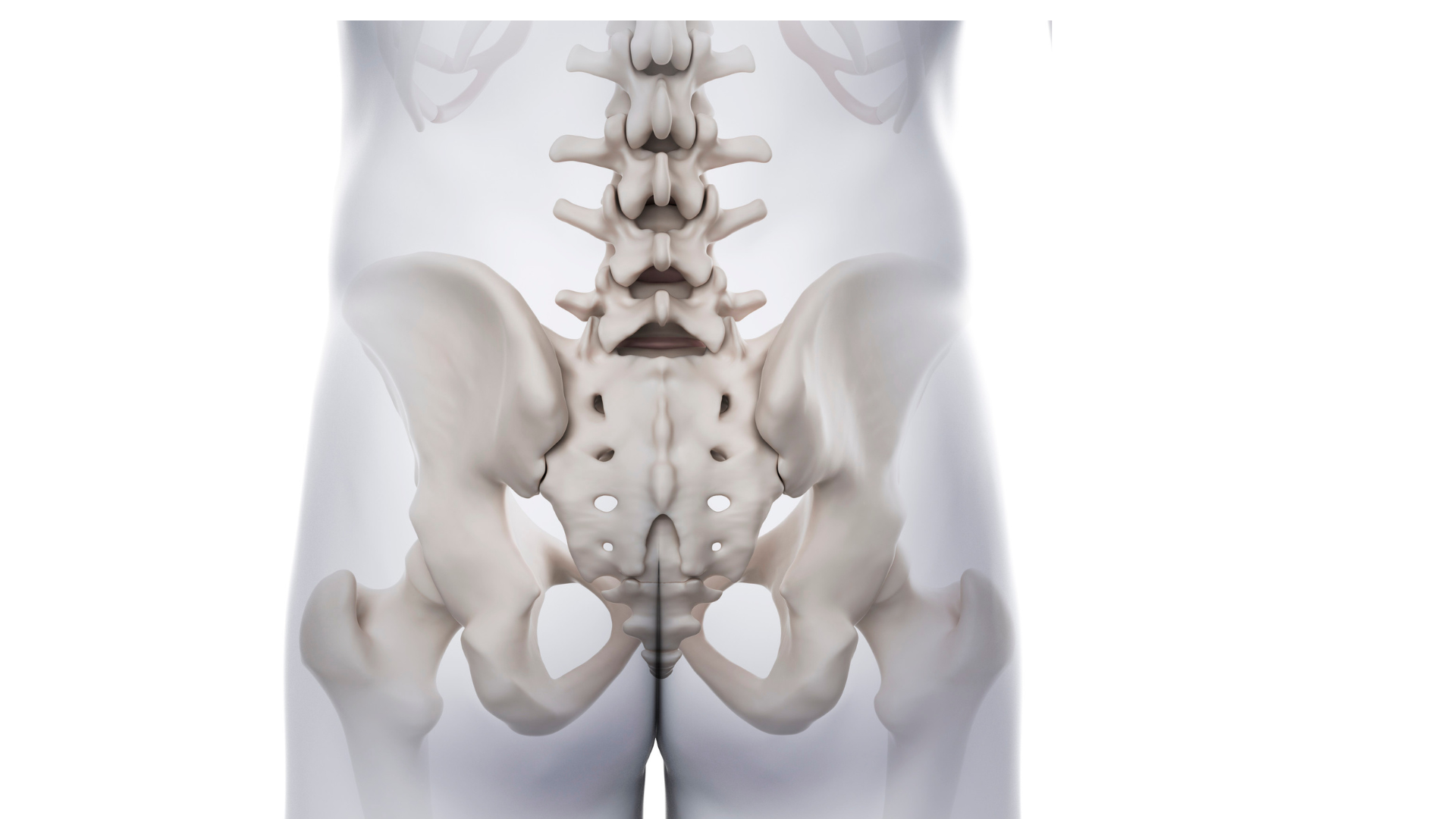
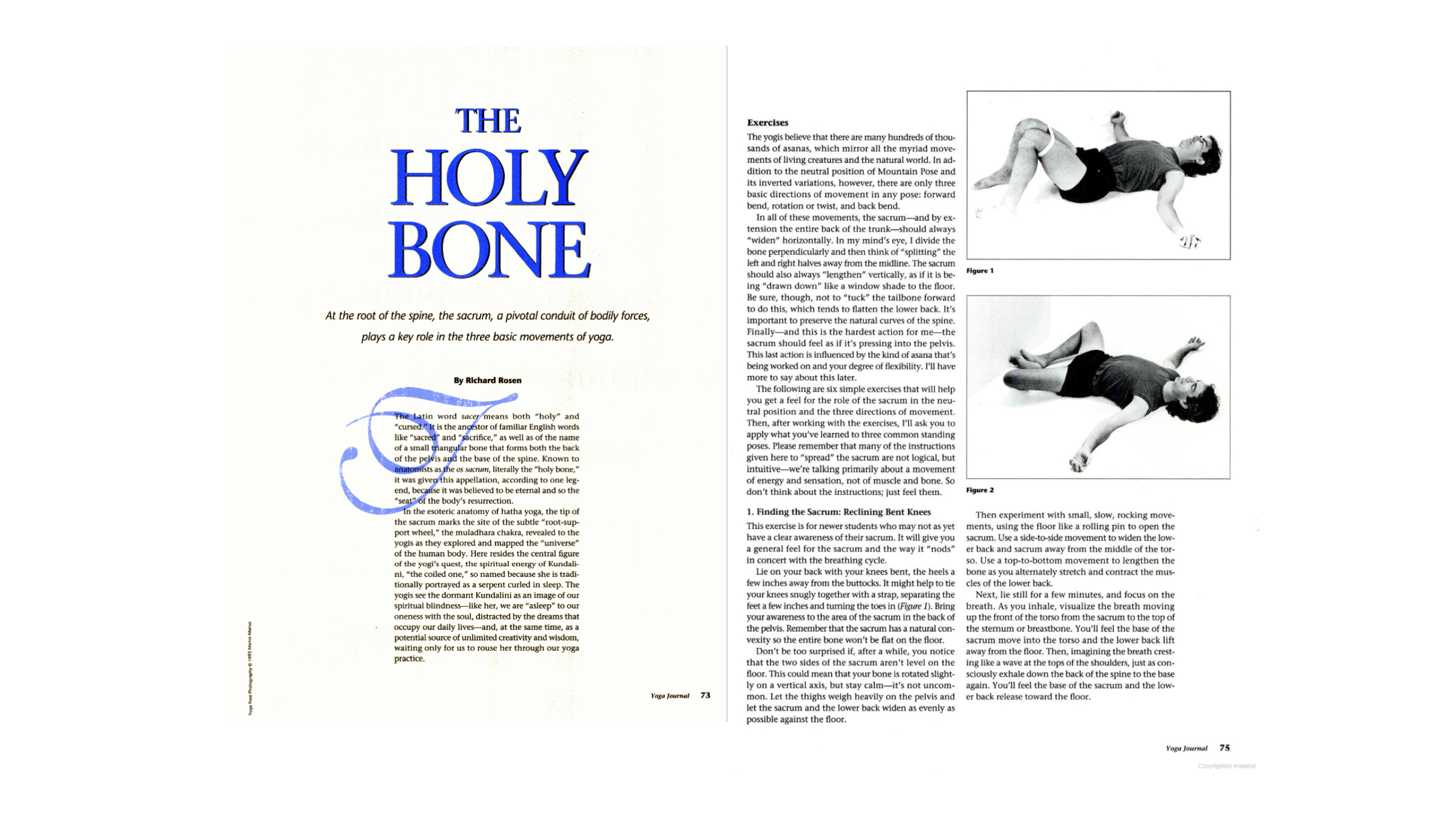
Deep within the architecture of the human pelvis lies a structure of profound physical significance and mystical heritage: the sacrum. Known anatomically as the os sacrum—literally translating to the "holy bone"—this triangular keystone forms the posterior wall of the pelvis and serves as the foundational anchor for the entire spinal column. In the lexicon of hatha yoga, the sacrum is far more than a mechanical bridge transferring upper body weight to the lower limbs; it is recognized as the anatomical seat of the muladhara, or root chakra, and the threshold of dormant spiritual energy known as Kundalini.
For decades, modern practitioners and classical yogis alike have studied this region to resolve chronic lower back pain, correct postural misalignments, and deepen their understanding of subtle body mechanics. By bridging ancient esoteric anatomy with modern kinesiology, yoga practitioners discover that mastering the sacrum—specifically through understanding its dual functions of rooting and supporting the spine—yields unprecedented stability, ease, and grace in both basic postures and advanced asanas.
Chronology: From Ancient Esoteric Roots to Modern Yoga Archives
The veneration of the sacrum spans thousands of years, evolving from mythic religious traditions into the structural awareness taught in contemporary yoga studios.

- Ancient Etymological Origins: The Latin root sacer historically carried a dual meaning of both "holy" and "cursed," giving rise to modern English terms such as "sacred" and "sacrifice." Ancient traditions regarded the os sacrum as indestructible, believing it to be the eternal seed or "seat" from which the physical body would experience resurrection.
- The Development of Hatha Yoga (Medieval Era): As ancient Indian yogis mapped the subtle universe of the human body, they identified the tip of the sacrum as the focal point of the muladhara chakra. Here, they visualized the Kundalini—traditionally depicted as a sleeping serpent—representing the duality of human spiritual blindness and unlimited creative potential.
- November–December 1993: Yoga Journal published a landmark archival article examining the sacrum bone, its anatomical functions, and its precise engagement across various asanas. This text laid the groundwork for modern somatic awareness in yoga teaching.
- Present Day: Contemporary yoga pedagogy heavily integrates pelvic alignment. Teachers routinely utilize sacral awareness to combat the modern sedentary lifestyle, alleviate lower back strain, and educate students on the interplay between physical stability (samatva) and energetic flow (prana).
Supporting Data and Anatomical Mechanics
Understanding the sacrum requires both tactile exploration and an appreciation of its unique geometry. The bone is broad across its superior base—acting as a pedestal for the flexible vertebrae above—and tapers downward to a point known as the apex, which connects to the vestigial tailbone, or coccyx (derived from the Greek word for "cuckoo," due to its resemblance to a bird’s beak).
The Two Primary Functions of the Sacrum
- Rooting the Spine: The sacrum acts as the ultimate foundation for the "staff of Meru" (the spine), anchoring structural movement and absorbing the vital forces of the lower body.
- Balancing Biomechanical Forces: The sacrum serves as an essential conduit for bodily forces. It receives the downward pressure of the trunk, shoulders, and head from the spine, grounding that weight through the pelvis and legs into the Earth. Simultaneously, it accommodates the reciprocal upward thrust of the planet, which sustains the human posture.
When these opposing forces flow harmoniously through a properly aligned sacrum, practitioners experience physical integration and emotional stability. Conversely, sacral misalignments sever this connection to the ground, causing physical strain, stagnant energy, and emotional listlessness.
Official Perspectives and Expert Insights
Pioneering movement educators and classical yoga philosophies emphasize that working with the sacrum is rarely about aggressive muscular exertion; rather, it requires an intuitive adjustment of energy and sensation.
The Wisdom of the Classical Texts
Classical texts such as the Bhagavad Gita refer to samatva—translated as "evenness" or "equanimity"—which is physically realized when every vertebra shares equally in the movement of an asana. When action originates from the sacral "root," it manifests as what the Gita terms "skillful action": effortless, coordinated, and direct.
The Role of Somatic Awareness
Experts in therapeutic yoga note that common postural errors—such as an anterior pelvic tilt caused by aggressively pushing the base of the sacrum into the body—frequently precipitate chronic lower back injuries. Correcting these habits requires understanding the three fundamental directions of movement in asana practice:
- Forward Bends: Requiring the sacrum to widen horizontally and lengthen vertically.
- Twists: Originating from the root of the sacrum and spiraling upward through the spine.
- Backbends: Utilizing the apex of the sacrum as the primary pivot point rather than dumping pressure into the lower lumbar vertebrae.
Implications for Practice: Integrating Sacral Awareness
To translate these anatomical and esoteric principles into tangible benefits, practitioners can utilize specific somatic exercises designed to heighten awareness of the sacrum in neutral positions, twists, forward folds, and backbends.
1. Reclining Bent Knees (Neutral Awareness)
Lying supine with knees bent and feet slightly apart allows practitioners to map the natural convexity of the sacrum against the floor. Gentle rocking movements help release lower back tension, while focused breathing visualizes prana moving in a wave from the base of the sacrum up to the sternum and back down again.
2. Reclining Bound Angle (Supta Baddha Konasana)
By bringing the soles of the feet together and drawing the pelvis close to the heels, students can practice broadening the sacrum against the floor. This exercise stabilizes the lower back and generates "strength without tension," a hallmark of sustainable yoga practice.
3. Sitting Crossed Legs (Forward Bend Preparation)
For forward bends, flexible and stiff students alike must learn to maintain a neutral sacrum. Using the hands to gently draw the flesh of the buttocks away from the sacrum creates a horizontal expansion across the back of the pelvis, preventing the lower back from overstretching.
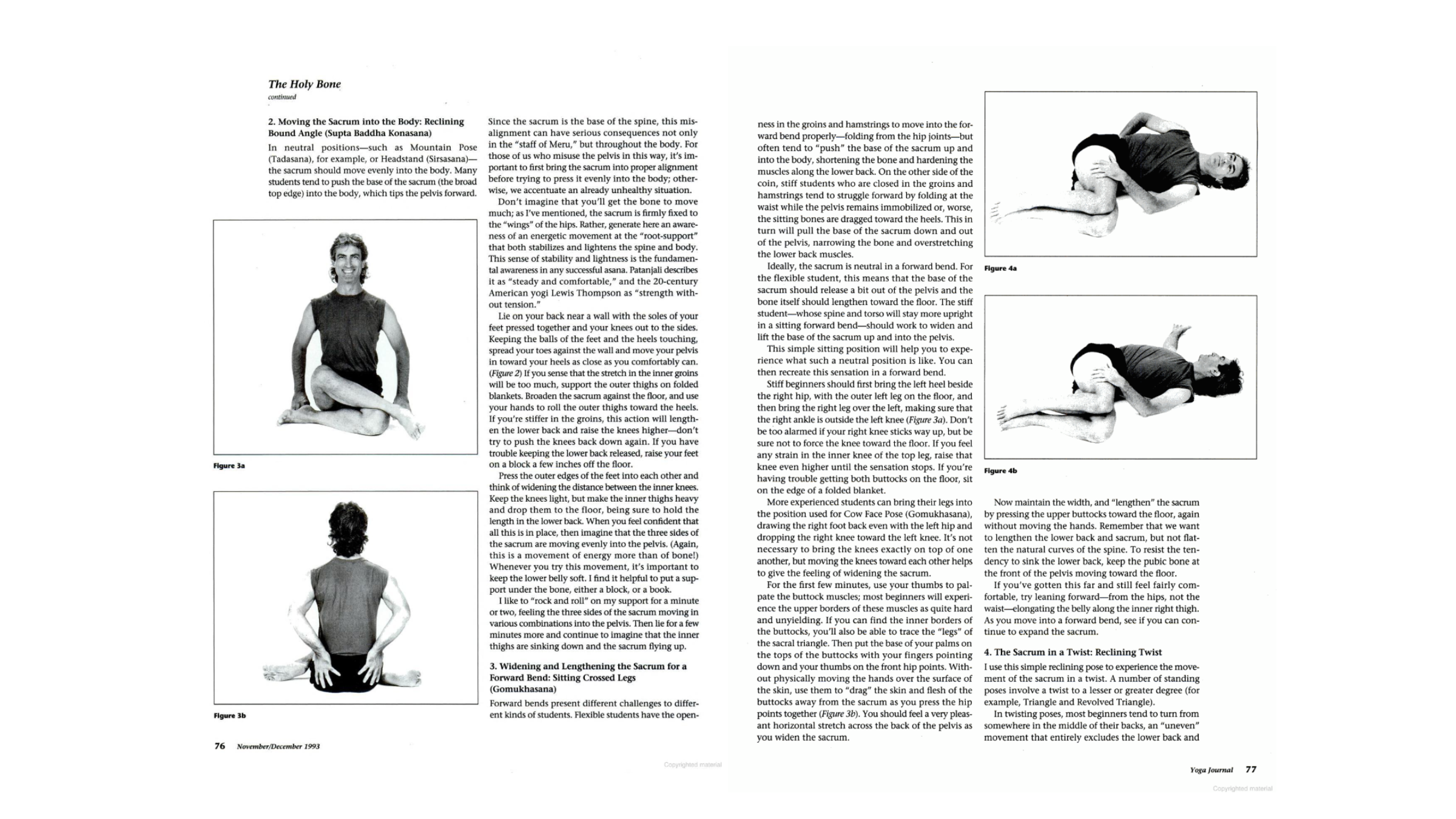
4. Reclining Twist
Twisting postures must always initiate from the root of the spine. By isolating the left or right side of the sacrum and guiding the vertebrae into a smooth concavity, practitioners ensure that twists are distributed evenly throughout the entire spinal column rather than forced exclusively from the mid-back.
5. Reclining Half Hero and Low Lunge (Backbend Preparation)
Preparation for backbends requires opening the front groins and thighs without compressing the lower lumbar region. By ensuring the apex of the sacrum reaches downward while the base broadens, backbends become therapeutic tools rather than sources of injury.
Conclusion: The Play of the Universe (Lila)
Ultimately, the exploration of the "holy bone" transcends mere physical alignment. In yogic philosophy, the universe is understood as lila—the joyous, unending "play" of existence. Just as the sacrum roots the physical body while allowing the spine to dance with flexibility and grace, our engagement with yoga should reflect this sacred balance. By honoring the sacrum as both a structural anchor and a spiritual gateway, practitioners align themselves with the deeper harmony of body, mind, and cosmos.
