

A quiet revolution in localized surveillance has transformed northern Arizona into a key node in a vast, interconnected national network of law enforcement databases.
According to network audit logs obtained from the Coconino County Sheriff’s Office (CCSO) by Larson Newspapers, a network of just 20 Flock Safety automated license plate readers (ALPRs) installed in Coconino County was searched an astonishing 3,259,997 times by 3,815 law enforcement agencies across the United States between January 1, 2026, and July 22, 2026.
The findings reveal the staggering scale of modern license plate surveillance, where local data collected in rural Arizona is routinely accessed by police departments thousands of miles away. Among the regional participants, the Yavapai County Sheriff’s Office (YCSO) was tied to 279 of these searches, despite not operating its own Flock camera network, raising significant questions about inter-agency data sharing, privacy, and the stated justifications for acquiring surveillance technology.
Main Facts of the Surveillance Network
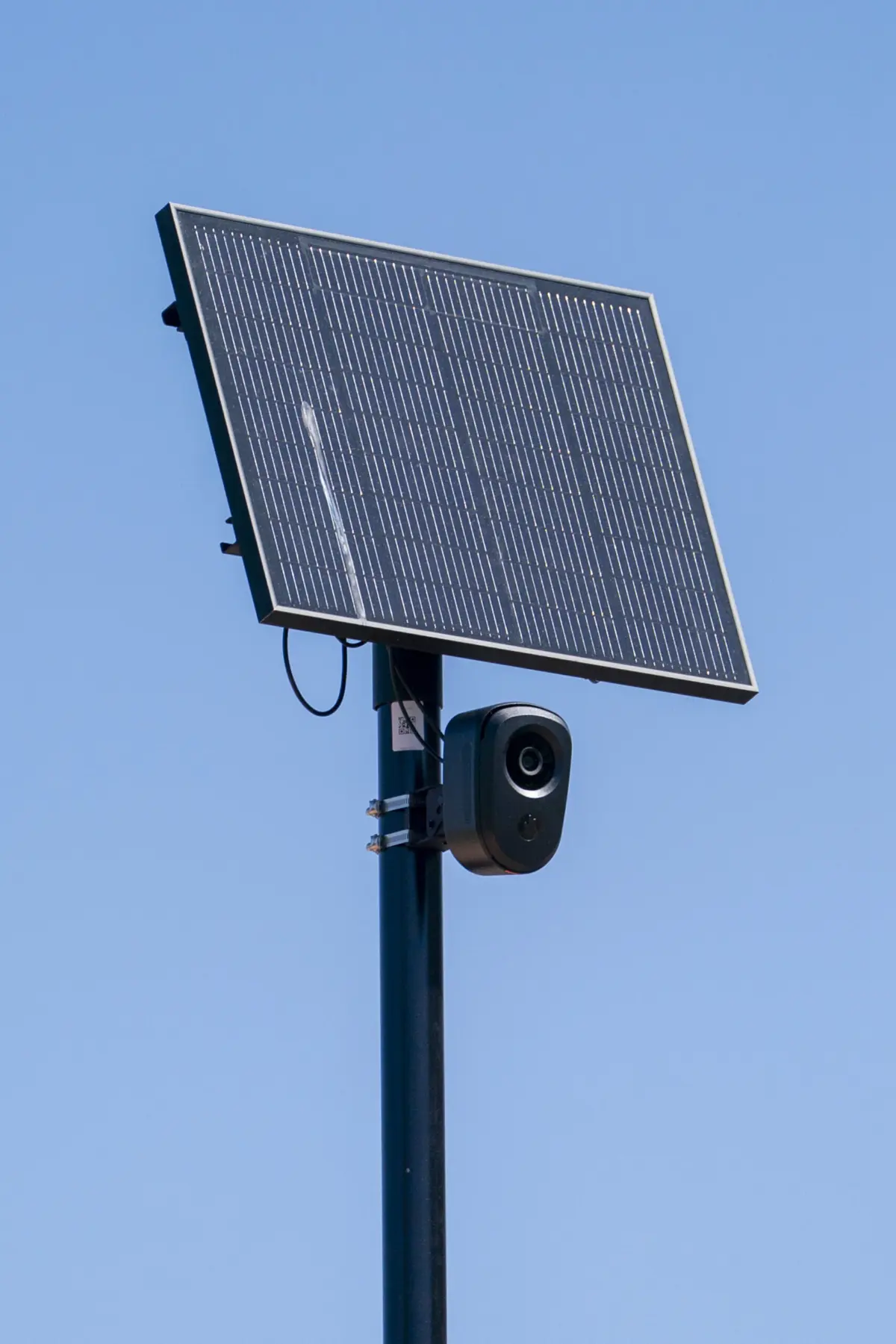
Automated license plate readers are high-speed, computer-controlled camera systems typically utility-mounted on poles, streetlights, or police cruisers. These cameras photograph every passing vehicle, capturing not only the license plate number but also unique vehicle features such as make, model, color, and even bumper stickers or roof racks. This raw data is uploaded instantly to cloud-based servers, where proprietary machine-learning algorithms convert images into highly searchable, time-stamped vehicle profiles.
In Coconino County, the Sheriff’s Office maintains a network of 20 Flock Safety ALPRs. While these cameras are physically situated in northern Arizona, the data they collect is accessible to a web of law enforcement agencies nationwide through pre-established data-sharing agreements. When CCSO initially rolled out its program, it established data-sharing pacts with 94 law enforcement agencies, including local neighbors like the Cottonwood Police Department (CPD), the Prescott Police Department, the Prescott Valley Police Department, and the Yavapai County Sheriff’s Office.
The sheer volume of search activity documented in the audit logs highlights the continuous nature of this digital dragnet:
- Total Searches: 3,259,997 queries over a 203-day period.
- Daily Average: Nearly 16,000 searches per day.
- Involved Agencies: 3,815 distinct law enforcement bodies nationwide.
- Out-of-State Domination: The vast majority of queries originated from police departments outside the state of Arizona.
Under CCSO’s current operational policy, the license plate data collected by these 20 cameras is retained in the cloud for 30 days before being purged. However, during that 30-day window, any agency with access to the sharing network can query the database, mapping the movements of residents and travelers moving through Coconino County.
Chronology of the ALPR Expansion
To understand how northern Arizona became integrated into this national surveillance web, it is necessary to trace the procurement and partnership timelines of the region’s law enforcement agencies:
July 2023: The Funding Catalyst
The Yavapai County Sheriff’s Office accepted $71,381 in grant funding specifically designated for the purchase of four vehicle-mounted Vigilant Solutions ALPRs. The primary justification presented to secure these funds was drug interdiction and combating human trafficking along major highway corridors.
Late 2025: Coconino County’s Deployment
The Coconino County Sheriff’s Office finalized the installation of its 20-camera Flock Safety network. To maximize the utility of the system, CCSO established its initial 94 data-sharing agreements, linking rural northern Arizona to municipal police departments and sheriff’s offices across the Southwest.
January 7, 2026: The HSI Proxy Search
Early in the audit window, YCSO initiated a wide-reaching search on behalf of Homeland Security Investigations (HSI). Logged under drug and narcotics investigations with the notation "drug investigation -PV HSI," this single query was broadcast across 5,730 connected networks. The search did not have an associated local case number.
January 1 – July 22, 2026: The Audit Period
Over these seven months, millions of automated and manual searches were run against CCSO’s 20 cameras. During this timeframe, local agencies without Flock contracts, such as YCSO and the Camp Verde Marshal’s Office, routinely accessed the network through proxy agreements or direct queries.
August 2026: Public Disclosure
Following public records requests, Larson Newspapers obtained and analyzed the CCSO network audit logs, revealing the massive scale of interstate data sharing and prompting inquiries into agency policies.
Supporting Data: A Deep Dive into the Numbers
The audit logs reveal a stark contrast between local usage and the massive volume of inquiries generated by large, out-of-state metropolitan police departments.
The National Out-of-State Demands
A small group of large agencies accounted for a massive portion of the search traffic. The top ten searching agencies alone accounted for 957,176 queries—representing 29.4% of the total 3.2 million searches.
The most active out-of-state agencies searching Coconino County’s data include:
| Agency | Number of Searches |
|---|---|
| Dallas Police Department (TX) | 313,404 |
| California Highway Patrol (CA) | 299,216 |
| Texas Department of Public Safety (TX) | 75,432 |
| Houston Police Department (TX) | 72,184 |
This high volume of out-of-state queries suggests that major metropolitan areas and state highway patrols use automated batch queries to cross-reference local databases across the country against their own active "hot lists" of vehicles under investigation.
Local Agency Activity
In northern Arizona, local departments utilized the CCSO network with varying frequency:
- Cottonwood Police Department: Conducted 649 direct searches. Cottonwood itself hosts 11 Flock ALPR cameras.
- Camp Verde Marshal’s Office: Conducted 24 searches, despite not operating any Flock hardware of its own.
- Yavapai County Sheriff’s Office: Tied to 279 total searches.
Of the 279 searches connected to YCSO, only 106 were run directly by YCSO personnel. The remaining 173 searches were executed by neighboring departments citing YCSO or a specific YCSO case number in their search justifications. Approximately 50% of the Flock search activity benefiting YCSO was conducted through another department’s account.
For instance, the Prescott Police Department executed 132 searches linked to YCSO, explicitly naming the Sheriff’s Office in 65 of those requests and attaching a case number to every query. Similarly, the Cottonwood Police Department conducted 18 searches on behalf of YCSO, with 13 explicit requests and four associated case numbers.
Stated Reasons for YCSO-Connected Queries
An analysis of the reasons provided by officers for the 279 YCSO-connected searches reveals that local police primarily used the system to investigate property and financial crimes, rather than the high-level trafficking operations used to justify the technology’s funding.
[YCSO-Connected Searches by Crime Category]
├── Burglary & Property Crimes: 52 searches
│   ├── Burglary: 38
│   └── Stolen Property: 14
├── Vehicle Theft: 30 searches
├── Missing/Endangered Persons & Welfare: 50 searches
│   ├── Missing/Endangered: 26
│   └── Welfare Checks: 24
├── Financial Crimes (Embezzlement/Fraud): 21 searches
├── Domestic & Violent Crimes: 20 searches
│   ├── Domestic Assault: 14
│   └── Stalking: 6
├── Narcotics: 11 searches
└── Other/Miscellaneous: 95 searches
Notably, zero of the 279 YCSO-connected searches were logged as human trafficking investigations, despite YCSO accepting over $71,000 in federal/state funds in 2023 under the explicit premise of using ALPR technology for drug and human trafficking interdiction.
The Homeland Security (HSI) Connection
Federal agencies also rely on local ALPR networks through local proxies. Homeland Security Investigations (HSI), the primary investigative arm of U.S. Immigration and Customs Enforcement (ICE), does not hold a direct account on CCSO’s Flock network and conducted zero direct searches.
However, HSI was cited as the beneficiary in 404 searches run by 38 other agencies. Five Arizona departments ran searches on behalf of HSI:
- Mesa Police Department: 45 searches
- Arizona Department of Public Safety (DPS): 27 searches
- Tolleson Police Department: 14 searches
- Coconino County Sheriff’s Office: 9 searches
- Yavapai County Sheriff’s Office: 1 search
These 404 HSI-related searches were primarily categorized under narcotics (136), human trafficking (88), weapons violations (51), and financial crime (23). None of the logged searches referenced immigration status, deportation, or removal. However, because searches assisting federal agencies can be conducted without written notes, any unnotated queries leave no audit trail.
Official Responses and Public Accountability
The revelation of millions of external searches on Coconino County’s local database has raised questions about oversight and policy boundaries.
When contacted for clarification on the sheriff’s office’s digital search policies, YCSO spokesman Paul Wick did not respond to multiple requests for comment. Key questions left unanswered by the department include:
- What internal policies govern when and how YCSO deputies can query another agency’s ALPR database?
- Why is approximately half of YCSO’s ALPR search activity routed through the accounts of neighboring municipal departments like Prescott and Cottonwood?
- How does the agency reconcile the zero human trafficking queries in the audit log with the law enforcement grants accepted in 2023 to combat trafficking via ALPRs?
In an effort to map the full extent of regional surveillance sharing, public records requests have been submitted to both the Prescott Police Department and the Prescott Valley Police Department, seeking their complete network audit logs.
Implications: Function Creep and the Interstate Surveillance Web
The findings from the Coconino County audit logs highlight several key policy questions regarding localized surveillance networks:
1. The Reality of "Function Creep"
"Function creep" occurs when surveillance tools acquired for high-level, severe public safety threats—such as terrorism, human trafficking, or cartel-scale drug distribution—gradually become routine tools for minor local offenses.
The data from northern Arizona illustrates this shift. While YCSO’s original ALPR funding was justified by drug and human trafficking interdiction, the audit logs show that the network is primarily queried for property crimes, financial fraud, welfare checks, and local thefts. While these are legitimate law enforcement concerns, civil liberties advocates argue that using regional surveillance networks for routine policing bypasses the public debate that should accompany the deployment of such invasive technology.
2. The Creation of an Unregulated National Database
Because local agencies regularly establish data-sharing agreements with hundreds of other departments, localized camera installations effectively merge into an unregulated national tracking database. A driver traveling through rural Coconino County has their location, vehicle type, and travel patterns recorded and made searchable to thousands of out-of-state officers—from Dallas detectives to California Highway Patrol officers—without a warrant and often without any connection to interstate crime.
3. Lack of Transparent Auditing and Oversight
The audit logs reveal that a significant portion of search activity is conducted via proxy. When one agency queries the database on behalf of another, or when an officer fails to log a detailed case number, the accountability trail is weakened. The fact that half of YCSO’s associated searches were run through other municipal accounts makes it difficult for civilian oversight bodies to monitor how often, and for what purposes, local deputies are accessing vehicle tracking data.
As automated license plate readers continue to expand along Arizona’s roadways, the balance between public safety utility and motorist privacy remains a central point of discussion. The millions of searches recorded in Coconino County demonstrate that what is captured locally rarely stays local.
