

By Editorial Staff
Published in collaboration with metaphysical research groups and spiritual documentation archives.
Main Facts: The Universal Sensation of Being Out of Place
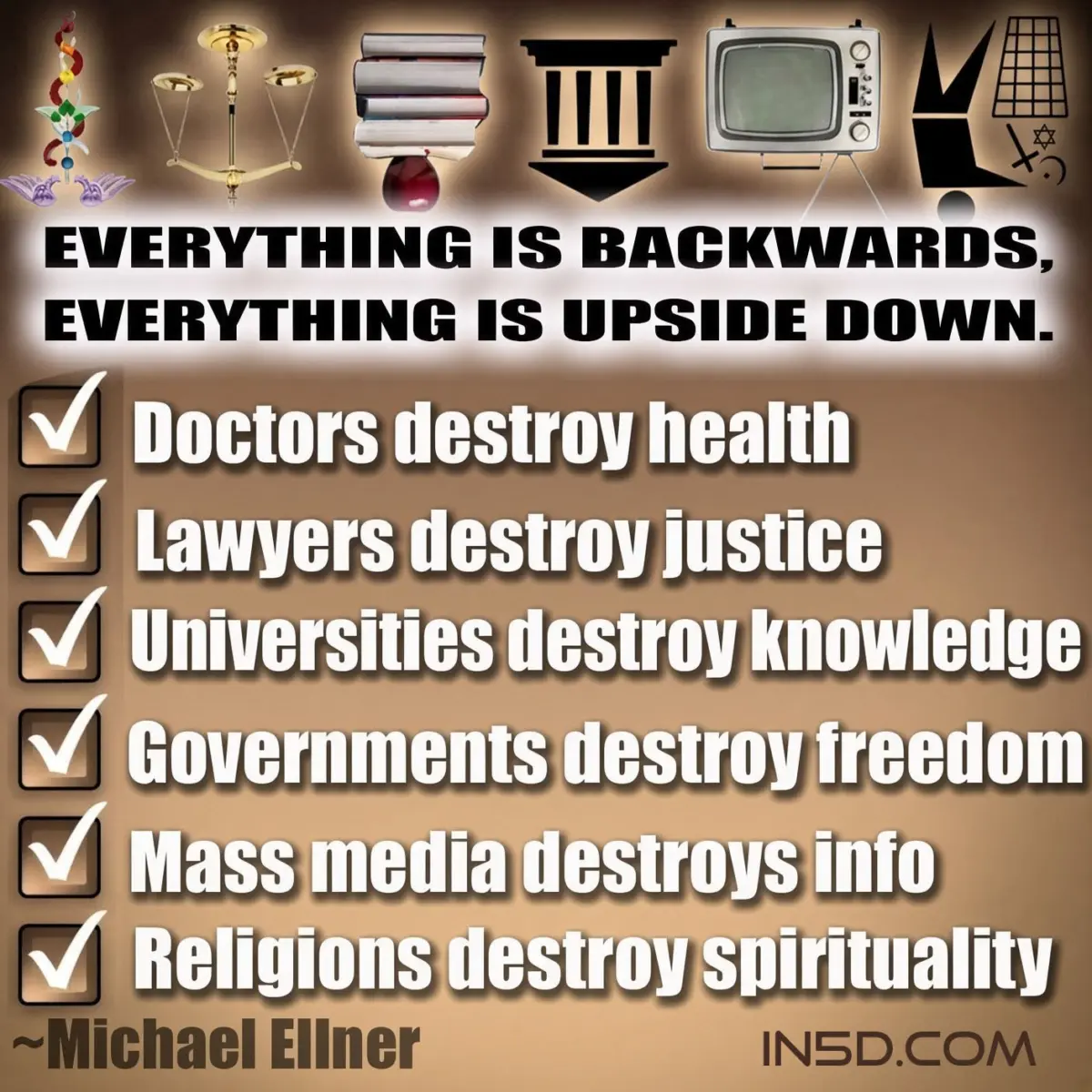
For millions of people worldwide, looking at modern society provokes a jarring, deeply unsettling internal reaction. Rather than feeling a sense of integrated citizenship in their local towns, home countries, or even on Earth itself, these individuals experience a lifelong, pervasive alienation. Common refrains echo across digital forums, counseling sessions, and spiritual communities: "Why does everything feel upside down and backwards?" or "I didn’t sign up for this."
Far from being a localized psychological anomaly, this profound sense of displacement crosses cultural, economic, and geographic boundaries. Contemporary sociological and metaphysical observations indicate that a significant demographic of the global population experiences a persistent existential homesickness—a yearning for a place they cannot physically name, coupled with the uncanny realization that societal structures (such as formalized labor, competitive consumerism, and dogmatic education) appear fundamentally misaligned with human well-being.
Key facets of this phenomenon include:
- Early-Life Alienation: Many report questioning institutional norms, such as organized religion or rigid educational systems, from early childhood.
- The "Upside-Down" Paradigm: Observers frequently note that societal expectations—prioritizing material accumulation over authentic connection—run counter to intuitive human desires.
- The Search for a Soul Tribe: Despite feeling entirely isolated for decades, awakening individuals often experience sudden, profound alignments when discovering peers who share identical worldview perspectives.
Chronology: Tracing the Evolution of Alienation from Childhood to Awakening
To understand how this profound sense of non-belonging manifests, researchers frequently map the timeline of an awakening individual’s psychological and spiritual development.
Phase 1: Early Recognition of the "Matrix" (Childhood)
The trajectory often begins in early youth. Individuals frequently recall instances where standard societal environments—such as Sunday schools, rigid classrooms, or traditional family structures—provoked immediate internal resistance or confusion. Rather than seamlessly absorbing cultural doctrines, these children ask probing questions that disrupt institutional norms, often drawing institutional or parental concern.

Phase 2: The Longevity of Masking (Adolescence and Early Adulthood)
Realizing that their internal perceptions differ vastly from those of their peers, many individuals spend years attempting to conform. They enter the traditional workforce, pursue conventional milestones, and attempt to integrate into mainstream social circles. However, this period is routinely marked by a quiet, underlying melancholy or a sense of playing a role in a play they never auditioned for.
Phase 3: The Catalyst of Memory and Regression (Mid-Life or Awakening Triggers)
A turning point often arrives via an unexpected catalyst—be it a profound life transition, exposure to metaphysical literature (such as the work of Dolores Cannon on "Volunteer Souls"), or experimental practices like past-life regression audio tools. During this phase, individuals recontextualize their lifelong alienation. Memories or conceptual frameworks regarding alternate origins, past lives (such as indigenous resistance to colonial conversions), or interstellar connections suddenly click into place, offering an explanatory narrative for their lifelong displacement.
Phase 4: Integration and Community Building (Late Awakening)
In the final phase, individuals cease trying to force themselves into conventional societal boxes. By accepting their inherent sense of "otherness," they begin actively seeking out resonant communities—often referred to in esoteric circles as "soul tribes"—transforming isolation into purposeful, authentic living.
Supporting Data: Psychological Profiles and Metaphysical Frameworks
While mainstream psychology tends to view alienation through the lens of introversion (such as INFP personality markers), neurodiversity, or counter-cultural friction, metaphysical frameworks offer alternative, complementary models to explain these feelings.
1. The Psychological and Sociological Lens
From a secular perspective, individuals who feel out of place are often classified as deep thinkers, highly sensitive persons (HSPs), or introverted creatives. Societal pressures demand conformity, obedience, and economic productivity. Those whose intrinsic values center on authenticity, philosophical inquiry, or cooperative harmony naturally clash with hyper-capitalistic and highly bureaucratic systems. Consequently, their alienation is a rational response to an irrational social structure.
2. The Metaphysical Framework: Old Souls and Starseeds
Conversely, metaphysical models—popularized by researchers investigating human consciousness evolution—categorize these feelings into specific archetypes:

- Old Souls: Consciousnesses that have experienced numerous prior incarnations, leading to an innate wisdom that feels world-weary or detached from the superficial dramas of contemporary youth culture.
- Starseeds / Volunteer Souls: The hypothesis that certain consciousnesses originate from extraterrestrial star systems (such as the Pleiades, Arcturus, or Sirius) and incarnated on Earth during a critical evolutionary epoch to assist with a collective shift in human awareness.
- Lightworkers and Empathic Archetypes: Individuals driven by a persistent, internal mandate to heal, uplift, or transform collective paradigms, despite lacking a concrete blueprint or job description for their "mission."
Official and Institutional Responses: The Medicalization of Non-Conformity
Traditional institutional bodies—encompassing psychiatric, educational, and religious establishments—have historically responded to non-conformity and spiritual questioning with attempts at correction, diagnosis, or marginalization.
- Educational and Religious Corrections: Historically, children who question dogma or exhibit anomalous perceptual abilities (such as precognition, vivid astral experiences, or deep skepticism toward institutional narratives) have been funneled into remedial programs, catechism corrections, or behavioral counseling.
- The Pathologization of Metaphysical Experiences: Mainstream psychology frequently categorizes profound spiritual longings, past-life memories, or feelings of cosmic displacement as symptoms of dissociation, maladaptive daydreaming, or depressive alienation.
- The Shift in Modern Discourse: In recent years, however, integrative health practitioners, holistic psychologists, and progressive counselors have begun bridging the gap. Recognizing the limits of purely materialist models of the mind, a growing contingent of mental health professionals now validate spiritual emergence phenomena, helping individuals navigate existential distress without prematurely pathologizing non-traditional worldviews.
Implications: Redefining the Purpose of Human Existence
The realization that one does not "belong" to the conventional blueprint of modern civilization carries profound personal and collective implications.
Shifting from Alienation to Intention
The primary shift occurs when an individual stops viewing their non-belonging as a personal failure and begins treating it as a diagnostic tool. Instead of asking, "Why am I stuck in this broken world?" the inquiry evolves into, "Why did I choose to witness and participate in this specific historical transition?" This reframing transforms passive despair into active, purposeful resilience.
The Power of Decentralized Networks
As digitally native platforms, alternative documentation apps (such as spiritual journey trackers), and global communication networks expand, isolated free-thinkers are no longer constrained by geography. The archaic loneliness of being the sole question-pointer in a small town is increasingly replaced by global connectivity, proving that those who felt isolated were merely scattered across a vast canvas.
A New Cultural Paradigm
Ultimately, the collective rise of those who refuse to conform points toward a fundamental restructuring of human values. If millions of people collectively reject a lifestyle built exclusively around labor, consumption, and superficial distraction, society itself is forced to evolve. The friction felt by these "misfits" is not a glitch in human design; it is the friction of a chrysalis breaking open—signaling that humanity is awakening to a deeper, more interconnected understanding of existence.
