

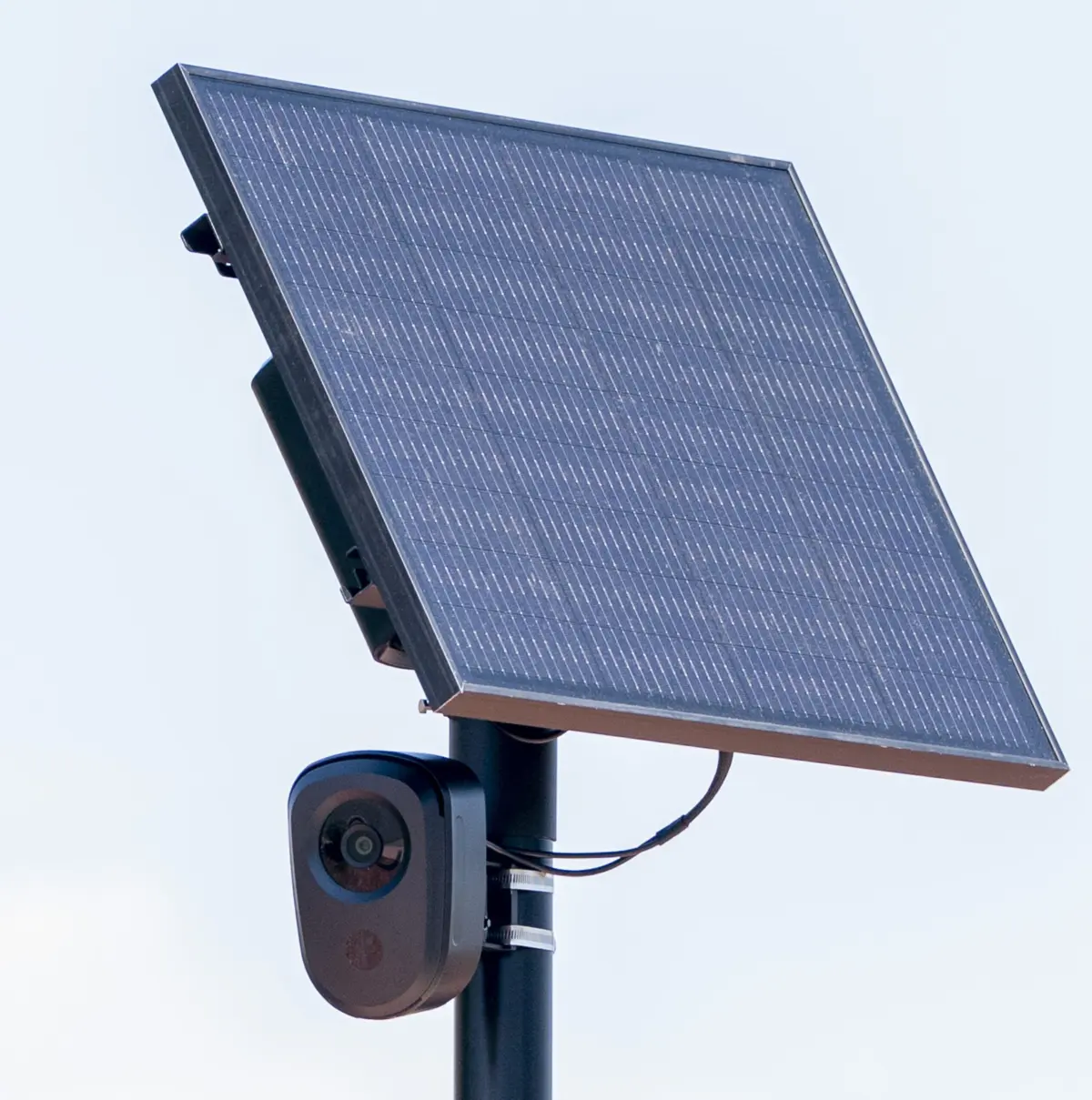
COTTONWOOD, AZ — In recent years, local law enforcement agencies across Arizona have aggressively expanded their surveillance footprints, frequently securing lucrative state grants by promising to combat high-profile crimes like human trafficking. However, public records and internal audit logs paint a vastly different picture of how these high-tech tools are used in practice.
A chief justification cited by the Cottonwood Police Department (CPD) to secure a $213,992.80 grant from the Arizona Department of Public Safety (DPS) in 2025 was to "enhance law enforcement services and programs that reduce human trafficking within the state." Yet, public records obtained from the Coconino County Sheriff’s Office (CCSO) reveal a stark discrepancy: CPD has not used the neighboring county’s automated license plate reader (ALPR) network for a single human trafficking interdiction.
Instead, the data shows that these powerful tracking networks—marketed as shields against modern-day slavery—are overwhelmingly used to police routine traffic infractions, drug offenses, and local domestic disputes, raising serious questions about transparency, municipal funding justifications, and civil liberties.
Chronology of ALPR Expansion in Northern Arizona
The adoption of Automated License Plate Reader technology in the Verde Valley and surrounding counties has progressed rapidly over the last five years, transitioning from a novel local tool to an interconnected, multi-state surveillance web.
- 2021: The Cottonwood Police Department installs its first four stationary ALPR units, laying the groundwork for localized vehicle-tracking capabilities.
- Early 2024: The Camp Verde Marshal’s Office (CVMO) enters the stationary surveillance landscape, installing two Leonardo-brand ALPR cameras at the busy intersection of Finnie Flat Road and Cliffs Parkway.
- June 2025: Cottonwood Police officials present a major expansion proposal to the City Council. The department secures a $213,992.80 grant from the Arizona Department of Public Safety (DPS). The explicit, primary justification for this funding is to bolster state-level anti-human trafficking efforts.
- Late 2025: Parallel to municipal efforts, the Yavapai County Sheriff’s Office (YCSO) seeks to scale up its intelligence-gathering infrastructure. On November 5, the Yavapai County Board of Supervisors unanimously accepts $2 million in state seed money to establish a future Criminal Information Intelligence Analysis Coordination Center.
- January 1 – July 22, 2026: This period marks the timeframe captured by CCSO’s network audit logs, obtained via public records requests by Larson Newspapers. During these seven months, 3,815 law enforcement agencies nationwide run millions of searches on Coconino County’s 20-camera Flock Safety network.
- July 17, 2026: Public records requests are filed with the Cottonwood Police Department seeking their internal Flock network audit logs to cross-reference their localized search justifications.
- August 14, 2026: The statutory and reasonable deadline passes. CPD fails to turn over its internal Flock audit logs, leaving a critical gap in local accountability.
Supporting Data: Deep Dive into the Search Logs
The sheer volume of data generated by Flock Safety’s machine-learning-enabled cameras reveals an incredibly active regional and national search ecosystem. Flock cameras do not merely photograph license plates; they capture unique vehicle characteristics—such as roof racks, bumper stickers, damage patterns, and color—allowing police to search database histories for matching profiles.
The Coconino County Sheriff’s Office Dragnet
Between January 1 and July 22, 2026, CCSO’s modest network of just 20 Flock cameras was searched an astonishing 3,259,997 times by 3,815 different law enforcement agencies across the United States.
Despite the massive volume of queries, searches explicitly targeting human trafficking were virtually non-existent among local agencies.
- Across the entire multi-million-search database, only 12,163 queries (0.37%) cited human trafficking as the search reason.
- Of those trafficking searches, 9,526 listed human trafficking as the sole justification, while 2,637 listed it alongside other suspected crimes.
- The vast majority of these trafficking searches did not originate in Arizona. The Texas Department of Public Safety led all agencies with 3,356 searches, followed by the Kansas Highway Patrol with 2,165.
CCSO ALPR Network Searches (Jan 1 - Jul 22, 2026)
│
├── Total Network Searches: 3,259,997 (by 3,815 agencies)
│
└── Human Trafficking Searches: 12,163 (0.37% of total)
    ├── Out-of-State Agencies: 10,695
    │   ├── Texas Dept. of Public Safety: 3,356
    │   └── Kansas Highway Patrol: 2,165
    │
    └── Arizona Agencies: 1,468
        ├── Benson Police Department: 426
        ├── Arizona DPS: 368
        ├── Pinal County Sheriff's Office: 284
        ├── Phoenix Police Department: 143
        ├── Payson Police Department: 36
        ├── Coconino County Sheriff's Office: 5
        ├── Prescott Police Department: 4
        └── Verde Valley Agencies (CPD, YCSO, CVMO): 0
Within Arizona, the state’s total of 1,468 trafficking-related searches was heavily concentrated in southern and central corridors:
- Benson Police Department: 426 searches
- Arizona DPS: 368 searches
- Pinal County Sheriff’s Office: 284 searches
- Phoenix Police Department: 143 searches
- Payson Police Department: 36 searches
- Coconino County Sheriff’s Office: 5 searches
- Prescott Police Department: 4 searches (all logged in January under "HT Investigation" with valid case numbers)
- Verde Valley Agencies (including YCSO and CPD): 0 searches
Cottonwood Police Department’s Search Profiles
While CPD did not run any human trafficking searches on the CCSO network, it was highly active in other categories, running 649 searches during the seven-month audit window.
The breakdown of Cottonwood’s queries reveals that the technology is primarily utilized for local, street-level policing and domestic issues rather than specialized interstate interdictions:
- Domestic Assault: 124 searches
- Traffic Infractions: 85 searches
- Narcotics: 77 searches
- Vehicle Theft: 46 searches
- Welfare Checks: 42 searches
- Missing Persons: 42 searches
- Warrants: 36 searches
- Hit-and-Run: 29 searches
- Assault: 24 searches
- Larceny: 19 searches
- Stolen Property: 18 searches
- Sex Offenses: 16 searches
- Weapons: 12 searches
- Disorderly Conduct: 12 searches
- Burglary: 11 searches
- Threats: 10 searches
- Trespass: 10 searches
- Protective Order Violations: 9 searches
- DUI: 7 searches
- Kidnapping: 4 searches
- Fleeing Law Enforcement: 3 searches
- Homicide: 2 searches
- Stalking, Robbery, Obstructing Justice, Vandalism, Financial Crime, Alcohol Offenses: 1 search each
The April 1st Anomaly
A closer look at CPD’s search habits reveals significant potential anomalies in internal auditing. On April 1, a single Cottonwood officer executed 46 consecutive domestic assault searches between 10:48 a.m. and 11:15 a.m.—averaging nearly two searches per minute.
None of these 46 searches were accompanied by an active police case number or a written administrative explanation. This single, rapid-fire window accounted for more than a third of all domestic violence searches conducted by CPD on the network. Without this isolated incident, domestic violence searches would drop behind routine traffic infractions as the department’s primary search category.
Camp Verde’s External Queries
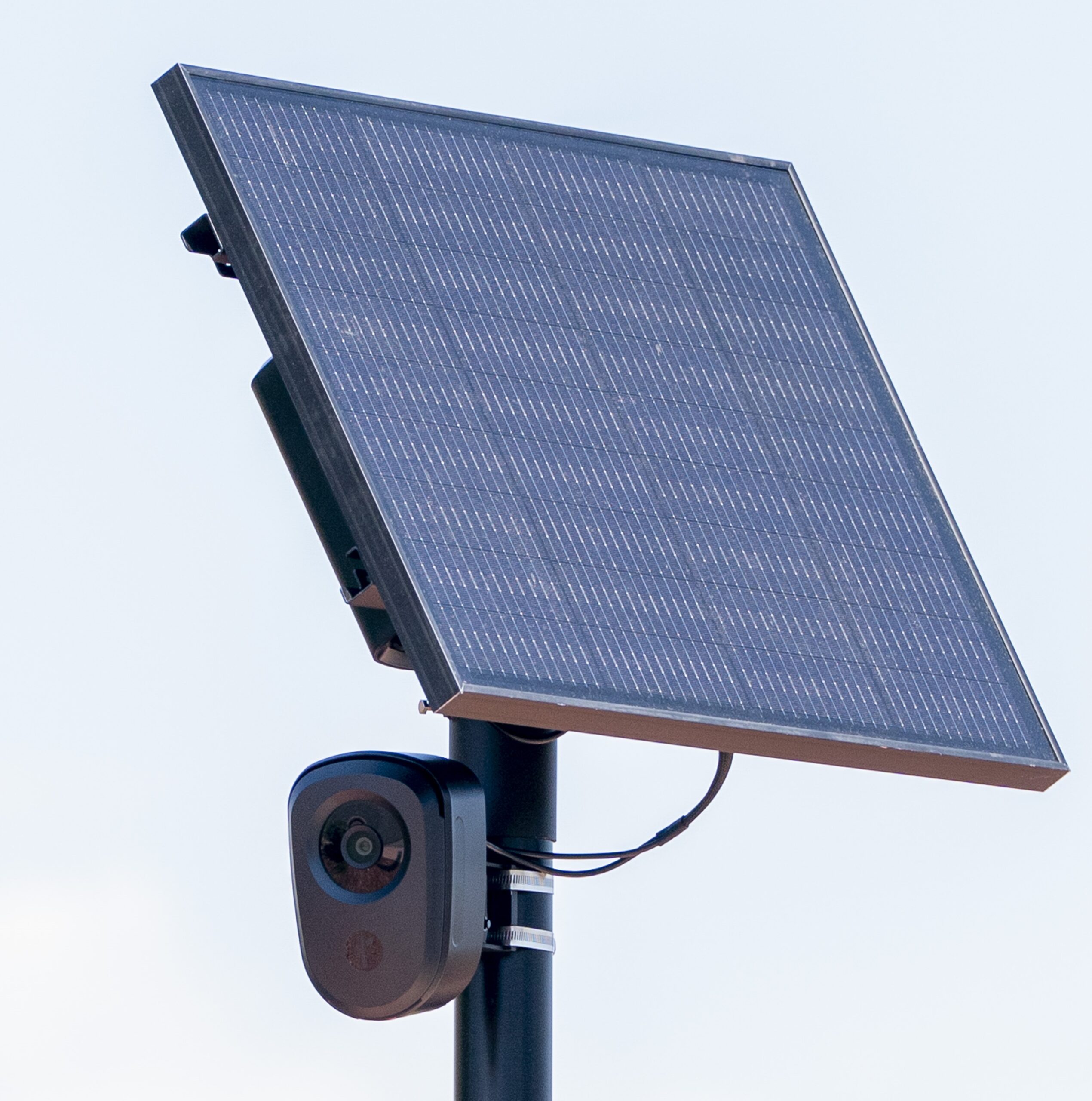
The Camp Verde Marshal’s Office operates under a different technological framework. After securing a grant in 2025, CVMO equipped several of its vehicles with four Motorola Mobile ALPR units. Because CVMO does not maintain its own Flock Safety account, it relies on partner agencies to query the Flock network on its behalf.
During the audit period, other departments ran 24 searches on behalf of CVMO. This included 20 searches run by the Cottonwood Police Department and four by the Prescott Police Department. The justifications for these cooperative searches were heavily focused on localized property and drug crimes:
- Narcotics: 16 searches
- Vehicle Theft: 4 searches
- Missing/Endangered Persons: 3 searches
- Burglary: 1 search
Official Responses and Transparency Hurdles
The stark contrast between the public-facing justifications for acquiring surveillance technology and its actual usage has met with varying degrees of transparency from local officials.
Camp Verde Marshal’s Office
CVMO has been direct regarding its operational limitations and collaborative practices. In a written statement, CVMO Administrative Sgt. Dustin Richardson clarified the agency’s reliance on neighboring departments to access the Flock database:
"CVMO does not have a Flock account or direct access to the Flock platform through a task force, regional partnership, or another agency’s login. When information available through the Flock network is needed, CVMO requests assistance from an agency that has authorized access to that system."
Cottonwood Police Department
In contrast, the Cottonwood Police Department has faced significant scrutiny regarding its willingness to subject its surveillance habits to public oversight.
A public records request was submitted to CPD by Larson Newspapers on July 17, requesting the department’s internal Flock audit logs. Such logs are vital to understanding if the department is using its own local Flock cameras—purchased with the $213,992.80 anti-trafficking grant—for their stated purpose.
CPD failed to produce the records by the August 14 deadline, leaving the public in the dark regarding the exact local search metrics and whether the undocumented, rapid-fire searches seen on the CCSO network are also occurring on Cottonwood’s proprietary system.
Implications: The "Grant-Justification" Discrepancy and Privacy Concerns
The findings from the Coconino County audit logs highlight a growing national trend in law enforcement procurement: the use of highly sensitive, emotionally charged societal issues to secure funding for broad-spectrum surveillance technology.
The "Trojan Horse" of Grant Writing
Human trafficking, child exploitation, and counter-terrorism are powerful rhetorical tools. When municipal police departments apply for federal or state grants, tying technology acquisitions to these severe crimes maximizes the likelihood of approval.
However, as the Arizona data demonstrates, once the technology is integrated into daily operations, it behaves as a generalized dragnet. Over 99% of the system’s actual usage is dedicated to policing local municipal issues—such as traffic violations, domestic disputes, and petty thefts—that would likely not qualify for high-level state or federal grants on their own.
Stated Grant Goal vs. Actual ALPR Usage
┌─────────────────────────────────────────────────────────────────────────┐
│ STATED GRANT GOAL (DPS Grant: $213,992.80)                              │
│ "Enhance law enforcement programs that reduce human trafficking"        │
└─────────────────────────────────────────────────────────────────────────┘
                                   │
                                   ▼
┌─────────────────────────────────────────────────────────────────────────┐
│ ACTUAL NETWORK USAGE (Coconino County Flock Audit Logs)                  │
│ ── Human Trafficking: 0.37% of searches                                 │
│ ── Local Crime/Traffic/Domestic: 99.63% of searches                     │
└─────────────────────────────────────────────────────────────────────────┘
The Erosion of Internal Auditing and Oversight
The occurrence of 46 consecutive searches by a single Cottonwood officer on April 1 without case numbers or justifications underscores a major concern raised by civil liberties advocates: the potential for personal or unauthorized use of ALPR technology.
Without strict, automated enforcement of audit fields—such as requiring an active dispatch or case report number before a search can be executed—the system is vulnerable to "love-intakes" (officers tracking romantic partners), neighborhood surveillance, or unchecked profiling.
The Interconnected Surveillance State
The fact that nearly 4,000 out-of-state agencies can instantly query vehicle movements in rural Northern Arizona demonstrates the decentralized, unregulated nature of modern police databases. A driver passing through Flagstaff or Cottonwood has their location data stored in a cloud environment where it can be searched by state troopers from Texas or highway patrol officers from Kansas, often without a warrant or judicial oversight.
As Yavapai County prepares to build its $2 million intelligence coordination center, the debate over how these tools are funded, justified, and monitored is bound to intensify. For residents of the Verde Valley, the question remains: is the promise of public safety worth the silent, undocumented expansion of an all-seeing digital eye?
