

Main Facts: The Rise of a Distinctive Voice in Modern Regional Painting
At just 28 years old, Arizona-based artist Clariss Kear is rapidly carving out a formidable reputation as one of the most promising figurative and atmospheric painters of her generation. Working primarily in oil on panel, Kear bridges the gap between historical regionalism and contemporary psychological liminality. Her striking nocturnes and emotionally charged interior and exterior spaces have recently earned her national recognition, including a coveted spot in Southwest Art magazine’s prestigious annual feature, "21 Under 31 | Young Artists to Watch, 2026."
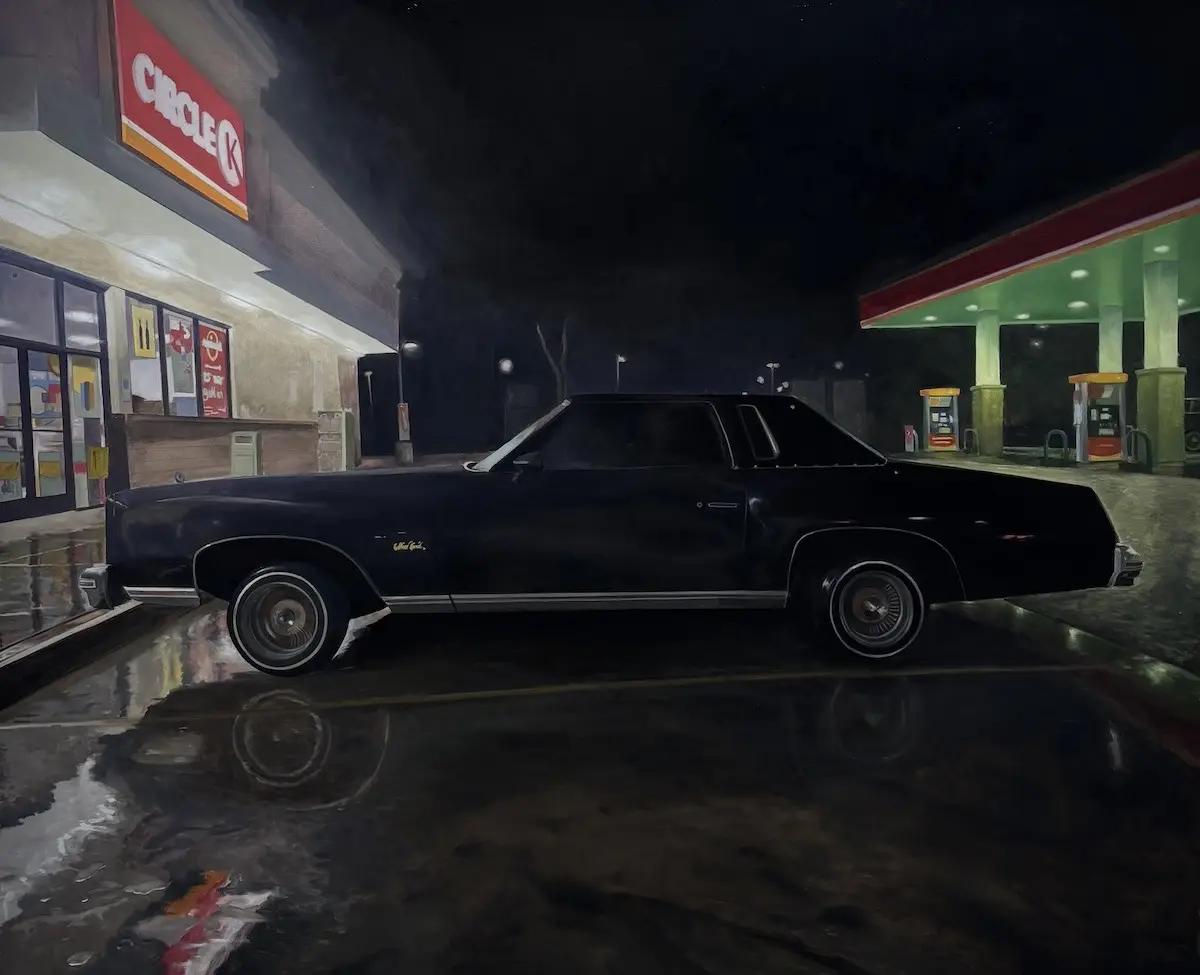
Kear’s artistic output is anchored by a sophisticated grasp of color theory, dramatic lighting, and spatial ambiguity. Her standout piece, Night Call (oil on panel, 30 x 36 inches), exemplifies her ability to manipulate darkness and illumination to evoke a profound sense of narrative mystery. Operating out of the American Southwest—a landscape that deeply informs both her studio practice and her outdoor excursions—Kear creates work that commands attention from collectors, critics, and curators alike. With a market price range spanning from $300 for smaller studies up to $8,000 for major works, she represents an accessible yet highly appreciating asset in the contemporary fine art market.
Chronology: The Formative Years and Academic Trajectory
Kear’s journey toward becoming a nationally recognized painter is built on a foundation of rigorous classical training and an ongoing commitment to academic excellence.
The Pennsylvania Academy of Fine Arts (2018–2022)
Kear’s formal education began at the historic Pennsylvania Academy of Fine Arts (PAFA), the oldest art school and museum in the United States. Studying at PAFA instilled in her a deep reverence for draftsmanship, traditional oil techniques, and direct observation. It was during this period that she encountered pivotal mentorship, most notably from instructor Scott Noel. Reflecting on the best piece of advice she has ever received, Kear recalls Noel’s constant refrain: "No matter what happens, paint through it." This philosophy of resilience in the face of technical or creative hurdles has remained a cornerstone of her studio practice. She successfully completed her Bachelor of Fine Arts (BFA) degree in 2022.
Transition to the Sonoran Desert and Current Studies (2022–Present)
Following her graduation from PAFA, Kear relocated to Arizona, a geographical and cultural shift that profoundly redirected her visual vocabulary. The vast, baking expanses of the Sonoran Desert, contrasted with the stark, cool shadows of desert nights, provided an entirely new suite of atmospheric challenges and inspirations.
Currently, Kear is expanding her theoretical and technical boundaries by pursuing a Master of Fine Arts (MFA) at the University of Arizona. Her graduate work is structured around a multi-year trajectory culminating in an ambitious thesis exhibition scheduled for 2028. This academic milestone serves as the organizing principle of her current studio output, pushing her to synthesize her historical influences with her lived experience in the modern American Southwest.
Supporting Data: Influences, Environment, and Studio Culture
To fully understand Kear’s work, one must examine the diverse array of influences, musical backdrops, and environmental passions that fuel her creative output.
Artistic Lineage and Inspirations
Kear’s paintings do not exist in a vacuum; they are in direct dialogue with both art history and contemporary peers. She draws heavily from the atmospheric color palettes and masterful nocturnes of Frederic Remington, known for capturing the moody, twilight hours of the American West. Simultaneously, she incorporates the eerie, hyper-detailed liminality found in the paintings of Daniel Sprick.
Among contemporary works, Kear points to Apartment in Rome by Zoey Frank as a pinnacle of what modern painting can achieve. She admires Frank’s ability to orchestrate a delicate balance between flat decorative patterns and deep three-dimensional form, complex spatial perspectives, and subtle luminous reflections skating across monochromatic passages of color. These are precisely the visual problems Kear sets for herself in pieces like Night Call.

The Studio Soundscape
An artist’s environment extends beyond the physical walls of the studio to the auditory landscape that guides their hands. When working in the studio, Kear curates a dynamic soundtrack depending on the phase of the painting process. For loose, exploratory sessions, she leans toward new indie folk acts such as Wednesday, Friendship, and Greg Freeman. However, when the work demands intense concentration and meticulous mark-making, she pivots entirely to the relentless, steady techno beats and foundational discography of electronic pioneers Kraftwerk.
Beyond the Canvas
Kear’s connection to the physical world is not restricted to the indoors. When she steps away from her easel, she remains deeply engaged with visual arts and the natural world. She is an avid plein air painter, capturing the fleeting light of the Arizona landscape directly from nature. Furthermore, she balances the solitary nature of studio painting with musical pursuits—specifically playing the guitar—and physical exploration through hiking the rugged terrains of the Sonoran Desert.
Official Responses and Critical Reception
The inclusion of Clariss Kear in the 2026 "21 Under 31" cohort marks a significant milestone in her critical reception. Art critics and regional publication editors have praised her ability to move beyond mere regional pastiche, updating the cowboy-and-sunset tropes of historical western art into psychological landscapes that resonate with contemporary viewers.
While traditional western art has often relied on broad daylight and heroic narratives, Kear’s focus on nocturnes and liminal spaces introduces a sense of urban or rural isolation, quiet suspense, and psychological depth. Gallery directors and curators monitoring her progress note that her work bridges two distinct collector bases: traditional enthusiasts of Southwest art who appreciate her technical mastery, and contemporary collectors who are drawn to her conceptual framing of space, light, and architectural alienation.
University faculty at the University of Arizona have similarly highlighted her thesis preparation as a project to watch, noting that her rigorous background from PAFA combined with the expansive scale of her current southwestern inspiration yields a mature voice rarely seen in artists under the age of thirty.
Implications: The Future of Southwestern Art and Kear’s Market Trajectory
As Clariss Kear looks toward her upcoming 2028 MFA thesis exhibition, her career trajectory holds several important implications for the broader art market and the genre of American regionalism.
Redefining Regional Art for the 21st Century
For decades, "Southwest art" risked pigeonholing into decorative representations of desert flora, fauna, and romanticized historical narratives. Artists of Kear’s caliber are actively shattering these boundaries. By infusing regional landscapes with the psychological weight of contemporary nocturnes and the rigorous formal structures learned at institutions like PAFA, Kear demonstrates that regional art can be simultaneously localized and universally resonant. Her exploration of liminality—the threshold between spaces, times, and psychological states—speaks directly to a modern audience grappling with displacement and modern isolation.
Market Viability and Collector Outlook
Priced currently between $300 and $8,000, Kear’s work sits in a sweet spot for emerging and mid-tier collectors. Paintings of this technical caliber, backed by institutional recognition and an active academic trajectory, frequently experience significant appreciation as the artist transitions from graduate programs to major gallery representation. Her upcoming 2028 thesis exhibition is widely anticipated to be a breakout commercial and critical event, likely cementing her status as a permanent fixture in high-end galleries across Santa Fe, Scottsdale, and beyond.
For collectors, museums, and enthusiasts tracking the next wave of American figurative painting, Clariss Kear represents an investment in technical excellence paired with a forward-looking vision. Through disciplined brushwork, a profound respect for art history, and an unwavering commitment to "painting through it," Kear is rapidly transforming from an emerging young talent into a defining voice of her artistic generation.
