

Main Facts
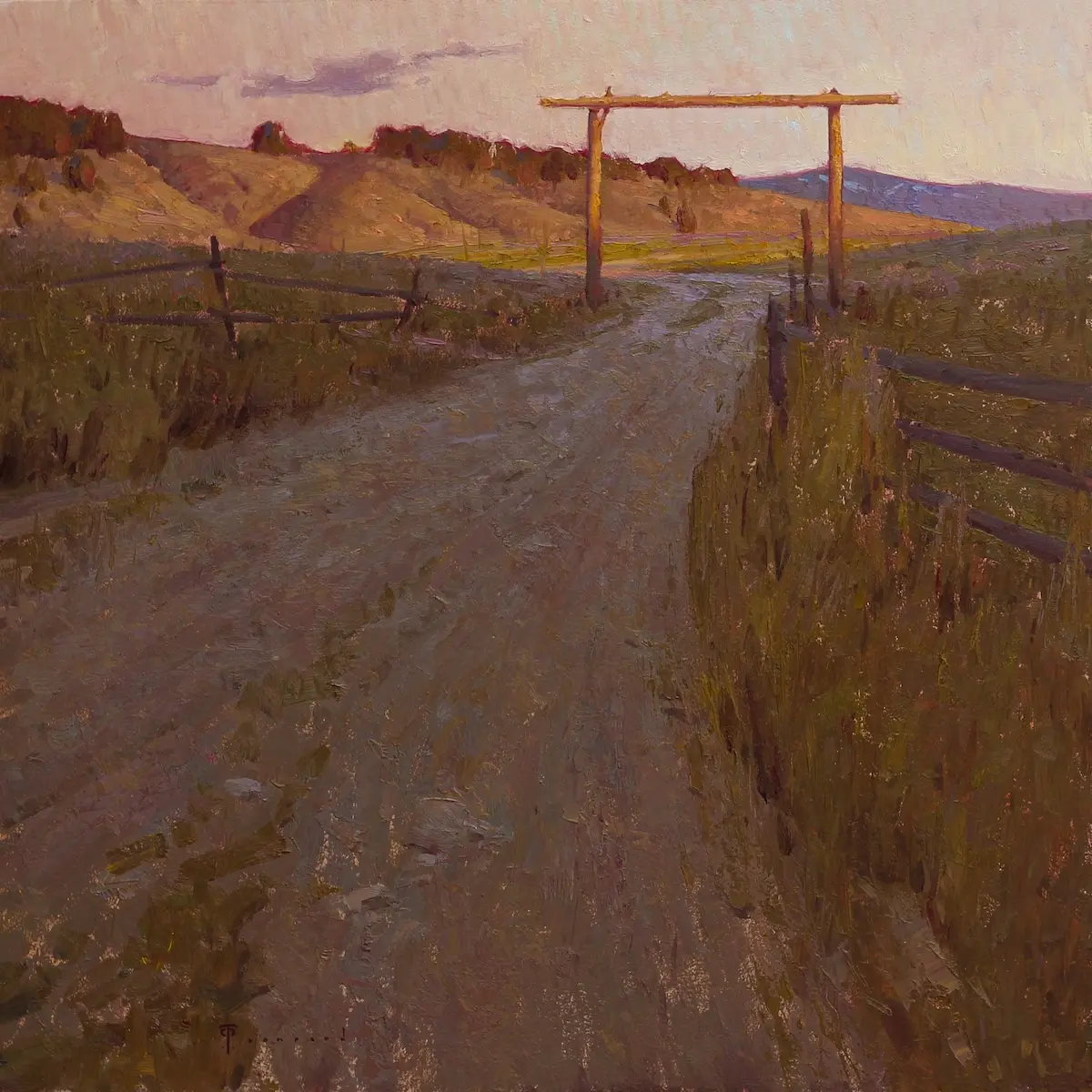
At just 28 years old, Utah-based artist Carson Thompson is rapidly emerging as one of the most promising new voices in contemporary American art. Working primarily in oil on panel, Thompson bridges the atmospheric subtleties of Tonalism with the vibrant, light-capturing techniques of Impressionism. His evocative canvases—such as his notable 24-by-24-inch oil painting Day’s Gate—capture the quiet grandeur of the American landscape, balancing moody shadows with luminous skies.
Recognized for his distinct visual vocabulary, Thompson was recently featured in the prestigious "21 Under 31 | Young Artists to Watch, 2026" roundup in the August/September 2026 issue of Southwest Art magazine. Represented by Corwin Galleries in Hamilton, Montana, his original works command a growing market, with price points ranging from $400 to $7,000. As he balances family life with an ambitious studio practice, Thompson is steadily working toward his ultimate career milestone: transitioning into a full-time professional artist capable of producing increasingly bold, large-scale works.
Chronology: The Making of an Artist
Carson Thompson’s journey toward artistic recognition is rooted in a deliberate and structured academic foundation, followed by rigorous self-guided field study.
- Early Beginnings and Formal Education: Thompson pursued a rigorous academic path in the visual arts, enrolling at Brigham Young University (BYU). During his undergraduate years, he honed his draftsmanship and visual storytelling skills, ultimately earning a Bachelor of Fine Arts (BFA) in Illustration in 2022.
- The Turning Point: A pivotal moment in Thompson’s artistic development occurred early in his time at BYU when he crossed paths with mentor and instructor David Dibble. Recognizing the young student’s potential, Dibble lent Thompson a university plein air painting setup and delivered a piece of advice that would permanently alter Thompson’s creative trajectory: paint outside as much as possible.
- Embracing the Outdoors: Taking this mentorship to heart, Thompson integrated plein air painting into the core of his daily routine. Working directly from nature allowed him to study shifting light, atmospheric conditions, and color harmonies firsthand—lessons that now serve as the backbone of his studio output.
- Professional Ascent (2022–Present): Following his graduation in 2022, Thompson transitioned into the professional gallery scene. His distinct blend of impressionistic brushwork and tonalist mood quickly caught the attention of collectors and curators. This momentum culminated in his representation by Corwin Galleries in Hamilton, Montana, and his inclusion in national spotlight features such as Southwest Art’s 2026 generational showcase.
Supporting Data and Artistic Profile
Understanding Carson Thompson’s work requires looking closely at the technical influences, daily studio habits, and aesthetic preferences that shape his artistic output.
- Style and Inspirations: Thompson views Impressionism as the foundational framework for his mark-making, appreciating how broken color and visible brushwork can convey energy and movement. Simultaneously, he draws heavy inspiration from Tonalist traditions, which emphasize atmospheric haze, subdued palettes, and emotional resonance over stark realism.
- Artistic Influences: While Thompson cites his ongoing dialogue with mentor David Dibble as fundamental to his technical growth, his broader artistic inspirations span generations. When asked about his favorite piece of art by another contemporary creator, Thompson points to The Night Follows Close by renowned Western artist George Carlson, praising its masterful mood and composition.
- Studio Environment: To maintain focus and cultivate the contemplative mood present in his paintings, Thompson relies on a carefully curated auditory environment. His studio soundtrack frequently features mellow instrumental compositions, with Hania Rani’s critically acclaimed album On Giacometti serving as a primary staple during long painting sessions.
- Market Snapshot:
- Mediums: Oil on panel
- Primary Subject Matter: Landscapes, atmospheric studies, western vistas
- Price Range: $400 to $7,000, depending on scale and complexity
- Primary Gallery Representation: Corwin Galleries (Hamilton, MT)
- Official Portfolio: carsonthompsonart.com
Official Perspectives and Insights
Although young in his career, Thompson possesses a remarkably mature philosophy regarding the creative process, mentorship, and the demanding nature of landscape painting. Reflecting on the best advice he has ever received, Thompson frequently emphasizes the profound impact of his initial encounter with David Dibble.
"When I first met David, he lent me a plein air painting setup from the university and told me I should paint outside as much as possible," Thompson recalls. "I’ve since received similar advice from other artists whose work I love, and it has been rewarding in many ways."

This endorsement of direct observation underscores a broader shift among contemporary emerging artists who reject purely digital workflows in favor of tactile, physical engagement with the natural world. For Thompson, painting outdoors is not merely a sketching exercise, but a vital discipline that informs the depth, weight, and authenticity of his finished studio pieces.
Beyond his canvas work, Thompson remains grounded in his personal life, identifying his primary passion outside of art as spending quality time outdoors with his wife and daughter. This shared appreciation for nature continually feeds back into his professional practice, ensuring that his artistic vision remains deeply personal and authentic.
Implications for the Contemporary Art Market
Carson Thompson’s emergence as a talent to watch carries several notable implications for the contemporary Western and regional art markets.
First, his trajectory highlights the enduring viability and evolution of traditional representational media in the 21st century. While digital art and hyper-contemporary abstract movements frequently dominate headlines, there remains a robust, highly discerning collector base hungry for work rooted in classical techniques like plein air impressionism and tonalism. Artists like Thompson prove that younger generations are successfully breathing new life into these historical idioms by infusing them with contemporary sensibilities and personal introspection.
Second, Thompson’s success underscores the critical role of regional institutions and mentorship pipelines. Programs like the BFA in illustration at Brigham Young University, combined with localized gallery representation through venues like Corwin Galleries in Montana, demonstrate how regional ecosystems continue to incubate national-caliber talent. By connecting emerging artists with seasoned mentors early in their academic journeys, these institutions help bridge the often-difficult gap between student status and commercial viability.
Finally, as Thompson works toward his long-term goal of transitioning into a full-time, independent studio practice and scaling up his canvas sizes, his career offers a compelling case study for art collectors and investors. At a current price point ranging from $400 to $7,000, early-career collectors have a unique window to acquire works by an artist whose national profile is rapidly ascending. As his portfolio expands and his artistic voice deepens, Carson Thompson is well-positioned to become a defining figure in the next generation of American landscape painting.
