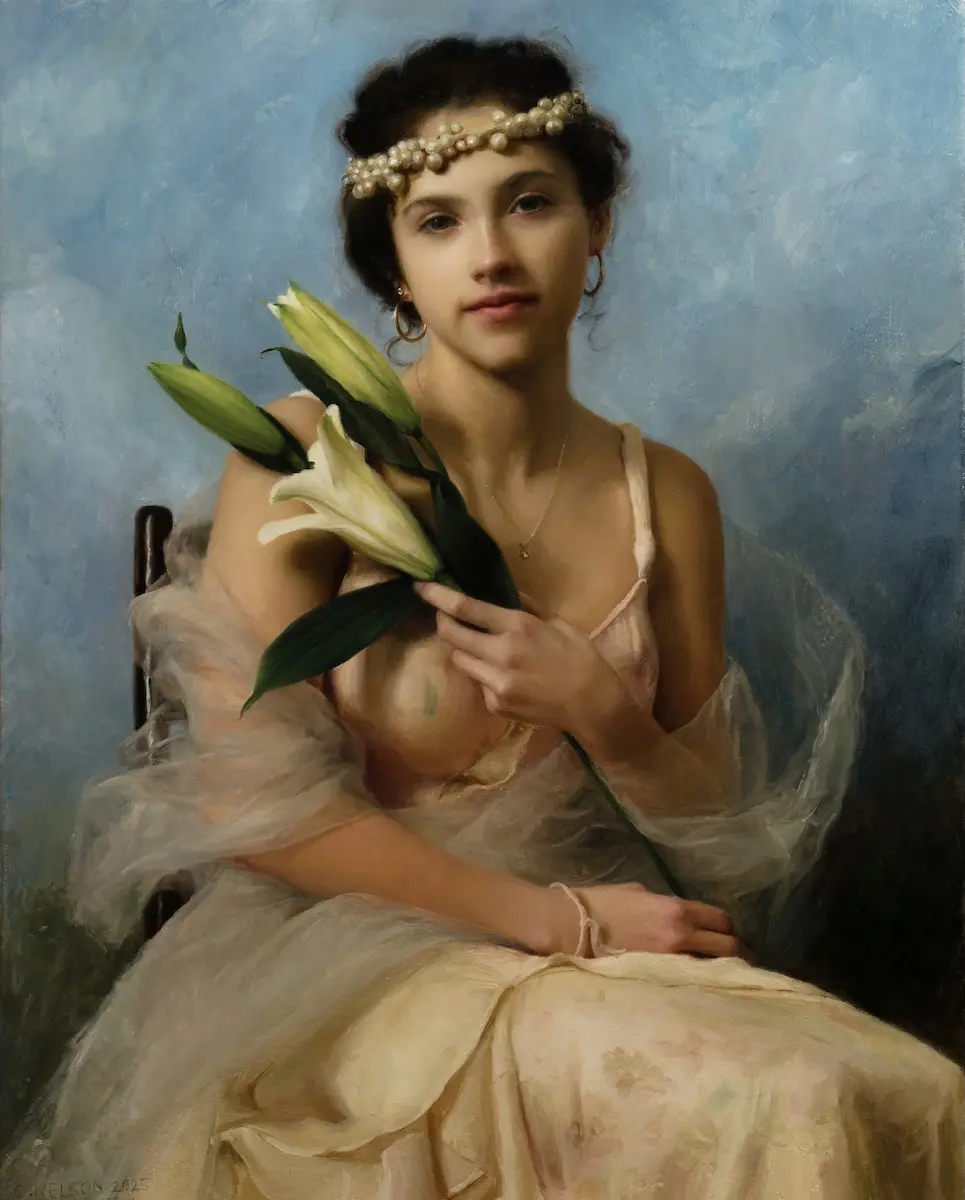
In the contemporary art world, where conceptual installations and digital mediums frequently dominate gallery spaces, a dedicated cohort of young creators is breathing new life into traditional techniques. Among the most promising voices in this classical revival is 28-year-old Virginia-based oil painter Caroline Nelson. Recognized for her meticulous draftsmanship, luminous skin tones, and evocative narrative qualities, Nelson has quickly captured the attention of collectors, critics, and institutions alike.
Recently featured in Southwest Art magazine’s prestigious "21 Under 31 | Young Artists to Watch, 2026" issue, Nelson represents a bridge between nineteenth-century academic traditions and modern sensibilities. With representation by New York’s esteemed Arcadia Contemporary and works commanding prices between $3,000 and $20,000, Nelson is solidifying her status as a formidable force in contemporary representational art.
Chronology: The Formative Path of a Classical Realist
Nelson’s journey toward becoming a nationally recognized realist painter was shaped by rigorous, traditional instruction and a lifelong affinity for historical aesthetics.
Early Inspirations and Literary Roots
Growing up, Nelson developed a deep fascination with historical narratives and romantic aesthetics. Her artistic vision was profoundly forged by the literary world—most notably L.M. Montgomery’s Anne of Green Gables series—as well as cinematic masterpieces of period drama, including the 1995 film adaptation of Sense and Sensibility and the 2005 production of Pride & Prejudice. These influences instilled in her an appreciation for pastoral beauty, emotional sincerity, and sartorial history, themes that subtly permeate her portfolio today.
Rigorous Atelier Training (2018–2022)
Recognizing that academic mastery required more than raw talent, Nelson pursued intensive, immersive training under master painters:
2018–2020: Nelson undertook private, full-time classical realism training under the guidance of Henry Wingate. This foundational period demanded absolute precision in drawing from life, understanding anatomy, and mastering the complex physics of oil paint, particularly in capturing light and shadow.
2020–2022: Seeking to further hone her professional studio practice, she served as an artist-in-residence and intern at East Oaks Studio in Raleigh, North Carolina. This environment allowed her to work alongside other dedicated realists, refining her palette and deepening her technical capabilities.
Professional Breakthrough and Market Recognition
Following her formal studies, Nelson established her independent studio practice in Virginia, where she creates striking figurative works and still lifes. Her dedication bore fruit when her painting Lilies of the Field (oil on linen, 20 x 16 inches) caught the eye of the editorial team at Southwest Art. Her inclusion in the "21 Under 31" feature marked a major milestone, introducing her work to a national audience of serious collectors and securing her representation with Arcadia Contemporary in New York City.
Supporting Data: Artistic Methodology, Influences, and Market Profile
To understand Nelson’s rapid ascent, one must examine the specific mechanics of her studio practice, her artistic lineage, and her current standing in the art market.
Technical Approach and Medium
Nelson is a firm advocate of painting exclusively from life, a method that separates her work from artists who rely heavily on photographic reference. By studying live models and physical still-life arrangements, she captures subtle shifts in temperature, atmospheric perspective, and texture that photographs often fail to convey.
Her technical philosophy is anchored in classical methodologies. When asked about the best artistic advice she has ever received, Nelson highlights a fundamental atelier maxim:
"Always remember to squint at your painting! It helps you keep your values, chroma and hue in check and visually balanced."
Aesthetic Influences and Inspirations
Nelson’s artistic lineage traces directly back to the 19th-century academic painters. She holds a deep reverence for the French academic master William-Adolphe Bouguereau, whose legendary mastery of form and idealism heavily influences her figurative compositions. While she studies numerous historical works to inform her brushwork, she points to Bouguereau’s iconic masterpiece The Song of the Angels as a perennial source of study and inspiration.
The Studio Environment
Sound plays a pivotal role in Nelson’s creative process. Her studio soundtrack heavily features classical composition, providing a contemplative atmosphere conducive to patient, detailed brushwork. Her favorite composers include:
Claude Debussy
Dario Marianelli
Max Richter
Ennio Morricone
Pyotr Ilyich Tchaikovsky
Howard Shore
Antonio Lucio Vivaldi
Market Valuation and Career Metrics
Current Representation: Arcadia Contemporary, New York, NY
Primary Medium: Oil on linen
Price Range: $3,000 to $20,000, depending on scale, complexity, and subject matter.
Official Perspectives: Goals, Philosophy, and Future Directions
In statements discussing her current artistic trajectory, Nelson remains refreshingly grounded. While she has already achieved a level of technical proficiency that eludes many artists twice her age, she views her career as an ongoing apprenticeship to the masters she admires.
Striving for Nuance and Painterly Freedom
Reflecting on her artistic goals, Nelson emphasizes that technical mastery is a lifelong pursuit. She aims to cultivate a more nuanced approach to her paintings, moving beyond hyper-realism into a realm of expressive sophistication. Specifically, she is currently studying the legendary brushwork of John Singer Sargent. By analyzing Sargent’s economy of stroke, Nelson hopes to introduce greater breadth in texture, experimenting with deliberate variations between loose, gestural brush-handling and hyper-tight focal points.
Balance Outside the Studio
Despite the intense concentration required to execute classical oil paintings, Nelson maintains a rich and active personal life that feeds her creative spirit. An avid outdoorsman, she frequently takes long walks to observe natural light and color in her surrounding Virginia environment. Her hands-on craftsmanship extends beyond the canvas into the art of making delicate crepe paper flowers—a pursuit that mirrors her appreciation for botanical detail in her still-life work. Above all, she prioritizes her time spent cooking, exploring nature, and sharing her life with her husband and family.
Implications: The Revival of Classical Realism in the 2026 Art Market
The emergence of artists like Caroline Nelson carries significant implications for the contemporary art ecosystem, signaling a broader cultural shift in how figurative art is valued, collected, and taught.
The Rejection of Pure Conceptualism
For decades, the contemporary art market was heavily skewed toward conceptual, minimalist, or highly abstracted movements where technical skill was often secondary to intellectual provocation. However, the rise of the atelier movement—championed by studios like East Oaks and artists like Nelson—demonstrates a strong, enduring public appetite for craftsmanship. Collectors are increasingly seeking out works that demonstrate profound human labor, visual accessibility, and deep historical continuity.
The Economic Viability of Young Realists
That a 28-year-old artist can command prices ranging from $3,000 to $20,000 through a major gallery like Arcadia Contemporary speaks volumes about the economic health of the classical realism market. Millennial and Gen Z collectors, alongside seasoned patrons, are investing heavily in traditional mediums. Oil on linen, rendered with archival integrity, is increasingly viewed not only as an aesthetic centerpiece but as a sound long-term store of value.
Mentorship and the Next Generation
Nelson’s career trajectory underscores the vital importance of direct mentorship in the arts. By bypassing traditional university-run Master of Fine Arts (MFA) programs in favor of intensive, studio-based apprenticeships with contemporary masters like Henry Wingate, Nelson bypassed academic trends to acquire tangible, highly marketable technical skills. This educational model is quietly reshaping how the next generation of painters prepares for professional careers.
Conclusion
As Caroline Nelson continues to refine her brushwork, expand her exhibition history, and push the boundaries of her narrative compositions, she stands at the vanguard of a new golden age for figurative realism. Her ability to merge the emotional depth of 19th-century academic painting with the freshness of a 21st-century perspective ensures that her work will remain a vital touchstone in the contemporary art conversation for decades to come.