

Introduction: The New Vanguard of Southwest Realism
In the contemporary art landscape, capturing the sublime vastness and eerie quietude of the American West requires a delicate balance of technical rigor and poetic intuition. Enter Clarissa Kear, a 28-year-old Arizona-based painter whose atmospheric nocturnes and liminal compositions are quickly establishing her as one of the most compelling young voices in modern figurative and landscape art. Recognized in the prestigious Southwest Art “21 Under 31 | Young Artists to Watch, 2026” issue, Kear bridges historical artistic traditions with a distinctly contemporary, moody sensibility.
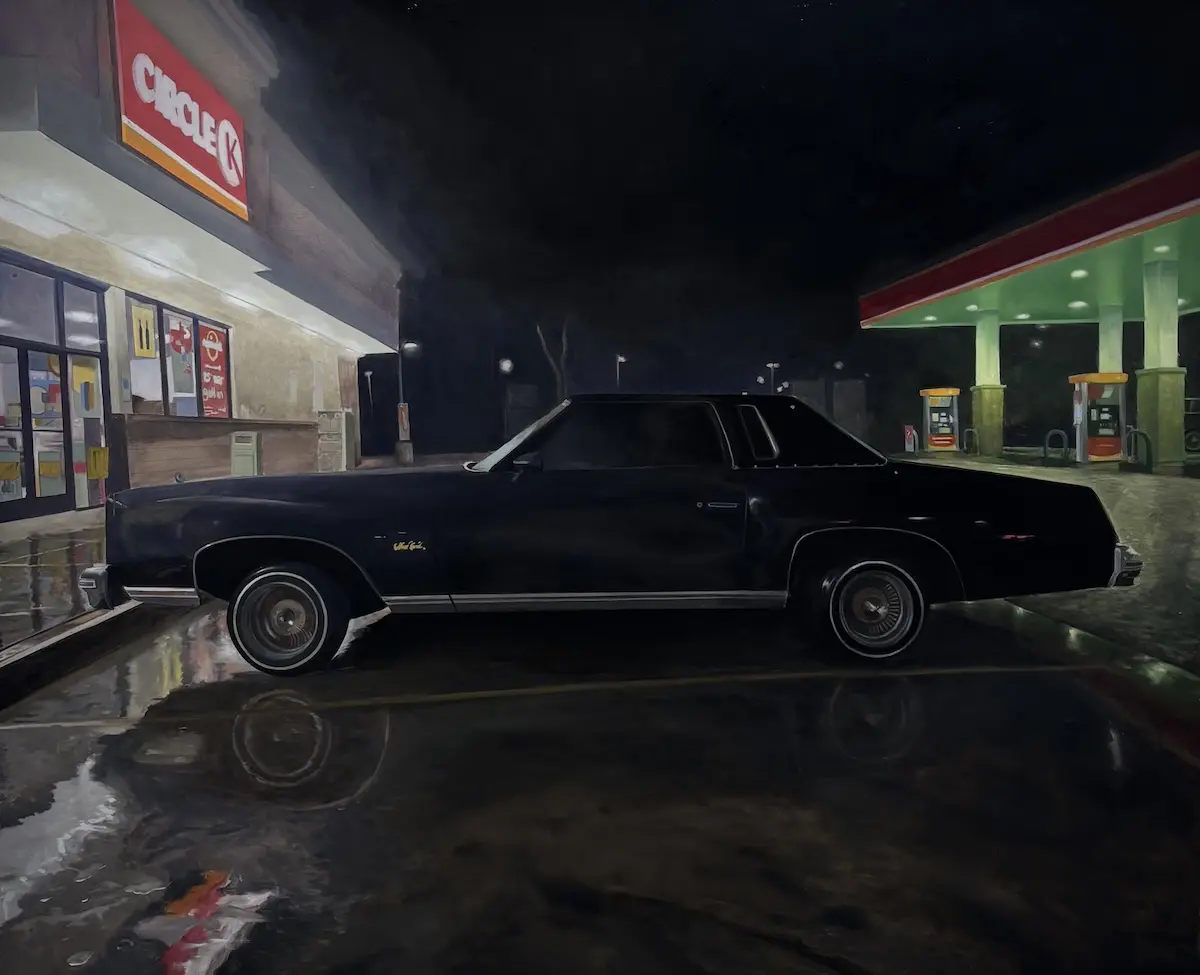
Working primarily in oil on panel, Kear’s creations—such as her striking 30-by-36-inch piece Night Call—evoke a sense of psychological suspense and deep stillness. Her work explores the spaces between dusk and dark, reality and memory, positioning her at the forefront of a new generation of artists redefining what it means to paint the contemporary American landscape.
Main Facts: Profile of an Emerging Master
At just 28 years of age, Clarissa Kear has already built an impressive foundation that combines rigorous academic training with a rapidly expanding professional footprint.
- Name: Clarissa Kear
- Age: 28
- Base of Operations: Arizona
- Primary Medium: Oil on panel
- Price Range: $300 – $8,000
- Current Academic Pursuit: Master of Fine Arts (MFA) at the University of Arizona (expected completion in 2028)
- Undergraduate Education: Bachelor of Fine Arts (BFA) from the Pennsylvania Academy of the Fine Arts (PAFA), earned between 2018 and 2022
- Official Website: clarissakearart.com
- Notable Accolades: Featured in Southwest Art magazine’s annual “21 Under 31” showcase (August/September 2026)
Kear’s artistic output spans meticulously rendered indoor scenes and haunting outdoor nocturnal vistas. Her pricing structure—ranging accessibly from small works starting at $300 to major studio pieces commanding up to $8,000—makes her an appealing prospect for both emerging collectors and established art institutions looking to invest in tomorrow’s blue-chip talents.
Chronology: The Making of an Artist
To understand Kear’s technical precision and conceptual depth, one must examine the timeline of her artistic development, which has been defined by deliberate academic choices and deep immersion in diverse geographic and cultural landscapes.
2018–2022: The Crucible of PAFA
Kear’s formal artistic journey took root at the Pennsylvania Academy of the Fine Arts, America’s first art museum and school. Immersed in PAFA’s rigorous, historic atelier-style training, Kear spent four formative years mastering the fundamentals of drawing, anatomy, and classical oil painting.
It was during this period that she encountered mentors who would profoundly shape her philosophy. Most notably, painter Scott Noel instilled in her a mantra that would become her creative bedrock: "No matter what happens, paint through it." This advice taught her to embrace the difficult, often frustrating middle stages of a canvas rather than abandoning a piece when technical challenges arose.
2022–Present: Transition to the Desert and Graduate Studies
Following her graduation with a BFA in 2022, Kear relocated to Arizona, a geographic shift that fundamentally altered her color palette and thematic focus. The stark light, intense heat, and sprawling wilderness of the Sonoran Desert provided a fresh lexicon of visual inspiration.
Eager to push her conceptual boundaries further, she enrolled in the MFA program at the University of Arizona. Set to culminate in a major thesis exhibition in 2028, this graduate program has allowed Kear to experiment with scale, narrative ambiguity, and the psychological weight of light and shadow.
Supporting Data: Influences, Workspace, and Philosophy
A painter’s studio is a window into their mind. For Kear, the creative process is fueled by a curated mix of historical reverence, musical accompaniment, and deep admiration for her contemporaries.
Inspirations and Artistic Lineage
Kear’s work sits at the intersection of historical mastery and modern liminality. She draws heavily from the atmospheric color palettes and dramatic nocturnes of Frederic Remington, known for his haunting depictions of the American frontier after dark. Simultaneously, she looks to the contemporary master Daniel Sprick, whose hyper-realistic yet deeply atmospheric interiors and still lifes explore the liminal spaces of daily life.

Her admiration for contemporary talent is perhaps best captured by her favorite painting by another artist: Apartment in Rome by Zoey Frank. Kear notes that Frank’s work embodies the exact qualities she strives for in her own practice—a delicate, harmonious balance between flat pattern and three-dimensional form, complex spatial perspectives, and subtle, luminous reflections skipping across flat planes of color.
Studio Soundtracks
Music plays an integral role in regulating Kear’s workflow. When she is in a exploratory or foundational phase, her studio echoes with the sounds of modern indie folk bands such as Wednesday, Friendship, and Greg Freeman. However, when she needs absolute, laser-focused concentration for intricate brushwork, she pivots entirely to the mechanical, driving rhythms of electronic pioneers Kraftwerk or steady techno beats.
Beyond the Canvas
Kear’s dedication to her craft extends far beyond the four walls of her studio. When she isn’t painting, she can frequently be found working en plein air across the rugged Arizona terrain, picking up her guitar to unwind, or hiking through the Sonoran Desert—an activity that continually feeds her visual vocabulary for desert lighting and atmospheric depth.
Official Perspectives: In Her Own Words
Kear’s artistic vision is anchored by clarity of purpose and a grounded work ethic. Speaking on her trajectory and goals, she emphasizes the importance of regional authenticity paired with universal human resonance.
"My main focus right now is pursuing my MFA at the University of Arizona and building toward a 2028 thesis exhibition," Kear explains. "I want it to feel ambitious and deeply rooted in my experience as a painter of the American Southwest, while continuing to pursue new exhibition opportunities that challenge me to grow."
By anchoring her contemporary education within the unique ecological and cultural narrative of the American desert, Kear avoids regional clichés. Instead, she uses the desert as a stage to explore universal themes of isolation, beauty, and temporal suspension—a strategy that has clearly resonated with critics and curators alike.
Implications: Why Clarissa Kear Matters to the Art Market
The inclusion of Clarissa Kear in Southwest Art’s 2026 “21 Under 31” roster is more than a personal milestone; it is a bellwether for where the market for Western and contemporary realist art is heading.
A Shift Toward Psychological Realism
Traditional Western art has historically leaned heavily on heroic narratives, historical reenactment, and bright, sun-drenched panoramas. Kear’s work subverts this expectation by focusing on nocturnes, interior psychological spaces, and the quiet, uneventful moments of modern life against a backdrop of ancient landscapes. By introducing elements of liminality—spaces that feel transitional, dreamlike, or suspended in time—she appeals to a younger, more aesthetically diverse demographic of art collectors who value mood and mystery over straightforward narrative representation.
Market Viability and Investment Potential
With a price range starting at a highly accessible $300 for smaller studies and capping around $8,000 for major works, Kear occupies a sweet spot for art market participants. Early-career collectors can acquire original works by an academically trained, critically recognized artist without breaking the bank. Meanwhile, institutional buyers and gallery owners are taking note of her steady upward trajectory, fueled by her ongoing MFA studies at the University of Arizona.
As she prepares for her highly anticipated 2028 thesis exhibition, early adopters who invest in Kear’s work today are likely to see significant cultural and financial appreciation as her exhibition history expands nationally.
Conclusion
Clarissa Kear represents a thrilling synthesis of past and present. Armed with the rigorous classical training of the Pennsylvania Academy of the Fine Arts and inspired by the moody, sun-baked expanse of the Sonoran Desert, she is crafting a visual language all her own. As she navigates her graduate studies at the University of Arizona and looks toward her 2028 milestone exhibition, the art world would do well to keep a watchful eye on this rising star. Whether rendering the quiet stillness of Night Call or capturing the fleeting shadows of a desert dusk, Kear proves that the American Southwest remains an inexhaustible wellspring of inspiration when filtered through a brilliant, modern mind.
