

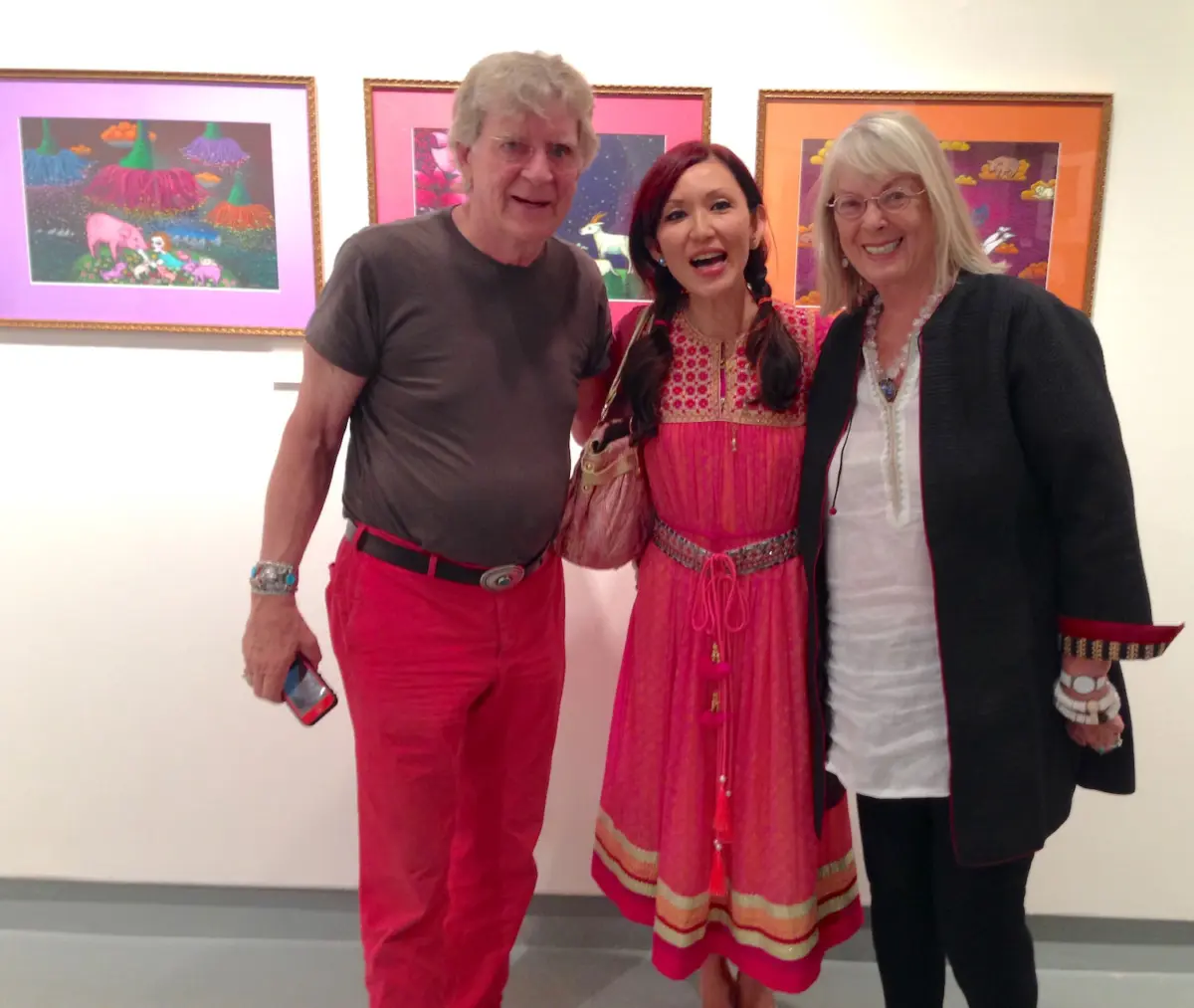
Main Facts: The Loss of a Pillar of the Tibetan Community and Global Humanitarian
The global Tibetan community and advocates for human rights are mourning the passing of Bob—a towering figure of boundless energy, academic vigor, and fierce moral conviction. Known affectionately by those closest to him for his larger-than-life presence, brilliant intellect, and compassionate heart, Bob spent more than three decades as one of the most steadfast, vocal, and fearless supporters of Tibet on the international stage.
His life was defined by an uncompromising commitment to justice, cultural preservation, and Buddhist principles. Whether marching under a scorching 100-degree summer sun in Washington, D.C., supporting monastic communities in Dharamsala, or offering deeply personal solace to friends facing debilitating illnesses, Bob lived as a practical embodiment of the altruistic values he championed. His passing, compounded by recent geopolitical and localized flashpoints surrounding the Tibet movement—including a high-profile self-immolation in New York by former Tibetan monk Lobga Ranzen—has reignited global focus on the ongoing struggle for Tibetan autonomy and cultural survival.
Chronology: A 33-Year Journey of Friendship and Activism
To understand Bob’s profound impact, one must trace the timeline of his lifelong dedication to the Tibetan cause and his deep personal relationships within the community.
- The Early Years of Connection (Early 1990s): Bob’s relationship with artists, scholars, and Tibetan leaders began to crystallize decades ago. Over a 33-year friendship with visionary artist and author Rima Fujita, Bob established himself as a cultural bridge, bringing profound warmth and intellectual depth to interactions within New York’s cultural hubs, such as Tibet House.
- Decades of Grassroots Activism (Mid-1990s–2010s): Unlike many fair-weather political supporters who retreated from advocacy as China’s global economic and political power surged, Bob doubled down on his activism. He walked shoulder-to-shoulder with Tibetans and their supporters during high-stakes demonstrations, notably braving brutal, triple-digit summer heat and humidity in Washington, D.C., during visits by His Holiness the Dalai Lama.
- Cultural and Monastic Patronage (Ongoing): Bob extended his support far beyond political rallies into the realm of spiritual and material preservation. He regularly commissioned traditional thangkas from monks at institutions like the Nechung Monastery in Dharamsala, providing critical economic lifelines that sustained the monastery and preserved sacred Tibetan artistic heritage.
- Final Communications and Passing (Recent Years): Even as he navigated his own final chapters, Bob maintained his signature attentiveness. In his last communications to lifelong friends facing severe health crises, he characteristically set aside his own burdens to offer comfort, coping strategies, and boundless compassion. His passing marks the end of an era for the Tibet movement in the West, yet leaves behind a blueprint for resilient, heart-led activism.
Supporting Data and Testimonials: The Depth of Bob’s Impact
Bob’s influence was measured not by institutional titles, but by the profound depth of his personal connections and the tangible economic and moral support he provided to marginalized communities.
- The Power of Complete Presence: According to those who knew him well—drawing parallels to the quality of presence embodied by His Holiness the Dalai Lama—Bob possessed a rare gift. When engaged in conversation, his attention never wandered. Friends report that decades of rigorous meditation practice and genuine compassion allowed him to make every interlocutor feel as though they were the sole focus of the room.
- Economic Contributions to Monastic Preservation: Bob’s patronage of sacred art directly funded the livelihoods of Tibetan monastic artists. By commissioning intricate thangkas, he ensured that master painters could pass down centuries-old iconography to younger generations despite displacement and exile.
- Resilience Against Geopolitical Shifts: As noted by long-standing allies, when international pressure caused many prominent academic and political figures to soften their stances on Beijing to secure economic partnerships, Bob remained outspoken, fearless, and entirely uncompromised.
Official Responses and Tributes from Leaders and Monastics
The international Tibetan community, religious leaders, and prominent advocates have shared sweeping tributes highlighting Bob’s irreplaceable role as an ally, protector, and friend.
Dr. Tenzin Dorjee, a prominent scholar and advocate, offered a poignant assessment of Bob’s unwavering dedication:
"Bob stuck with us, the Tibetans, throughout the good times and the bad. While many supporters of Tibet became silent as China rose to global power, Bob remained outspoken and fearless. Although, as a disciple of His Holiness the Dalai Lama, he embraced the Middle Way Approach, he always supported Students for a Free Tibet. He was never afraid to raise his voice. He never took the easy way out. We have lost one of Tibet’s strongest friends."
A representative monk from the Nechung Monastery in Dharamsala added:
"Bob was such a kind man. We all loved him. He contributed so much to preserving Tibetan culture, and he commissioned us to create many thangkas, which supported our monastery and our community."
Reflecting on his character, Rima Fujita noted:
"Of course, I am not a bodhisattva — not even close — but Bob had a way of seeing the very best in people. He always looked beyond our imperfections and found something genuinely good in each of us. That was simply who he was."
Implications: Reigniting the Tibet Movement and the Enduring Legacy of a Bodhisattva
Bob’s physical departure coincides with a deeply turbulent period for the global Tibetan diaspora. The recent self-immolation of former Tibetan monk Lobga Ranzen in New York has thrust the psychological and political desperation of the Tibetan cause back into the Western media spotlight. For many within the community, these combined events have triggered heavy waves of grief, helplessness, and existential reflection.
Yet, rather than inducing permanent despair, these moments have paradoxically galvanized the movement. Activists, artists, and scholars are finding renewed enthusiasm to fight for cultural preservation and political self-determination through both diplomatic channels and grassroots cultural preservation. Bob’s life serves as a vital touchstone in this revival. His refusal to be silenced, his absolute rejection of apathy, and his embodiment of radical, inclusive love demonstrate that true solidarity transcends political shifts.
As those who loved him process his passing—imagining him, in the words of his friends, entering the bardo happy, curious, and wearing his unmistakable smile—they carry forward his core philosophy. In a world often fractured by division and self-interest, Bob’s legacy remains a thundering reminder of what a single human being can achieve through unyielding courage, fierce loyalty, and boundless, unconditional compassion. To borrow his own enduring maxim in the face of mortality: "We don’t die."
