

Main Facts
The Tibetan Buddhist community, activists, and global human rights advocates are mourning the loss of a towering figure in contemporary interfaith and cross-cultural dialogue. Bob Thurman—a preeminent scholar, charismatic teacher, tireless activist, and foundational pillar of the Tibetan solidarity movement in the West—has passed away. Known widely for his larger-than-life personality, booming laughter, and unwavering dedication to the Tibetan cause, Thurman left an indelible mark on everyone he encountered, from high-ranking spiritual leaders to grassroots activists.
His passing coincides with a poignant moment of renewed focus on the Tibetan freedom movement, reignited by recent events in New York, including the self-immolation of former Tibetan monk Lobga Ranzen. These events have galvanized a new wave of activism, urging supporters to redouble their efforts through both political advocacy and cultural preservation.
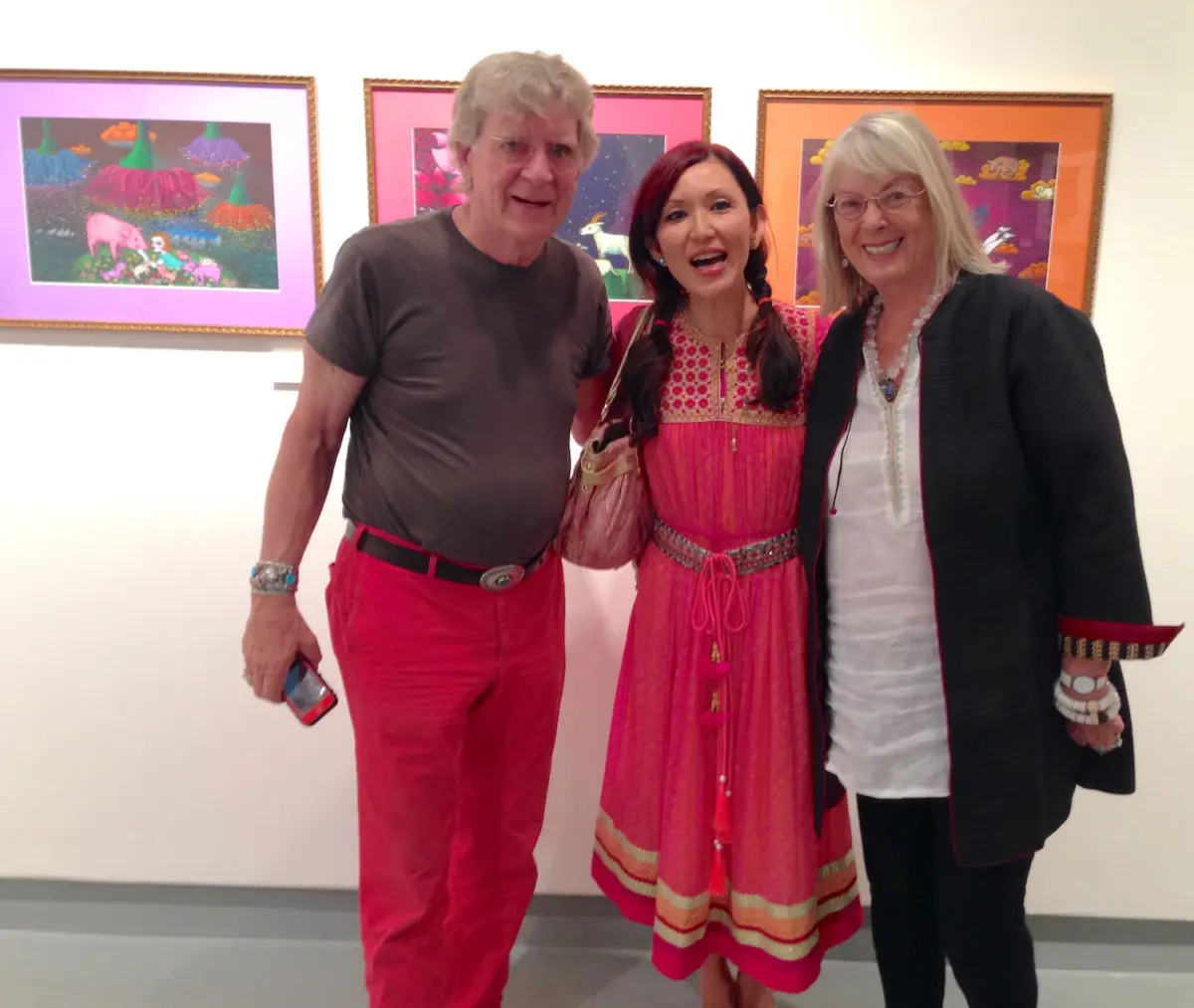
For artist, author, and long-time friend Rima Fujita, whose bond with Thurman spanned 33 years, losing him is both a personal heartbreak and a call to action. Recalling a friendship defined by profound kindness, shared activism, and mutual respect, Fujita and others in the global community are reflecting on a life that embodied the very definition of a bodhisattva—someone dedicated to the liberation of all sentient beings.
Chronology of a Lifelong Dedication
Decades of Friendship and Shared Struggle
The relationship between Bob Thurman and Rima Fujita offers a window into the consistency of Thurman’s character. Spanning over three decades, their friendship was forged in intellectual spaces, spiritual gatherings, and the sweltering streets of political protest.
- The New York Encounters: Fujita often recalled encounters at institutions like Tibet House US in New York City, where Thurman would joyfully single her out in crowds, affectionately labeling her a "bodhisattva"—a playful reversal of the profound respect others held for him.
- The Washington, D.C. Marches: During a scorching summer in Washington, D.C., amid a visit by His Holiness the Dalai Lama, temperatures soared near 100 degrees with suffocating humidity. While many high-profile figures opted for air-conditioned comfort, Thurman marched shoulder-to-shoulder with Tibetan refugees and activists. Drenched in sweat, his iconic golden hair plastered to his head, he continuously chanted, "Free Tibet! Free Tibet!" with unyielding stamina.
- The Final Communications: Even in his final days, facing his own mortality and health transitions, Thurman’s focus remained on others. In his last email to Fujita, he offered words of comfort and emotional support to help her cope with a rare illness she had been battling for years.
A Legacy Woven into the Fabric of Tibetan Culture
Thurman’s involvement with Tibet was never merely academic or superficial. He was an intimate confidant of His Holiness the Dalai Lama and one of the earliest Westerners to be ordained as a Tibetan Buddhist monk by the Dalai Lama himself, before later transitioning back to lay life to pursue academic and advocacy work.
Over the decades, he co-founded Tibet House US, establishing a cultural embassy in New York dedicated to preserving, protecting, and sharing Tibet’s endangered civilizational heritage. He commissioned traditional artisans, including monks from monasteries such as Nechung in Dharamsala, to create authentic thangkas and religious art, directly supporting monastic communities in exile.
Supporting Data and Personal Remembrances
To understand the scale of Thurman’s impact, one must look to the communities he supported. His work crossed institutional boundaries, bridging the gap between Western academia and ancient Eastern traditions.
- Academic and Activist Integration: Unlike some scholars who retreated into ivory towers, Thurman actively bridged the Middle Way Approach—advocated by the Dalai Lama—with more radical grassroots efforts, proudly supporting organizations like Students for a Free Tibet.
- Monastic Support: Monasteries in exile relied on patrons like Thurman. A monk from Nechung Monastery noted that Thurman’s commissions for traditional religious artwork provided essential financial lifelines for monks struggling to preserve their culture away from their homeland.
- Personal Resonance: Those who worked with him frequently noted his rare gift of complete presence. Following the pattern of advanced meditation practitioners, Thurman made every conversational partner feel as though they were the only person in the room—a trait born of genuine compassion rather than social etiquette.
Official Responses and Tributes
The global Tibetan community and prominent scholars have expressed profound grief over Thurman’s passing, emphasizing that his absence leaves a void that will be difficult to fill.
Dr. Tenzin Dorjee on Thurman’s Fearlessness
Dr. Tenzin Dorjee, a close friend and prominent voice in the Tibetan community, offered a poignant tribute capturing Thurman’s unique role in international politics:
"Bob stuck with us, the Tibetans, throughout the good times and the bad. While many supporters of Tibet became silent as China rose to global power, Bob remained outspoken and fearless. Although, as a disciple of His Holiness the Dalai Lama, he embraced the Middle Way Approach, he always supported Students for a Free Tibet. He was never afraid to raise his voice. He never took the easy way out. We have lost one of Tibet’s strongest friends."
Nechung Monastery on Cultural Preservation
A representative monk from the Nechung Monastery in Dharamsala highlighted Thurman’s humanitarian and cultural contributions:
"Bob was such a kind man. We all loved him. He contributed so much to preserving Tibetan culture, and he commissioned us to create many thangkas, which supported our monastery and our community."
Implications for the Future of the Tibet Movement
Thurman’s passing arrives at a critical juncture for the Tibetan independence and cultural preservation movement. With the geopolitical landscape increasingly dominated by trade and diplomatic anxieties surrounding China’s global influence, vocal Western champions of Tibetan human rights have dwindled.
Re-Energizing the Movement
The convergence of Thurman’s passing and the recent self-immolation of former Tibetan monk Lobga Ranzen in New York has thrust the plight of Tibet back into the North American public consciousness. For activists like Rima Fujita, who admits to battling moments of helplessness regarding the political stalemate, these events have sparked a renaissance of purpose. The collective grief has transformed into a renewed, grassroots-driven determination to utilize both political advocacy and cultural education to keep the Tibetan narrative alive.
A Blueprint for Modern Bodhisattvas
Ultimately, Bob Thurman’s life serves as a blueprint for engaged spirituality. He demonstrated that deep contemplative practice is not an escape from worldly suffering, but a fuel for direct, courageous action in the public square.
As friends, students, and admirers process their grief, they find solace in Thurman’s own philosophical outlook on existence. Rejecting notions of absolute termination, he often reminded those around him with a signature chuckle: "We don’t die."
In the hearts of the Tibetan community, the monasteries of Dharamsala, and the bustling streets of New York, Bob Thurman’s explosive, joyful energy continues to illuminate the path forward.
