

By James Gritz | Enriched and Expanded Report
Main Facts
On the morning of August 26th, the fragile cryosphere of the high Himalayas suffered a catastrophic failure. A massive glacial mass gave way high above Kyirong on the Tibetan side of the border, triggering a devastating chain reaction that has transformed scenic Himalayan valleys into zones of utter devastation.
The ensuing torrent of ice, water, and debris tore violently down through Rasuwa and onward into Nuwakot, obliterating entire villages, sweeping away vital bridges, and crushing critical hydropower infrastructure in its path. The wall of water surged relentlessly down the Bhote Koshi River before emptying into the Trishuli River basin, leaving a trail of profound ruin in its wake.
According to the latest figures released by Nepal’s National Disaster Risk Reduction and Management Authority (NDRRMA), the human toll is staggering. More than 350 people are confirmed dead in Nepal, while over 800 individuals remain unaccounted for. Across the border in Tibet, authorities have confirmed at least three fatalities, with hundreds more still missing.
Compounding the tragedy is the demographic profile of the missing. Many of those swept away or trapped by the sudden deluge were pilgrims journeying toward Mount Kailash and Lake Mansarovar—sacred grounds deeply revered by Hindus, Buddhists, Jains, and Bönpo traditions alike.
For those familiar with the region, the devastation hits painfully close to home. Nepal has long served as a spiritual haven and one of the primary global centers for Tibetan Buddhism in exile. The valleys of Rasuwa and Nuwakot are far more than mere coordinates on a map; they are living landscapes interwoven with the history, practice, and heart of generations of practitioners, teachers, and pilgrims.
Chronology of a Disaster: How the Events Unfolded
Pre-Dawn Vulnerability: The Setup in Kyirong
While precise meteorological data leading up to the final collapse is still being synthesized by regional seismological and geological institutes, the underlying vulnerability had been developing for years. Rising global temperatures have steadily weakened high-altitude glaciers across the Tibetan Plateau and the Himalayan range, creating unstable glacial lakes and hyper-fragile ice masses held back by weak moraine dams.
The Breach: August 26th, Morning Hours
On the morning of August 26th, a critical threshold was crossed. A massive section of the glacier above Kyirong detached, sending an unprecedented volume of ice, mud, and water cascading down steep mountain gradients. The sudden displacement of mass overwhelmed natural containment systems, transforming a high-altitude collapse into a high-velocity flash flood.
The Downstream Rush: Rasuwa and Nuwakot
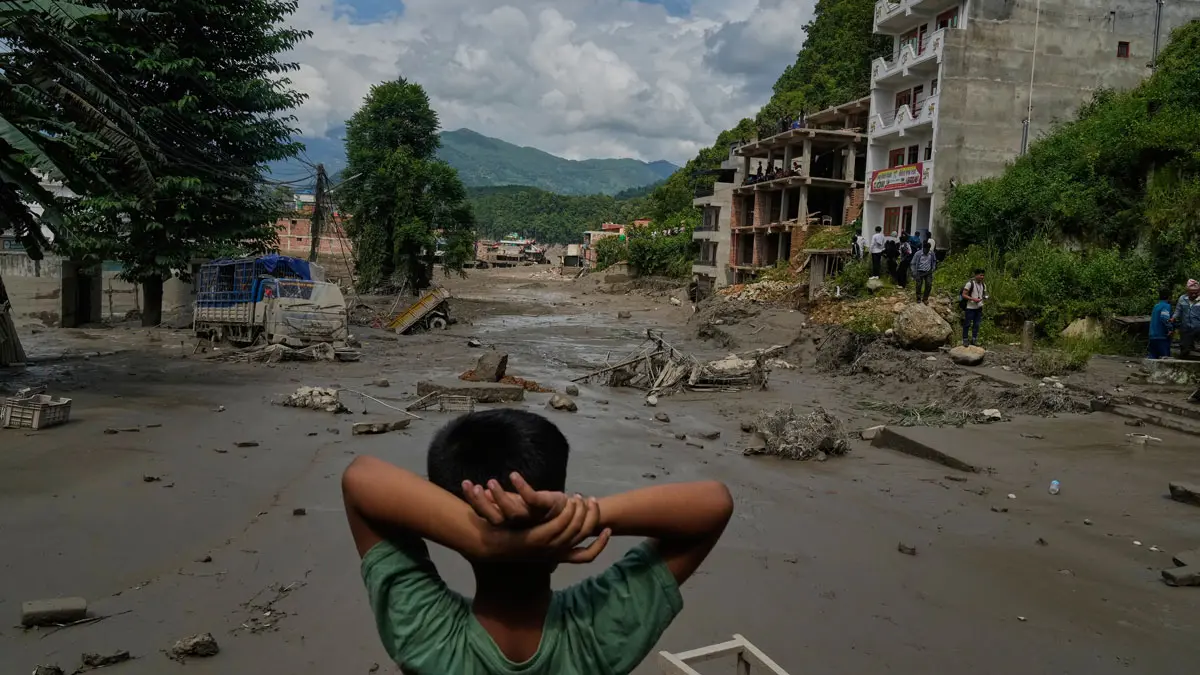
Within hours, the wall of slurry and raging water crossed the border into Nepal’s Rasuwa district. Traveling at terrifying speeds, the torrent acted like a natural bulldozer. It scoured riverbanks, tore foundations from bedrock, and pulverized infrastructure. Bridges that had stood for decades were snapped like twigs. Small rural settlements vanished beneath meters of silt and debris.
As the surge pushed further south into the Nuwakot district, it crippled regional hydropower stations, plunging communities into darkness and severing communication lines. The torrent funneled into the Bhote Koshi and spilled powerfully into the Trishuli River, carrying debris and victims for dozens of kilometers downstream and complicating initial emergency response efforts due to impassable roads and destroyed river crossings.
Supporting Data and Humanitarian Impact
The scope of the destruction is still being mapped by search and rescue teams, but early data underscores an unfolding humanitarian emergency of historic proportions.
- Confirmed Casualties: Over 350 deaths officially recorded in Nepal; 3 fatalities confirmed in the Tibet Autonomous Region.
- Missing Persons: More than 800 individuals remain unaccounted for in Nepal, with hundreds more missing on the Tibetan side.
- Demographic Vulnerability: A significant proportion of the missing are pilgrims traversing remote high-altitude routes toward Mount Kailash and Lake Mansarovar.
- Infrastructure Destruction: Dozens of homes, multiple bridges, critical rural roads, and essential hydropower facilities have been rendered entirely non-functional or completely swept away.
- Geographical Reach: The disaster spans multiple administrative zones, beginning in Kyirong (Tibet), surging through Rasuwa and Nuwakot (Nepal), and impacting the broader Bhote Koshi and Trishuli river basins.
Dramatic visual evidence of the disaster’s scale has begun to emerge. International media outlets, including Euronews, have broadcast harrowing footage filmed by the Nepal Red Cross Society, capturing the apocalyptic landscape of the Rasuwa valley submerged under churning brown waters and thick blankets of grey debris.
Official Responses and Spiritual Guidance
As recovery operations struggle against logistical nightmares and unstable terrain, spiritual leaders and international bodies have stepped forward to offer condolences, practical guidance, and warnings regarding the root causes of the catastrophe.
The Dalai Lama’s Statement
His Holiness the Dalai Lama released an official condolence message addressing the tragedy. Expressing his profound sorrow, he stated:
"I am saddened to learn of the devastating floods in the Rasuwa region of Nepal and Kyirong in Tibet, resulting in loss of life and heavy structural damage. I pray for all those who have lost their lives, and offer my sympathy and heartfelt condolences to the bereaved and to all those affected by this tragedy."
Significantly, the Dalai Lama pointed directly to the broader ecological context of the disaster, identifying human-induced climate change as a probable underlying catalyst for the sudden glacial collapse.
Bönpo Leadership Responds
Tenzin Wangyal Rinpoche, a prominent master of the ancient Bön tradition, shared a message of solace and guidance with his global community of students:
"May those who have passed rest in peace. May the injured recover swiftly. May grieving families find strength and comfort, and may all those offering help be guided by compassion and wisdom."
Governmental and Institutional Updates
Nepali authorities, operating through the NDRRMA, are coordinating emergency relief operations around the clock. Official updates, casualty tracking, and resource allocation reports are being regularly published via the official portal at ndrrma.gov.np.
Implications: Climate Change and the Fragile Himalayas
This disaster is not an isolated meteorological anomaly; it is a terrifying preview of a warming planet’s toll on the "Third Pole." The Hindu Kush Himalayan region is warming at a rate significantly higher than the global average. As temperatures climb, glaciers that have endured for millennia are retreating, thinning, and destabilizing at an exponential rate.
The Threat of Glacial Lake Outburst Floods (GLOFs)
Scientists have long warned that retreating glaciers leave behind unstable moraine dams filled with millions of cubic meters of meltwater. When these natural dams fail—whether triggered by ice avalanches, seismic activity, or sudden internal melting—the results are catastrophic Glacial Lake Outburst Floods (GLOFs). The event above Kyirong demonstrates how rapidly these crises can develop, leaving downstream populations with virtually no early warning time.
Geopolitical and Cross-Border Vulnerability
The disaster also highlights the complex realities of trans-boundary water management in the Himalayas. Weather systems and river basins do not respect national borders. When disasters originate in high-altitude Tibetan zones and cascade down into the densely populated valleys of Nepal, effective disaster mitigation requires seamless, rapid communication and data-sharing between Beijing and Kathmandu—a diplomatic and logistical challenge that emergency planners must urgently address.
Preservation of Heritage and Livelihoods
Beyond the immediate humanitarian crisis, the long-term implications for local communities are severe. Tourism, agriculture, and sacred pilgrimage economies have been severely disrupted. The destruction of hydropower stations threatens regional energy security, slowing recovery efforts and plunging local economies into prolonged darkness.
How to Help: Relief Organizations on the Ground
For individuals across the globe whose lives, spiritual paths, or personal histories have been touched by Nepal and its people, this moment calls for active solidarity.
Relief organizations are working under extreme conditions to deliver search-and-rescue support, clean water, medical care, and temporary shelter. Trusted organizations currently operating on the ground include:
- Nepal Red Cross Society: Operating via the International Federation of Red Cross and Red Crescent Societies (IFRC), which has already released emergency response funding. Donations and information can be found at ifrc.org.
- GlobalGiving’s Nepal Flood Relief Fund: Channels financial resources directly to vetted local grassroots organizations specializing in search, rescue, medical aid, and shelter provision. Visit globalgiving.org.
- Direct Relief: Actively coordinating medical logistics and pharmaceutical supplies with Nepal’s Ministry of Health, building on a continuous support network established in the country since 2009. Learn more at directrelief.org.
A Crucial Warning Against Scams
Nepali authorities and international aid agencies have issued explicit warnings regarding fraudulent fundraising campaigns. In the wake of major disasters, opportunistic scammers frequently set up unauthorized personal accounts and social media fundraisers. Donors are strongly urged to channel their financial support exclusively through officially registered, reputable humanitarian organizations rather than unverified private appeals.
Conclusion
As search and rescue personnel brave treacherous mudflows and unstable riverbanks to find the missing, and as grieving families begin the agonizing process of mourning, the international community must not look away. The waters of the Bhote Koshi and Trishuli have receded from their peak, but the ripple effects of this ecological tragedy will be felt for generations.
May those who have perished find ultimate peace. May the missing be safely recovered. May those on the front lines of rescue and relief be guided by unwavering strength, wisdom, and compassion.
