

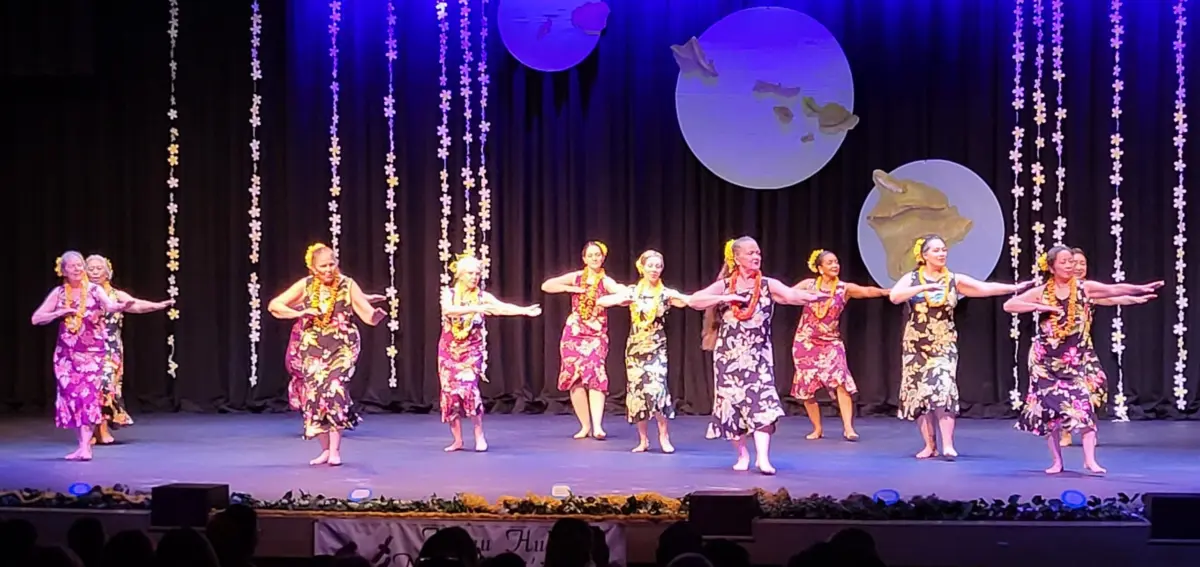
CAMP VERDE, Ariz. — For more than two decades, the high desert of Arizona’s Verde Valley has served as an unexpected but vibrant sanctuary for the preservation of Native Hawaiian culture. This autumn, the tradition continues as Aloha ʻĀina o Hawaiʻi and Hālau Hula Napuaokaleiʻilima prepare to present the 21st annual Hoʻike—a premier hula exhibition show dedicated to sharing authentic Hawaiian hula, music, and ancestral customs.
Scheduled for Saturday, October 17, at the Phillip England Center for the Performing Arts in Camp Verde, the event promises an immersive, educational journey into the heart of Hawaiian heritage. Led by recognized hula master (Kumu Hula) Kehau Chrisman and celebrated cultural scholar Dr. B. Kaʻimiloa Chrisman, the Hoʻike offers mainland audiences a rare glimpse into both the ancient and modern iterations of Hawaii’s national dance.
Main Facts: A Cultural Bridge in the Arizona Desert
The 21st annual Hoʻike serves as both a cultural showcase and a vital fundraiser for regional education. The event will take place at the Phillip England Center for the Performing Arts, located at 280 Camp Lincoln Road in Camp Verde, Arizona.
Key Event Details
- Date: Saturday, October 17
- Doors Open: 12:30 p.m.
- Showtime: 1:00 p.m. to 3:00 p.m. (Two-hour program)
- Presenting Organizations: Aloha ʻĀina o Hawaiʻi (a 501(c)(3) nonprofit) and Hālau Hula Napuaokaleiʻilima
- Featured Leadership: Kumu Hula Kehau Chrisman and B. Kaʻimiloa Chrisman, Ph.D.
The annual exhibition is designed to transcend commercialized representations of Hawaiian culture, offering instead a rigorously authentic portrayal of the islands’ history, language, and spiritual traditions. Through a combination of live performances, lecture-demonstrations, and community engagement activities, the organizers aim to foster a deeper, more respectful understanding of Hawaiian indigenous arts.
Chronology: A Structured Journey Through Hawaiian History
The two-hour program is carefully structured to guide attendees through a chronological and thematic exploration of Hawaiian history, transitioning from the sacred protocols of antiquity to the melodic expressions of the modern era.
[12:30 PM] Doors Open: Silent Auction, 50-50 Raffle, & Hālau Store Open
     │
[1:00 PM]  Part I: Ancient Hula (Kahiko) & Cultural Presentation
     │     - Presentation by Dr. B. Kaʻimiloa Chrisman & Kumu Hula Kehau Chrisman
     │     - Demonstration of traditional percussion instruments
     │     - Performance of sacred dances by Hālau students
     │
[2:00 PM]  Part II: Modern Hula (ʻAuana)
     │     - Choreography set to melodic string music and vocals
     │     - Focus on historic and legendary geographical landmarks of Hawaiʻi
     │
[3:00 PM]  Event Concludes
12:30 p.m. — Arrival and Community Engagement
The experience begins the moment doors open at 12:30 p.m. Before the stage performances commence, attendees are invited to explore the lobby, which transforms into a bustling Hawaiian marketplace.
- The Hālau Store: Features curated Hawaiian-themed items, apparel, and handcrafted goods.
- Silent Auction: Offers attendees the opportunity to bid on authentic Hawaiian artifacts, original illustrations, and fine artwork.
- 50-50 Cash Raffle: A community-focused raffle where proceeds are split between the winner and the organizing nonprofit to fund year-round cultural programming.
1:00 p.m. — Part I: The Roots of Hula (Kahiko)
The formal program begins promptly at 1:00 p.m. with an educational presentation led by Dr. B. Kaʻimiloa Chrisman and Kumu Hula Kehau Chrisman. This segment focuses on hula kahiko (ancient hula), the traditional style performed prior to Western contact in 1778.
During this portion, Dr. Chrisman and Kumu Kehau will demonstrate the construction, history, and usage of traditional percussion instruments. Following the lecture, students of Hālau Hula Napuaokaleiʻilima will execute ancient dances, characterized by rhythmic chanting (mele) and heavy, grounded movements that honor Hawaiian deities, chiefs (aliʻi), and natural forces.
2:00 p.m. — Part II: The Evolution of Hula (ʻAuana)
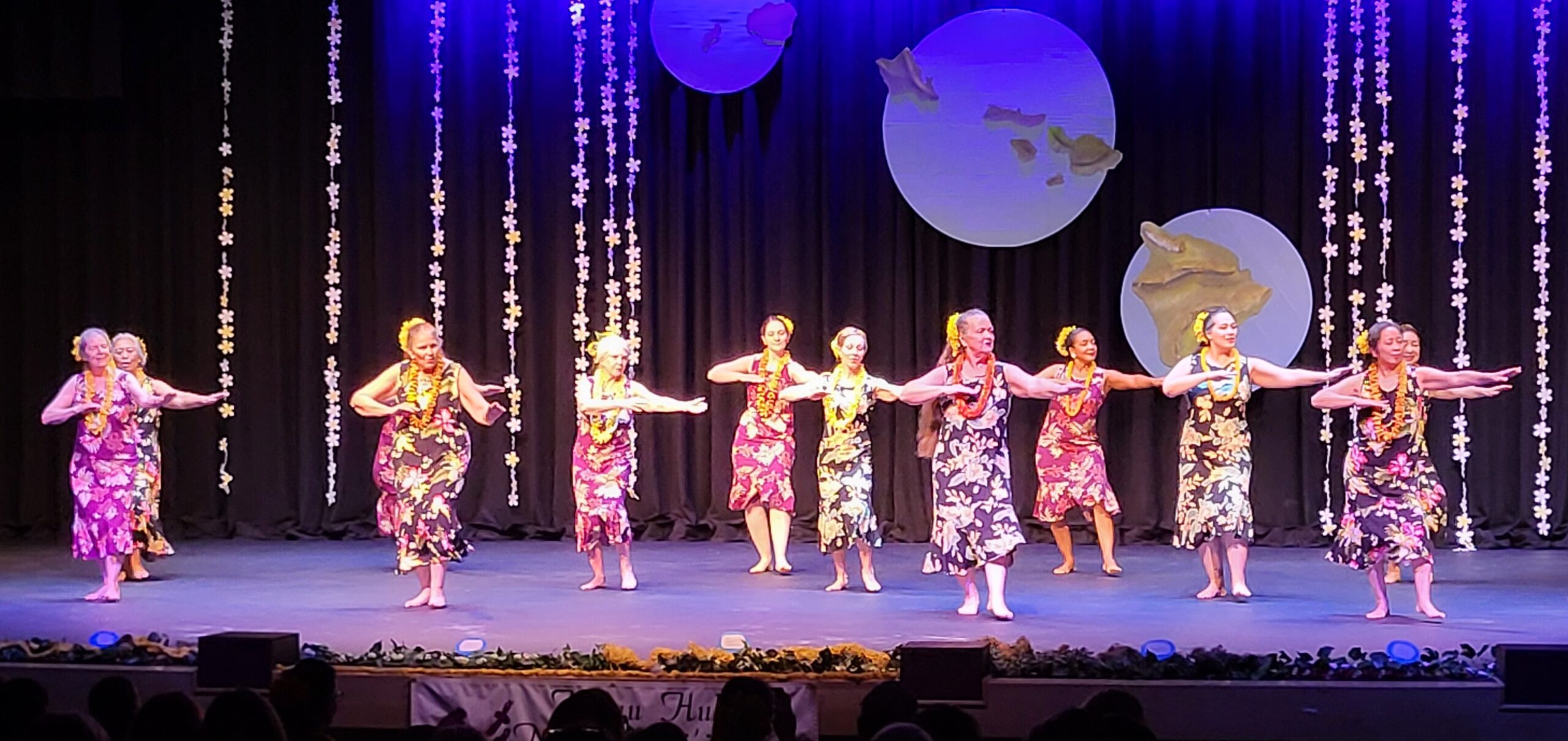
The second half of the program shifts to hula ʻauana (modern, drifting hula). Developed in the late 19th and 20th centuries under Western influences, hula ʻauana is characterized by fluid, graceful movements accompanied by melodic stringed instruments such as the ukulele, guitar, and steel guitar.
Under the direction of Kumu Kehau, dancers will perform choreographies that tell the stories of legendary landmarks, historical figures, and the breathtaking natural beauty of the Hawaiian archipelago. The show concludes at 3:00 p.m.
Supporting Data: Deep-Rooted Lineage and Historic Recognition
The authenticity of the Hoʻike is anchored by the deep credentials of its presenters, both of whom carry decades of formal training and historic accolades.
The Historic Legacy of Dr. B. Kaʻimiloa Chrisman
A central highlight of the event is the participation of Hawaiian culture scholar B. Kaʻimiloa Chrisman, Ph.D. Dr. Chrisman was named a recipient of the prestigious Living Treasures of Hawaiʻi award.
Established by the Honpa Hongwanji Mission of Hawaii in 1976, this honor recognizes individuals who have made significant, lifelong contributions to the preservation and perpetuation of traditional Hawaiian culture and humanities.
Living Treasures of Hawaiʻi Award: Key Milestone
┌─────────────────────────────────────────────────────────────────┐
│ Dr. B. Kaʻimiloa Chrisman                                       │
├─────────────────────────────────────────────────────────────────┤
│ • Recognized for reviving the lost art of "ipu pāwehe"          │
│ • First-ever award recipient to reside outside the state of     │
│   Hawaiʻi, marking a milestone for the global diaspora          │
└─────────────────────────────────────────────────────────────────┘
Dr. Chrisman’s specific contribution lies in reviving the lost art of ipu pāwehe (decorated gourds). This highly complex, traditional Niʻihau craft involves etching intricate geometric patterns onto the outer skin of a green gourd and coloring it from the inside out using a natural dye made from indigenous plants. Through his research and craftsmanship, Dr. Chrisman successfully rescued this endangered art form from near-extinction. Notably, he is the first recipient in the award’s history to receive the honor while residing outside the state of Hawaiʻi.
Kumu Hula Kehau Chrisman and Hālau Hula Napuaokaleiʻilima
Hālau Hula Napuaokaleiʻilima (the "Hula School of the Beautiful Blossoms of the ʻIlima"), based in Cottonwood, Arizona, has operated under the direction of Kumu Hula Kehau Chrisman since 2004.
Kumu Hula Kehau Chrisman: At a Glance
┌────────────────────────────────────────────────────────┐
│ • Total Years in Hula Field: 40+ Years                 │
│ • Intensive Training in Hawaiʻi: 17 Years              │
│ • Years Teaching Hula in Hawaiʻi: 1997 – 2004          │
│ • Years Teaching in Arizona: 2004 – Present (20 Years) │
└────────────────────────────────────────────────────────┘
Kumu Kehau’s journey to becoming a hula master is defined by rigorous, traditional protocols:
- 40+ Years of Experience: Over four decades dedicated to the study, practice, and instruction of hula.
- 17 Years of Advanced Training: Spent in Hawaiʻi undergoing intensive training to attain the sacred rank of Kumu Hula (hula master) under revered elders within Hawaii’s unbroken hula lineage.
- Geographic Reach: While based in the Verde Valley, the school’s reputation attracts students who travel long distances from Flagstaff, Prescott, and throughout Northern and Central Arizona to study under her guidance.
Official Responses: Voices of Cultural Stewardship
Organizers and cultural leaders emphasize that the Hoʻike is more than a performance; it is a vital act of cultural preservation.
In discussing her teaching philosophy and the mission of Hālau Hula Napuaokaleiʻilima, Kumu Hula Kehau Chrisman emphasizes that hula serves as the historical archive of the Hawaiian people:
"Hula is not merely entertainment; it is our history, our language, and our connection to our ancestors. In ancient Hawaiʻi, where there was no written language, the history of our people—the genealogies of our chiefs, the descriptions of our lands, and our spiritual beliefs—was recorded and passed down through the chants and movements of the hula. When we teach hula here in Arizona, we are carrying a sacred trust. Our students learn not just how to move their hands and feet, but the profound spiritual and historical context behind every gesture."
Dr. B. Kaʻimiloa Chrisman reflects on the global responsibility of the Hawaiian diaspora in maintaining these ancient crafts:
"Receiving the Living Treasures of Hawaiʻi award while living in Arizona was a deeply humbling moment, not just for me personally, but for the entire community of cultural practitioners living on the mainland. It proved that the work of preserving our heritage is not bound by geography. The revitalization of ipu pāwehe and the preservation of traditional woodworking are essential to keeping our ancestral soul alive. By sharing these instruments and techniques at the Hoʻike, we invite the public to appreciate the depth of Hawaiian intellect and scientific understanding of nature."
Implications: Cultural Preservation and the Mainland Diaspora
The longevity and success of the annual Hoʻike highlight several broader cultural, educational, and sociological trends.
The Role of the Diaspora in Cultural Survival
As housing costs and economic pressures have driven many Native Hawaiians to relocate to the U.S. mainland, vibrant cultural hubs have emerged in states like Arizona, Nevada, and Utah. Hālau Hula Napuaokaleiʻilima serves as a crucial cultural anchor for this diaspora. By providing a space where displaced Hawaiians and non-Hawaiians alike can study the language, music, and dance under a certified master, the hālau ensures that the culture remains dynamic, living, and accurately represented thousands of miles from the Pacific.
Key Educational Impacts of the Hoʻike:
1. Deconstructs commercialized stereotypes of Hawaiian culture.
2. Teaches the Hawaiian language (ʻŌlelo Hawaiʻi) through song and chant.
3. Funds workshops, lectures, and community outreach in Northern Arizona.
Educational and Economic Community Integration
The Hoʻike is funded in part by Aloha ʻĀina o Hawaiʻi, a 501(c)(3) nonprofit organization. All proceeds from the silent auction, store sales, and ticket admissions directly support the nonprofit’s mission: promoting public education regarding the customs, values, language, and arts of Hawaiian culture.
By drawing audiences from major Northern Arizona municipalities—including Flagstaff, Sedona, and Prescott—the event also stimulates local economic activity in Camp Verde, demonstrating how cultural diversity initiatives can enrich regional tourism and community cohesion.
Event Logistics, Ticketing, and Organization Information
To support the nonprofit’s efforts and secure attendance at this highly anticipated regional event, organizers encourage early ticket purchases.
Ticket Pricing Structure
- Pre-sale Tickets (Available online until 11:59 p.m. on Friday, Oct. 16):
- Adults: $15
- Youth (Ages 7 to 17): $8
- Children (Under 7): Free
- At-the-Door Tickets (Saturday, Oct. 17):
- Adults: $20
- Youth (Ages 7 to 17): $10
- Children (Under 7): Free
Contact and Web Resources
- Hula School Information & Enrollment: Visit arizonahula.com to learn more about classes, workshops, and the school’s history in Cottonwood.
- Cultural Programs & Nonprofit Activities: Visit hawaiianculture.com for resources on Hawaiian language, ukulele instruction, and community outreach.
- General Inquiries & Ticket Bookings: Email the organizing committee directly at [email protected].
