

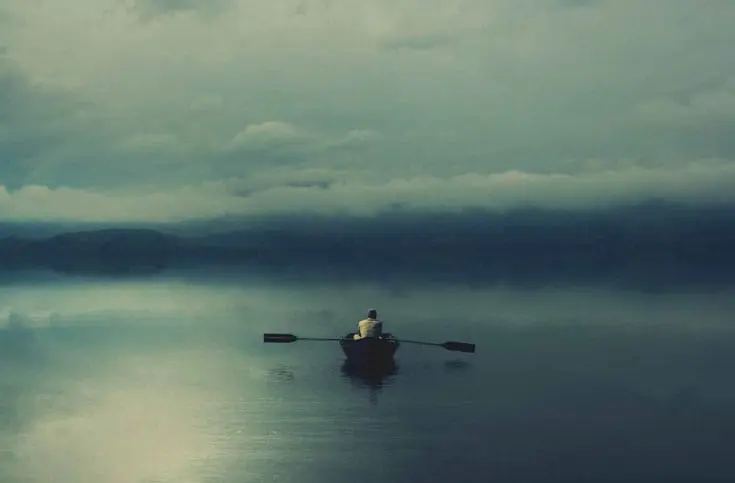
In contemporary Western culture, death remains the final taboo—an abrupt blackout, an ultimate medical failure, and an existential horror to be resisted at all costs. Yet, across ancient contemplative traditions, particularly Tibetan Buddhism, death is viewed through an entirely inverted lens: not as a tragedy to be avoided, but as a once-in-a-lifetime opportunity for profound spiritual evolution.
Drawing from extensive literature on conscious dying, modern consciousness studies, and ancient texts such as The Tibetan Book of the Dead, contemporary scholars and meditation masters are offering a radically different framework for mortality. By reframing the end of life as a fluid "karmic gap," practitioners argue that individuals can prepare for—and consciously navigate—the transition between lives, transforming fear into liberation.
Main Facts: The Nature of the Bardo and the Karmic Gap
At the core of Tibetan Buddhist teachings on mortality is the concept of the bardo, a Tibetan term translating loosely to "intermediate state" or "no-man’s-land." According to this tradition, death is not a static end point, but a dynamic transition period.
When biological life ceases, the karma that propelled an individual into their current incarnation is exhausted, while the karma for their next rebirth has not yet crystallized. This leaves the consciousness in a temporary, fluid "clean slate." Robert Thurman, a renowned scholar and translator of The Tibetan Book of the Dead, highlights the unique potential of this window:
"The time of the between [bardo] is the best time to attempt consciously to affect the causal process of evolution for the better. Our evolutionary momentum is temporarily fluid during the between, so we can gain or lose a lot of ground during its crises."
Buddhist masters assert that because of this temporal and karmic gap, there are mathematically and spiritually more opportunities for absolute awakening in death than in life. However, because most individuals lack familiarity with the process, the experience is defined by disorientation, panic, and an instinctive, reflexive grasping that often dictates an unfortunate rebirth.
Chronology: The Three Death Bardos
To understand how consciousness transitions through this phase, Tibetan Buddhism maps out three distinct chronological stages known as the three death bardos. While detailed, these phases serve as a map rather than a rigid prescription, emphasizing that the actual experience of dying is inherently wild and unscripted.
1. The Painful Bardo of Dying
This initial phase begins with the onset of the disease, trauma, or condition that ultimately terminates biological life. In instances of sudden, catastrophic death, it occurs in a fraction of a second. It is designated as "painful" because the mind and consciousness experience a deep, involuntary resistance to letting go of the physical anchor of the body.
2. The Luminous Bardo of Dharmata
Following the cessation of the physical body, the second bardo begins. Dharmata translates to "suchness" or the true, enlightened nature of reality. During this phase, consciousness encounters a state of brilliance so intense and radiant that it is often described as blinding. For the unprepared mind, this absolute clarity is terrifying; the individual faints from the brilliance, waking up dazed in the subsequent phase.
3. The Karmic Bardo of Becoming
As the brilliant light of suchness fades, confusion reasserts itself. The winds of past karma begin to blow, driving the disembodied consciousness toward its next rebirth. In this state, mental projections and emotional habits feel entirely real, creating terrifying hallucinations if the mind has not been properly trained.
Supporting Data: Scientific and Contemplative Insights
The intersection between ancient contemplative maps of consciousness and modern neuroscience is increasingly drawing academic attention. Dr. Andrew Holecek, an interdisciplinary scholar-practitioner in Tibetan Buddhism and a research consultant for the Cognitive Neuroscience Program at Northwestern University, bridges these worlds. Holding degrees in biology, dentistry, and classical music, Holecek has spent decades studying lucid dreaming, dark retreats, and the physiology of meditation.
Clinical and contemplative research suggests that mental training can drastically alter how the human brain processes extreme stress, pain, and disorientation—states that mirror the bardo experiences.
- Neuroplasticity and Mindfulness: Studies on long-term meditators demonstrate a thickening of the prefrontal cortex and a downregulation of the amygdala, the brain’s fear center. This physiological shift underpins the ability to remain calm amidst chaos.
- The "Flow State" Correlation: Neuroscientists have long studied states of "flow" or being in "the zone," where time perception alters and self-referential thought ceases. Contemplative traditions view these states as micro-experiences of the timeless "fourth moment"—an inlet to the deathless state of pure awareness.
Official Responses: Guidance from Spiritual Masters
Prominent modern teachers and lineage holders have consistently emphasized that death demands active, compassionate engagement rather than passive denial.
Lama Zopa Rinpoche repeatedly stressed the urgency of post-mortem care and mental preparation:
"This is when people must do something for the person who has died; this is the most crucial time for the person… If you die with this bodhichitta thought, your death becomes a cause of your enlightenment and a cause for the enlightenment of all sentient beings."
Similarly, Dzogchen Ponlop Rinpoche advises individuals to lean fully into the present reality of whatever condition they face, noting that trying to cling to an identity of "being alive" when dying is underway only compounds psychological suffering.
To prepare the mind for these profound shifts, Tibetan Buddhism relies on specific, highly actionable modalities of meditation: Shamatha, Vipashyana, Tonglen, and a unique class of practices known as "reverse meditations."
Shamatha (Calm Abiding)
Shamatha meditation trains the mind to rest without distraction. Practiced initially with a reference point—such as the breath or the physical body—it develops into formless shamatha, the ability to rest awareness on any experience whatsoever. When the physical body drops away at death, formless shamatha acts as a psychological lifeline, preventing the consciousness from panicking and grasping at harmful illusions.
Vipashyana (Insight Meditation)
While shamatha calms the mind, vipashyana allows the practitioner to see through the mind. The foundational maxim of this practice is that "recognition and liberation are simultaneous." Just as becoming lucid within a nightmare transforms the dreamer from a victim of the dream into its master, recognizing bardo visions as mere projections of one’s own mind liberates the dying person from suffering.
Tonglen and Reverse Meditations
Perhaps the most counterintuitive tools in this tradition are "reverse meditations." Rather than running away from discomfort, practitioners intentionally invite pain, chaos, and fear into their meditation practice.
- Pain Meditation: By voluntarily exploring physical sensations (such as a minor sting or ache) without mental commentary, practitioners learn to separate raw physical sensation ("the first arrow") from the psychological story of suffering ("the second arrow").
- Chaos and Horror Practices: Teachers like Khenpo Tsultrim Gyamtso Rinpoche have even recommended watching horror movies or meditating in hyper-stimulating environments (such as busy metropolitan centers) to befriend fear and sensory overload before facing the bardo of becoming.
Implications: Reclaiming the Art of Dying
The practical implications of integrating these teachings into modern life are profound. By demystifying death and training the mind through daily mindfulness, individuals can dismantle the pervasive cultural terror surrounding mortality.
As Holecek and other contemporary scholars argue, preparation for death is ultimately preparation for life. When an individual learns to surrender expectations, embrace discomfort, and rest in the present moment, they cease viewing death as an absolute defeat. Instead, mortality is reclaimed as an ultimate frontier of human potential—a sacred, once-in-a-lifetime opportunity to wake up completely.
