

By Global News Desk
Published in collaboration with the Buddhist Justice Reporter
Main Facts
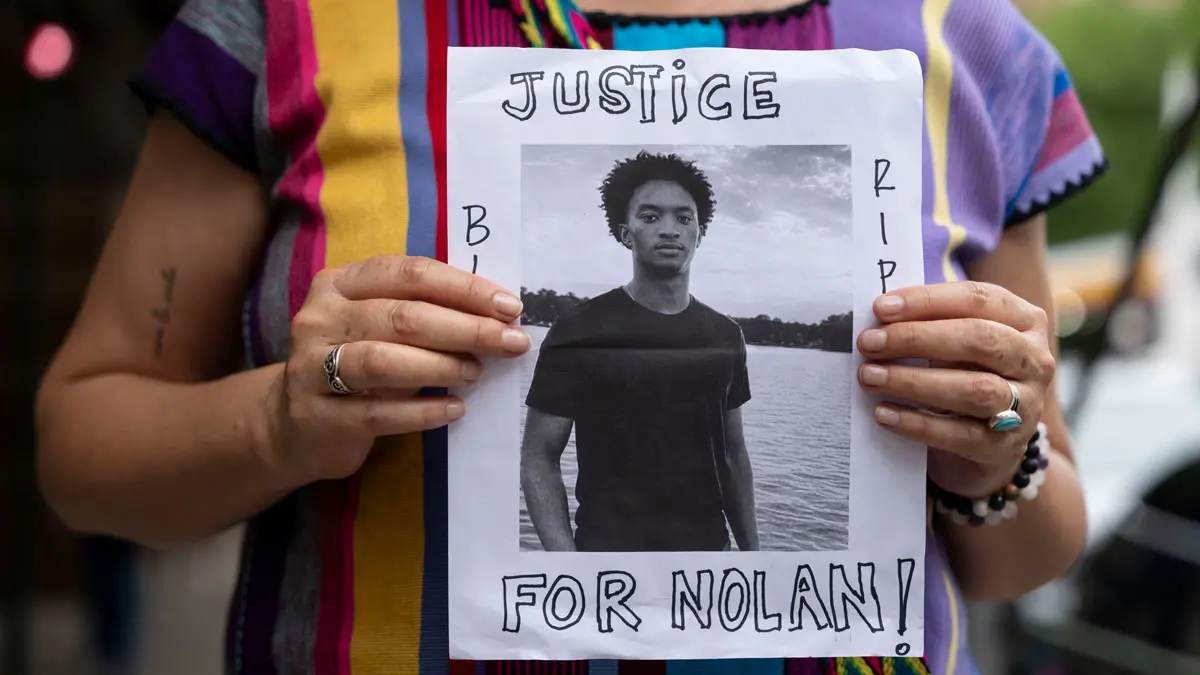
The intersection of systemic racism, parental anxiety, and spiritual resilience forms a heavy burden for Black families across the United States. Recent high-profile tragedies—specifically the deaths of teenagers Nolan Xavier Wells and Daniel Erving, followed closely by the police killings of Corey Ruiz in Madison, Wisconsin, and unarmed Anthoneil Williams II in Austin, Texas—have thrust the harsh reality of systemic violence back into the national spotlight.
For Black parents, raising a child in the United States requires an acute, constant state of observation. This hyper-vigilance is not merely about physical safety; it is an agonizing mental calculus. Parents must gauge the precise developmental inflection point when their children can comprehend, without psychological shattering, that their identities as Black individuals carry an unrelenting, systemic threat from both the state and vigilantes.
Civil rights attorney Ben Crump, who was retained by the Wells family on July 7 and by the Erving family on July 13, has once again stepped in to demand accountability. Yet, the persistent need for such high-profile legal intervention underscores a grim truth: the systemic dangers faced by Black youth in America remain unabated, forcing communities to navigate a fragile tightrope between radical joy and profound existential dread.
Chronology of Events and Escalating Tensions
The timeline of recent state-sanctioned and racialized violence highlights a continuous, unhealed wound in the American social fabric:
- Early July: The families of teenagers Nolan Xavier Wells and Daniel Erving suffer devastating losses, prompting nationwide mourning and demands for institutional accountability.
- July 7: Noted civil rights attorney Ben Crump is officially retained by the Wells family to investigate the circumstances surrounding their child’s death and to pursue justice.
- July 13: The Erving family similarly retains Ben Crump, formalizing a legal battle against systemic negligence and violence.
- Mid-July (Five days following initial advocacy): In Madison, Wisconsin, police shoot and kill Corey Ruiz, escalating local and national outrage over the unchecked use of lethal force by law enforcement.
- One week following the Madison incident: In Austin, Texas, unarmed Anthoneil Williams II is killed by police officers, adding another name to the tragic roll call of victims of state violence.
- Ongoing: Communities, spiritual leaders, and civil rights advocates grapple with the compounding trauma of these events, utilizing public advocacy, legal action, and spiritual frameworks to process the crisis.
Supporting Data: The Anatomy of Systemic Fear
The psychological and societal weight carried by Black parents is supported by a long history of institutional disparity, racial profiling, and demographic targeting. According to data compiled by civil rights organizations and criminologists, Black Americans remain disproportionately represented among victims of police use of force, despite representing a fraction of the total population.
- The Criminal Justice Pipeline: Black children are disproportionately introduced to the carceral system at younger ages compared to their white peers. The terminology of the justice system—ranging from "arrest" and "probation" to "detention" and "life sentence"—becomes part of a premature socialization process.
- Economic and Social Profiling: Language, accent, and cultural markers are frequently weaponized to question the citizenship, due process rights, and humanity of people of color.
- The Prison and Deportation Industrial Complex: Systemic paranoia regarding actualized, empowered Black and brown individuals fuels legislative and carceral quotas. This structural anxiety often manifests as mass incarceration, intensified policing, and policy proposals that echo historical colonialist oppression.
Official Responses and Legal Representation
As communities reel from the cascading tragedies involving Nolan Xavier Wells, Daniel Erving, Corey Ruiz, and Anthoneil Williams II, official and legal responses have brought both a measure of accountability and a reminder of systemic shortcomings.
Attorney Ben Crump, whose career has been defined by representing victims of racial violence, vocalized the absolute necessity of holding law enforcement and civic institutions accountable. In statements accompanying his retention by the Wells and Erving families, Crump emphasized that justice cannot be delayed or denied to families who have lost their children to state-inflicted violence.
However, community leaders and spiritual practitioners note a bittersweet reliance on legal crusaders. While advocates like Crump are indispensable, the sheer frequency with which their services are required points to a systemic failure of prevention and protection. Local municipal governments and police departments involved in the recent killings have faced intense scrutiny, with internal affairs investigations and community-led oversight boards demanding transparency, policy overhauls, and the independent prosecution of officers involved in unjustified lethal force.
Broader Implications: Spirituality, Parenting, and Resistance
The convergence of these events forces a deep examination of how marginalized communities survive psychological and physical assaults. For many, traditional coping mechanisms must evolve to address the modern socio-political climate.
Writing from the perspective of a Black mother and a trained Buddhist practitioner, scholars and spiritual leaders point out that philosophies of equanimity and peace cannot be used to bypass the righteous anger necessitated by injustice. Rather than utilizing meditative practices to douse the flames of anger with "dharma-softening deep breathing," many are choosing to let that heat rise to a clarifying level. Anger, in this context, becomes a catalyst for truth-telling and collective awakening.
Navigating the Conversation on Safety
Parents are forced to make agonizing decisions regarding how and when to warn their children about a society that views actualized Blackness with suspicion. This includes difficult, highly politicized guidance—such as advising Black youth to navigate public spaces with white friends only in the presence of responsible Black adults. While such advice may seem jarring or overly cautious to outsiders, it reflects a deeply calculated assessment of modern fascism, systemic intimidation, and the very real threat of targeted violence.
The Role of Accountability and Empathy
Ultimately, the broader implications demand a wholesale reimagining of community care. True systemic reform requires:
- Dismantling Carceral Paranoia: Ending the reliance on racial profiling and profit-driven penal systems that view Black bodies as commodities or threats.
- Radical Affirmation: Cultivating spaces where Black children are explicitly validated, loved, and taught their inherent worth before the harsh lexicon of the prison industrial complex reaches their psyches.
- Cross-Racial Solidarity: Confronting the uncomfortable reality that even peers—including white friends—can sometimes be complicit in, or oblivious to, the systemic dangers threatening Black lives.
As families mourn the losses of Nolan Xavier Wells, Daniel Erving, Corey Ruiz, and Anthoneil Williams II, the path forward requires an unyielding commitment to truth, justice, and community resilience. By pairing the clarity of anger with the persistence of love, Black parents and their allies continue the generational work of demanding a world where children can grow up not in dread, but in unencumbered freedom.
