

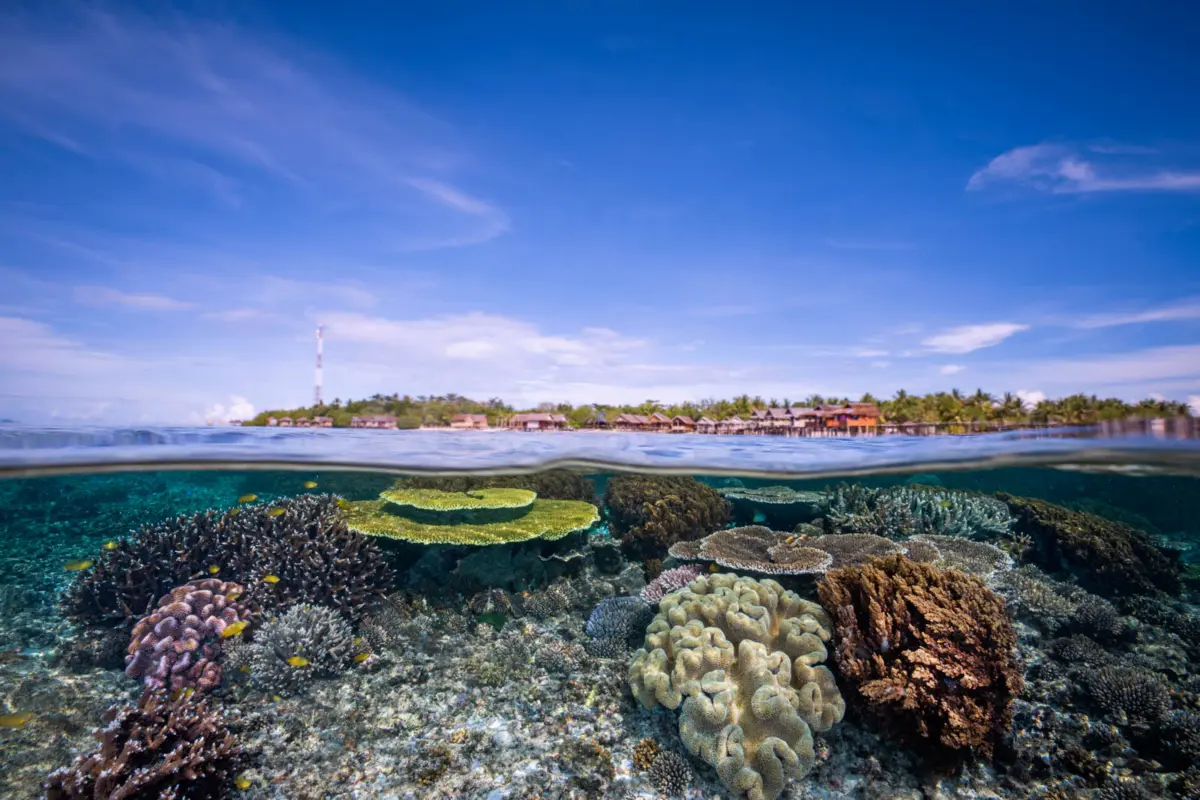
For decades, the name Raja Ampat has resonated in diving and photography circles with an almost mythical reverence. Tucked away off the northwestern tip of Bird’s Head Peninsula in West Papua, Indonesia, this remote archipelago represents the gold standard of underwater imaging. It is a cinematic landscape of jungle-draped karst islands, startlingly bioluminescent shallows, and some of the most ecologically robust coral reefs left on planet Earth.
For wildlife and underwater photographers willing to brave the grueling transit logistics, Raja Ampat offers an embarrassment of riches—an ocean so teeming with life that it challenges the limits of human comprehension and photographic technique.
Main Facts: At the Heart of Marine Biodiversity
Often romanticized as “The Last Paradise,” Raja Ampat is a sprawling geographical expanse comprising over 1,500 small islands, cays, and shoals encircling the four major islands of Waigeo, Batanta, Salawati, and Misool. Geographically positioned dead center in the global epicentre of marine biodiversity known as the Coral Triangle, this tropical utopia is estimated to harbor a staggering 75% of all known coral species on Earth.
The statistics beggar belief:

- Corals: Over 540 distinct species of hard and soft corals.
- Fish Life: More than 1,000 species of reef and pelagic fish.
- Invertebrates & Megafauna: Around 700 types of mollusks, alongside resident populations of dugongs, saltwater crocodiles, sea turtles, sharks, and schooling manta rays.
Unlike many marine environments worldwide facing catastrophic bleaching and degradation, parts of Raja Ampat—particularly around Misool in the south—are experiencing an improvement in overall biodiversity, largely thanks to strict, community-led marine protected areas (MPAs) and conservation initiatives.
Chronology and Logistics: Planning the Ultimate Expedition
Reaching the frontier of marine conservation is, by design, an exercise in patience and endurance. For travelers originating from Australia and other regional hubs, a typical journey requires a complex itinerary: multiple domestic flights with extended layovers, a hot and humid two-hour ferry crossing from Sorong to Waisai, and a final, jarring car journey over potholed coastal roads just to reach the departure gateways.

Choosing Your Mode of Transit
Once you arrive at your jumping-off point, photographers face a critical logistical fork in the road:
- Day-Trip Resorts & Homestays: Ideal for travelers looking to unpack once, decompress, and focus heavily on specific house reefs or localized macro subjects. However, this limits your range.
- Liveaboards: The preferred methodology for serious underwater image-makers. A liveaboard vessel allows photographers to cover hundreds of nautical miles across vast regions, accessing remote pinnacles and southern hubs like Misool that day-boats cannot reach.
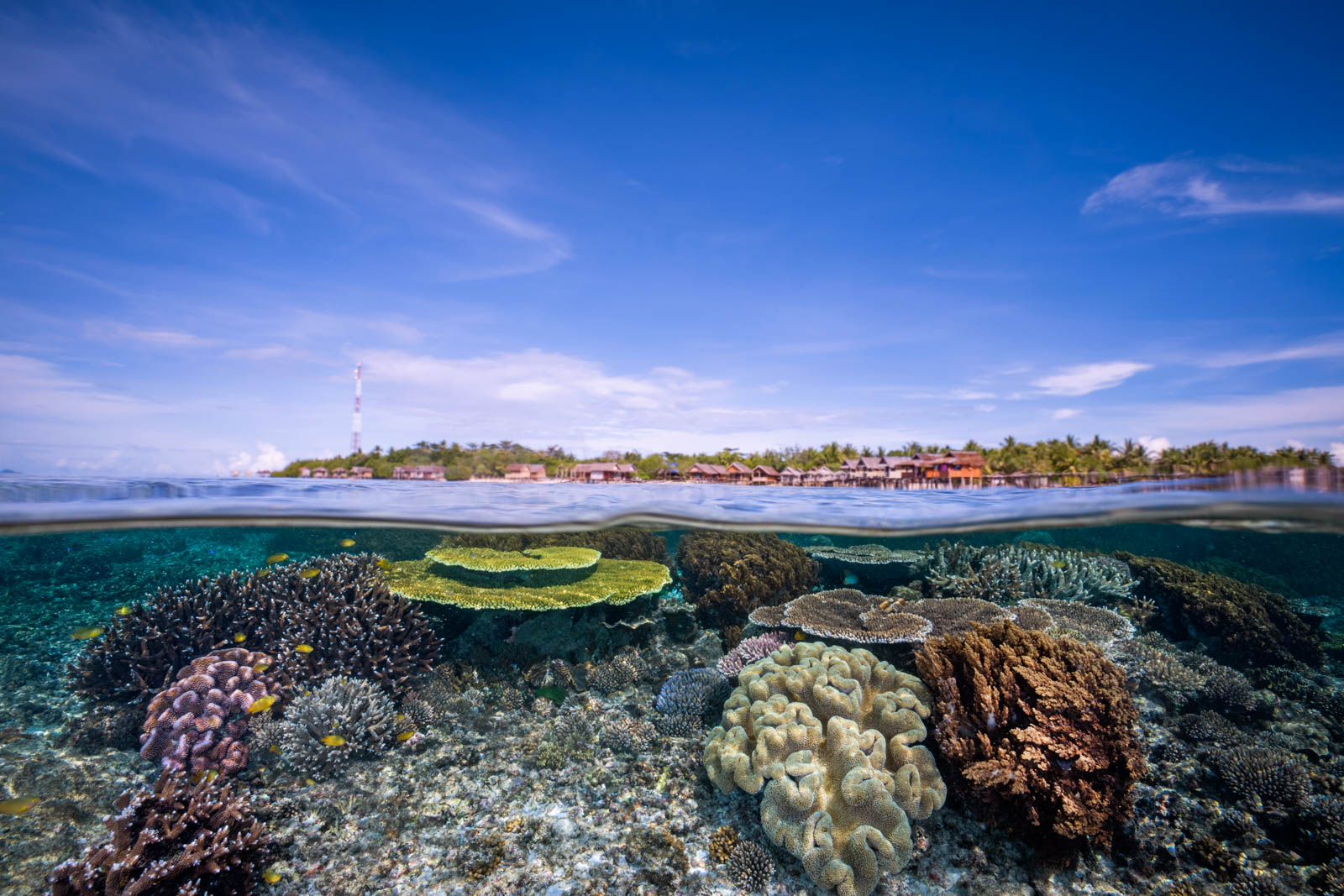
A well-rounded itinerary often combines both: starting with a 7- to 10-day liveaboard expedition to sweep across the outer archipelagos, followed by a few days relaxing at an eco-homestay to capture intimate, shallow-water split shots off a vibrant house reef.

Supporting Data & Photographic Expectations: Wide-Angle vs. Macro
Raja Ampat is a non-discriminatory playground for image-makers, offering equal weight to grand, sweeping seascapes and microscopic behavior. However, because the underwater topography changes dramatically from site to site, preparation is everything.
The Wide-Angle Canvas
The region’s flourishing reef systems grow with unimaginable scale, bursting with hyper-saturated pinks, purples, and yellows. This aquatic cosmos provides an ideal backdrop for wide-angle perspectives (recommended lenses: 16–35mm). Photographers can regularly frame:

- Enormous schools of barracuda, snappers, and batfish.
- Reef sharks, wobbegongs, and majestic sea turtles.
- Overhead split shots (over-under images) utilizing the dramatic limestone karst formations and stunning equatorial sunrises and sunsets.
The Macro Cosmos
For those who prefer smaller subjects, the cracks and crevices of Raja Ampat’s drop-offs are packed with bizarre and wonderful macro critters. While a mid-range macro lens (like a 60mm) is useful, packing a longer focal length (such as a 90mm or 120mm) paired with an external diopter is essential for tiny subjects like:
- Pygmy seahorses and pygmy pipehorses.
- Flamboyant cuttlefish, blue-ringed octopuses, and ghost pipefish.
- Rare nudibranchs, mantis shrimp, and leaf scorpionfish.
Official Responses and Ecological Challenges
While the biological rewards are high, shooting in Raja Ampat comes with distinct environmental hurdles that demand specialized technical mastery.

Nutrient-Rich Waters and Visibility
The very mechanism that feeds Raja Ampat’s staggering biodiversity—massive upwellings of nutrient-rich water pushed through narrow straits—frequently results in less-than-crystal-clear visibility. Photographers attempting wide-angle captures must meticulously master strobe positioning to avoid illuminating backscatter suspended in the water column.
Combatting the Currents
The currents coursing through areas like the Dampier Strait can be violently strong. Photographers must frequently execute dives where they do nothing more than hook onto a rocky outcrop, hold on for dear life with one hand, and attempt to stabilize heavy camera housings with the other.

Pro-Tip: If your dive briefing warns of "strong down-currents," experienced professionals often recommend leaving the housing behind to avoid gear damage, or ensuring your insurance policy covers underwater equipment loss.
Implications: Top Dive Sites for Your Itinerary
To maximize your time behind the lens, prioritize these world-class marine sanctuaries:

1. Melissa’s Garden
A legendary wide-angle site near the Fam Islands. Dropping down here places you amid an endless carpet of hard coral plates, serving as a pristine backdrop for schooling batfish, snappers, and predatory pelagics.
2. Batu Rufus
Featuring a glowing emerald lagoon enclosed by sheer limestone cliffs, Batu Rufus begins on an outer sloping reef before leading divers through a coral-encrusted swim-through. It is an ideal shallow-water location for natural-light freediving and split-shot photography.

3. Cape Kri
Holder of legendary status for recording the highest number of fish species on a single dive, Cape Kri offers deep, sloping walls down to 40 meters. It is equally celebrated for wide-angle pelagic encounters and macro hunts for camouflaged pygmy seahorses tucked inside Muricella gorgonian fans.
4. Manta Ridge
A high-stakes, hit-or-miss station where reef mantas gather in numbers. When the ocean currents align, photographers can capture frame-filling interactions with these gentle giants—provided they maintain strict buoyancy and respect the unpredictable surge.

5. Citrus Ridge
True to its name, this T-shaped ridge near the Gam Islands blazes with vibrant soft corals. It acts as both a macro wonderland for spotting rare bottom-dwellers and a sweeping wide-angle landscape crawling with wobbegong sharks and turtles.
Conclusion
Raja Ampat remains an unmatched crucible for underwater photography. The complexity of its logistics and the ferocity of its currents are minor inconveniences when weighed against the sheer ecological grandeur found beneath the surface.

Whether you choose to lock down a macro setup to track down micro-critters or mount a wide-angle dome port to capture schooling mantas over sprawling coral gardens, discipline is key. Commit to your lens choice, respect the fragile ecosystems and powerful currents, and immerse yourself fully in the pristine magic of the world’s ultimate marine sanctuary.
