

Main Facts
It reads like the quintessential opening act of a Hollywood romantic comedy: A young Los Angeles family spends months desperately hunting for their forever home, only to come up empty-handed as the Southern California real estate market proves elusive and uninspiring. Enter the twist: the husband’s mother, happily residing in an immaculate, picture-perfect 1940s estate in Beverly Hills, decides to trade urban life for the coastal serenity of Montecito, opting for a slower rhythm defined by fresh lemons and eucalyptus trees. Impulsively, she gifts her city residence to her son and his family.
For Annie Meyers-Shyer—an author, former Harper’s Bazaar accessories editor, and the daughter of iconic filmmaker Nancy Meyers (the cinematic architect behind such beloved touchstones as Something’s Gotta Give, The Holiday, and Father of the Bride)—this unexpected real estate windfall catalyzed a five-year journey. What followed was a top-to-bottom yet deeply respectful architectural renovation of her husband’s family home, the birth of a wildly popular, viral Instagram account boasting over 209,000 followers (@thisoakhouse), and an upcoming publication: her debut book, This Oak House, published by Chronicle Books.
.jpg)
The resulting collaboration between mother and daughter blurs the boundaries between real-life domesticity and the aspirational, cozy, cream-toned sets that have made Nancy Meyers a household name and the pioneer of the cultural phenomenon known online as #NancyMeyersCore.
Chronology
The Pancake Call and the Decision to Renovate
The saga began over breakfast. As Annie Meyers-Shyer tells it, she was flipping pancakes one morning when her husband, lawyer Robby Koch, walked in to deliver life-altering news amidst the cacophony of their two young sons.

"Your mom said what? I can barely hear you. Come closer!" Annie recalled telling him, straining to capture his words over the shouting.
"She said we could move into her house," Koch shouted back. "She wants to stay in Montecito full-time. I said no thank you."

Shocked, Annie promptly burned the pancakes. Recognizing the rare opportunity of inheriting a charming, midcentury-rooted property, she quickly persuaded her husband to circle back and graciously tell his mother "yes, thank you."
The Birth of @thisoakhouse
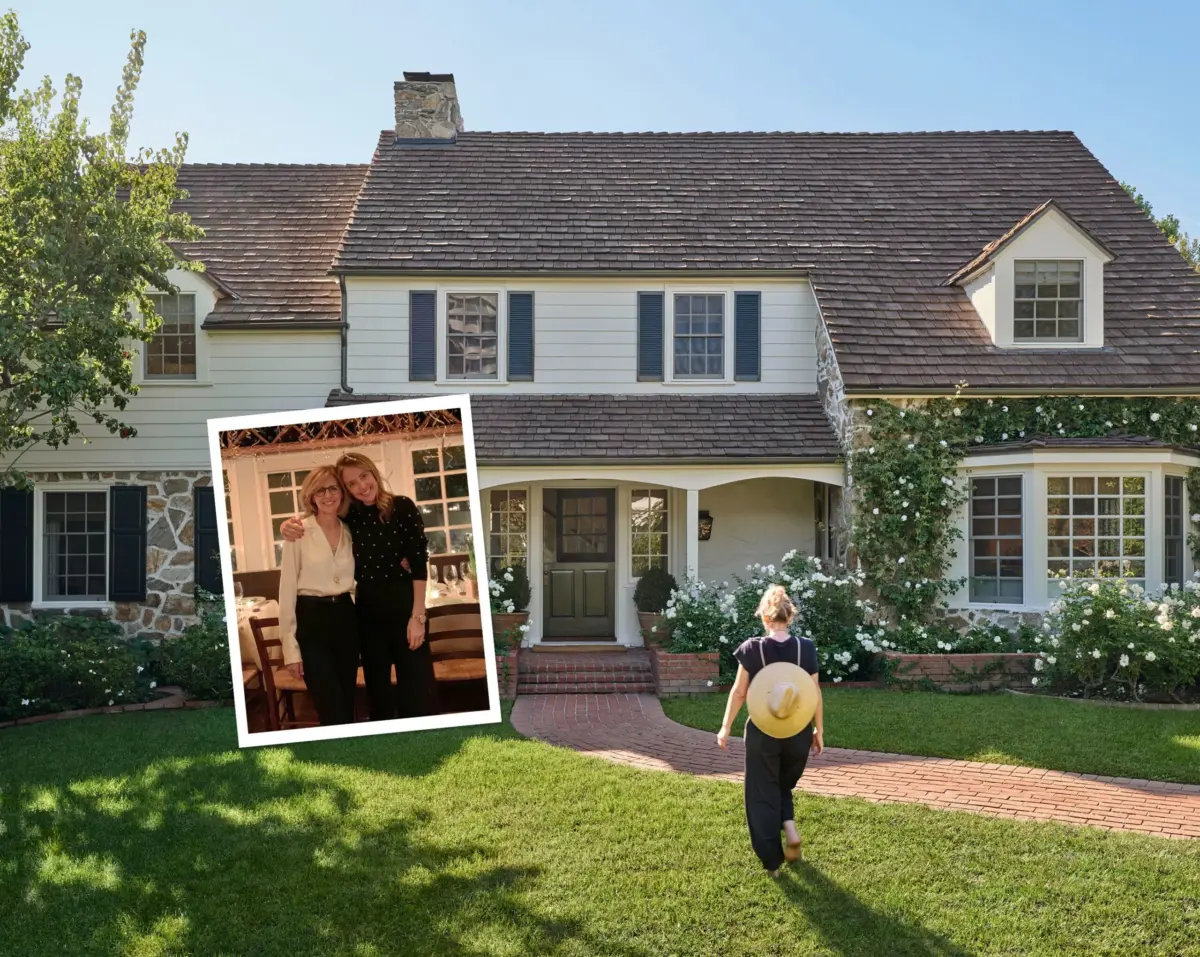
Construction on the home—a Pennsylvania Dutch-style residence originally designed by celebrated midcentury Los Angeles architect Gerard Colcord and owned by Koch’s family for over two decades—kicked off in late 2022. A few months into the rigorous building process, Annie launched the @thisoakhouse Instagram account.

Fed up with the secretive, gatekept nature of the high-end interior design world—where professionals routinely hoard product sources and paint codes—Annie decided to document her renovation transparently. What started as a casual logbook to share progress with friends and family quickly blew up. When Nancy Meyers amplified the account to her own millions of followers, calling it "a great one to follow… my daughter Annie’s adventure in remodeling a beautiful old house into a beautiful new house," the follower count skyrocketed. The public was suddenly privy to precise paint formulas, headboard dimensions, and flooring choices, launching what Annie fondly calls "a Slipper Satin revolution" (referencing Farrow & Ball’s popular off-white paint).
Moving In and Publishing the Book
After meticulous planning, structural overhauls, and countless layout adjustments, the family—including their sons, now 10 and 13—officially moved into the finished home in January 2025.

With the dust settled, Annie poured her comprehensive research, design struggles, and supplier breakdowns into This Oak House, slated for a September 15 release. The rollout coincides serendipitously with a busy creative period for Nancy Meyers, who is currently shooting her first feature film in over a decade, starring Penélope Cruz, Kieran Culkin, and Jude Law.
Supporting Data & Architectural Details
Behind the cozy, cinematic aesthetic of the Meyers-Koch residence lies serious architectural engineering. The home, imbued with historic charm by Gerard Colcord, required structural intervention to accommodate a modern family of four.

- The Layout Overhaul: Originally, one of the home’s three upstairs bedrooms was awkwardly tucked behind the primary suite, accessible only via a back staircase. Architect Brian Covington devised a brilliant solution: removing the back staircase entirely and engineering a brand-new upstairs hallway that seamlessly connects all three bedrooms.
- The Kitchen Transformation: A cramped, inefficient footprint was expanded by absorbing an old butler’s pantry, resulting in a spacious, gathering-friendly culinary zone.
- Design Specifics: The renovation balanced historic preservation with functional luxury. Original moldings were carefully removed and meticulously replicated using custom-crafted cutting knives to maintain the home’s 1940s pedigree.
- Material Palette: The home relies on warm white oak flooring, plush textiles like Le Manach cut velvet (used on the family room’s custom ottoman—dubbed the "pièce de résistance"), and classic neutral paint palettes that pay homage to traditional craftsmanship.
Official Responses and Family Dynamics
Despite cultural tropes predicting friction between mothers-in-law, mothers, and daughters collaborating on home design, the reality inside the Meyers-Shyer-Koch household is one of total harmony and creative synergy.
"You were a huge influence on my choices for this house," Annie told her mother during a recent joint interview amid their hectic schedules.

Nancy Meyers, reflecting on the project, expressed immense pride in how her daughter navigated the pitfalls of home renovation—a process Nancy knows all too well. She recalled her own first home renovation with Annie’s father, the late filmmaker Charles Shyer: "We were three months in and the contractor said, ‘I’m sorry, but I’ve spent the entire budget.’ It was like a bad movie. But Annie is wiser than we were. She made no big mistakes like that."
The creative feedback loop runs both ways. During the COVID-19 pandemic, when Nancy Meyers assumed she was effectively retired from filmmaking, she turned to Annie for fresh inspiration. She asked her daughter to hop on FaceTime for two hours to review various script ideas. Annie selected the project now filming under the tentative title Paris Paramount.

When it came to decorating the house, Nancy acted as a trusted sounding board. "She would schlep here one L.L. Bean bag after another filled with fabric samples," Nancy laughed, "and we would lay them all out on my dining room floor."
Nancy also served as the home’s ultimate creative director at critical junctures. When Annie found herself paralyzed by indecision over the kitchen color scheme, it was Nancy who delivered the clarifying perspective: "What’s wrong with a white kitchen?"

Fittingly, Nancy also selected the cover image for This Oak House—an outtake featuring Annie walking toward her front door in linen J. Crew pants, barefoot, with a Lack of Color sunhat dangling down her back. "It is adorable," Nancy insisted. "I insisted."
Implications
The success of This Oak House and the viral fascination surrounding Annie Meyers-Shyer’s renovation point to a broader cultural hunger for authenticity, transparency, and accessible nostalgia in home design.

For decades, audiences have tried to replicate the "Nancy Meyers aesthetic"—characterized by sun-drenched kitchens, oversized slipcovered sofas, copper cookware, and an undeniable sense of emotional safety and warmth. By pulling back the curtain on how a real historic home is modernized without losing its soul, Annie has democratized a design philosophy that was previously locked behind the guarded doors of elite Hollywood decorators.
Furthermore, the project highlights a powerful generational continuity in storytelling and space-making. Whether through film or interior design, the Meyers-Shyer family understands that a home is never merely a shelter; it is a character in its own right, a repository of memories, and the ultimate stage for the comedy of everyday life. As This Oak House hits shelves, it guarantees that fans can finally stop envying the movie sets of the past and start building their own cinematic realities.
