

The intersection of interior design, fashion, and contemporary art is undergoing a radical redefinition. In the October issue of Architectural Digest, leading designers, fashion houses, and emerging ceramicists are challenging preconceived notions of domestic spaces. Eschewing sterile perfectionism in favor of eclectic mixing, tactile storytelling, and historical reinterpretation, these creators are reshaping how we interact with our homes.

Below is an in-depth look at the major debuts, designer profiles, and architectural transformations defining the current landscape of interior architecture.

Main Facts: The Vanguard of Contemporary Design
The autumn design calendar is marked by cross-disciplinary collaborations and bold, personal expressions of style. Rather than adhering to rigid, single-period aesthetics, today’s leading creatives are synthesizing global influences, historical archives, and industrial elements.

- Mieke ten Have for Rejuvenation: The stylist and interior designer has launched an eclectic, pattern-happy collection of textiles, rugs, and small furnishings drawing from 19th-century Iranian carpets, Indian block prints, and ancient Roman wall paintings.
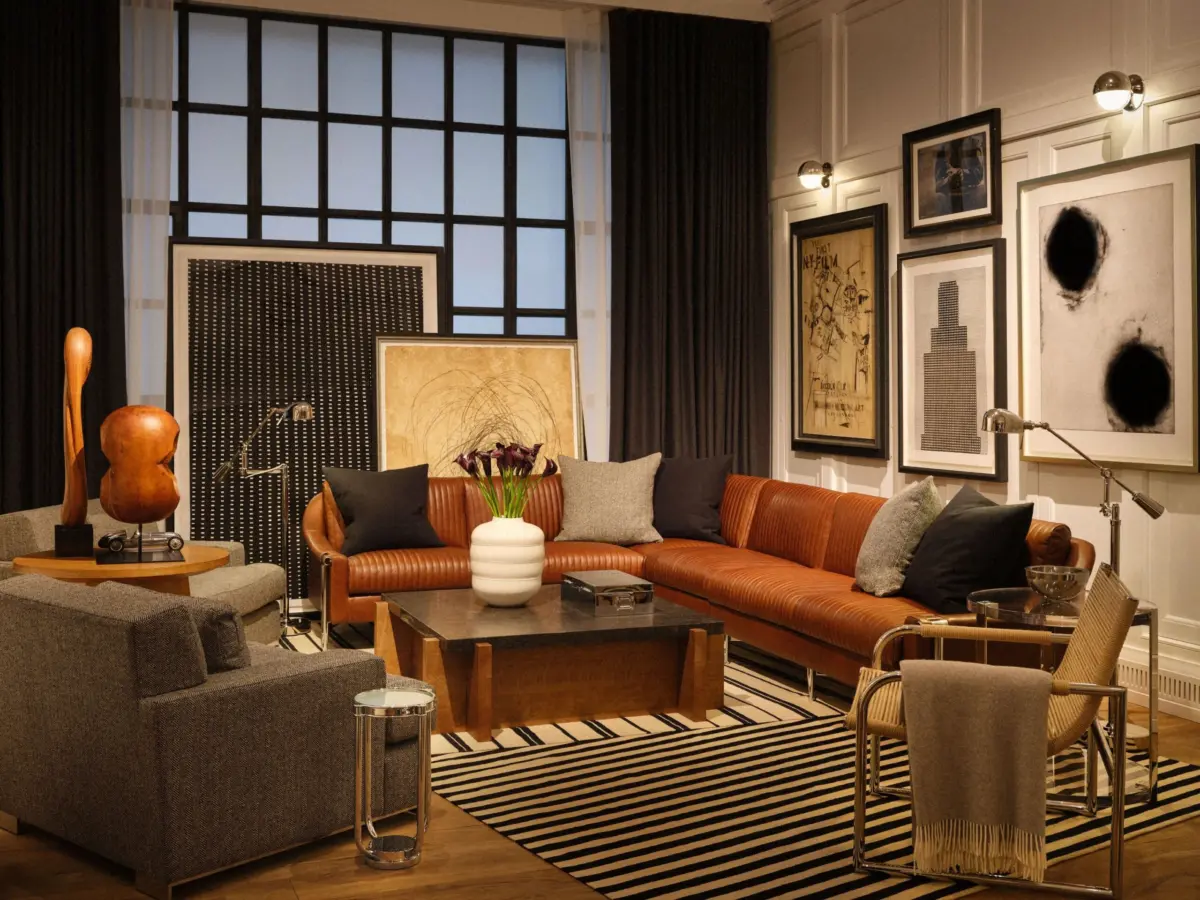
- Ralph Lauren Home’s Loft Collection: Embracing the urban, industrial energy of New York and Parisian ateliers, Ralph Lauren’s fall line pairs raw elements like chrome, leather, and Belgian Blue limestone with tactile warmth.
- Joël Brodovsky-Adams at Superhouse: The Canadian-born ceramicist’s solo show, "Like a Rumor," translates queer club culture and the amorphous nature of dance floors into vibrant, orange-glazed terracotta sculptures.
- Rio Kobayashi’s Amsterdam Music Room: Located inside Future Days Shop, this bespoke listening chamber is entirely wrapped in a complex, instrument-like marquetry of cherry, walnut, and oak.
- Dior’s Corolle Lamps: Noé Duchaufour-Lawrance has translated Christian Dior’s iconic 1947 "New Look" into portable, rechargeable lighting featuring rippled Murano glass and calfskin straps.
- Lizzie Fortunato’s SoHo Showroom: Twin sisters Lizzie and Kathryn Fortunato have transformed their Manhattan headquarters into a hybrid shiplap-clad atelier and showroom designed alongside Alexander Laing.
- Hillary Taymour x Layered: The Collina Strada founder’s first foray into home goods pairs high-octane botanical prints and plaids with sustainable hand-tufted rugs and plush couches.
- Nicholas Obeid’s Frank Collection: Channeling the geometries and restraint of Frank Lloyd Wright, the designer has introduced a line of white oak casegoods crafted in Los Angeles.
Chronology: A Timeline of New Debuts and Milestones
The current wave of design innovations follows a deliberate evolution across fashion, retail, and residential architecture over recent years:

- 1947: Christian Dior debuts his revolutionary "New Look" in Paris, establishing a sculptural silhouette with softened shoulders and a voluminous skirt that continues to inspire decorative arts today.
- 1986: Design writer Suzanne Slesin publishes The International Book of Lofts, cementing industrial urban spaces as the "interior design laboratories" of the modern era.
- Seven Years Ago: Jewelry designers Lizzie and Kathryn Fortunato lease a former law firm office on Centre Street in New York City, originally using it exclusively as a wholesale workspace.
- 2023: Musician Tomo Katsurada encounters woodworking maestro Rio Kobayashi’s veneer-clad speakers at the London Design Festival, sparking a multi-year collaboration for Future Days Shop in Amsterdam.
- September 9: Mieke ten Have officially debuts her eclectic collection of home accessories and textiles with Rejuvenation, paired with handpicked antiques.
- September 16: Fashion designer Hillary Taymour launches her debut furniture and rug collaboration with Swedish brand Layered.
- Present (Fall 2026): Major installations open across New York and Europe, including Joël Brodovsky-Adams’s "Like a Rumor" exhibition at Superhouse, running through October 17.
Supporting Data: Materials, Influences, and Craftsmanship
The materiality of the current design season emphasizes a return to rich textures, heavy handwork, and repurposed historical motifs.

- Color Stories: Mieke ten Have’s palette is deeply informed by the dusty yet saturated hues of ancient Roman wall paintings housed at The Met, alongside Japanese spider chrysanthemums and peonies grown at her Hudson Valley home. Similarly, Joël Brodovsky-Adams anchors his entire ceramic collection in a dynamic orange spectrum inspired by the cover of Robyn’s 2018 album Honey.
- Wood and Marquetry: In Amsterdam, Rio Kobayashi utilized an intricate puzzle-like arrangement of cut and spliced cherry, walnut, and oak to wrap a private music room. Nicholas Obeid’s Frank collection relies entirely on white oak rendered in high-gloss lacquer and dual ceruse finishes.
- Industrial Metals: Ralph Lauren Home’s Loft collection heavily features polished chrome structures paired with channel-tufted leather upholstery, warm woods, and stone slabs.
- Glass and Ceramics: Dior’s Corolle lamps incorporate mouth-blown, bell-shaped Murano glass available in six-and-a-half- and nine-inch heights, while Brodovsky-Adams manipulates wheel-thrown terracotta components into fluid, composite forms.
Official Responses and Creator Insights
Designers and creators are increasingly vocal about the philosophy of imperfection, utility, and emotional resonance within domestic spaces.

When discussing her rejection of overly curated interiors, Mieke ten Have noted, "I don’t like rooms that feel predictable. I’d rather something be weird than perfect." She adds that in interior design, innovation is rarely about inventing something entirely new: "In decorating there’s nothing new under the sun. It’s the way that you rework or combine things that makes it feel novel."

Joël Brodovsky-Adams drew heavily on contemporary sociological and theoretical texts when developing his ceramic works, citing José Esteban Muñoz’s Cruising Utopia and McKenzie Wark’s Raving. "She describes the dance floor as blending and edgeless," Brodovsky-Adams explains regarding Wark’s work. "I really latched onto that."

For Hillary Taymour, bridging the gap between generations was a core driver of her collaboration with Layered. "I feel like people need some liveliness in their homes, especially as Gen Z is getting older," she explains. Meanwhile, Tomo Katsurada emphasizes the acoustic and emotional impact of architectural geometry: "A room’s design shapes the way music feels. Playing here feels really cosmic."

Implications: The Future of Hybrid Spaces and Eclectic Living
The convergence of fashion, art, and interior design signals a fundamental shift in consumer behavior and spatial utility. As demonstrated by Lizzie Fortunato’s newly redesigned Manhattan headquarters and Hillary Taymour’s residential-inspired campaign shoots, the boundaries between private studio work and public-facing retail experiences are dissolving.

Furthermore, the embrace of "weirdness" over clinical perfection suggests that homeowners are looking for authenticity and emotional storytelling. By integrating historical references—whether Frank Lloyd Wright’s early-20th-century stained glass or the industrial ethos of 1980s lofts—contemporary creators are proving that modern design thrives on dialogue across time periods and global traditions. This movement away from mass-produced uniformity toward heirloom-quality, expressive mixing is poised to define residential architecture for the foreseeable future.
