

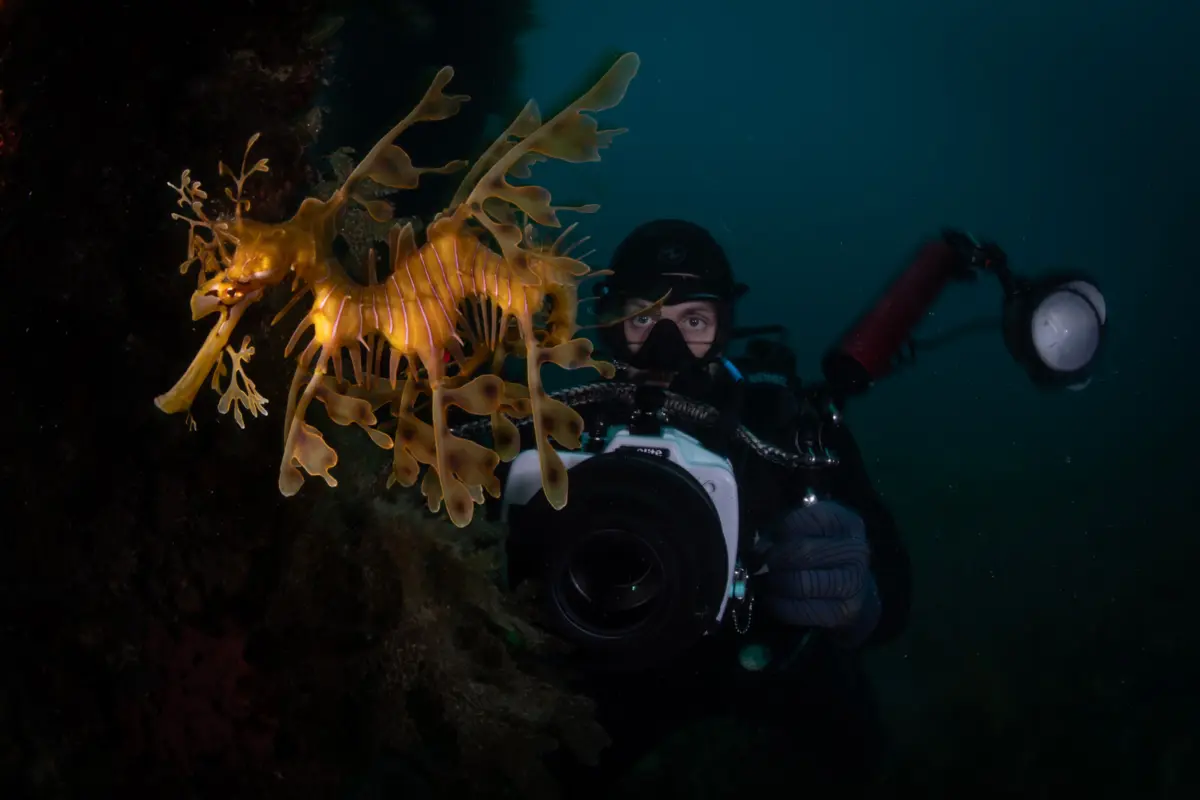
Main Facts: The Journey of an Ocean Storyteller
In the world of wildlife photography, few transitions are as dramatic as the one made by award-winning underwater photographer Rowan Dear. Growing up far from the coast on a rural Welsh farm, Dear’s early interaction with wildlife was limited to terrestrial creatures like badgers, foxes, and hedgehogs. Today, he is a globally recognized professional underwater photographer, celebrated for his breathtaking imagery of marine life—from giant cuttlefish aggregations in South Australia to leopard sharks in Byron Bay and southern right whales in Argentina.
Dear’s career challenges the conventional narrative of professional photography being an exclusive, lifelong pursuit. Embracing underwater photography as recently as 2020 after conquering a lifelong fear of water, Dear has rapidly ascended through the ranks of the industry, securing major competition wins and establishing a distinctive style defined by natural lighting, behavioural depth, and minimal post-processing.

Chronology: From Disposable Cameras to Professional Accolades
Early Inspirations and Childhood Limitations
Dear’s fascination with the natural world began in childhood, fueled by the classic BBC nature documentaries narrated by David Attenborough. Like many aspiring young conservationists, he dreamt of witnessing Earth’s most elusive ecosystems, particularly the ocean. Armed with a disposable camera, he attempted to capture the wildlife around his family farm. However, lacking professional gear, technical know-how, and financial privilege, wildlife photography initially felt like an unattainable luxury reserved for the societal elite.
Confronting Fears Down Under (2017)
A pivotal shift occurred in 2017 when Dear relocated to Sydney, Australia. Confronting a personal fear of deep water, he enrolled in scuba diving courses. This milestone opened the gateway to a hidden world, allowing him to trade terrestrial landscapes for the vibrant marine ecosystems of the Southern Hemisphere.

Diving into Professional Photography (2020)
By 2020, Dear fully transitioned into underwater photography. His early milestone images—such as a flat, uninspired shot of a giant cuttlefish taken with a newly acquired, high-end dive camera—served as a stark learning curve. Recognizing the vast gap between his early snapshots and professional standards, Dear dedicated himself to mastering camera settings, buoyancy, and marine animal behavior. Major competition wins soon followed, validating his artistic vision and cementing his transition into a full-fledged professional career.
Supporting Data: Field Craft, Locations, and Technical Evolution
Dear’s artistic evolution is deeply tied to his shooting methodology, choice of locations, and technical refinement. Transitioning away from heavy digital manipulation, his current philosophy is anchored in getting the shot right "in-camera."

The Anatomy of Modern Post-Processing
- Reduced Editing Time: Modern workflows see Dear spending only a couple of minutes per image.
- The Philosophy of In-Camera Quality: According to Dear, excessive editing—such as trying to salvage overexposed frames or digital backscatter—only draws attention to technical mistakes. If an image requires extensive rescue work in post-production, it signals the need to return to the field.
- Natural Lighting: Rejecting heavily stylized or oversaturated digital filters, Dear prioritizes abundant natural light and balanced strobe usage to preserve the authentic vibrancy of marine life.
Key Marine Locations and Gear Strategy
Dear frequently revisits specific global habitats to build long-term visual narratives:
- Whyalla, South Australia: Home to annual aggregations of over 10,000 giant cuttlefish in shallow, five-meter coastal waters. Dear utilizes a diverse lens array—ranging from wide-angle and fisheye to macro—to capture dynamic interactions, behavioral dominance displays, and shifting light columns.
- Byron Bay, New South Wales: A seasonal sanctuary for large populations of leopard sharks. This location allows Dear to experiment with perspectives, blending shallow, sunray-lit close-ups with top-down environmental compositions.
- Heron Island, Great Barrier Reef: A premier freediving destination visited during turtle hatching season (February to April). Timed precisely with peak tides, Dear documents newly hatched turtles alongside resident lemon sharks and rays.
Official Insights: In the Words of Rowan Dear
Reflecting on his journey, Dear offers profound insights into the psychological and physical hurdles of wildlife photography. When asked about his early work and the illusion of social media validation, he notes:

"It’s easy to get carried away when people are telling you that you should sell images or take photography up full time, especially in the era of social media, where likes and follows can give you a warped perspective of where you are and how good you are. Wildlife photography is also about making those opportunities happen and planning ahead…"
Addressing the unpredictability of working with marine life, Dear highlights the realities of field expeditions:

"I have been on trips to photograph minke whales where we had bad weather and zero sightings. Sometimes, it doesn’t matter how well you have planned, as nature has other ideas. You have to make do with the hand you are dealt."
Offering advice to his younger self, Dear underscores the balance between self-criticism and creative confidence:

"My main advice would be to work out where you want to get to, follow the people who inspire you and follow your instincts, create your own style, hone your craft, and always try to improve. Never be content with where you are at; be self-critical, but also appreciate the value of the work you have done and trust in your process and your ability."
Implications: The Future of Ocean Conservation and Visual Storytelling
Rowan Dear’s trajectory from an amateur enthusiast in rural Wales to an internationally acclaimed ocean storyteller carries broader implications for the fields of wildlife photography and marine conservation.

As global marine ecosystems face unprecedented pressures from climate change, industrial overfishing, and habitat degradation, visual artists play a critical frontline role in conservation advocacy. By bringing intimate, emotionally resonant portraits of cephalopods, sharks, and marine mammals to the surface, photographers like Dear bridge the psychological gap between terrestrial humanity and the vulnerable aquatic realm.
Furthermore, Dear’s career trajectory serves as an empowering blueprint for aspiring creators. By demonstrating that technical excellence can be forged through patience, rigorous field research, and self-awareness—rather than immediate privilege or inherited access—he redefines what it means to be a modern nature photographer in the digital age.
