

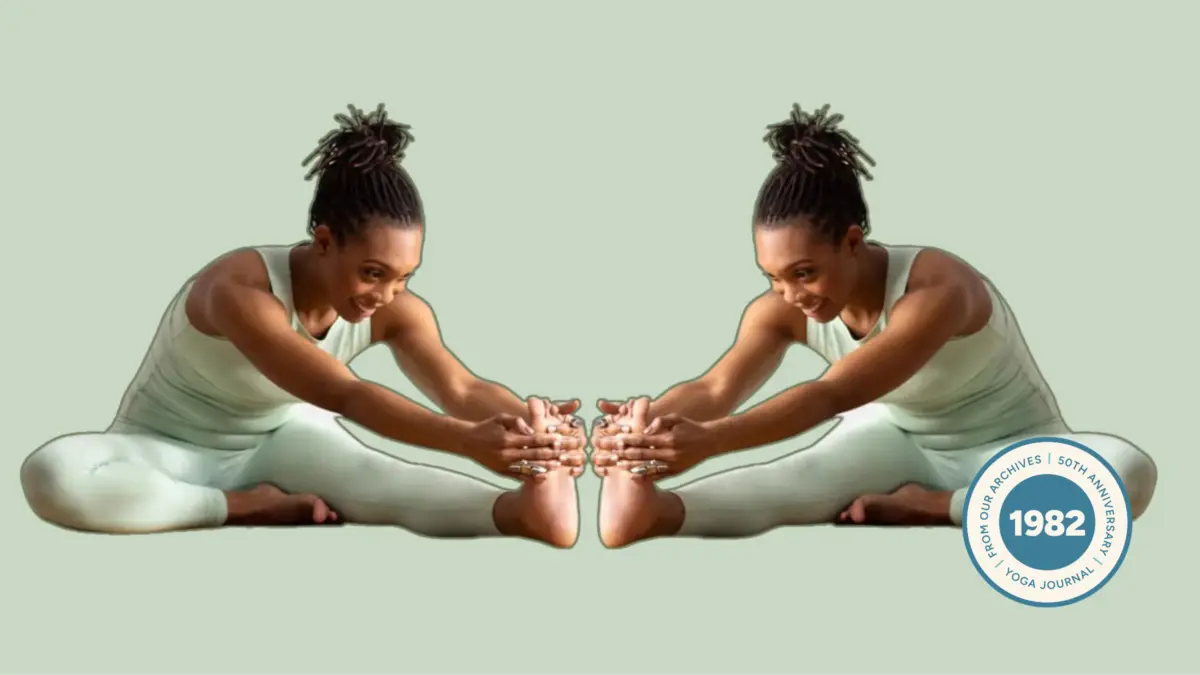
Published: August 28, 2026
Series: Yoga Journal Archives (Originally published March–April 1982)
Main Facts
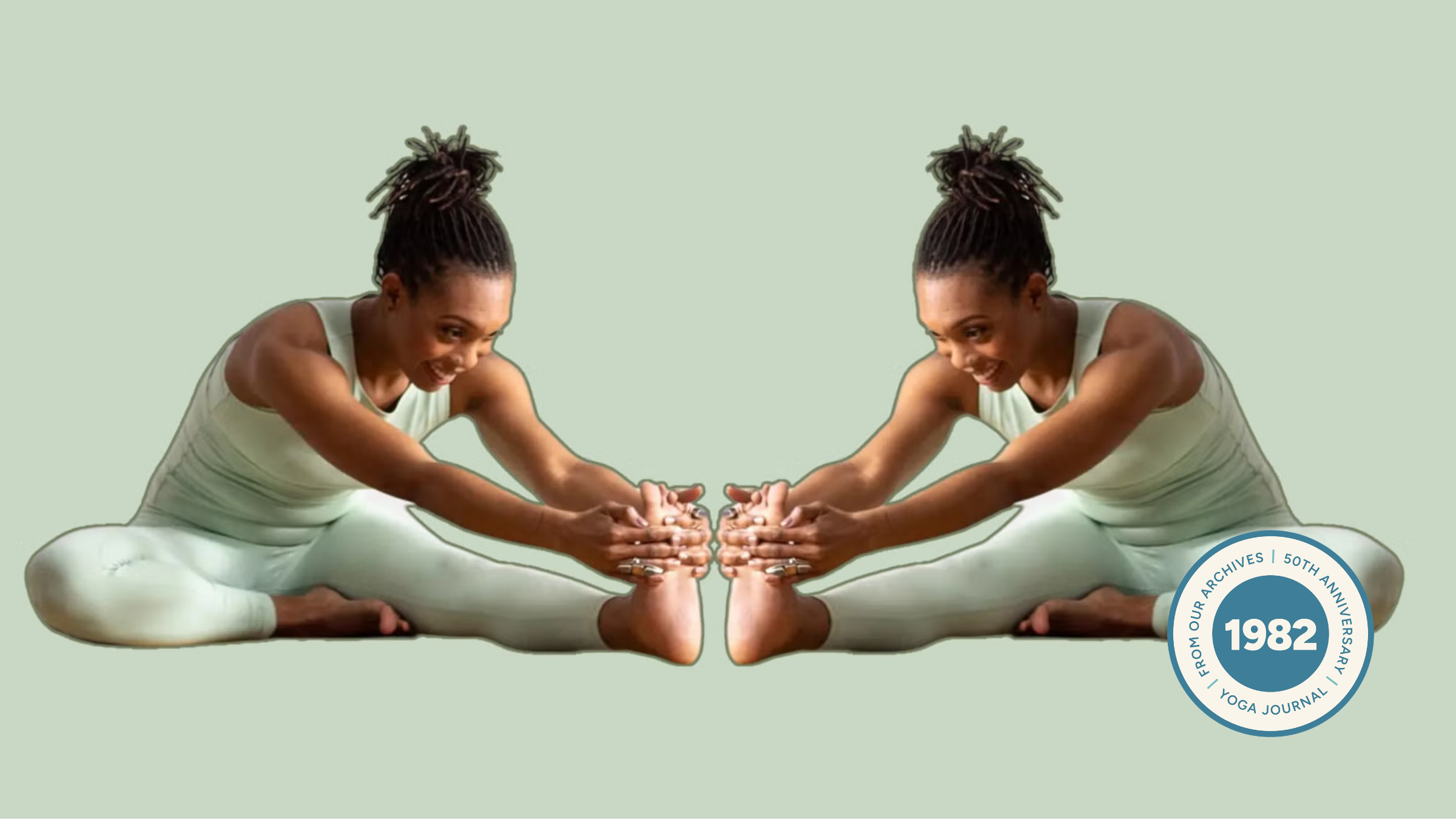
In the vast lexicon of physical yoga, few postures bridge the gap between physical mechanics and meditative introspection quite like Janu Sirsasana, commonly known as the Head-to-Knee Pose. Pronounced Ja-nu shear-SHA-sa-na, the posture derives its Sanskrit roots from janu, meaning "knee," and sirs, meaning "head." While novice practitioners often mistake the title as an instruction to cram their heads down onto their kneecaps, the true anatomical focus rests heavily on the upper leg: the kneecap is drawn up firmly throughout the movement, locking the alignment of the straight leg and anchoring the lower body.
Long before modern wellness trends popularized mindfulness, classical Hatha Yoga utilized Janu Sirsasana as a primary gateway for students to encounter deep mental stillness. When performed with mechanical precision, the posture creates an almost complete extension of the vertebral column. Rather than collapsing the torso forward—a common mistake that compromises the spinal discs—the movement initiates from the anterior (forward) rotation of the pelvis over the heads of the femurs (thigh bones). This precise pelvic pivot allows the spine to maintain its full length, shielding the central nervous system from undue mechanical stress while unlocking profound meditative focus.
Chronology
- March–April 1982: Yoga Journal publishes its foundational guide on Janu Sirsasana, detailing the delicate interplay between physical resistance, spinal alignment, and mental release.
- Decades of Practice (1980s–2020s): The architectural principles of the pose—emphasizing pelvic rotation over spinal flexion—influence generations of alignment-based yoga teachers, shifting the pedagogical focus away from "touching your toes" and toward functional spinal elongation.
- August 2026: Yoga Journal surfaces the historic manuscript in its digital Archives series, pairing the timeless text with updated photography (credited to Andrew Clark) to reintroduce classical Hatha philosophy to a contemporary audience.
Supporting Data and Anatomical Mechanics
The science of Hatha Yoga has historically placed an extraordinary emphasis on the health of the vertebral column. Modern anatomical understanding validates this ancient intuition: the spinal nerves pass laterally through foramina (openings) in the vertebrae, directly stimulating internal organs, glands, and skeletal muscles throughout the body. Any acute rotation or unnatural compression of the vertebrae can physically irritate these nerves. Furthermore, classical yogic philosophy holds that subtle misalignments along the spine can disrupt the subtle flow of energy (prana), directly altering the nature of human consciousness.
The Cycle of Resistance and Release
Practicing Janu Sirsasana introduces students to an immediate physiological dialogue with resistance. Initially, practitioners experience significant tension in the legs, with the primary sensory feedback originating from the hamstrings in the posterior thigh. Additional resistance frequently appears in the calf muscles or the lower back leg, particularly if the toes of the extended leg flare outward rather than pointing toward the ceiling.
As the body adapts to this geometry, a distinct cyclical pattern emerges:
- Initial Resistance: The student encounters physical tension and mental friction.
- The Threshold: The body reaches a peak of discomfort, demanding an act of conscious will.
- Surrender: By choosing to release into the discomfort rather than fighting it, the student experiences a sudden wave of physical release and mental quieting.
- Integration: The original internal "conflict" resolves into stillness, allowing the practitioner to move deeper into the pose.
Over months and years of consistent practice, these dramatic peaks of resistance and valleys of surrender smooth out. The practitioner learns to bypass the chaotic outer layers of tension, moving directly into the tranquil interior state that defines the ultimate goal of yoga.
Expert Guidance: The Anatomy of Discomfort
In the framework of traditional yoga instruction, discomfort serves a vital pedagogical purpose. Teachers emphasize a critical distinction between the sharp, warning pain of injury and the deep, rich physical sensation of muscular and fascial opening.
Without a physical point of intense concentration, the human mind inevitably scatters. It is virtually impossible for an untrained mind to focus on "nothing." The calculated, manageable discomfort of Janu Sirsasana provides the mind with a concrete, undeniable anchor. It forces awareness directly into the center of the posture, offering an immediate focal point that anchors wandering thoughts.
Step-by-Step Execution for Practitioners
- Establish the Foundation: Begin in Seated Staff Pose (Dandasana). The legs must be straight and together in front of you, the spine completely vertical, and the hands resting lightly on the floor near the upper thighs.
- Fold the Leg: Keeping the kneecap of the moving leg facing the ceiling, bend that knee toward your chest as far as comfortable. Let the entire leg drop outward to the side, placing the sole of the foot against the inner thigh of the opposite, straight leg. (For beginners, the legs should form a 90-degree right angle; intermediate practitioners can widen this angle into an obtuse shape).
- Lift and Lengthen: Place your hands behind your back. On an exhalation, use your arms to help lift the spine upward. Avoid hiking your shoulders toward your ears. The primary mechanical emphasis must remain on rolling the pelvis forward.
- Maintain the Lumbar Curve: Ensure the lower back (lumbar region) does not round outward. It should preserve its natural lordotic curve, moving inward toward the front of the body. (Students with chronically tight hamstrings may sit on a firmly rolled yoga mat or blanket to assist this forward pelvic tilt).
- Reaching Forward: Place your hands on the knee, shin, or foot of the extended leg. Exhale to roll the pelvis further forward while stretching the spine upward. Keep the extended leg’s knee tight and slightly turned inward, with the foot held neutrally between flexed and pointed, toes freely extended.
- Duration: Hold the posture for several calm, measured breaths, gradually building endurance over time. Advanced students frequently hold the pose for 5 to 10 minutes per side before slowly releasing and repeating on the alternate leg.
Implications for Modern Teaching and Practice
Revisiting this 1982 archive text offers a profound corrective for modern fitness-culture approaches to yoga, which often prioritize aesthetic flexibility—such as touching the forehead directly to the knee—over structural integrity.
A Note for Instructors
For students struggling with tight hamstrings, teachers must pivot away from goal-oriented stretching. Instructors should advise students to prioritize vertical elongation over forward reach. Utilizing a yoga strap looped around the foot can help learners maintain an upward spinal lift while slowly introducing forward momentum. If a student pulls too aggressively from the lower back, the middle back muscles inevitably lock up with excess tension, defeating the meditative purpose of the asana.
Furthermore, as students advance from a 90-degree leg angle to a wider, obtuse configuration, the mechanical difficulty multiplies. The practitioner is forced to combat not only hamstring resistance but also an inherent spinal twist generated by opening the leg wider. By mastering these intricate physical mechanics, instructors ensure that Janu Sirsasana remains what it was always intended to be: a moving meditation that transforms physical friction into profound, enduring inner stillness.
