

Published August 11, 2026
In the modern digital landscape, anxiety often manifests as a physical and psychological sensation akin to a shaken-up snow globe—a chaotic flurry where thoughts, deadlines, digital notifications, and physiological stress responses swirl indiscriminately. For millions navigating fast-paced environments, this state of chronic hyperarousal has become an unwanted baseline. However, emerging wellness methodologies and ancient somatic practices point toward a remarkably accessible antidote: intentional breathwork.
Designed by yoga instructor Daria LeGrand, a specialized 13-minute guided breathing session offers a practical framework to let the "snow" settle, returning the nervous system to a state of equilibrium. By anchoring awareness in internal sensations, utilizing color-based visualization, and practicing structured breath control, individuals can interrupt the spiral of overwhelm and cultivate a profound sense of inner stillness.
Main Facts
The contemporary lifestyle is heavily laden with cognitive friction. Restless and anxious states frequently arise when individuals become systematically disconnected from their biological breath and internal worlds. Chronic exposure to high-stress triggers—ranging from hyper-connectivity on social media and persistent sleep deficits to lapses in foundational self-care—can push the autonomic nervous system into a state of continuous sympathetic activation (fight-or-flight).
To counter this, LeGrand’s 13-minute protocol synthesizes three core modalities:
- Internal Check-Ins: Cultivating interoception—the ability to perceive internal bodily signals—to assess stress levels without judgment.
- Color-Based Visualization: Engaging the imagination to assign soothing hues to the breath, thereby distracting the mind from catastrophic thought loops.
- Box Breathing (Pranayama/Sama Vritti): Regulating the autonomic nervous system through equal-ratio inhalation, retention, exhalation, and suspension.
The primary objective of the session is not to force the mind blank, but rather to establish comfort, ease, and physiological regulation through supportive props and rhythmic breathing patterns.
Chronology: The 13-Minute Guided Protocol
To maximize the efficacy of the session, practitioners are encouraged to progress through a structured sequence that moves from physical grounding to active regulation, and finally to integration.
Phase 1: Preparation and Settling (Minutes 1–3)
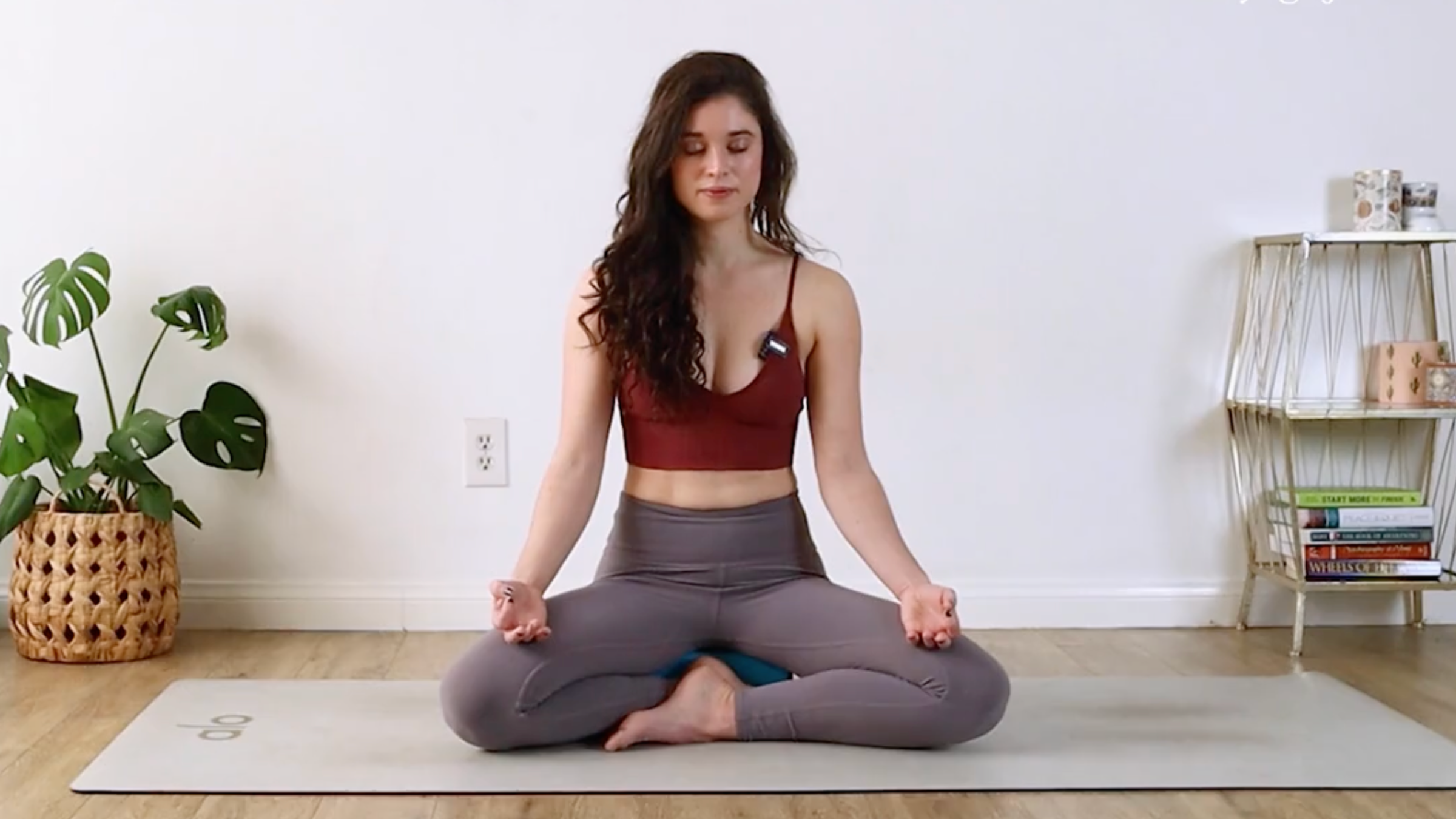
The session begins with environment and posture optimization. Participants gather preferred props—such as yoga blocks, bolsters, or folded blankets—to support the body in either a seated or prone position.
- Supported Easy Pose: If seated, practitioners place a block or firm pillow beneath the sit bones to elevate the hips, mitigating lower back strain and allowing the spine to elongate naturally.
- Hand Placement and Mudra: Hands rest on the thighs, palms facing upward in a gesture of receptivity, with the index fingers gently touching the thumbs.
- The Gaze: Eyes are closed to minimize visual stimuli, allowing the practitioner to drop inward and settle into the physical support of the earth.
- Initial Observation: Participants are guided to observe their natural, unforced breathing patterns and acknowledge any emotional or physical turbulence arising in stillness.
Phase 2: Visualization and Deepening (Minutes 4–5)
As the body begins to anchor, the practice introduces imaginative elements to deepen relaxation.
- Color Association: Practitioners are instructed to imagine their breath possessing a specific color—a visual frequency that feels inherently soothing and restorative to them.
- Deepening Inhalation: With every inhalation, the mind tracks this soothing color filling the torso. With every exhalation, practitioners consciously release muscular tension, dropping heavier into their seat or support props.
Phase 3: The Core Practice—Box Breathing (Minutes 6–11)
The centerpiece of the 13-minute session is box breathing, a powerful somatic tool utilized by athletes, military personnel, and clinicians to rapidly down-regulate the nervous system.
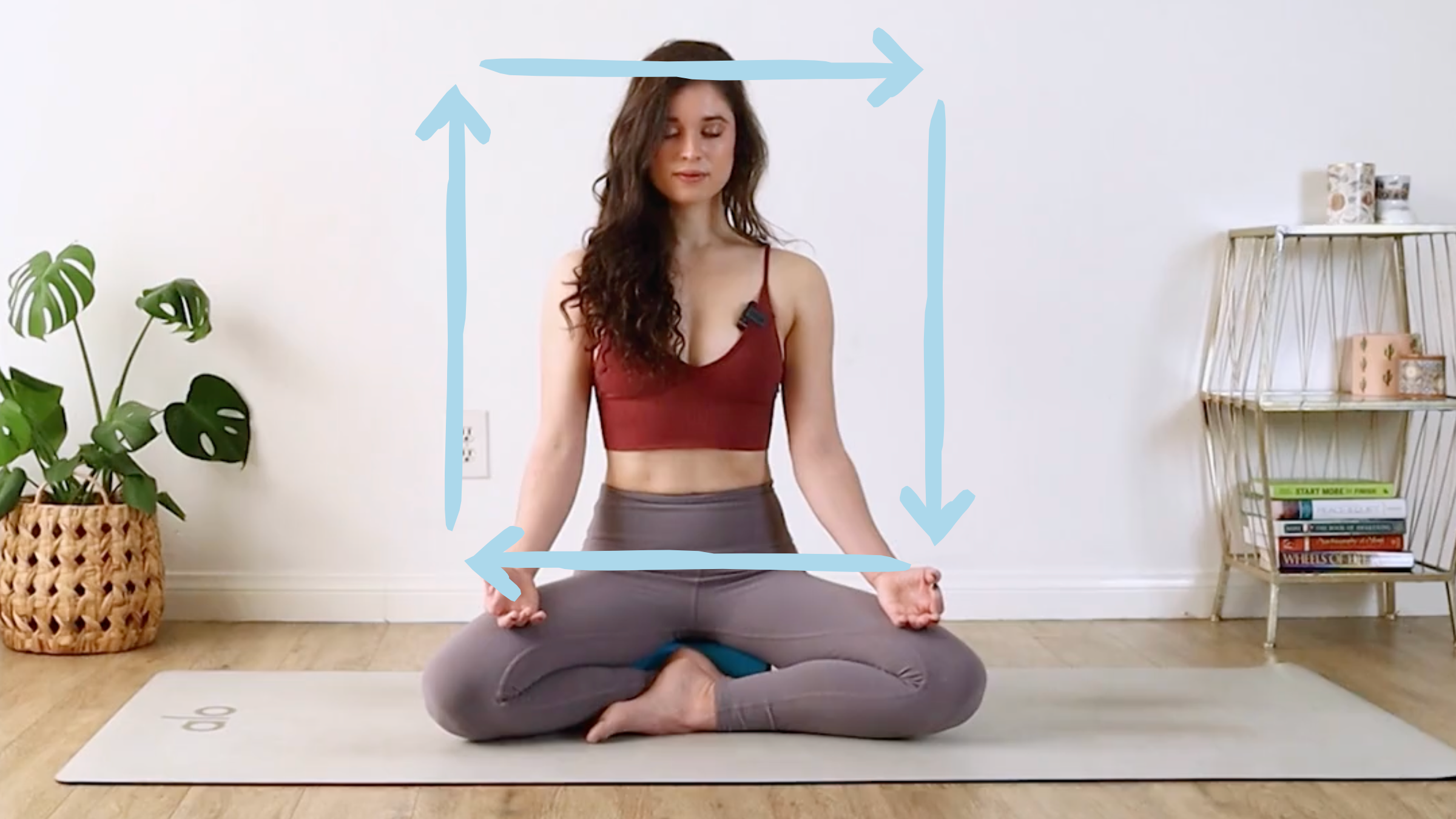
Box breathing, or Sama Vritti (equal fluctuations), is defined by four distinct phases of equal duration:
- The Inhalation: Drawing air slowly and steadily through the nose.
- The Top Retention: Pausing with the lungs comfortably full of air.
- The Exhalation: Releasing the air smoothly and completely.
- The Bottom Retention: Pausing with the lungs empty before the next cycle.
- Pacing the Count: The exercise begins with a modest count of three for each of the four sides of the "box." After establishing rhythm and comfort, practitioners naturally lengthen the count to four, and eventually to five if it remains accessible and strain-free.
- Sustained Awareness: This phase spans several minutes, requiring the individual to tether their cognitive focus entirely to the numerical count and the physical sensations of airflow, effectively blocking out external stressors.
Phase 4: Integration and Closing (Minutes 12–13)
The final minutes of the session transition the practitioner from active control back to integration.
- Return to Intuitive Breathing: Box breathing is released, allowing the breath to return to its natural, unmanaged cadence while the practitioner observes shifts in their physical and mental landscape.
- Intention Setting: Participants formulate a micro-intention to carry into the remainder of their day, often centered on radiating the newly cultivated calm.
- Clearing Breath and Bowing: The session concludes with a deep, audible sigh through the mouth. Practitioners bring their hands to heart center in Anjali Mudra, bow their head in self-gratitude for dedicating time to mental well-being, and gently open their eyes.
Supporting Data and Somatic Science
While ancient traditions have utilized breath regulation for millennia, modern neuroscience and psychophysiology increasingly validate the mechanisms behind practices like box breathing.
- The Vagus Nerve Connection: Controlled, rhythmic breathing—particularly prolonged exhalations and breath retention—stimulates the vagus nerve, which serves as the primary driver of the parasympathetic nervous system (the "rest-and-digest" mechanism). This stimulation reduces heart rate variability, lowers blood pressure, and decreases circulating cortisol levels.
- Cognitive Interruption: Clinical data on mindfulness-based interventions show that visualization and tactile focus (such as finger-touch mudras and counting boxes) actively engage the prefrontal cortex. This down-regulates the amygdala, the brain’s emotional processing center responsible for initiating the fight-or-flight panic response.
- Digital Overload Metrics: Studies tracking screen time and stress correlations indicate that continuous micro-interruptions from mobile devices trap the user in a state of low-grade, chronic sympathetic arousal. Interventions under 15 minutes—such as LeGrand’s protocol—demonstrate high compliance rates and measurable subjective reductions in acute anxiety symptoms among working professionals.
Official Responses and Expert Insights
Wellness experts, somatic therapists, and yoga educators have increasingly emphasized the necessity of micro-interventions in combating modern mental health hurdles.
"When anxiety takes hold, individuals often feel entirely powerless, trapped inside a runaway train of catastrophic thinking," notes Daria LeGrand. "Breathwork is not about stopping the thoughts from coming; it’s about changing your relationship to them. By providing the mind with a structured task—like counting a box breath or visualizing a soothing color—we reclaim agency over our physiological state in real time."
Clinical psychologists support this perspective, noting that somatic techniques bridge the gap between cognitive therapy and physiological regulation. Traditional talk therapy can sometimes stall when a patient is actively dysregulated; physical practices like breathwork act as a prerequisite physical reset, enabling deeper psychological processing. Furthermore, public health advocates praise the accessibility of 13-minute protocols, noting that they require zero financial investment, specialized gym memberships, or complex equipment—only a quiet space and a willingness to pause.
Implications for Daily Life and Long-Term Well-Being
The integration of short-form, structured breathwork into daily routines carries profound implications for personal and collective wellness.
1. Shift from Reactivity to Response
Chronic anxiety conditions individuals to react impulsively to minor stressors, viewing routine challenges as existential threats. Daily engagement with protocols like box breathing builds a psychological buffer—a neurological pause button that transforms knee-jerk reactivity into measured, conscious responses.
2. Democratization of Mental Health Care
As rates of generalized anxiety disorder climb globally, reliance solely on clinical interventions is logistically unsustainable. Accessible, self-administered modalities such as guided breathwork empower individuals to manage sub-clinical anxiety autonomously, reducing the burden on healthcare systems while providing immediate relief in moments of crisis.
3. Redefining Productivity Through Rest
In professional cultures that historically glorified burnout, practices that champion stillness and "coming home to the breath" challenge the paradigm of constant output. By demonstrating that 13 minutes of intentional pause can dramatically improve focus, emotional regulation, and cognitive clarity, breathwork reframes rest not as a luxury or a reward, but as an essential performance and health metric.
Ultimately, while the modern snow globe of life will continue to shake, tools like Daria LeGrand’s guided breathing exercise remind us that we possess an internal anchor capable of restoring clarity, calm, and equilibrium whenever the storm picks up.
