


By the Editorial Desk
Published: September 2025
Main Facts: Unlocking the Next Level of Photographic Polish
Every working photographer is familiar with a particular brand of frustration: looking at an image that checks every technical box yet somehow feels entirely lifeless. The exposure histogram is balanced, the focus point is surgically sharp, and the rule of thirds has been applied with precision. Yet, the final frame falls flat, lacking the emotional gravity that separates a standard snapshot from a captivating work of art.
According to industry veterans, the missing ingredient is rarely a complete overhaul of the RAW file. Instead, it comes down to nuanced, sophisticated finishing touches.
In the modern digital darkroom, software developers are increasingly focusing on localized, intelligent color science rather than blunt-force saturation. Skylum’s flagship editing ecosystem, Luminar Neo, has positioned itself at the forefront of this philosophy. Hidden within its extensive Professional Tools suite lies a feature that many users initially overlook: Color Harmony.

When paired with targeted vignette control and efficient preset workflows, Color Harmony provides photographers with the exact microscopic control needed to pivot a dull image into a stunning, gallery-ready visual statement—all without sacrificing the natural integrity of the scene.
Chronology: The Evolution of Non-Destructive Color Grading in Software
To understand the significance of tools like Color Harmony in modern applications like Luminar Neo, it helps to examine how digital post-processing has evolved over the last two decades.
- The Early 2000s (The Global Adjustment Era): Digital editing relied heavily on global sliders. Adjusting saturation, contrast, or color balance affected the entire pixel grid uniformly, often leading to clipped highlights, oversaturated skin tones, and heavy-handed digital artifacts.
- The 2010s (The Rise of Selective Masking): The introduction of advanced brush tools, radial filters, and basic luminosity masks allowed photographers to isolate specific tonal ranges. While powerful, this workflow was labor-intensive, often requiring hours of tedious masking to achieve balanced color interaction.
- The AI and Algorithmic Era (2020s–Present): Software developers shifted toward context-aware intelligence. Rather than forcing photographers to manually calculate complementary color palettes, modern platforms introduced algorithmic tools capable of analyzing image luminance, shadow distribution, and color relationships in real-time.
- The Introduction of Luminar Neo’s Color Harmony: Designed to bridge the gap between complex Hollywood-style color grading and everyday enthusiast workflows, the Color Harmony module was engineered to give creators granular control over brilliance, warmth, split tones, and color contrast without demanding an advanced degree in color theory.
Supporting Data and Technical Breakdown: Mastering Color Harmony
The Color Harmony tool in Luminar Neo is not built for drastic, surreal color replacements. Instead, its architecture focuses on subtle, mathematical relationships between hues, saturation levels, and tonal zones. A deep dive into its core sub-sections reveals how professional editors leverage the tool to guide the human eye.
1. Brilliance and Warmth: The Gentle Touch
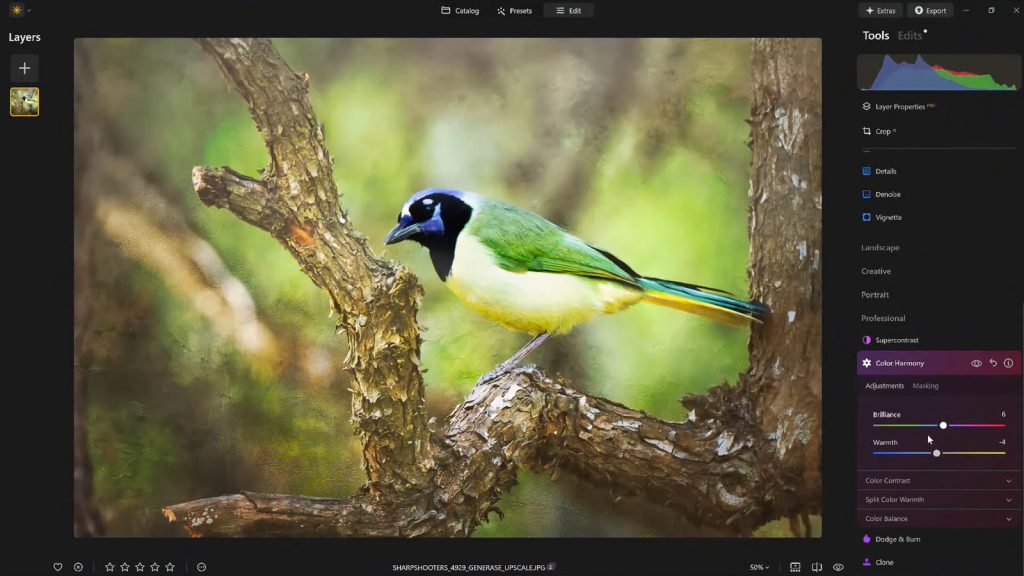
Traditional saturation boosts amplify all colors equally, frequently destroying delicate skin tones or subtle foliage gradients. Brilliance, by contrast, operates with a lighter hand. It intelligently elevates under-saturated tones while protecting already vibrant areas from clipping.

When paired with the Warmth slider, photographers can infuse a scene with a golden-hour atmosphere or cool it down into an atmospheric blue-hour mood. The key, according to editing experts, is emotional alignment: the warmth of the digital canvas must match the physical lighting conditions captured in the field.
2. Color Contrast and Split Warmth
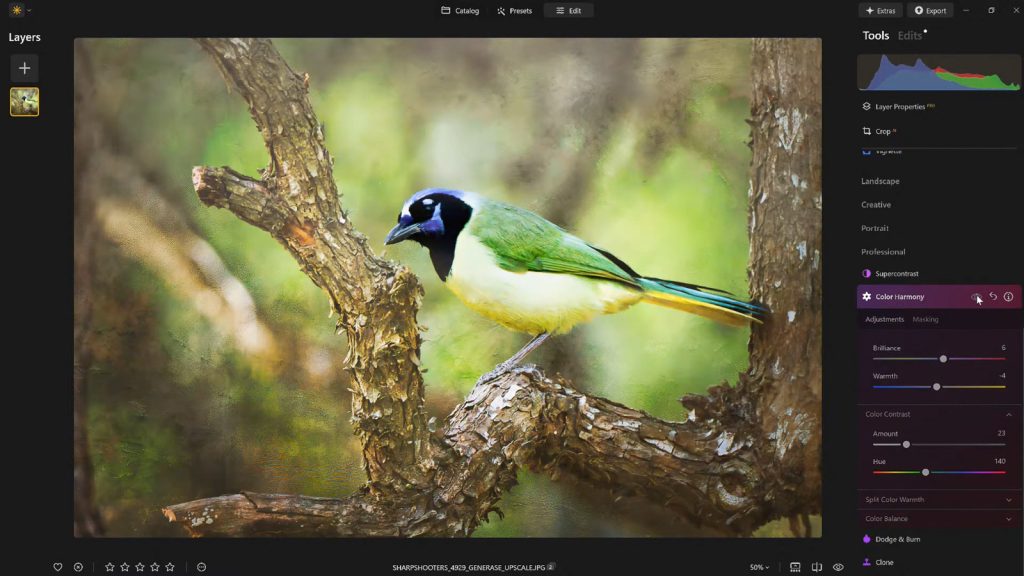
Visual tension is what keeps a viewer’s eye moving across a frame. Color Contrast increases the dynamic push-and-pull between opposing color ranges—particularly between warm highlights and cool shadows.
Meanwhile, Split Warmth grants creators the ability to bifurcate their lighting adjustments. This is particularly useful in complex mixed-lighting scenarios, such as a landscape lit by both warm setting sun and cool ambient shade, allowing for clean color separation in layered compositions.
3. Color Balance: Shadows, Midtones, and Highlights
Perhaps the most powerful feature within the suite is the three-tier Color Balance control. By separating adjustments into shadows, midtones, and highlights, photographers can execute targeted color grading. Shifting midtones slightly toward a desired hue can instantly make a portrait look more natural or give an architectural landscape an inviting cinematic atmosphere.

Official Responses and Industry Perspectives: Insights from Skylum’s Leadership
The philosophy behind Luminar Neo’s design is rooted in the belief that software should accelerate creativity rather than complicate it. Vanelli, an accomplished photographer, author, and the Director of Education at Skylum, frequently emphasizes the importance of restraint in post-processing.
"What sets apart a truly compelling image often isn’t a dramatic change—it’s a handful of carefully considered enhancements," Vanelli explains. "Photographers spend hours in the field capturing the right light. The digital darkroom shouldn’t destroy that reality; it should honor it, elevate it, and guide the viewer’s emotional response."
Vanelli, whose transition from a Triple Crown Karate champion to a leading visual arts educator has given him a unique perspective on discipline and mastery, notes that many developing photographers fall into the trap of over-editing.
"After staring at an image for an hour, your eyes adjust, and you can easily push sliders too far," Vanelli notes. "That’s why developing a systematic workflow—utilizing saved presets, stepping away from the screen, and returning with fresh eyes—is critical to professional-grade results."
Implications: The Future of Efficient, High-End Photo Editing
As digital camera sensors continue to capture higher dynamic ranges and staggering resolutions, the volume of data photographers must manage on a daily basis is skyrocketing. The implications of tools like Luminar Neo’s Color Harmony extend far beyond simple aesthetic improvements; they represent a fundamental shift toward operational efficiency.
1. Streamlining Commercial and Nature Workflows
For nature and landscape photographers working in rapidly changing outdoor environments, time is of the essence. Features that allow for fast, precise tonal adjustments reduce editing times significantly, allowing professionals to deliver polished galleries to clients faster.
2. The Power of Preset Re-Evaluation
A major bottleneck in digital editing is consistency across a portfolio or client delivery set. By saving custom Color Harmony profiles as presets, photographers establish a standardized baseline. Furthermore, this workflow introduces a safety net against over-processing: creators can reapply a favorite preset at a reduced opacity (such as 70% to 80%), retaining the foundational aesthetic while dialing back aggressive enhancements.
3. Democratizing Advanced Color Grading
Historically, cinematic color grading was the exclusive domain of high-end video colorists utilizing expensive node-based software. By packaging these advanced separation and balance controls into an intuitive, user-friendly interface, software suites like Luminar Neo are democratizing professional-grade post-processing for enthusiasts and semi-professional creators worldwide.
Conclusion and Special Offer
Transforming a dull photograph into a stunning visual narrative does not require complicated masking or hours of manual pixel manipulation. By mastering tools like Color Harmony, implementing thoughtful vignette control to guide the viewer’s eye, and maintaining editorial restraint, photographers can achieve professional polish with minimal friction.
For creators looking to upgrade their post-processing toolkit, Luminar Neo offers a compelling balance of AI-driven efficiency and manual artistic control. Readers interested in trying the software can take advantage of an exclusive 10% discount by using the promo code NATURETTL at checkout on the official Skylum platform.
