

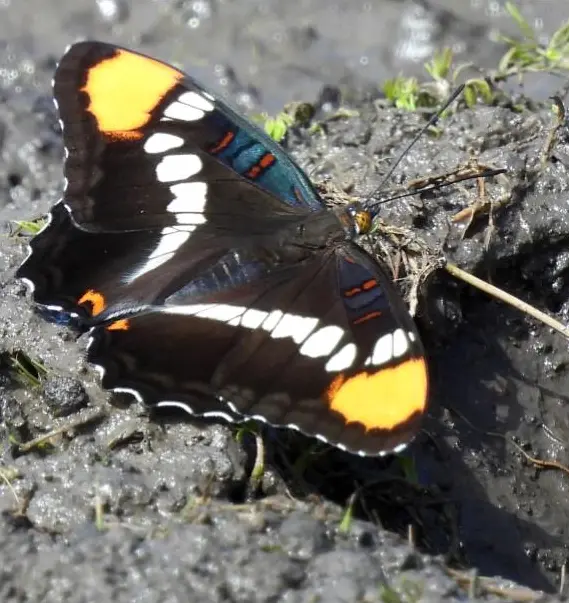
SEDONA, Ariz. — In a significant milestone for regional conservation and community-driven ecological education, the city of Sedona, in partnership with the Butterfly Enthusiasts of Northern Arizona (BENA), has announced the staging of the inaugural Sedona Butterfly Festival. The event is scheduled to take place on Saturday, September 12, from 9:00 a.m. to 12:00 p.m. at the Sedona Wetlands Preserve.
Designed to foster environmental stewardship and highlight the rich biodiversity of the Verde Valley, the festival will offer a range of public activities, including educational exhibits, native plant vendors, citizen science demonstrations, and interactive family programming. The event represents a collaborative effort between local government authorities and grassroots environmental organizations to integrate ecological awareness into the municipal framework of Sedona.
Main Facts: The Inaugural Sedona Butterfly Festival
The Sedona Butterfly Festival represents a major step forward in local conservation outreach, bridging the gap between scientific research and public participation. Organized primarily by the Butterfly Enthusiasts of Northern Arizona (BENA) and supported by the Sedona Parks and Recreation Department, the event aims to transform public interest in lepidoptera into actionable conservation practices.
Key Event Details
- Date: Saturday, September 12
- Time: 9:00 a.m. to 12:00 p.m.
- Location: Sedona Wetlands Preserve (located west of the city limits)
- Admission: Free and open to the public
- Key Activities: Butterfly tagging demonstrations, a biodiversity scavenger hunt, native plant sales, and educational booths hosted by regional environmental organizations.
Key Organizations and Personnel
- Butterfly Enthusiasts of Northern Arizona (BENA): A grassroots nonprofit organization co-founded in February 2025 by local naturalists Becky Hardy and Denise Gibbs, dedicated to the study, preservation, and celebration of northern Arizona’s butterfly populations.
- Sedona Parks and Recreation Department: The municipal division facilitating the event under its "pop-ortunity" program, represented by Athletics and Aquatics Supervisor Kimberly Sager and Special Events Coordinator Jason Vargo.
- Southwest Monarch Study: A regional scientific organization partnering to provide training, resources, and tracking tags for monarch butterfly monitoring.
- Monarch Conservation Fund: A conservation group providing biological data and research parameters regarding monarch reproductive cycles and migratory pathways.
The primary venue, the Sedona Wetlands Preserve, is uniquely suited for the festival. Originally developed as a multi-functional municipal site, the preserve has evolved into a vital sanctuary for migratory birds, insects, and native flora. By hosting the festival at this location, organizers hope to raise awareness of the preserve’s role as an ecological haven within the high-desert landscape of northern Arizona.
Chronology: From Grassroots Concept to Community Celebration
The journey toward establishing a dedicated butterfly festival in Sedona is a testament to the rapid growth of local environmental advocacy. The timeline of this initiative spans several years of cataloging, organizing, and municipal collaboration.
[2018] Denise Gibbs begins cataloging local butterfly species (101 species identified).
  │
  └───► [Feb 2025] Becky Hardy and Denise Gibbs co-found BENA.
          │
          └───► [Mid-2026] Sedona Parks & Rec invites BENA to host a "pop-ortunity" event.
                  │
                  └───► [Sept 12] The Inaugural Sedona Butterfly Festival is launched.
2018–2024: Establishing the Baseline
In 2018, naturalist Denise Gibbs relocated to the Verde Valley and began a systematic effort to catalog the region’s butterfly species. At the start of her survey, she documented 101 distinct species. Over the subsequent six years, Gibbs and a growing network of local observers continued to monitor sightings, establishing a robust database of local lepidoptera populations and identifying critical habitats.
February 2025: The Founding of BENA
Recognizing the need for a structured organization to channel community interest, Becky Hardy and Denise Gibbs co-founded the Butterfly Enthusiasts of Northern Arizona (BENA) in February 2025. Upon the group’s founding, Hardy set a long-term strategic goal: to organize and execute a comprehensive regional butterfly festival within five years.
Late Summer 2026: Municipal Outreach
Approximately 19 months after BENA’s inception—far ahead of Hardy’s original five-year timeline—the Sedona Parks and Recreation Department reached out to the group. Seeking to expand its community-oriented programming, the city proposed a short family field trip or "pop-up" event at the wetlands. Hardy, envisioning a larger platform for conservation education, proposed expanding the concept into a full-scale festival, a proposal the city enthusiastically accepted.
September 12: Festival Day Schedule
The festival is structured to maximize educational engagement within a condensed three-hour window:
- 9:00 a.m.: Festival gates open; native plant sales and the family scavenger hunt begin.
- 9:30 a.m.: First interactive butterfly tagging demonstration, led by regional experts.
- 11:00 a.m.: Second butterfly tagging demonstration, focusing on citizen science registration.
- 12:00 p.m.: Festival concludes, with resources distributed for home-based conservation efforts.
Supporting Data: Biodiversity, Migration, and the Science of Lepidopterology
The ecological significance of the Sedona Butterfly Festival is supported by concrete biological data collected by regional researchers. The Verde Valley serves as a crucial corridor for both resident and migratory butterfly species.
Expanding Biodiversity Metrics
Since Denise Gibbs began cataloging species in 2018, the documented diversity of butterflies in the region has risen consistently.
| Year | Documented Butterfly Species (Verde Valley/Sedona) | Source / Status |
|---|---|---|
| 2018 | 101 species | Initial cataloging by Denise Gibbs |
| 2025 | 120+ species | BENA internal databases |
| Current | 127 species | Pending expert verification of latest sighting |
This upward trend of nearly 26% in documented species richness highlights the importance of ongoing field observations and suggests that the microclimates of the Verde Valley may be supporting species previously unrecorded in the area.
"Puddling" and Reproductive Biology
Among the local species of interest is the Arizona sister (Adelpha eulalia), a striking butterfly known for its distinctive orange-tipped wings. Visitors to the wetlands are likely to observe these butterflies engaging in "puddling"—a behavior where males gather on moist soil or wet sand to extract essential minerals.
[Moist Soil / Wet Sand] ──► [Male Butterfly absorbs Sodium & Amino Acids]
                                   │
                                   ▼
[Nuptial Gift transferred to Female] ──► [Enhanced Egg Viability & Reproduction]
This behavior is critical to reproductive success:
- Nutrient Acquisition: Males extract sodium, amino acids, and other trace minerals from damp earth.
- The Nuptial Gift: During mating, the male transfers these nutrients to the female as a spermatophore, which directly enhances egg viability and reproductive longevity.
- Pheromone Production: Some species utilize these gathered minerals to synthesize courtship pheromones, which are emitted to attract females during flight.
Shifting Migration Patterns
Data collected by the Southwest Monarch Study indicates that monarch (Danaus plexippus) migration windows in northern Arizona are undergoing subtle shifts. Historically, the first wave of southward-bound monarchs appeared in the Verde Valley during mid-to-late July. In recent years, however, this arrival window has shifted later, with the first confirmed reports now occurring in early August.
Once they arrive, these monarchs utilize local milkweed (Asclepias) species to lay eggs. These eggs hatch within a rapid three-to-five-day window. The emerging caterpillars feed, pupate, and emerge as the "super generation"—the long-lived butterflies that will undertake the arduous journey to overwintering sites along the central coast of California or the high-altitude oyamel fir forests of central Mexico.
Conversely, some species display localized migration patterns driven by temperature sensitivity. The clouded sulphur (Colias philodice), which is highly sensitive to extreme desert heat, exhibits a reverse migration pattern. During the late summer heat, populations of clouded sulphurs migrate northward to higher, cooler elevations to maintain thermal homeostasis.
The Technology of Tracking: Sticker vs. Radio Tagging
To monitor these complex movements, researchers employ two distinct tagging methodologies:
┌─────────────────────────────────────────────────────────┐
│                    TAGGING METHODOLOGIES                │
├────────────────────────────┬────────────────────────────┤
│       STICKER TAGGING      │        RADIO TAGGING       │
├────────────────────────────┼────────────────────────────┤
│ • Lightweight adhesive     │ • Active micro-transmitters│
│ • Applied to hindwing cell │ • Emits VHF signals        │
│ • Low-cost, high community │ • Requires specific insect │
│   participation            │   weight & wing size       │
└────────────────────────────┴────────────────────────────┘- Sticker Tagging: This widely accessible method involves placing a tiny, ultra-lightweight adhesive label onto a specific cell on the underside of the butterfly’s hindwing. Each sticker contains a unique alphanumeric code and a contact email address or website. When citizen scientists recover or photograph a tagged butterfly, the data point is uploaded to a centralized database. This method is highly cost-effective and can be performed on butterflies of almost any size.
- Radio Tagging (Active Telemetry): A cutting-edge technique reserved for larger, robust specimens, such as healthy monarchs. This involves affixing a microscopic radio transmitter to the butterfly. These transmitters emit very high frequency (VHF) signals that can be tracked using specialized directional antennae. While highly precise, this method is limited by strict weight thresholds to ensure the butterfly’s flight dynamics are not compromised.
Official Responses: Public-Private Partnerships and Community Engagement
The realization of the Sedona Butterfly Festival underscores a growing trend of municipal departments collaborating with specialized non-profit groups to achieve community and environmental goals.
Municipal Perspectives
Kimberly Sager, Athletics and Aquatics Supervisor for the City of Sedona, expressed enthusiasm for the scale and scope of the upcoming event.
"We are incredibly excited to see this event grow beyond a simple pop-up," Sager stated. "It provides a fantastic platform to highlight the vital work of local grassroots organizations like BENA. Furthermore, it brings much-needed public attention to the Sedona Wetlands Preserve. Many residents are still unaware that this beautiful ecological site is actually a managed municipal park open for public enjoyment and education."
Sager also emphasized that the festival aligns directly with the goals outlined in the Sedona Community Plan, which advocates for environmental education, native plant landscaping, and the preservation of natural habitats.
The Role of "Pop-ortunities"
The partnership was facilitated under the city’s "pop-ortunity" program—an initiative designed to connect community groups with municipal resources on short notice. According to city representatives, these events serve as low-barrier entry points for local organizations to engage in public outreach.
The city is actively seeking additional partnerships for the upcoming fall and winter seasons. Organizations interested in collaborating are encouraged to contact Kimberly Sager ([email protected]) or Special Events Coordinator Jason Vargo ([email protected]). A comprehensive list of upcoming events and partnerships will be published in the city’s Fall-Winter Activity Guide, scheduled for release in mid-to-late September.
Organizer Philosophy
Becky Hardy, co-founder of BENA, reflected on the rapid development of the festival and her organization’s broader mission.
"When Denise and I started BENA, we dreamed of a festival, but we thought it would take years of building infrastructure to get there," Hardy said. "To be here, less than two years in, is a testament to the passion of our volunteers and the incredible support of the city. We want to show people that conservation isn’t just something done by scientists in far-off labs. It starts in our backyards with the plants we choose to grow."
Implications: Environmental Stewardship, Climate Indicators, and Citizen Science
The launch of the Sedona Butterfly Festival has ecological and social implications that extend far beyond a single morning of public programming.
Indicators of Climate and Environmental Health
Lepidoptera are widely recognized by ecologists as highly sensitive bioindicators. Because of their rapid lifecycles and reliance on specific host plants, changes in butterfly populations, species diversity, and migration schedules serve as early warning systems for broader environmental shifts.
- Habitat Fragmentation: The presence or absence of specific species indicates the connectivity of local wildlife corridors.
- Climate Shifts: Shifting migration dates for monarchs and the elevation-seeking behavior of clouded sulphurs provide real-time data on changing regional temperature profiles and moisture patterns.
By continuing to catalog and monitor these species, BENA and its scientific partners are creating a long-term dataset that will help regional planners understand the localized impacts of climate change in the high-desert Southwest.
The Democratization of Science
One of the most profound implications of the festival is its emphasis on "citizen science." By training everyday citizens—including children, retirees, and hobbyists—to identify, document, and tag butterflies, the festival helps democratize scientific data collection.
[Professional Researchers]
       ▲
       │ (Data analysis & conservation strategy)
       │
[Citizen Scientists (Public Volunteers)] ◄─── (Training provided at Festival)
       ▲
       │ (Observations, photography, sticker tagging)
       │
[Local Ecosystem (Sedona Wetlands / Backyards)]
This model greatly expands the geographic reach of researchers. A handful of professional biologists cannot monitor every backyard in the Verde Valley, but an educated network of hundreds of citizen scientists can. This mass participation provides the volume of data required to make statistically significant assessments of butterfly populations and migration routes.
Actionable Conservation at Home
Ultimately, the festival aims to transition passive appreciation into active conservation. By hosting native plant vendors, organizers are providing attendees with the direct means to transform their private landscapes into pocket sanctuaries. Replacing non-native ornamental plants with native species, such as desert milkweed (Asclepias subulata) or Arizona aster (Dieteria asteroides), creates vital stepping stones of habitat across urbanized areas. In doing so, the Sedona Butterfly Festival seeks to ensure that the fragile, colorful insects that flutter through the Verde Valley will continue to find a hospitable home for generations to come.
